img

官方微信

高级检索

中国沙漠 ›› 2026, Vol. 46 ›› Issue (3): 143-153.DOI: 10.7522/j.issn.1000-694X.2026.00022

• • 上一篇    

黄河流域数字经济发展与生态环境的协同演化及交互响应

王海荣1(), 王永峰2, 付占辉3()   

  1. 1.河南省第二地质大队有限公司,河南 郑州 450016
    2.河南省国土空间调查规划院,河南 郑州 450052
    3.河南大学 文化旅游学院,河南 郑州 450046
  • 收稿日期:2025-11-19 修回日期:2026-02-10 出版日期:2026-05-20 发布日期:2026-06-11
  • 通讯作者: 付占辉
  • 作者简介:王海荣(1981—),女,河南焦作人,高级工程师,主要从事地质环境治理与生态修复的研究。E-mail: 312462147@qq.com
  • 基金资助:
    国家自然科学基金项目(42401254)

Coupling relationship and interactive response mechanism between digital economy development and ecological environment in the Yellow River Basin

Hairong Wang1(), Yongfeng Wang2, Zhanhui Fu3()   

  1. 1.Henan Second Geological Brigade Co. ,Ltd. ,Zhengzhou 450016,China
    2.Henan Provincial National Land Space Survey and Planning Institute,Zhengzhou 450052,China
    3.School of Culture and Tourism,Henan University,Zhengzhou 450046,China
  • Received:2025-11-19 Revised:2026-02-10 Online:2026-05-20 Published:2026-06-11
  • Contact: Zhanhui Fu

摘要:

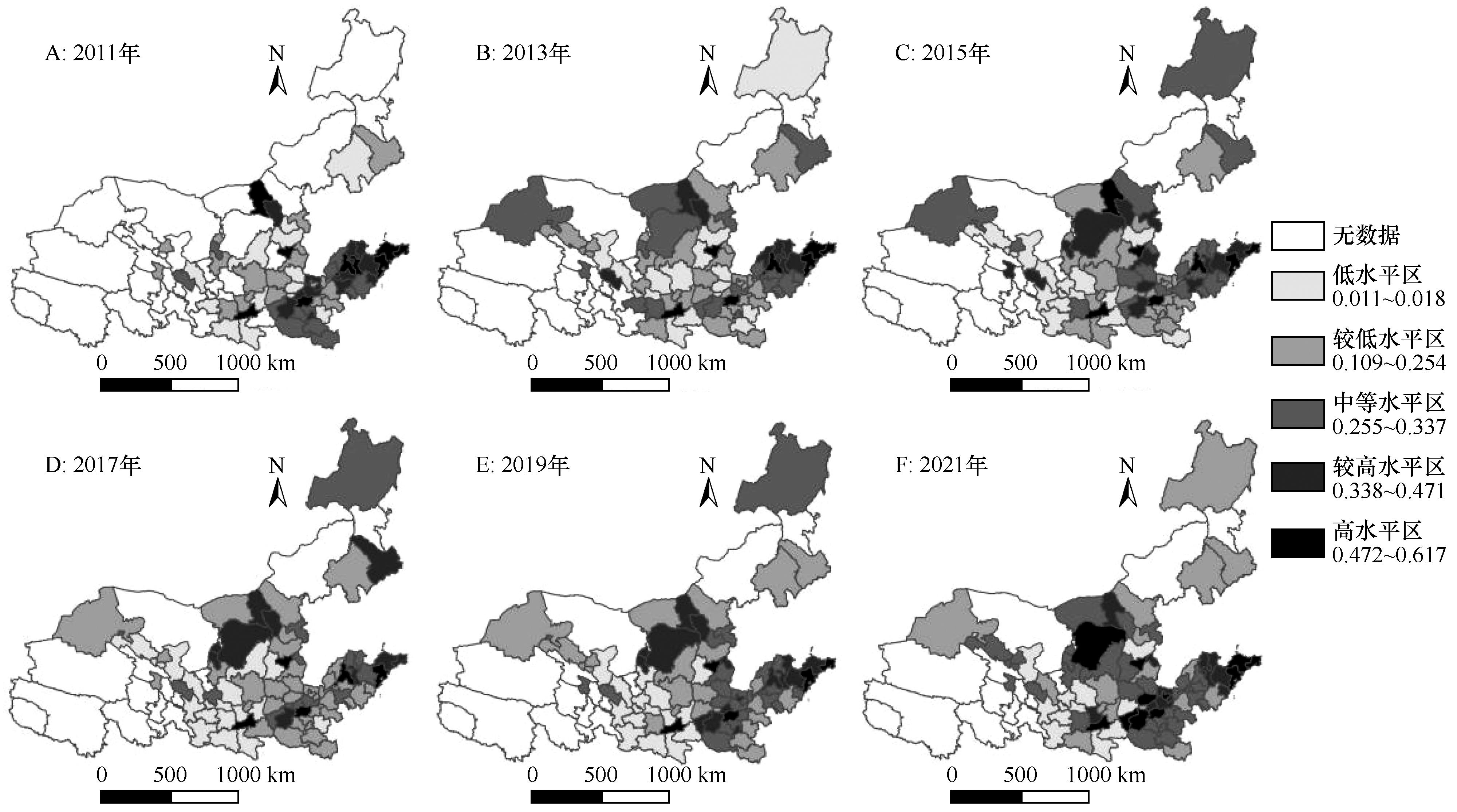
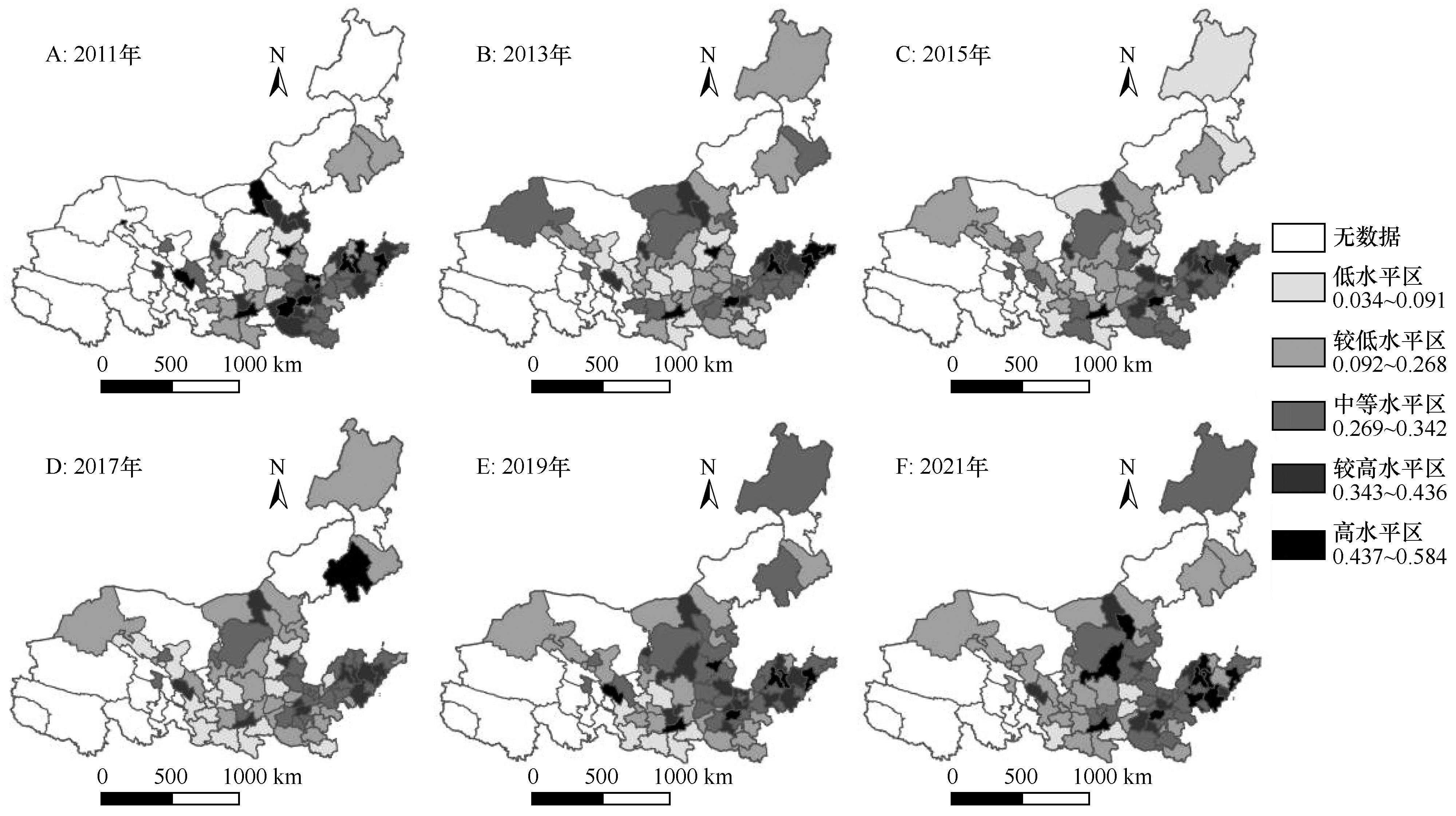
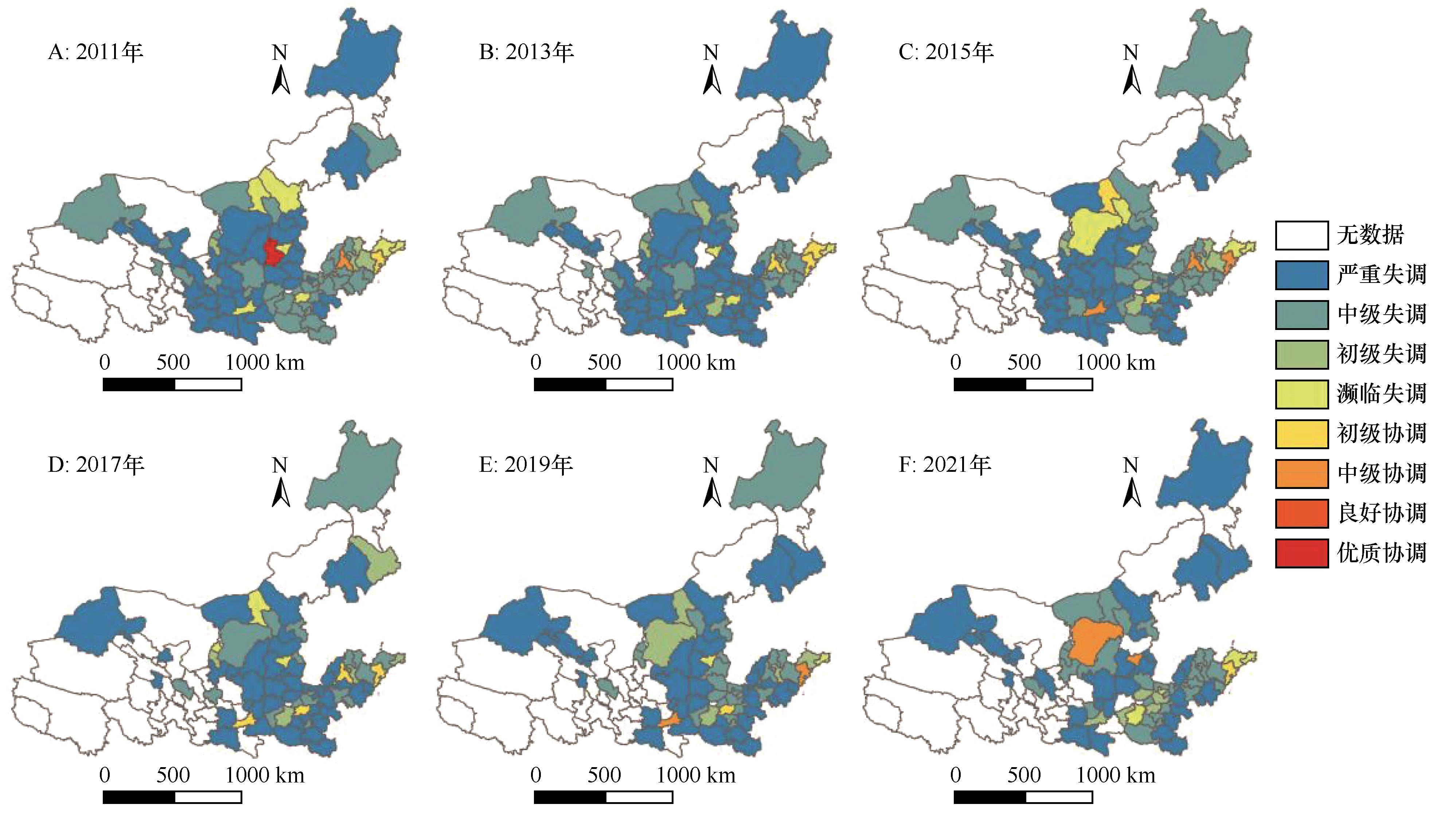
厘清数字经济发展与生态环境的协同演化规律对推动黄河流域绿色转型与可持续发展具有重要理论与实践意义。本文以黄河流域81个地市为研究单元,综合运用熵权法、改进的耦合协调度模型、面板VAR模型等方法,系统揭示二者协同演化的时空格局及交互响应机制。结果表明:(1)2011—2021年黄河流域数字经济发展水平稳步提升,生态环境发展水平整体呈现增长-下降-增长的变化趋势,二者空间分异特征均表现为上游<中游<下游。(2)数字经济发展与生态环境的协同水平表现为先降后升的“U型”变化趋势,且空间正自相关性持续增强。(3)高值集聚区域(HH)集中分布在中原城市群核心区和山东半岛,空间范围逐步扩大;低值集聚区域(LL)集中在青甘等上游地区,空间范围变化较小,具有低值锁定效应;低值异质(LH)和高值异质(HL)都呈现零星分布状态。(4)两系统均呈现路径依赖的发展趋势,且随时间逐步减弱;二者具有相互的正向促进作用,其中数字经济对生态环境的推动效应更显著。最后从实施差异化空间治理、增强高值区辐射能力、破解低值锁定效应等方面提出相应的政策建议。

关键词: 数字经济发展, 生态环境, 协同演化, 交互响应, 黄河流域

Abstract:

Clarifying the synergistic evolution between digital economy development and the ecological environment holds significant theoretical and practical importance for promoting green transformation and sustainable development in the basin. Taking 81 prefecture-level cities in the Yellow River Basin as research units and based on panel data from 2011 to 2021, this study systematically reveals the spatiotemporal patterns and interactive response mechanisms of their synergistic evolution by employing methods such as the entropy weight method, an improved coupling coordination degree model, and a panel VAR model. The main conclusions are as follows: (1) From 2011 to 2021, the development level of the digital economy in the Yellow River Basin steadily increased, while the ecological environment exhibited a fluctuating trend of growth-decline-growth. Both systems showed a consistent spatial differentiation pattern: upstream < midstream < downstream. (2) The synergistic level between digital economy development and the ecological environment followed a “U-shaped” trajectory, initially declining before gradually rising, with continuously strengthening spatial positive autocorrelation. (3) High-high agglomeration areas (HH) were mainly concentrated in the core zone of the Central Plains Urban Agglomeration and the Shandong Peninsula, with their spatial scope gradually expanding. Low-low agglomeration areas (LL) were clustered in upstream regions such as Qinghai and Gansu, showing limited spatial change and a low-value locking effect. Both low-high (LH) and high-low (HL) heterogeneous areas were sporadically distributed, reflecting insufficient regional linkage.(4) Both systems exhibited path dependence in their development trends, which gradually weakened over time. They demonstrated mutually reinforcing positive effects, with the digital economy exerting a more pronounced driving effect on the ecological environment. This study expands the research on the interaction between technological empowerment and ecological constraints at the prefectural scale and proposes corresponding policy recommendations, including implementing differentiated spatial governance, enhancing the radiating capacity of high-value areas, and breaking the low-value locking effect.

Key words: development of digital economy, ecological environment, synergistic evolution, interactive response, Yellow River Basin

中图分类号: