
- CN 62-1070/P
- ISSN 1000-694X
- Bimonthly 1981
Journal of Desert Research ›› 2025, Vol. 45 ›› Issue (2): 284-293.DOI: 10.7522/j.issn.1000-694X.2025.00012
Yu Wang1,2( ), Xingpeng Yuan1, Haolin Li3, Ying Zhang4, Tian Miao4, Miao Tian1, Yaling Xin1, Feiyan Hu1
Received:2024-11-26
Revised:2025-02-03
Online:2025-03-20
Published:2025-03-26
CLC Number:
Yu Wang, Xingpeng Yuan, Haolin Li, Ying Zhang, Tian Miao, Miao Tian, Yaling Xin, Feiyan Hu. Community structure and influencing factors characteristics of macrozoobenthos in the upper Yellow River (Gansu section) and Taohe River[J]. Journal of Desert Research, 2025, 45(2): 284-293.
Add to citation manager EndNote|Ris|BibTeX
URL: http://www.desert.ac.cn/EN/10.7522/j.issn.1000-694X.2025.00012
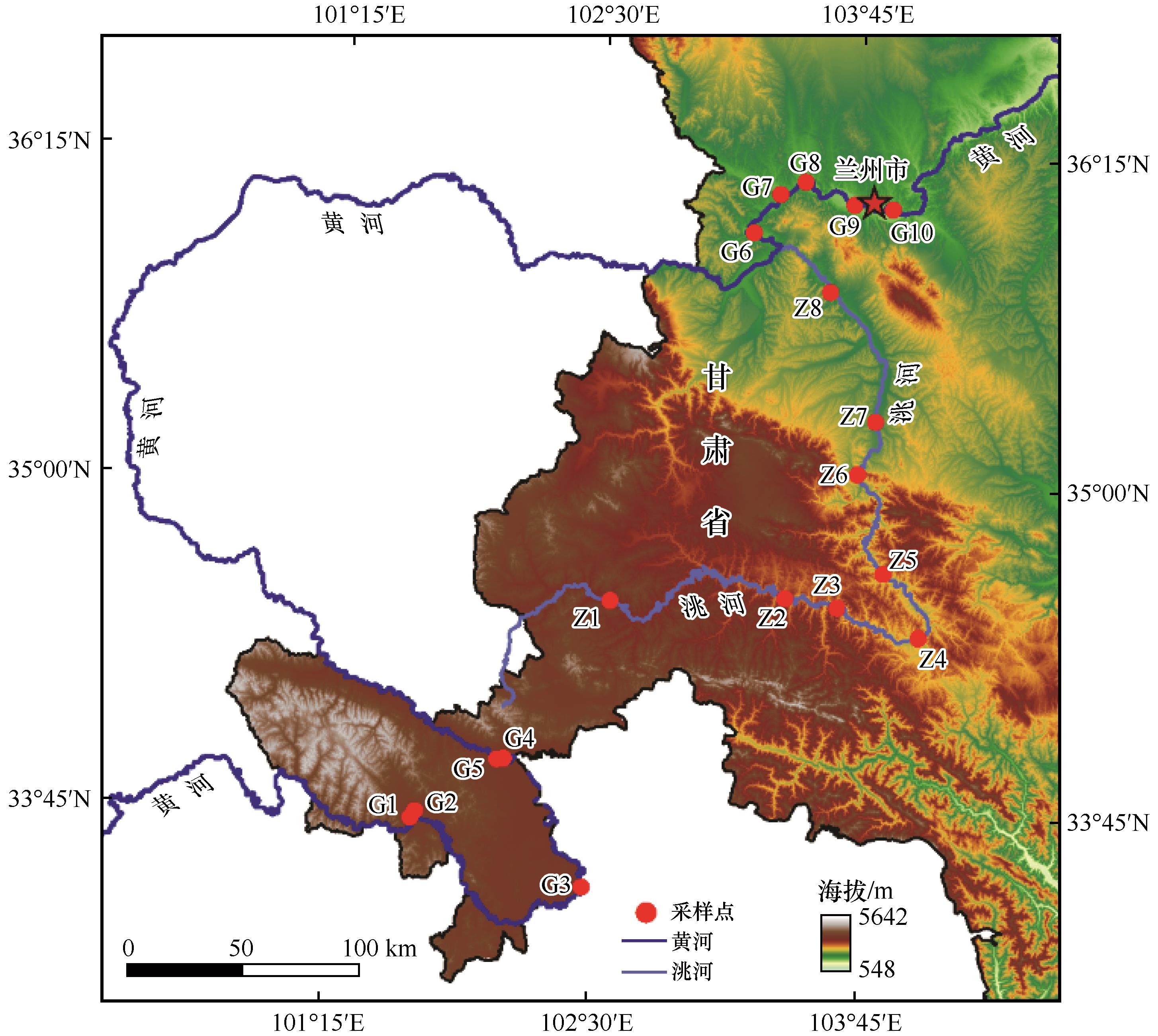
Fig.1 Overview map of the study area
| FFGS | 分类标准 | 项目 | FFGs参数 | 生态系统属性 |
|---|---|---|---|---|
| 刮食者 | 以各种营固着生活的生物类群为食 | 物质循环 | F1刮食者密度 | 初级生产力 |
| F2刮食者密度与滤食者、收集者之和比率 | 自养作用/异养作用 | |||
| 收集者 | 以河底的各种有机物颗粒为食 | F3撕食者密度和收集者密度之和 | 分解能力 | |
| F4生物量 | 次级生产力 | |||
| 滤食者 | 以水流中的细颗粒物为食 | 物质纵向输送能力 | F5滤食者密度 | 纵向输送能力 |
| F6滤食者与撕食者和收集者之和的比率 | 相对纵向输送能力 | |||
| 撕食者 | 以各种凋零物和粗有机颗粒为食 | 沿程物质输入 | F7撕食者密度 | 沿岸物质输入量 |
| F8撕食者密度与总密度之比 | 相对物质输入量 | |||
| 捕食者 | 以捕食其他水生动物为食 | 其他 | F9捕食者密度与总密度之比 | 粗有机颗粒/细有机颗粒 |
| F10刮食者和滤食者之和与撕食者和收集者之和的比率 | 生境稳定性 |
Table 1 FFGs classification and ecosystem attributes of macrozoobenthos in the main and tributary streams of the Yellow River Basin
| FFGS | 分类标准 | 项目 | FFGs参数 | 生态系统属性 |
|---|---|---|---|---|
| 刮食者 | 以各种营固着生活的生物类群为食 | 物质循环 | F1刮食者密度 | 初级生产力 |
| F2刮食者密度与滤食者、收集者之和比率 | 自养作用/异养作用 | |||
| 收集者 | 以河底的各种有机物颗粒为食 | F3撕食者密度和收集者密度之和 | 分解能力 | |
| F4生物量 | 次级生产力 | |||
| 滤食者 | 以水流中的细颗粒物为食 | 物质纵向输送能力 | F5滤食者密度 | 纵向输送能力 |
| F6滤食者与撕食者和收集者之和的比率 | 相对纵向输送能力 | |||
| 撕食者 | 以各种凋零物和粗有机颗粒为食 | 沿程物质输入 | F7撕食者密度 | 沿岸物质输入量 |
| F8撕食者密度与总密度之比 | 相对物质输入量 | |||
| 捕食者 | 以捕食其他水生动物为食 | 其他 | F9捕食者密度与总密度之比 | 粗有机颗粒/细有机颗粒 |
| F10刮食者和滤食者之和与撕食者和收集者之和的比率 | 生境稳定性 |
| 种类 | 干流 | 支流 | 种类 | 干流 | 支流 |
|---|---|---|---|---|---|
| 蜉蝣目 | 2 | 4 | 端足目 | 1 | 2 |
| 鞘翅目 | 9 | 13 | 十足目 | 1 | 2 |
| 双翅目 | 3 | 10 | 基眼目 | 4 | 7 |
| 毛翅目 | 0 | 4 | 柄眼目 | 0 | 1 |
| 半翅目 | 4 | 7 | 中腹足目 | 1 | 1 |
| 襀翅目 | 1 | 3 | 吻蛭目 | 0 | 1 |
| 鳞翅目 | 1 | 0 | 咽蛭目 | 1 | 1 |
| 蜻蜓目 | 3 | 8 | 颤蚓目 | 1 | 2 |
Table 2 Composition of macrozoobenthos species in the main stream and tributary of the upper Yellow River
| 种类 | 干流 | 支流 | 种类 | 干流 | 支流 |
|---|---|---|---|---|---|
| 蜉蝣目 | 2 | 4 | 端足目 | 1 | 2 |
| 鞘翅目 | 9 | 13 | 十足目 | 1 | 2 |
| 双翅目 | 3 | 10 | 基眼目 | 4 | 7 |
| 毛翅目 | 0 | 4 | 柄眼目 | 0 | 1 |
| 半翅目 | 4 | 7 | 中腹足目 | 1 | 1 |
| 襀翅目 | 1 | 3 | 吻蛭目 | 0 | 1 |
| 鳞翅目 | 1 | 0 | 咽蛭目 | 1 | 1 |
| 蜻蜓目 | 3 | 8 | 颤蚓目 | 1 | 2 |
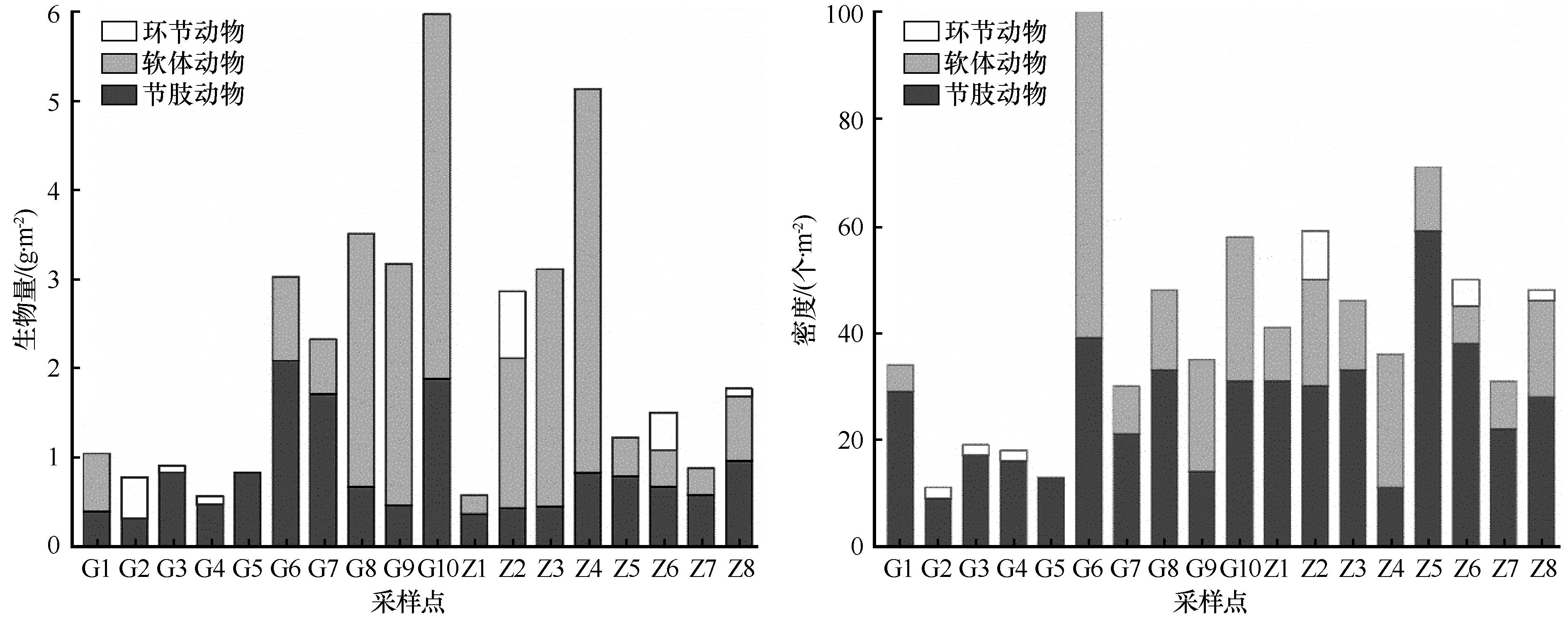
Fig.2 Density and biomass of macrozoobenthos in main and tributary streams
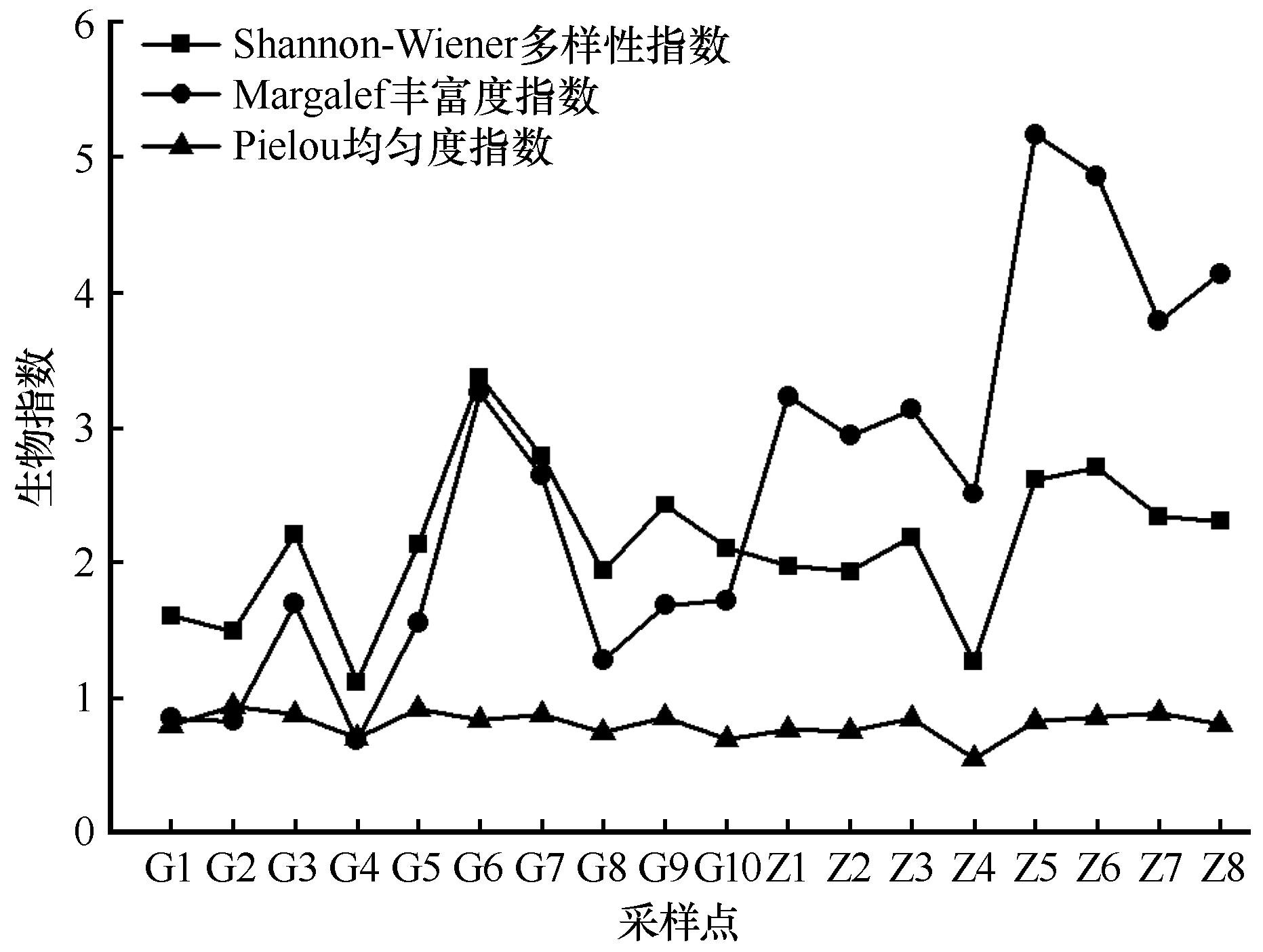
Fig.3 Biological index of the main and tributary streams
| 类群 | 优势种 | 优势度值(Y) | ||
|---|---|---|---|---|
| 整个流域 | 干流 | 支流 | ||
| 节肢动物 Arthropoda | 钩虾(Gammarus sp.) | 0.024 | ||
| 异钩虾(Anisogammarus sp.) | 0.026 | 0.116 | ||
| 青步甲(Chlaenius sp.) | 0.029 | |||
| 黑色蟌(Agrion atratum) | 0.030 | |||
| 摇蚊(Chironomus sp.) | 0.021 | |||
| 蠋步甲(Dolichus halensis) | 0.034 | |||
| 横纹划蝽(Sigara substriata) | 0.033 | |||
| 软体动物 Mollusca | 卵萝卜螺(Radix ovata) | 0.055 | 0.061 | 0.047 |
| 耳萝卜螺(Radix auricularia) | 0.033 | 0.054 | ||
Table 3 Species dominant in each region
| 类群 | 优势种 | 优势度值(Y) | ||
|---|---|---|---|---|
| 整个流域 | 干流 | 支流 | ||
| 节肢动物 Arthropoda | 钩虾(Gammarus sp.) | 0.024 | ||
| 异钩虾(Anisogammarus sp.) | 0.026 | 0.116 | ||
| 青步甲(Chlaenius sp.) | 0.029 | |||
| 黑色蟌(Agrion atratum) | 0.030 | |||
| 摇蚊(Chironomus sp.) | 0.021 | |||
| 蠋步甲(Dolichus halensis) | 0.034 | |||
| 横纹划蝽(Sigara substriata) | 0.033 | |||
| 软体动物 Mollusca | 卵萝卜螺(Radix ovata) | 0.055 | 0.061 | 0.047 |
| 耳萝卜螺(Radix auricularia) | 0.033 | 0.054 | ||
| 河流 | 物质循环 | 物质纵向输送 | 沿岸物质输送 | 其他 | ||||||||
|---|---|---|---|---|---|---|---|---|---|---|---|---|
| F1 | F2 | F3 | F4 | F5 | F6 | F7 | F8 | F9 | F10 | |||
| 干流 | 109 | 2.02 | 72 | 22.14 | 0 | 0 | 18 | 0.05 | 0.45 | 1.52 | ||
| 支流 | 95 | 0.73 | 132 | 17.07 | 5 | 0.04 | 6 | 0.02 | 0.39 | 0.76 | ||
Table 4 Variation of metrics based on macrozoobenthos FFGS in the mainstem and tributaries
| 河流 | 物质循环 | 物质纵向输送 | 沿岸物质输送 | 其他 | ||||||||
|---|---|---|---|---|---|---|---|---|---|---|---|---|
| F1 | F2 | F3 | F4 | F5 | F6 | F7 | F8 | F9 | F10 | |||
| 干流 | 109 | 2.02 | 72 | 22.14 | 0 | 0 | 18 | 0.05 | 0.45 | 1.52 | ||
| 支流 | 95 | 0.73 | 132 | 17.07 | 5 | 0.04 | 6 | 0.02 | 0.39 | 0.76 | ||
| 河流 | 海拔/m | WT/℃ | pH | EC/(μs·cm-1) | DO/(mg·L-1) | TDS/(mg·L-1) | Salinity/‰ | |
|---|---|---|---|---|---|---|---|---|
| 干流 | 均值±标准差 | 2496±939.2 | 20.41±3.66 | 8.36±0.09 | 468.2±135.27 | 6.91±0.69 | 212.2±56.65 | 0.218±0.05 |
| 范围 | 1477.1~3477 | 15.2~25.9 | 8.16~8.43 | 255~771 | 6~7.9 | 122~306 | 0.12~0.3 | |
| 支流 | 均值±标准差 | 2286.15±395.84 | 18.96±2.01 | 8.39±0.1 | 377±25.83 | 6.96±0.21 | 181.51±12.68 | 0.18±0.03 |
| 范围 | 1772.1~3086 | 15.1~21.8 | 8.18~8.48 | 336~421 | 6.73~7.28 | 161.6~202 | 0.12~0.21 | |
Table 5 Environmental characteristics of the main and tributary streams
| 河流 | 海拔/m | WT/℃ | pH | EC/(μs·cm-1) | DO/(mg·L-1) | TDS/(mg·L-1) | Salinity/‰ | |
|---|---|---|---|---|---|---|---|---|
| 干流 | 均值±标准差 | 2496±939.2 | 20.41±3.66 | 8.36±0.09 | 468.2±135.27 | 6.91±0.69 | 212.2±56.65 | 0.218±0.05 |
| 范围 | 1477.1~3477 | 15.2~25.9 | 8.16~8.43 | 255~771 | 6~7.9 | 122~306 | 0.12~0.3 | |
| 支流 | 均值±标准差 | 2286.15±395.84 | 18.96±2.01 | 8.39±0.1 | 377±25.83 | 6.96±0.21 | 181.51±12.68 | 0.18±0.03 |
| 范围 | 1772.1~3086 | 15.1~21.8 | 8.18~8.48 | 336~421 | 6.73~7.28 | 161.6~202 | 0.12~0.21 | |
| 海拔/m | WT/℃ | pH | EC/(μs·cm-1) | DO/(mg·L-1) | TDS/(mg·L-1) | Salinity/‰ | |
|---|---|---|---|---|---|---|---|
| 物种 | -0.562* | 0.030 | -0.162 | -0.092 | 0.252 | 0.095 | -0.092 |
| 密度 | -0.590** | 0.183 | -0.052 | 0.15 | 0.285 | 0.318 | 0.066 |
| 生物量 | -0.622** | 0.485* | 0.264 | 0.393 | 0.238 | 0.531* | 0.327 |
| H′ | -0.593** | 0.364 | -0.079 | 0.415 | 0.509* | 0.443 | 0.549* |
| dM | -0.440 | 0.037 | -0.198 | -0.093 | 0.248 | 0.087 | -0.067 |
| J | 0.124 | -0.497* | -0.445 | -0.024 | 0.079 | -0.137 | 0.084 |
Table 6 Correlation analysis between macrozoobenthos and environmental factors
| 海拔/m | WT/℃ | pH | EC/(μs·cm-1) | DO/(mg·L-1) | TDS/(mg·L-1) | Salinity/‰ | |
|---|---|---|---|---|---|---|---|
| 物种 | -0.562* | 0.030 | -0.162 | -0.092 | 0.252 | 0.095 | -0.092 |
| 密度 | -0.590** | 0.183 | -0.052 | 0.15 | 0.285 | 0.318 | 0.066 |
| 生物量 | -0.622** | 0.485* | 0.264 | 0.393 | 0.238 | 0.531* | 0.327 |
| H′ | -0.593** | 0.364 | -0.079 | 0.415 | 0.509* | 0.443 | 0.549* |
| dM | -0.440 | 0.037 | -0.198 | -0.093 | 0.248 | 0.087 | -0.067 |
| J | 0.124 | -0.497* | -0.445 | -0.024 | 0.079 | -0.137 | 0.084 |
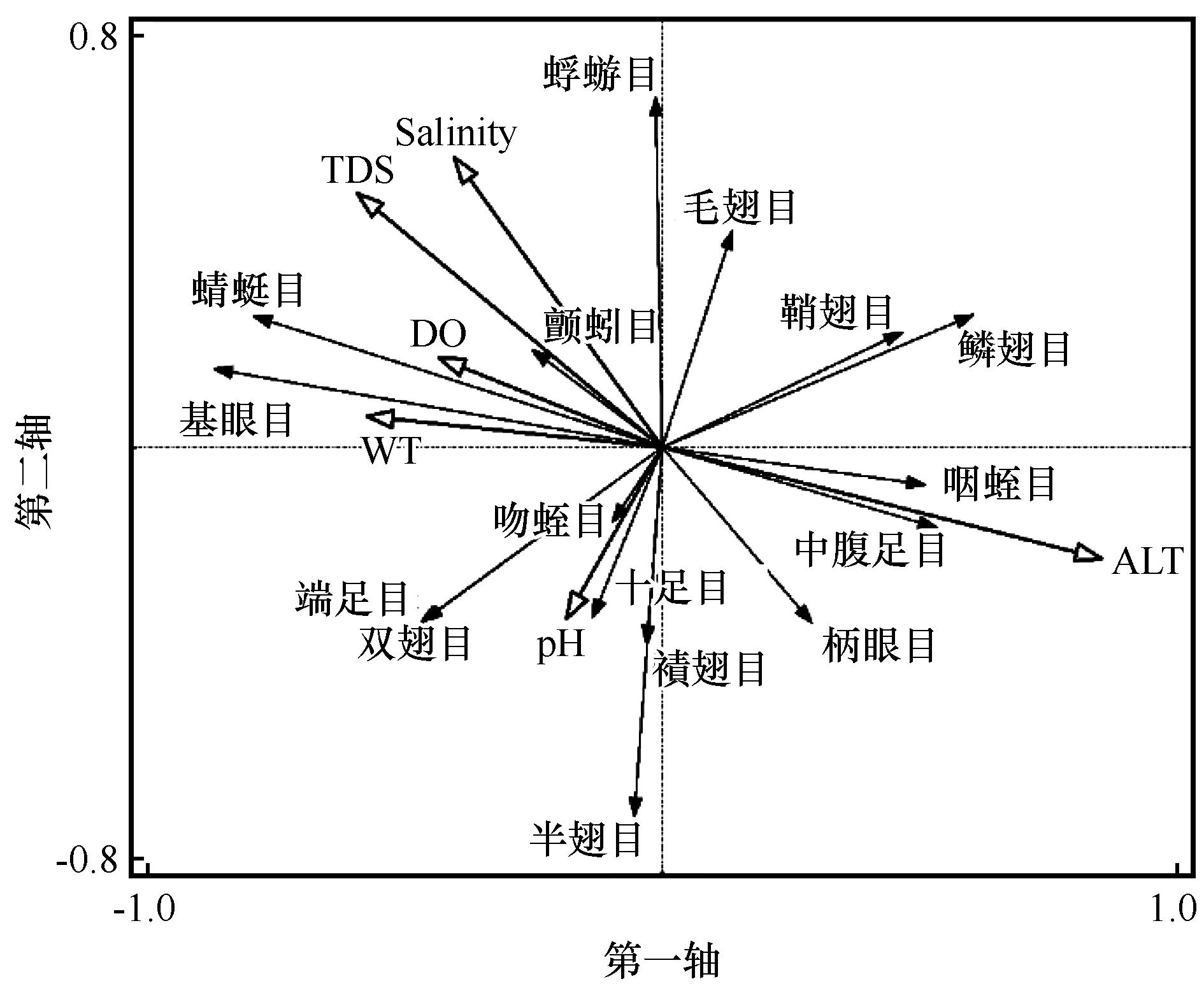
Fig.4 RDA ordination diagram of macrozoobenthos versus environmental factors
| 项目 | 轴1 | 轴2 | 轴3 | 轴4 |
|---|---|---|---|---|
| 特征值 | 0.2921 | 0.1385 | 0.0765 | 0.036 |
| 物种-环境因子相关系数 | 0.8807 | 0.8844 | 0.7547 | 0.7473 |
| 物种变量累计百分比 | 29.21 | 43.06 | 50.71 | 54.31 |
| 物种-环境变量累计百分比 | 51.38 | 75.73 | 89.19 | 95.52 |
Table 7 RDA analysis results of macrozoobenthos and environmental factors
| 项目 | 轴1 | 轴2 | 轴3 | 轴4 |
|---|---|---|---|---|
| 特征值 | 0.2921 | 0.1385 | 0.0765 | 0.036 |
| 物种-环境因子相关系数 | 0.8807 | 0.8844 | 0.7547 | 0.7473 |
| 物种变量累计百分比 | 29.21 | 43.06 | 50.71 | 54.31 |
| 物种-环境变量累计百分比 | 51.38 | 75.73 | 89.19 | 95.52 |
| 环境指标 | F | P |
|---|---|---|
| 海拔 | 4.9 | 0.004 |
| WT | 2.4 | 0.026 |
| pH | 2.2 | 0.036 |
| Salinity | 1.7 | 0.118 |
| TDS | 0.9 | 0.406 |
| DO | 0.9 | 0.466 |
Table 8 Monte Carlo test results of macrozoobenthos and environmental factors
| 环境指标 | F | P |
|---|---|---|
| 海拔 | 4.9 | 0.004 |
| WT | 2.4 | 0.026 |
| pH | 2.2 | 0.036 |
| Salinity | 1.7 | 0.118 |
| TDS | 0.9 | 0.406 |
| DO | 0.9 | 0.466 |
| 1 | 许继军,景唤.河流生态修复理念与技术研究进展[J].农业现代化研究,2022,43(4):691-701. |
| 2 | Wu Q, Ke L, Wang J,et al.Satellites reveal hotspots of global river extent change[J].Nature Communications,2023,14(1):1587. |
| 3 | 李良,杨扬,乔永民,等.东江干流及其源头支流大型底栖动物群落结构特征与环境指示评价[J].生态科学,2013,32(3):313-317. |
| 4 | 陈皓阳,赵瑞,李静纳,等.深圳大鹏半岛主要河流底栖动物群落结构及水质生物学评价[J].环境昆虫学报,2020,42(1):101-110. |
| 5 | Morley S A, Karr J R.Assessing and restoring the health of urban streams in the Puget Sound Basin[J].Conservation Biology,2002,16(6):1498-1509. |
| 6 | 张志远,张思九,林育青,等.怒江源区不同层级河流底栖动物群落结构特征及影响因子分析[J].环境科学学报,2023,43(11):350-361. |
| 7 | 侯易明,潘保柱,蒋小明,等.汉江上游干流和秦岭南麓典型支流的底栖动物群落特征及水质生物评价[J].湖泊科学,2020,32(4):1140-1153. |
| 8 | 傅海霞,张玉洲,黄书雅,等.徽水河底栖动物群落结构季节动态及构建机制[J].长江流域资源与环境,2024,33(6):1239-1249. |
| 9 | 王昱,刘娟娟,冯起,等.黑河流域底栖动物群落结构及水质评价[J].中国环境科学,2020,40(3):1305-1319. |
| 10 | Covich A P, Palmer M A, Crowl T A.The role of benthic invertebrate species in freshwater ecosystems zoobenthic species influence energy flows and nutrient cycling[J].BioScience,1999,49(2):119-127. |
| 11 | Wallace J B, Webster J R.The role of macroinvertebrates in stream ecosystem function[J].Annual Review of Entomology,1996,4(1):115-139. |
| 12 | 王昱,王旭,冯起,等.黄河甘肃段底栖动物群落结构及水质评价[J].中国沙漠,2023,43(4):146-156. |
| 13 | 田震,敖偲成,李先福,等.高黎贡山南段河流生态系统健康评价[J].水生态学杂志,2023,44(1):25-33. |
| 14 | 计伟,刘海江,高吉喜,等.黄河流域生态质量时空变化分析[J].环境科学研究,2021,34(7):1700-1709. |
| 15 | 赵茜,潘福霞,李斌,等.基于环境DNA技术的黄河流域下游山区河流大型底栖动物群落多样性特征及其影响要素分析[J].湖泊科学,2024,36(2):523-536. |
| 16 | 李海生.黄河流域生态环境问题系统识别与展望[J].环境科学研究,2024,37(1):1-10. |
| 17 | 王学良,李洪源,陈仁升,等.变化环境下1956-2020年黄河兰州站以上干支流径流演变特征及驱动因素研究[J].地球科学进展,2022,37(7):726-741. |
| 18 | 张胜武,葛宇梦,李小胜,等.黄河流域新型城镇化与水生态环境耦合协调的时空格局及影响因素[J].中国沙漠,2024,44(3):172-181. |
| 19 | 李雪迎,杨曦,乔琦,等.黄河流域甘肃段工业行业水污染物空间排放特征[J].环境科学,2022,43(5):2459-2466. |
| 20 | 周文霞,王星星.黄河流域甘肃段高质量发展时空格局演变研究[J].人民黄河,2022,44(4):4-9. |
| 21 | 戴文渊,玛久草,陈亦晨,等.黄河流域甘肃段水生态安全驱动力分析及动态演变[J].干旱区研究,2024,41(10):1662-1671. |
| 22 | 陈明霞.洮河流域水电梯级开发存在的问题及环境保护对策[J].水资源与水工程学报,2011,22(3):174-176. |
| 23 | 张洪波,黄强,刘晓黎.甘肃洮河流域水资源可持续利用问题的探讨[J].西北水电,2005(3):7-11. |
| 24 | 陈丽,王东波,君珊.拉萨河流域大型底栖动物群落结构及其与环境因子的关系[J].生态学报,2019,39(3):757-769. |
| 25 | 韩洁,宋蒙蒙,张杰,等.浑河流域大型底栖动物摄食功能群对栖息地环境的选择适应性[J].生态学报,2019,39(6):2013-2020. |
| 26 | 燕文明,姚琦,蔡永久,等.基于大型底栖动物功能摄食类群的太湖流域河流生态系统功能特征[J].生态学杂志,2024,43(4):982-992. |
| 27 | Yoshimura C, Tockner K, Omura T,et al.Species diversity and functional assessment of macroinvertebrate communities in Austrian rivers[J].Limnology,2006,7(2):63-74. |
| 28 | Wei M, Zhang N, Zhang Y,et al.Integrated assessment of river health based on water quality,aquatic life and physical habitat[J].Journal of Environmental Sciences,2009,21(8):1017-1027. |
| 29 | Davies P J, Wright I A, Findlay S J,et al.Impact of urban development on aquatic macroinvertebrates in south eastern Australia:degradation of in-stream habitats and comparison with non-urban streams[J].Aquatic Ecology,2010,44(4):685-700. |
| 30 | 鲍思敏,张凯,丁城志,等.澜沧江下游补远江大型底栖动物群落结构的时空分布及其影响因素[J].湖泊科学,2024,36(2):536-550. |
| 31 | 邹泓光,孔维静,杜彩丽,等.贵州打邦河夏季大型底栖动物群落功能摄食类群特征[J].应用与环境生物学报,2024,30(2):402-411. |
| 32 | 吴巍,王嘉玮,刘挺,等.梯级水电开发下黄河上游龙-刘河段DOC时空分布特征及通量研究[J].水资源与水工程学报,2022,33(3):106-114. |
| 33 | Tagliaferro M, Miserendino M L, Liberoff A,et al.Dams in the last large Free-Flowing Rivers of Patagonia,the Santa Cruz River,environmental features,and macroinvertebrate community[J].Limnologica,2013,43(6):500-509. |
| 34 | 李群,赵辉,赵成章,等.洮河国家湿地公园主要植物群落多样性对土壤环境因子的响应[J].生态学报,2022,42(7):2674-2684. |
| 35 | 杨紫薇,董晓健,秦勤.京杭运河镇江段水系大型底栖动物分布多样性与环境因子相关性评价[J].环境生态学,2024,6(6):83-87. |
| 36 | Cooper M J, Uzarski D G, Burton T M.Macroinvertebrate community composition in relation to anthropogenic disturbance,vegetation,and organic sediment depth in four Lake Michigan drowned river-mouth wetlands[J].Wetlands,2007,27(4):894-903. |
| 37 | Loayza-Muro R A, Elias‐Letts R, Marticorena-Ruiz J K,et al.Metal-induced shifts in benthic macroinvertebrate community composition in Andean high altitude streams[J].Environmental Toxicology and Chemistry,2010,29(12):2761-2768. |
| 38 | Mishra A S, Nautiyal P, Semwal V P.Distributional patterns of benthic macro-invertebrate fauna in the glacier fed rivers of Indian Himalaya[J].Our Nature,2013,11(1):36-44. |
| 39 | 邹亮华,邹伟,张庆吉,等.鄱阳湖大型底栖动物时空演变特征及驱动因素[J].中国环境科学,2021,41(6):2881-2892. |
| 40 | 刘惠秋,李晓东,杨清,等.基于浮游植物完整性指数的雅鲁藏布江中上游河流水生态健康评价[J].干旱区资源与环境,2023,37(9):109-117. |
| 41 | Cantin A, Beisner B E, Gunn J M,et al.Effects of thermocline deepening on lake plankton communities[J].Canadian Journal of Fisheries and Aquatic Sciences,2011,68(2):260-276. |
| Viewed | ||||||
|
Full text |
|
|||||
|
Abstract |
|
|||||
Address: No. 8, Tianshui Middle Road, Chengguan District, Lanzhou City, Gansu Province, China (Postcode: 730000)
Tel:0931-8267545
Email:caiedit@lzb.ac.cn;desert@lzb.ac.cn
Support:Magtech
