中国沙漠 ›› 2026, Vol. 46 ›› Issue (1): 184-198.DOI: 10.7522/j.issn.1000-694X.2025.00331
• • 上一篇
王国华1,2( ), 张晓颖1, 王佳琪1, 申长盛1
收稿日期:2025-11-23
修回日期:2025-12-23
出版日期:2026-01-20
发布日期:2026-03-09
作者简介:王国华(1984—),男,山西大同人,教授,主要研究方向为干旱区风沙治理。E-mail: gimi123@126.com
基金资助:
Guohua Wang1,2(), Xiaoying Zhang1, Jiaqi Wang1, Changsheng Shen1
Received:2025-11-23
Revised:2025-12-23
Online:2026-01-20
Published:2026-03-09
摘要:
林下草本层作为荒漠绿洲过渡带人工固沙生态系统中的重要组成部分,在维持生态稳定以及调节能量与物质循环等方面发挥着重要作用。本研究以河西走廊荒漠绿洲过渡带不同林龄(流动沙丘0、5、10、20、30、40 a)梭梭(Haloxylon ammodendron)人工林下草本植物为研究对象,通过测定不同林龄0~10 cm和10~20 cm土壤质地、水分、盐分(盐离子和电导率)、养分(有机质、全氮、全磷)等理化性质以及林下草本植物的物种数、密度和生物量,系统分析梭梭林下草本植物群落的演变规律和发生机制。结果表明:(1) 随着梭梭人工林林龄的增加,0~10 cm和10~20 cm土壤电导率及各种养分含量总体呈显著升高趋势;pH值始终维持在7.78~8.86;而0~10 cm土壤水分随林龄的增加呈先增加后减少的趋势,在30 a时达到最大值。(2) 林下草本植物群落优势种随林龄增加发生演变,优势种由流动沙丘(0 a)沙蓬(Agriophyllum squarrosum)向早期(5~10 a)雾冰藜(Bassia dasyphylla)沙蓬转变,而中期(20~30 a)又由雾冰藜向后期(40 a)白茎盐生草(Halogeton arachnoideus)演变;早期和中期优势种表现出较强的耐旱性(沙蓬对土壤含水量的生态阈值区间为0.437%~1.245%,雾冰藜的生态阈值为0.153%~1.560%),而后期优势种具有较强的耐盐性(白茎盐生草对土壤电导率的生态阈值区间为53.003~179.131 μS·cm-1)。(3) 林下草本植物物种多样性呈先升后降规律,Margalef、Shannon-Wiener、Simpson和Pielou指数均在30 a达到最大值,土壤含水量和电导率是多样性变化的关键因子。
中图分类号:
王国华, 张晓颖, 王佳琪, 申长盛. 荒漠绿洲过渡带人工梭梭(Haloxylon ammodendron)林下草本植物演替特征[J]. 中国沙漠, 2026, 46(1): 184-198.
Guohua Wang, Xiaoying Zhang, Jiaqi Wang, Changsheng Shen. Succession of the herbaceous layer in Haloxylon ammodendron woodland in a desert-oasis ecotone of the Hexi Corridor[J]. Journal of Desert Research, 2026, 46(1): 184-198.
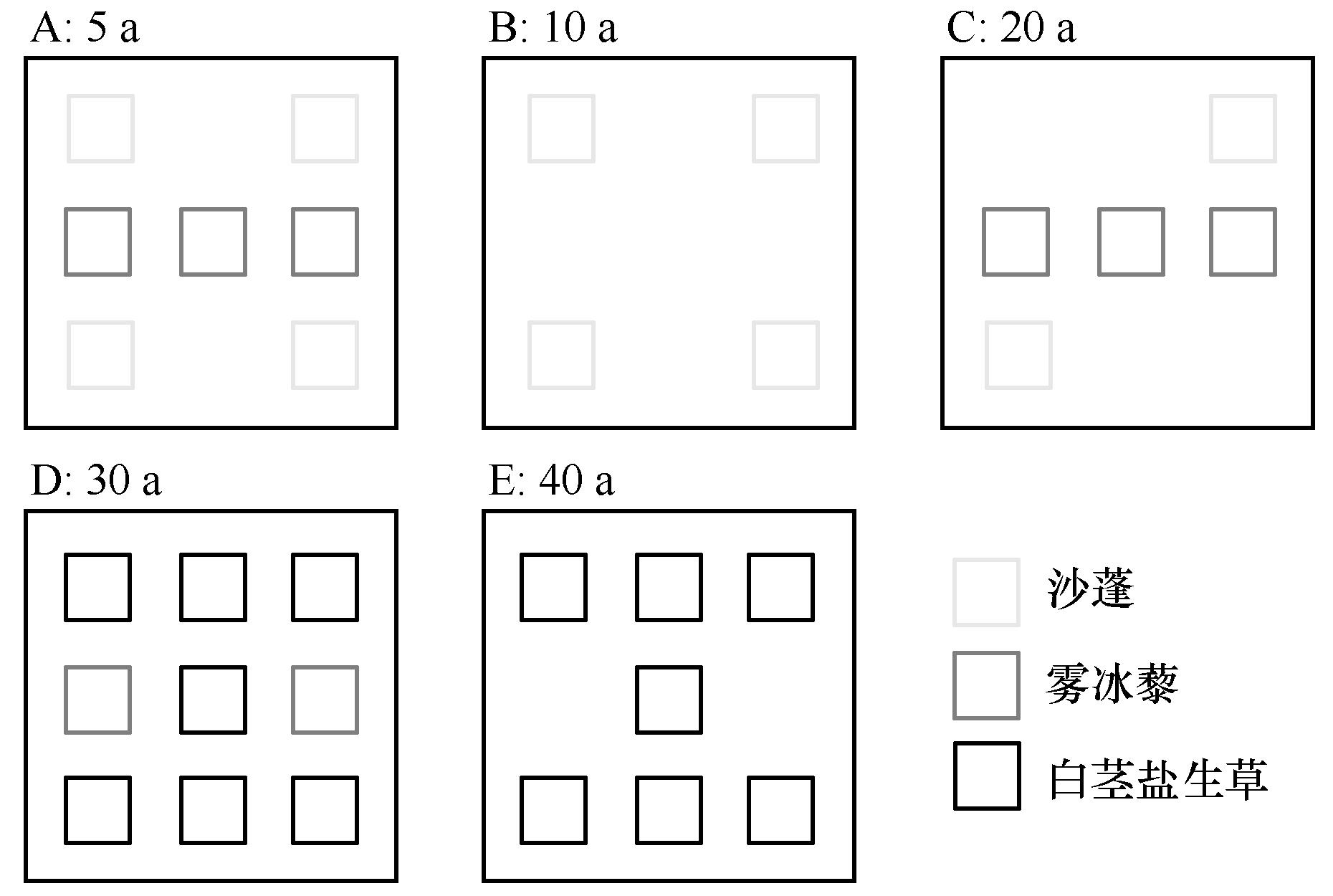
图1 不同林龄梭梭林3种优势一年生草本植物样区
Fig.1 Sample areas of three dominant annual herbaceous species of Haloxylon ammodendron woodland with different ages
深度 /cm | 林龄 /a | 土壤粒径组成/% | 土壤盐离子含量/(g·kg-1) | |||||
|---|---|---|---|---|---|---|---|---|
| 砂粒(>0.05 mm) | 粉粒(0.002~0.05 mm) | 黏粒(<0.002 mm) | Na+ | Ca2+ | Cl- | HCO | ||
| 0~10 | CK(0) | 92.76±0.55ab | 3.56±0.31c | 3.70±0.27c | 0.01±0.00c | 0.03±0.00b | 0.28±0.06c | 0.17±0.00e |
| 5 | 92.20±0.79ab | 2.72±0.22c | 5.07±0.57b | 0.24±0.01a | 0.05±0.02b | 0.87±0.16b | 0.61±0.08b | |
| 10 | 93.86±0.09a | 2.87±0.26c | 3.27±0.17c | 0.21±0.02a | 0.05±0.01b | 0.78±0.09b | 0.44±0.02c | |
| 20 | 90.25±2.22bc | 5.86±1.53b | 3.89±0.69c | 0.25±0.03a | 0.04±0.01b | 0.69±0.04b | 0.72±0.01a | |
| 30 | 87.40±1.54bc | 6.70±0.33b | 5.91±0.20b | 0.13±0.02b | 0.10±0.02a | 0.87±0.17b | 0.31±0.04d | |
| 40 | 76.74±2.74d | 11.57±1.90a | 11.68±0.84a | 0.22±0.03a | 0.08±0.01a | 1.12±0.18a | 0.74±0.05a | |
| 10~20 | CK(0) | 94.90±0.44a | 1.84±0.34c | 3.25±0.28b | 0.04±0.02b | 0.03±0.00b | 0.26±0.15c | 0.18±0.01b |
| 5 | 93.10±0.50ab | 3.23±1.17bc | 3.67±1.57b | 0.20±0.07b | 0.05±0.02b | 0.57±0.20ab | 0.35±0.08ab | |
| 10 | 92.52±0.24b | 2.68±0.20bc | 4.80±0.31b | 0.08±0.04b | 0.07±0.02b | 0.41±0.07bc | 0.28±0.06ab | |
| 20 | 91.63±2.76b | 3.10±0.19bc | 4.64±3.73b | 0.21±0.05b | 0.07±0.01b | 0.56±0.18ab | 0.40±0.18a | |
| 30 | 91.56±0.11b | 3.73±1.79b | 5.34±0.11b | 0.16±0.07b | 0.06±0.01b | 0.43±0.17bc | 0.29±0.01ab | |
| 40 | 81.98±0.79c | 7.11±0.53a | 10.91±0.31a | 0.65±0.50a | 0.15±0.09a | 0.78±0.13a | 0.38±0.11a | |
表1 不同林龄梭梭人工林土壤粒径及盐离子组成
Table 1 Composition of soil particles and salt ions in different ages of Haloxylon ammodendron woodland
深度 /cm | 林龄 /a | 土壤粒径组成/% | 土壤盐离子含量/(g·kg-1) | |||||
|---|---|---|---|---|---|---|---|---|
| 砂粒(>0.05 mm) | 粉粒(0.002~0.05 mm) | 黏粒(<0.002 mm) | Na+ | Ca2+ | Cl- | HCO | ||
| 0~10 | CK(0) | 92.76±0.55ab | 3.56±0.31c | 3.70±0.27c | 0.01±0.00c | 0.03±0.00b | 0.28±0.06c | 0.17±0.00e |
| 5 | 92.20±0.79ab | 2.72±0.22c | 5.07±0.57b | 0.24±0.01a | 0.05±0.02b | 0.87±0.16b | 0.61±0.08b | |
| 10 | 93.86±0.09a | 2.87±0.26c | 3.27±0.17c | 0.21±0.02a | 0.05±0.01b | 0.78±0.09b | 0.44±0.02c | |
| 20 | 90.25±2.22bc | 5.86±1.53b | 3.89±0.69c | 0.25±0.03a | 0.04±0.01b | 0.69±0.04b | 0.72±0.01a | |
| 30 | 87.40±1.54bc | 6.70±0.33b | 5.91±0.20b | 0.13±0.02b | 0.10±0.02a | 0.87±0.17b | 0.31±0.04d | |
| 40 | 76.74±2.74d | 11.57±1.90a | 11.68±0.84a | 0.22±0.03a | 0.08±0.01a | 1.12±0.18a | 0.74±0.05a | |
| 10~20 | CK(0) | 94.90±0.44a | 1.84±0.34c | 3.25±0.28b | 0.04±0.02b | 0.03±0.00b | 0.26±0.15c | 0.18±0.01b |
| 5 | 93.10±0.50ab | 3.23±1.17bc | 3.67±1.57b | 0.20±0.07b | 0.05±0.02b | 0.57±0.20ab | 0.35±0.08ab | |
| 10 | 92.52±0.24b | 2.68±0.20bc | 4.80±0.31b | 0.08±0.04b | 0.07±0.02b | 0.41±0.07bc | 0.28±0.06ab | |
| 20 | 91.63±2.76b | 3.10±0.19bc | 4.64±3.73b | 0.21±0.05b | 0.07±0.01b | 0.56±0.18ab | 0.40±0.18a | |
| 30 | 91.56±0.11b | 3.73±1.79b | 5.34±0.11b | 0.16±0.07b | 0.06±0.01b | 0.43±0.17bc | 0.29±0.01ab | |
| 40 | 81.98±0.79c | 7.11±0.53a | 10.91±0.31a | 0.65±0.50a | 0.15±0.09a | 0.78±0.13a | 0.38±0.11a | |
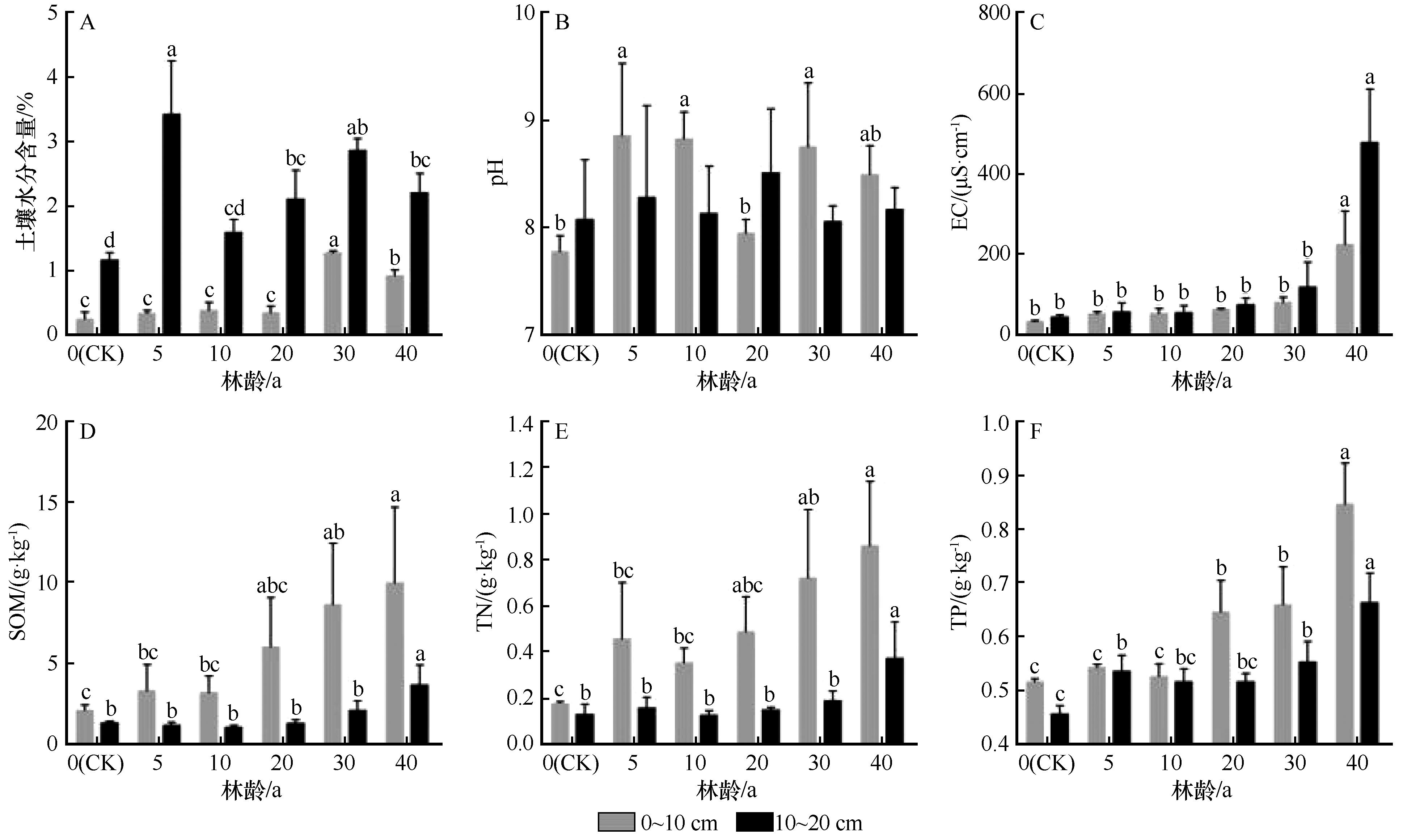
图2 不同林龄人工梭梭林土壤理化性质注:不同小写字母表示不同林龄土壤理化性质在P<0.05水平差异显著
Fig.2 Physicochemical properties of soil in artificial Haloxylon ammodendron forests with different ages
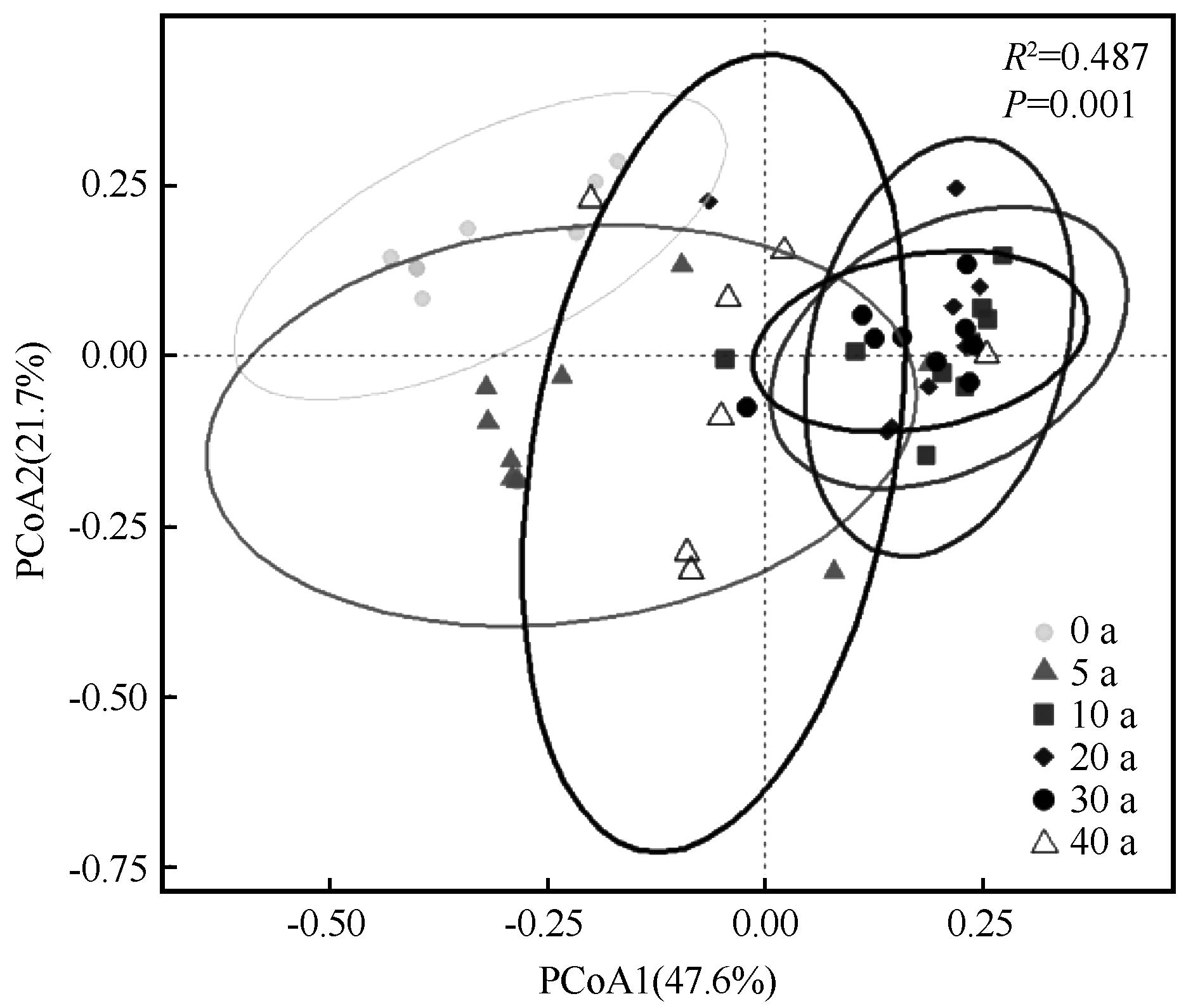
图3 梭梭林不同样地植物群落结构差异的PCoA分析
Fig.3 PCoA analysis of differences in plant community structure among sites of Haloxylonammodendron woodland
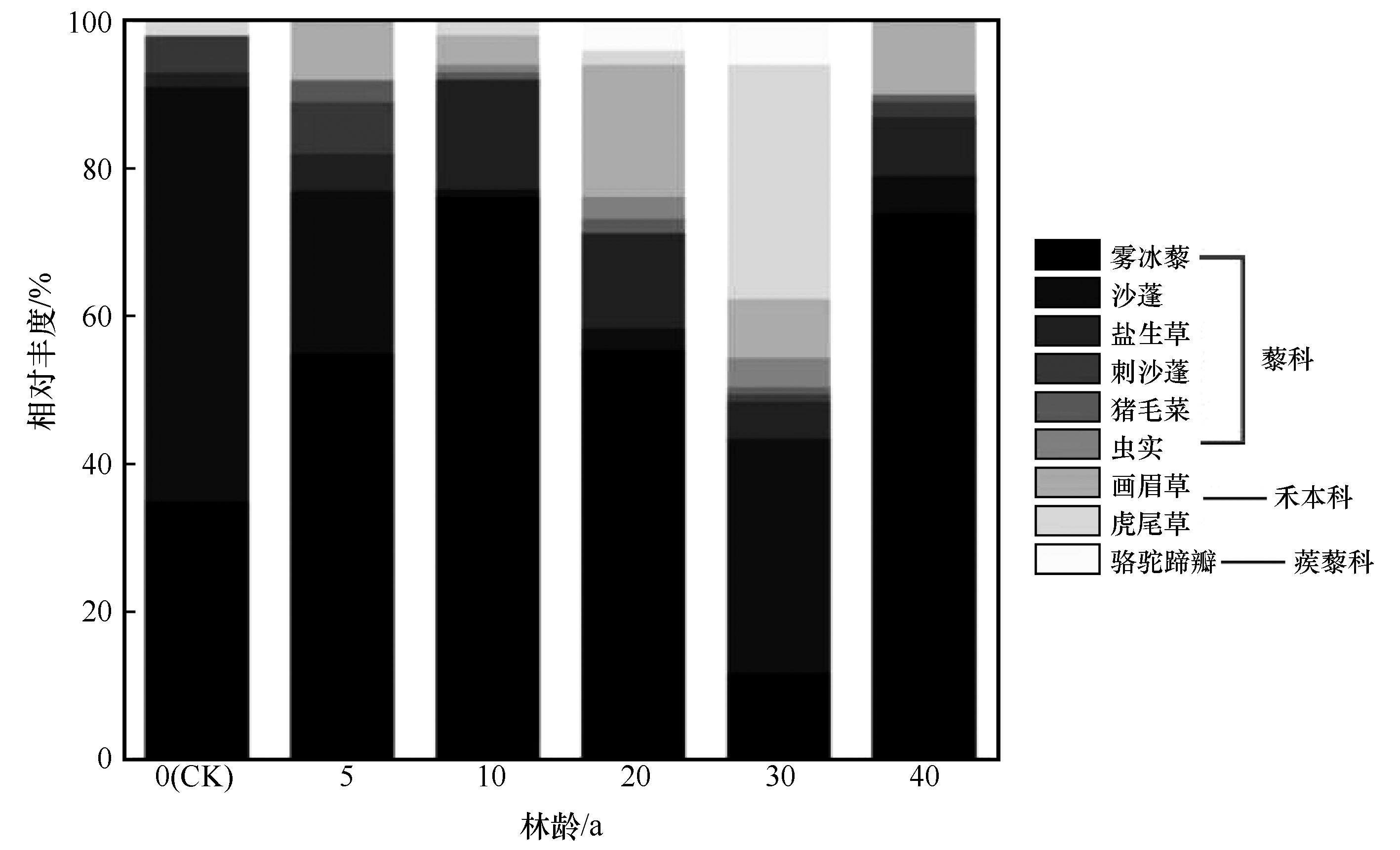
图4 不同林龄梭梭林下草本植物相对丰度
Fig.4 Relative abundance of understory herbaceous plants in Haloxylon ammodendron woodland of different ages
| 物种名 | 生活型 | 林龄/a | |||||||||||||||||
|---|---|---|---|---|---|---|---|---|---|---|---|---|---|---|---|---|---|---|---|
| 0(CK) | 5 | 10 | 20 | 30 | 40 | ||||||||||||||
| D | F | IV | D | F | IV | D | F | IV | D | F | IV | D | F | IV | D | F | IV | ||
| 泡泡刺(Nitraria sphaerocarpa) | S | 5.00 | 0.02 | 1.71 | — | — | — | — | — | — | — | — | — | — | — | — | — | — | — |
| 沙拐枣(Calligonum mongolicunl) | S | 3.81 | 0.69 | 8.55 | 2.00 | 0.04 | 1.88 | 1.00 | 0.03 | 0.85 | 1.00 | 0.07 | 1.35 | — | — | — | 3.60 | 0.17 | 4.47 |
| 梭梭(Haloxylon ammodendron) | S | — | — | — | 1.50 | 0.04 | 18.61 | — | — | 1.00 | 0.04 | 7.32 | — | — | — | — | |||
| 骆驼蹄瓣(Zygophyllum fabago) | P | — | — | — | — | — | — | — | — | — | 7.00 | 0.02 | 2.71 | 22.38 | 0.27 | 7.92 | — | — | — |
| 雾冰藜(Bassia dasyphylla) | A | 62.83a | 0.93a | 32.93a | 32.75a | 0.98a | 36.85a | 98.13a | 1.00a | 61.93a | 87.22a | 0.91a | 38.73a | 45.50b | 1.00a | 21.46a | 88.95a | 0.7a | 57.73a |
| 沙蓬(Agriophyllum Squarrosum) | A | 102.21a | 0.84a | 37.57a | 13.11a | 0.62a | 17.58a | 1.00b | 0.03b | 0.79b | 4.33b | 0.07b | 4.38b | 124.00a | 0.07b | 18.89a | 5.57b | 0.23b | 6.60b |
| 白茎盐生草(Halogeton arachnoideus) | A | 3.00b | 0.24b | 3.93b | 2.80b | 0.11b | 7.54b | 18.55a | 0.67a | 21.52a | 20.50a | 0.76a | 18.65a | 20.89b | 0.63a | 12.33b | 9.40b | 0.33a | 16.29a |
| 刺沙蓬(Salsola ruthenica) | A | 9.47b | 0.33b | 11.47b | 4.50b | 0.04b | 3.58b | — | — | — | — | — | — | 2.0b | 0.10b | 2.07b | 3.0a | 0.03b | 1.86b |
| 画眉草(Eragrostis pilosa) | A | — | — | — | 5.0b | 0.02b | 10.34b | 5.0b | 0.20b | 4.55b | 21.0a | 0.07b | 8.61b | 32.33b | 0.20b | 7.43b | 12.60b | 0.17b | 10.52b |
| 猪毛菜(Salsola collina) | A | — | — | — | 1.63b | 0.16b | 3.63b | 1.36b | 0.37b | 7.71b | 2.60b | 0.11b | 6.02b | 3.43b | 0.23b | 5.63b | 1.00b | 0.07b | 2.53b |
| 虎尾草(Chloris virgata) | A | 3.50b | 0.04b | 3.85b | — | — | — | 2.00b | 0.09b | 1.26b | 2.50b | 0.09b | 9.72b | 123.00a | 0.03b | 17.87a | — | — | — |
| 虫实(Corispermum macrocarpum) | A | — | — | — | — | — | — | 1.0b | 0.03b | 1.39b | 4.33b | 0.07b | 2.51b | 16.00b | 0.10b | 6.41b | — | — | — |
| 群落密度 | 189.82b | 63.28b | 128.05b | 151.19b | 389.53a | 124.12b | |||||||||||||
| 灌木层密度 | 8.81a | 3.50b | 1.00b | 2.00b | — | 3.60b | |||||||||||||
| 草本层密度 | 181.01b | 59.78b | 127.05b | 149.49b | 389.53a | 120.52b | |||||||||||||
| 灌木层物种数 | 2 | 2 | 1 | 2 | 0 | 1 | |||||||||||||
| 草本层物种数 | 5 | 6 | 7 | 8 | 9 | 7 | |||||||||||||
| 草本层优势种 | 沙蓬+雾冰藜 | 雾冰藜+沙蓬 | 雾冰藜+白茎盐生草 | 雾冰藜+白茎盐生草 | 雾冰藜+沙蓬 | 雾冰藜+白茎盐生草 | |||||||||||||
表2 不同林龄梭梭林下物种组成及其重要值
Table 2 Species composition and importance values in Haloxylon ammodendron woodland of different ages
| 物种名 | 生活型 | 林龄/a | |||||||||||||||||
|---|---|---|---|---|---|---|---|---|---|---|---|---|---|---|---|---|---|---|---|
| 0(CK) | 5 | 10 | 20 | 30 | 40 | ||||||||||||||
| D | F | IV | D | F | IV | D | F | IV | D | F | IV | D | F | IV | D | F | IV | ||
| 泡泡刺(Nitraria sphaerocarpa) | S | 5.00 | 0.02 | 1.71 | — | — | — | — | — | — | — | — | — | — | — | — | — | — | — |
| 沙拐枣(Calligonum mongolicunl) | S | 3.81 | 0.69 | 8.55 | 2.00 | 0.04 | 1.88 | 1.00 | 0.03 | 0.85 | 1.00 | 0.07 | 1.35 | — | — | — | 3.60 | 0.17 | 4.47 |
| 梭梭(Haloxylon ammodendron) | S | — | — | — | 1.50 | 0.04 | 18.61 | — | — | 1.00 | 0.04 | 7.32 | — | — | — | — | |||
| 骆驼蹄瓣(Zygophyllum fabago) | P | — | — | — | — | — | — | — | — | — | 7.00 | 0.02 | 2.71 | 22.38 | 0.27 | 7.92 | — | — | — |
| 雾冰藜(Bassia dasyphylla) | A | 62.83a | 0.93a | 32.93a | 32.75a | 0.98a | 36.85a | 98.13a | 1.00a | 61.93a | 87.22a | 0.91a | 38.73a | 45.50b | 1.00a | 21.46a | 88.95a | 0.7a | 57.73a |
| 沙蓬(Agriophyllum Squarrosum) | A | 102.21a | 0.84a | 37.57a | 13.11a | 0.62a | 17.58a | 1.00b | 0.03b | 0.79b | 4.33b | 0.07b | 4.38b | 124.00a | 0.07b | 18.89a | 5.57b | 0.23b | 6.60b |
| 白茎盐生草(Halogeton arachnoideus) | A | 3.00b | 0.24b | 3.93b | 2.80b | 0.11b | 7.54b | 18.55a | 0.67a | 21.52a | 20.50a | 0.76a | 18.65a | 20.89b | 0.63a | 12.33b | 9.40b | 0.33a | 16.29a |
| 刺沙蓬(Salsola ruthenica) | A | 9.47b | 0.33b | 11.47b | 4.50b | 0.04b | 3.58b | — | — | — | — | — | — | 2.0b | 0.10b | 2.07b | 3.0a | 0.03b | 1.86b |
| 画眉草(Eragrostis pilosa) | A | — | — | — | 5.0b | 0.02b | 10.34b | 5.0b | 0.20b | 4.55b | 21.0a | 0.07b | 8.61b | 32.33b | 0.20b | 7.43b | 12.60b | 0.17b | 10.52b |
| 猪毛菜(Salsola collina) | A | — | — | — | 1.63b | 0.16b | 3.63b | 1.36b | 0.37b | 7.71b | 2.60b | 0.11b | 6.02b | 3.43b | 0.23b | 5.63b | 1.00b | 0.07b | 2.53b |
| 虎尾草(Chloris virgata) | A | 3.50b | 0.04b | 3.85b | — | — | — | 2.00b | 0.09b | 1.26b | 2.50b | 0.09b | 9.72b | 123.00a | 0.03b | 17.87a | — | — | — |
| 虫实(Corispermum macrocarpum) | A | — | — | — | — | — | — | 1.0b | 0.03b | 1.39b | 4.33b | 0.07b | 2.51b | 16.00b | 0.10b | 6.41b | — | — | — |
| 群落密度 | 189.82b | 63.28b | 128.05b | 151.19b | 389.53a | 124.12b | |||||||||||||
| 灌木层密度 | 8.81a | 3.50b | 1.00b | 2.00b | — | 3.60b | |||||||||||||
| 草本层密度 | 181.01b | 59.78b | 127.05b | 149.49b | 389.53a | 120.52b | |||||||||||||
| 灌木层物种数 | 2 | 2 | 1 | 2 | 0 | 1 | |||||||||||||
| 草本层物种数 | 5 | 6 | 7 | 8 | 9 | 7 | |||||||||||||
| 草本层优势种 | 沙蓬+雾冰藜 | 雾冰藜+沙蓬 | 雾冰藜+白茎盐生草 | 雾冰藜+白茎盐生草 | 雾冰藜+沙蓬 | 雾冰藜+白茎盐生草 | |||||||||||||
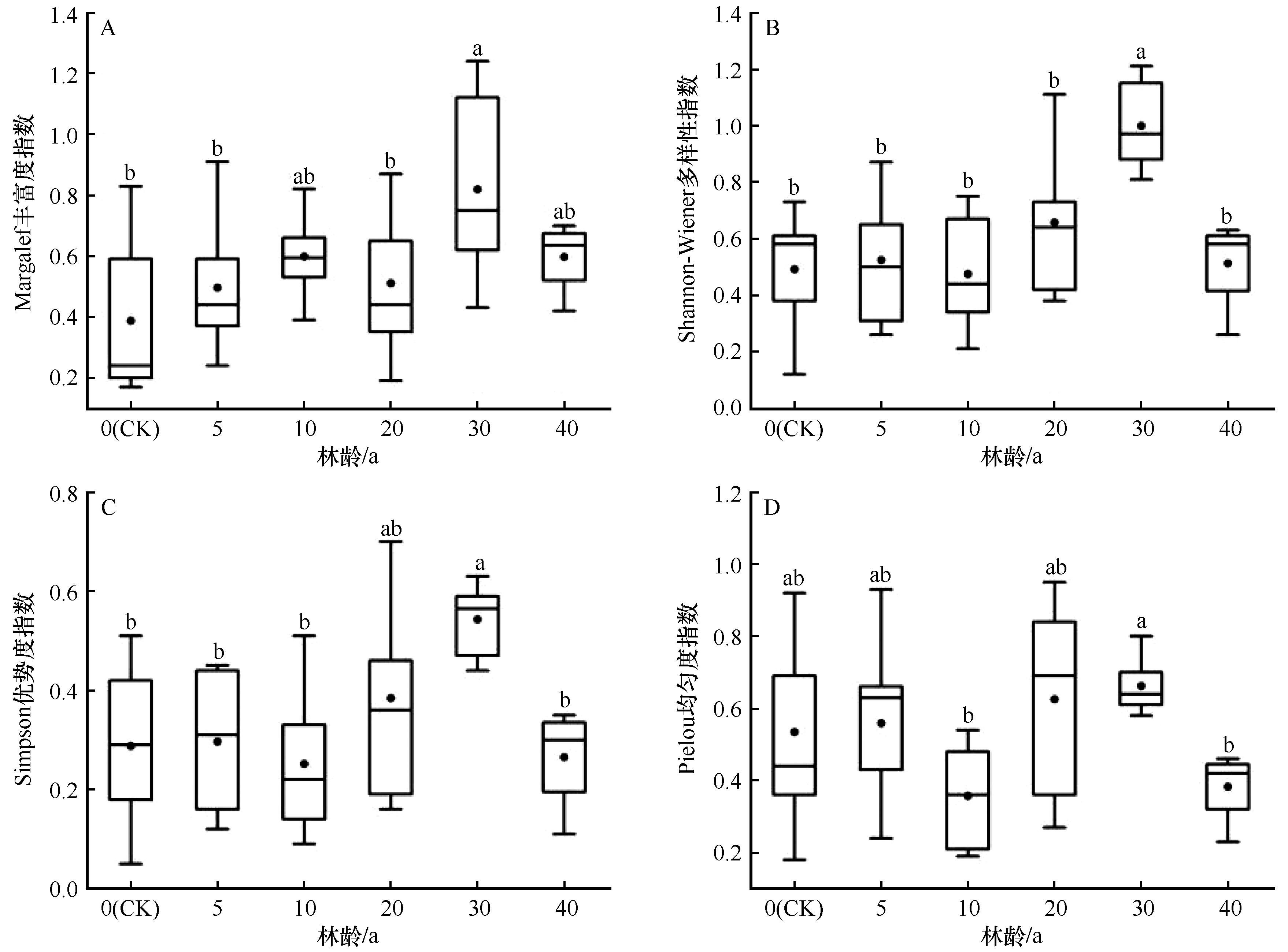
图5 不同林龄梭梭林下草本植物多样性指数注:不同小写字母表示不同林龄土壤理化性质在P<0.05水平差异显著
Fig.5 Understory herbaceous plant diversity in Haloxylon ammodendron woodland of different ages
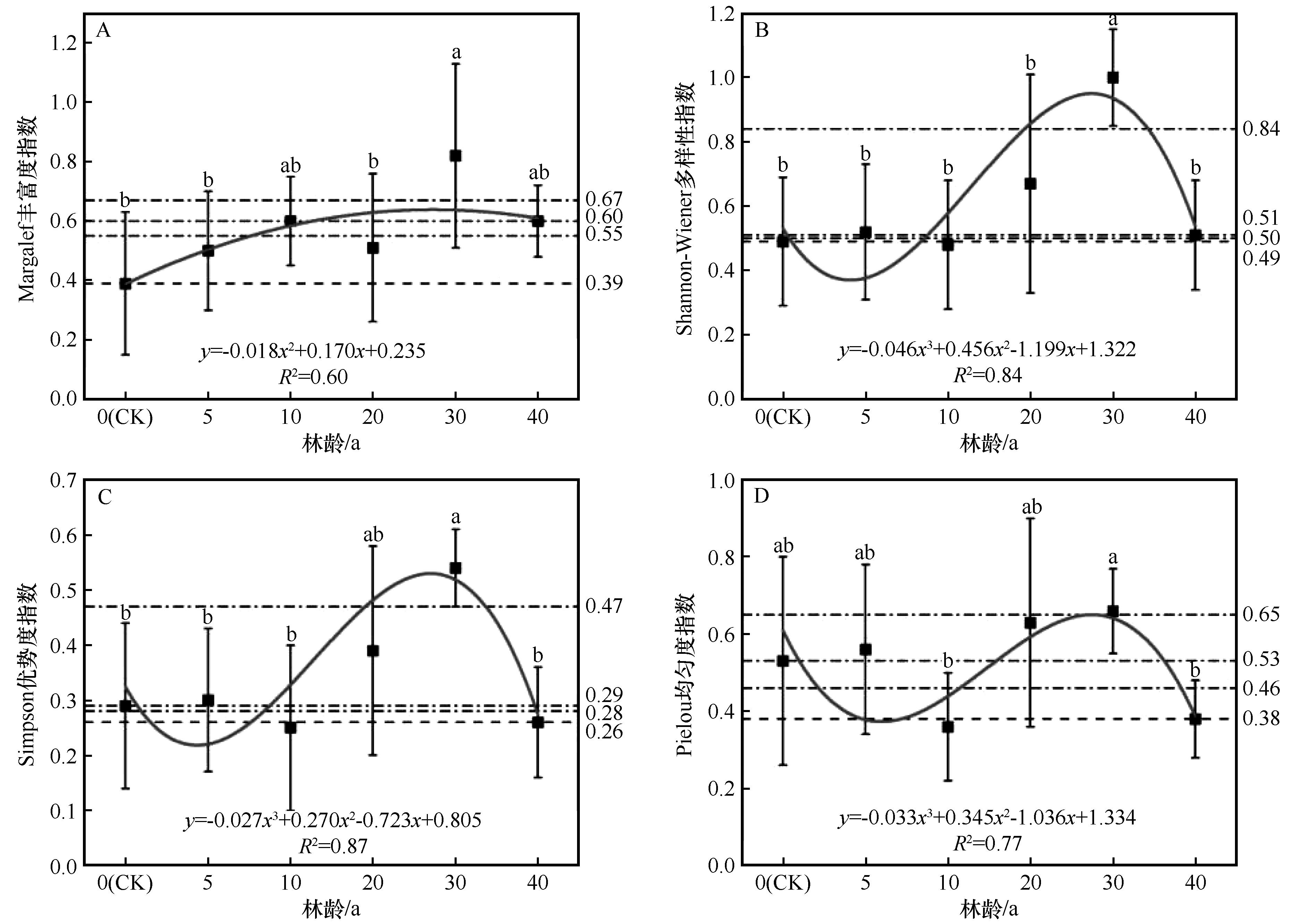
图6 不同林龄梭梭林下草本植物多样性指数变化趋势注:不同小写字母表示不同林龄土壤理化性质在P<0.05水平差异显著
Fig.6 Changes in herbaceous plant diversity index under Haloxylon ammodendron woodland with different ages
| 密度 | 地上生物量 | 地下生物量 | 总生物量 | |
|---|---|---|---|---|
| 密度 | 1 | |||
| 地上生物量 | 0.517** | 1 | ||
| 地下生物量 | 0.641** | 0.908** | 1 | |
| 总生物量 | 0.538** | 0.999** | 0.929** | 1 |
表3 人工梭梭林下3种优势一年生草本植物生物指标之间的相关性分析
Table 3 Correlation analysis of biological traits among three dominant annual herb species under artificial Haloxylon ammodendron forests
| 密度 | 地上生物量 | 地下生物量 | 总生物量 | |
|---|---|---|---|---|
| 密度 | 1 | |||
| 地上生物量 | 0.517** | 1 | ||
| 地下生物量 | 0.641** | 0.908** | 1 | |
| 总生物量 | 0.538** | 0.999** | 0.929** | 1 |
| 物种 | 土壤理化指标(x) | 拟合曲线方程 | R2 | P |
|---|---|---|---|---|
| 沙蓬 | 电导率 | y=-0.002x2+0.336x-13.049 | 0.589 | 0.045 |
| 含水量 | y=-23.924x2+39.424x-14.142 | 0.637 | 0.029 | |
| pH | y=1.07x-6.994 | 0.018 | 0.715 | |
| 无机碳 | y=-1.257x2+10.198x-19.011 | 0.332 | 0.244 | |
| 有机碳 | y=-0.131x2+1.188x-1.293 | 0.175 | 0.510 | |
| 全氮 | y=10.91x2-10.637x+3.424 | 0.358 | 0.212 | |
| 全磷 | y=598.543x2-314.178x+41.986 | 0.149 | 0.568 | |
| 全钾 | y=0.192x2-6.799x+61.127 | 0.033 | 0.889 | |
| 水解性氮 | y=0.001x2+0.020x-0.083 | 0.317 | 0.264 | |
| 有效磷 | y=0.008x2-0.238x+2.310 | 0.204 | 0.451 | |
| 速效钾 | y=0.003x2-0.520x+25.418 | 0.270 | 0.332 | |
| Cl- | y=-0.002x2+0.556x-39.621 | 0.200 | 0.458 | |
| HCO | y=-0.065x+5.815 | 0.098 | 0.698 | |
| Na+ | y=0.00005667x2-0.009x+1.383 | 0.005 | 0.982 | |
| Ca2+ | y=-0.042x2+0.521x-0.444 | 0.001 | 0.996 | |
| 雾冰藜 | 电导率 | y=-0.001x2+0.174x-6.967 | 0.622 | 0.033 |
| 含水量 | y=-3.101x2+5.13x-1.002 | 0.613 | 0.036 | |
| pH | y=0.598x-3.832 | 0.008 | 0.817 | |
| 无机碳 | y=0.987x2-8.813x+20.069 | 0.736 | 0.018 | |
| 有机碳 | y=0.963x2-5.892x+9.399 | 0.768 | 0.012 | |
| 全氮 | y=-5.467x2+3.755x+0.264 | 0.170 | 0.571 | |
| 全磷 | y=-33.807x2+29.221x-4.956 | 0.302 | 0.341 | |
| 全钾 | y=0.061x2-2.432x+24.419 | 0.716 | 0.023 | |
| 水解性氮 | y=0.001x2+0.009x+0.408 | 0.218 | 0.478 | |
| 有效磷 | y=-0.011x2+0.238x-0.185 | 0.331 | 0.300 | |
| 速效钾 | y=0.092x-4.532 | 0.241 | 0.437 | |
| Cl- | y=0.036x-0.699 | 0.265 | 0.397 | |
| HCO | y=-0.036x+2.57 | 0.286 | 0.363 | |
| Na+ | y=-0.038x+2.434 | 0.508 | 0.119 | |
| Ca2+ | y=-0.026x2+0.166x+0.638 | 0.198 | 0.516 | |
| 白茎盐生草 | 电导率 | y=-0.001x2+0.160x-8.201 | 0.680 | 0.019 |
| 含水量 | y=-9.129x2+15.328x-5.229 | 0.584 | 0.046 | |
| pH | y=-3.281x+25.425 | 0.225 | 0.197 | |
| 无机碳 | y=1.543x2-13.975x+32.159 | 0.506 | 0.121 | |
| 有机碳 | y=-0.133x2+0.943x-0.789 | 0.041 | 0.882 | |
| 全氮 | y=-6.963x2+5.108x-0.053 | 0.028 | 0.919 | |
| 全磷 | y=303.944x2-177.117x+26.423 | 0.100 | 0.729 | |
| 全钾 | y=-0.244x2+8.774x-78.036 | 0.232 | 0.453 | |
| 水解性氮 | y=0.003x2-0.125x+1.916 | 0.029 | 0.915 | |
| 有效磷 | y=0.007x2-0.164x+1.14 | 0.404 | 0.212 | |
| 速效钾 | y=0.027x-0.352 | 0.127 | 0.665 | |
| Cl- | y=-0.00004078x2-0.01x+3.366 | 0.229 | 0.458 | |
| HCO | y=-0.084x+4.098 | 0.429 | 0.186 | |
| Na+ | y=-0.00008733x2+0.023x-0.405 | 0.196 | 0.519 | |
| Ca2+ | y=0.029x2-0.723x+4.911 | 0.140 | 0.637 |
表4 人工梭梭林下3种优势一年生草本植物生物量与土壤理化指标之间的相关关系
Table 4 Correlations between biomass and soil physicochemical properties in the three dominant annual herbs
| 物种 | 土壤理化指标(x) | 拟合曲线方程 | R2 | P |
|---|---|---|---|---|
| 沙蓬 | 电导率 | y=-0.002x2+0.336x-13.049 | 0.589 | 0.045 |
| 含水量 | y=-23.924x2+39.424x-14.142 | 0.637 | 0.029 | |
| pH | y=1.07x-6.994 | 0.018 | 0.715 | |
| 无机碳 | y=-1.257x2+10.198x-19.011 | 0.332 | 0.244 | |
| 有机碳 | y=-0.131x2+1.188x-1.293 | 0.175 | 0.510 | |
| 全氮 | y=10.91x2-10.637x+3.424 | 0.358 | 0.212 | |
| 全磷 | y=598.543x2-314.178x+41.986 | 0.149 | 0.568 | |
| 全钾 | y=0.192x2-6.799x+61.127 | 0.033 | 0.889 | |
| 水解性氮 | y=0.001x2+0.020x-0.083 | 0.317 | 0.264 | |
| 有效磷 | y=0.008x2-0.238x+2.310 | 0.204 | 0.451 | |
| 速效钾 | y=0.003x2-0.520x+25.418 | 0.270 | 0.332 | |
| Cl- | y=-0.002x2+0.556x-39.621 | 0.200 | 0.458 | |
| HCO | y=-0.065x+5.815 | 0.098 | 0.698 | |
| Na+ | y=0.00005667x2-0.009x+1.383 | 0.005 | 0.982 | |
| Ca2+ | y=-0.042x2+0.521x-0.444 | 0.001 | 0.996 | |
| 雾冰藜 | 电导率 | y=-0.001x2+0.174x-6.967 | 0.622 | 0.033 |
| 含水量 | y=-3.101x2+5.13x-1.002 | 0.613 | 0.036 | |
| pH | y=0.598x-3.832 | 0.008 | 0.817 | |
| 无机碳 | y=0.987x2-8.813x+20.069 | 0.736 | 0.018 | |
| 有机碳 | y=0.963x2-5.892x+9.399 | 0.768 | 0.012 | |
| 全氮 | y=-5.467x2+3.755x+0.264 | 0.170 | 0.571 | |
| 全磷 | y=-33.807x2+29.221x-4.956 | 0.302 | 0.341 | |
| 全钾 | y=0.061x2-2.432x+24.419 | 0.716 | 0.023 | |
| 水解性氮 | y=0.001x2+0.009x+0.408 | 0.218 | 0.478 | |
| 有效磷 | y=-0.011x2+0.238x-0.185 | 0.331 | 0.300 | |
| 速效钾 | y=0.092x-4.532 | 0.241 | 0.437 | |
| Cl- | y=0.036x-0.699 | 0.265 | 0.397 | |
| HCO | y=-0.036x+2.57 | 0.286 | 0.363 | |
| Na+ | y=-0.038x+2.434 | 0.508 | 0.119 | |
| Ca2+ | y=-0.026x2+0.166x+0.638 | 0.198 | 0.516 | |
| 白茎盐生草 | 电导率 | y=-0.001x2+0.160x-8.201 | 0.680 | 0.019 |
| 含水量 | y=-9.129x2+15.328x-5.229 | 0.584 | 0.046 | |
| pH | y=-3.281x+25.425 | 0.225 | 0.197 | |
| 无机碳 | y=1.543x2-13.975x+32.159 | 0.506 | 0.121 | |
| 有机碳 | y=-0.133x2+0.943x-0.789 | 0.041 | 0.882 | |
| 全氮 | y=-6.963x2+5.108x-0.053 | 0.028 | 0.919 | |
| 全磷 | y=303.944x2-177.117x+26.423 | 0.100 | 0.729 | |
| 全钾 | y=-0.244x2+8.774x-78.036 | 0.232 | 0.453 | |
| 水解性氮 | y=0.003x2-0.125x+1.916 | 0.029 | 0.915 | |
| 有效磷 | y=0.007x2-0.164x+1.14 | 0.404 | 0.212 | |
| 速效钾 | y=0.027x-0.352 | 0.127 | 0.665 | |
| Cl- | y=-0.00004078x2-0.01x+3.366 | 0.229 | 0.458 | |
| HCO | y=-0.084x+4.098 | 0.429 | 0.186 | |
| Na+ | y=-0.00008733x2+0.023x-0.405 | 0.196 | 0.519 | |
| Ca2+ | y=0.029x2-0.723x+4.911 | 0.140 | 0.637 |
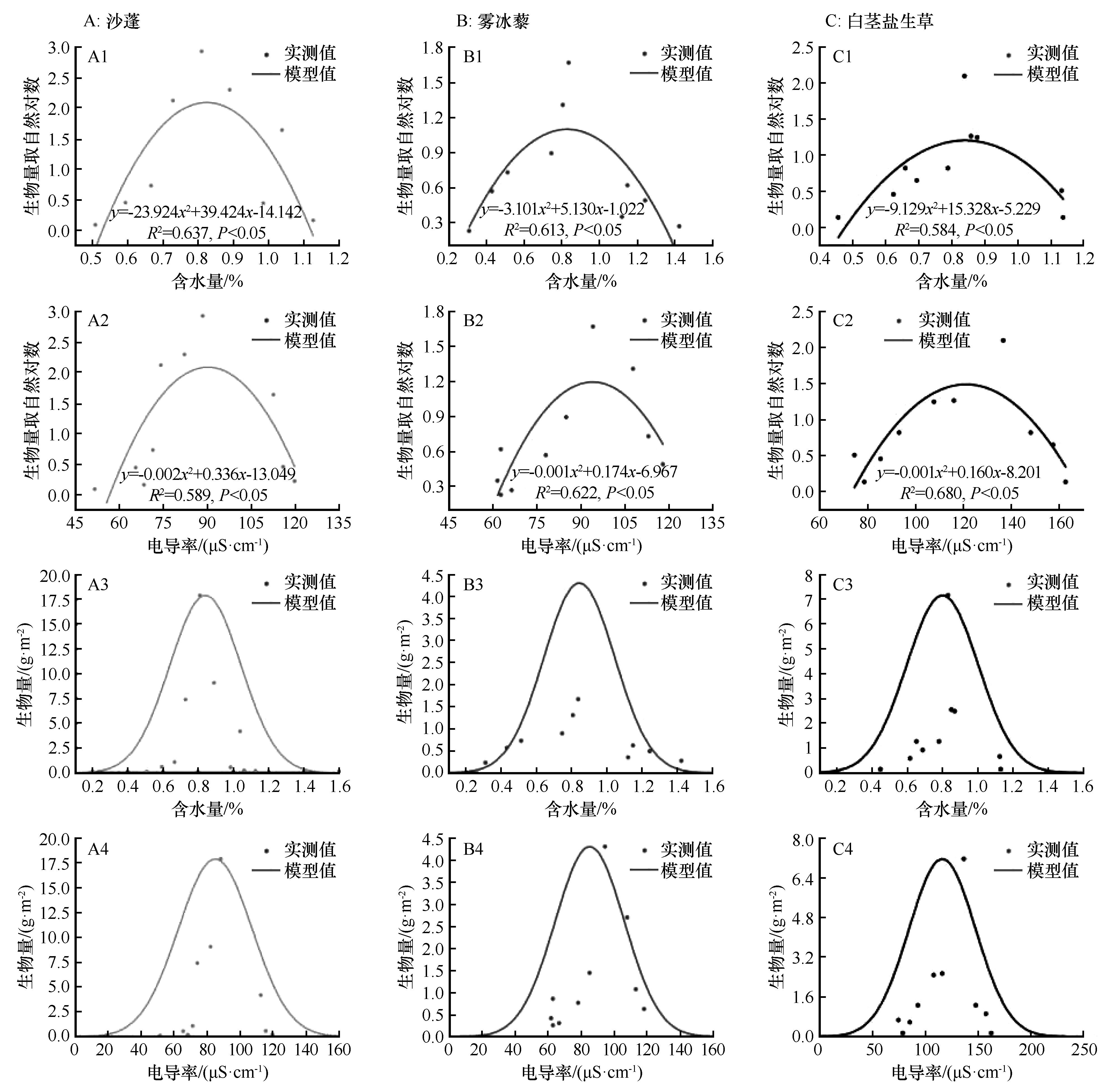
图7 3种优势一年生草本植物水盐响应及模型拟合结果
Fig.7 Water-salt response and model fitting results for three dominant annual herbaceous plants
| 物种 | 拟合结果 | |
|---|---|---|
| 土壤含水量 | 土壤电导率 | |
| 沙蓬 | ||
| 雾冰藜 | ||
| 白茎盐生草 | ||
表5 3种优势一年生草本植物的土壤水盐生态阈值高斯回归方程
Table 5 Soil water and salt ecological thresholds of three dominant annual herbaceous plants Gaussian regression equation
| 物种 | 拟合结果 | |
|---|---|---|
| 土壤含水量 | 土壤电导率 | |
| 沙蓬 | ||
| 雾冰藜 | ||
| 白茎盐生草 | ||
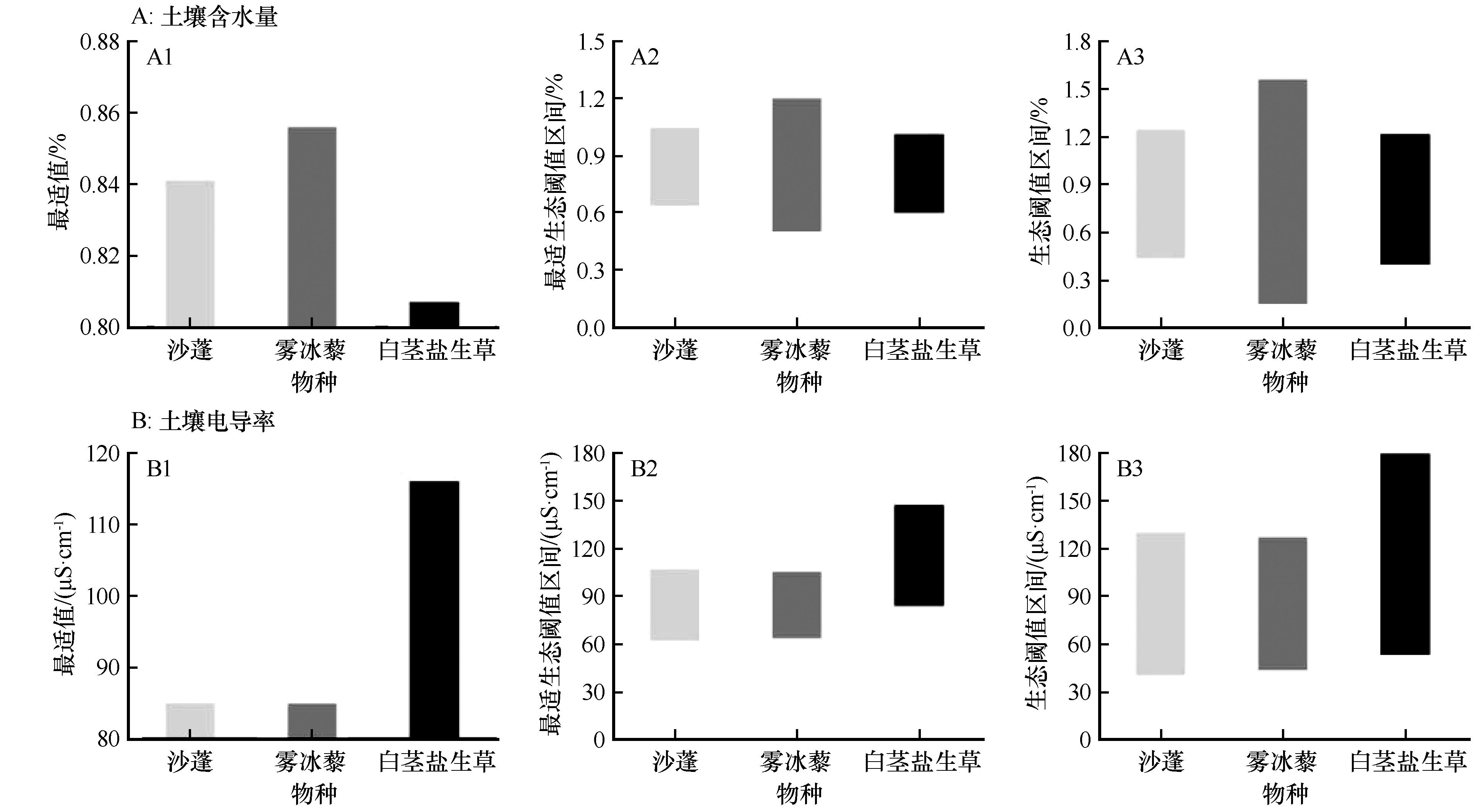
图8 3种优势一年生草本植物水盐生态阈值
Fig.8 Water-salt ecological thresholds of three dominant annual herbaceous plants
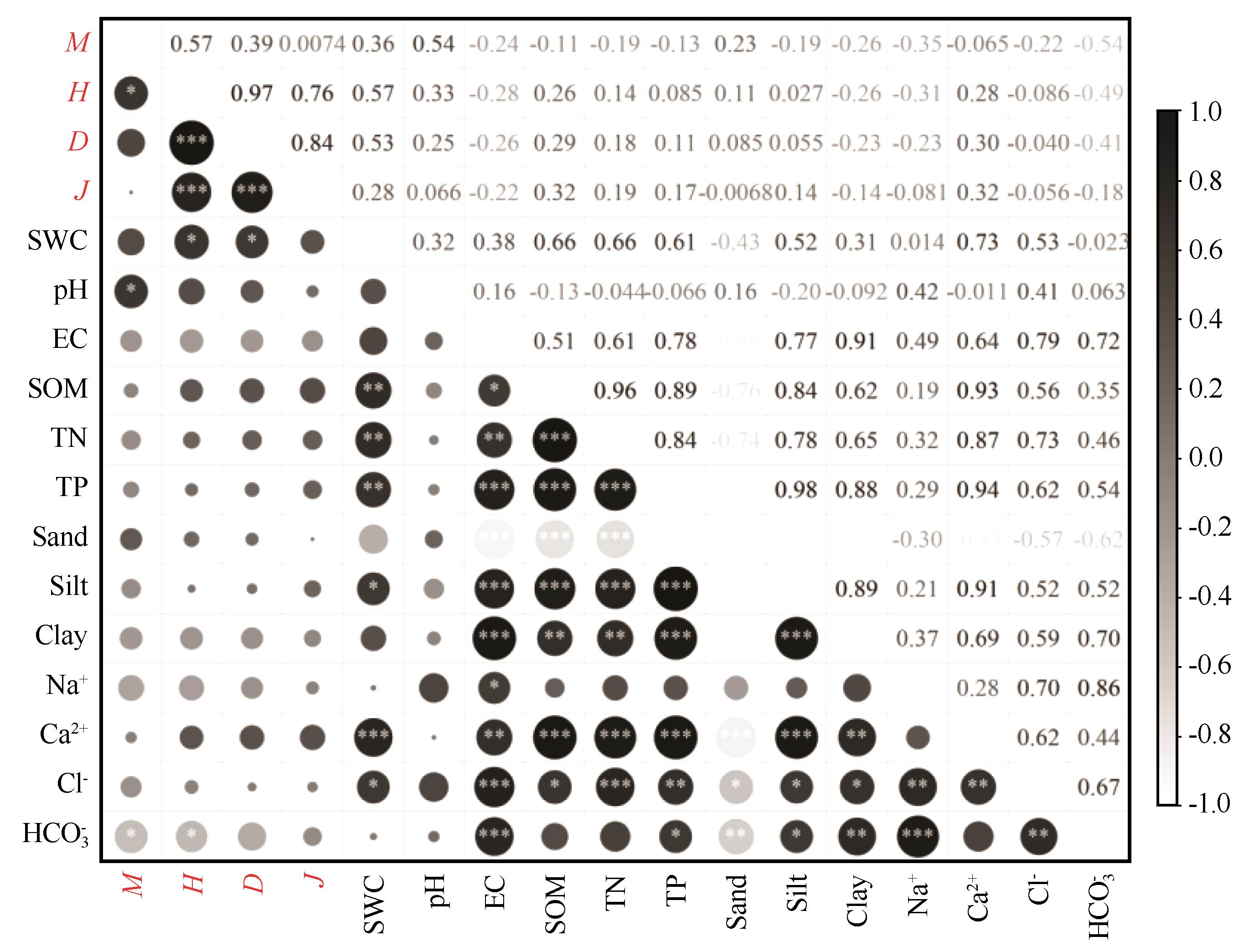
图9 林下草本植物多样性指数与土壤环境因子相关性分析注:M:Margalef丰富度指数;H:Shannon-Wiener多样性指数;D:Simpson优势度指数;J:Pielou均匀度指数。*** P<0.001;** P<0.01;*P<0.05
Fig.9 Correlation analysis between diversity indices of understory herbaceous plants and soil environmental factors
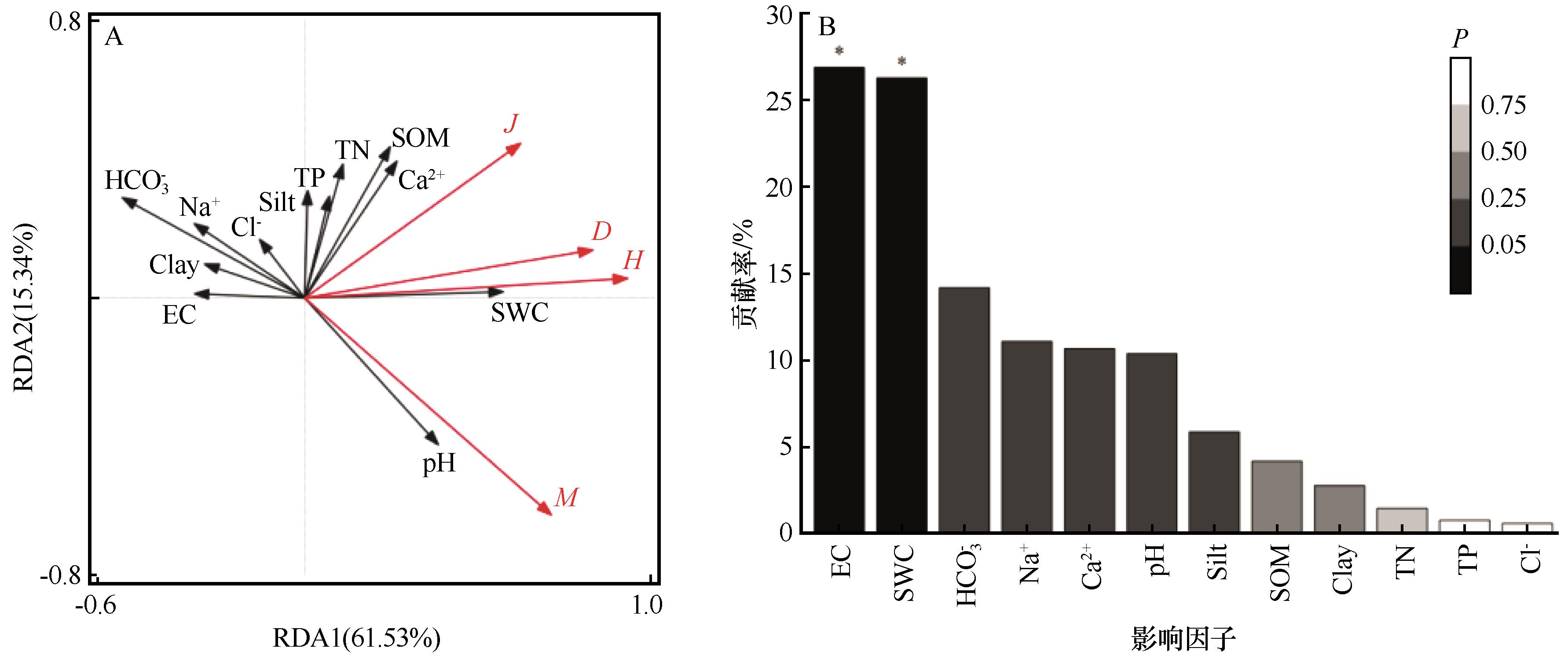
图10 林下草本物种多样性与土壤环境因子冗余分析RDA排序
Fig.10 RDA ordination plot of species diversity in understory vegetation and soil environmental factors
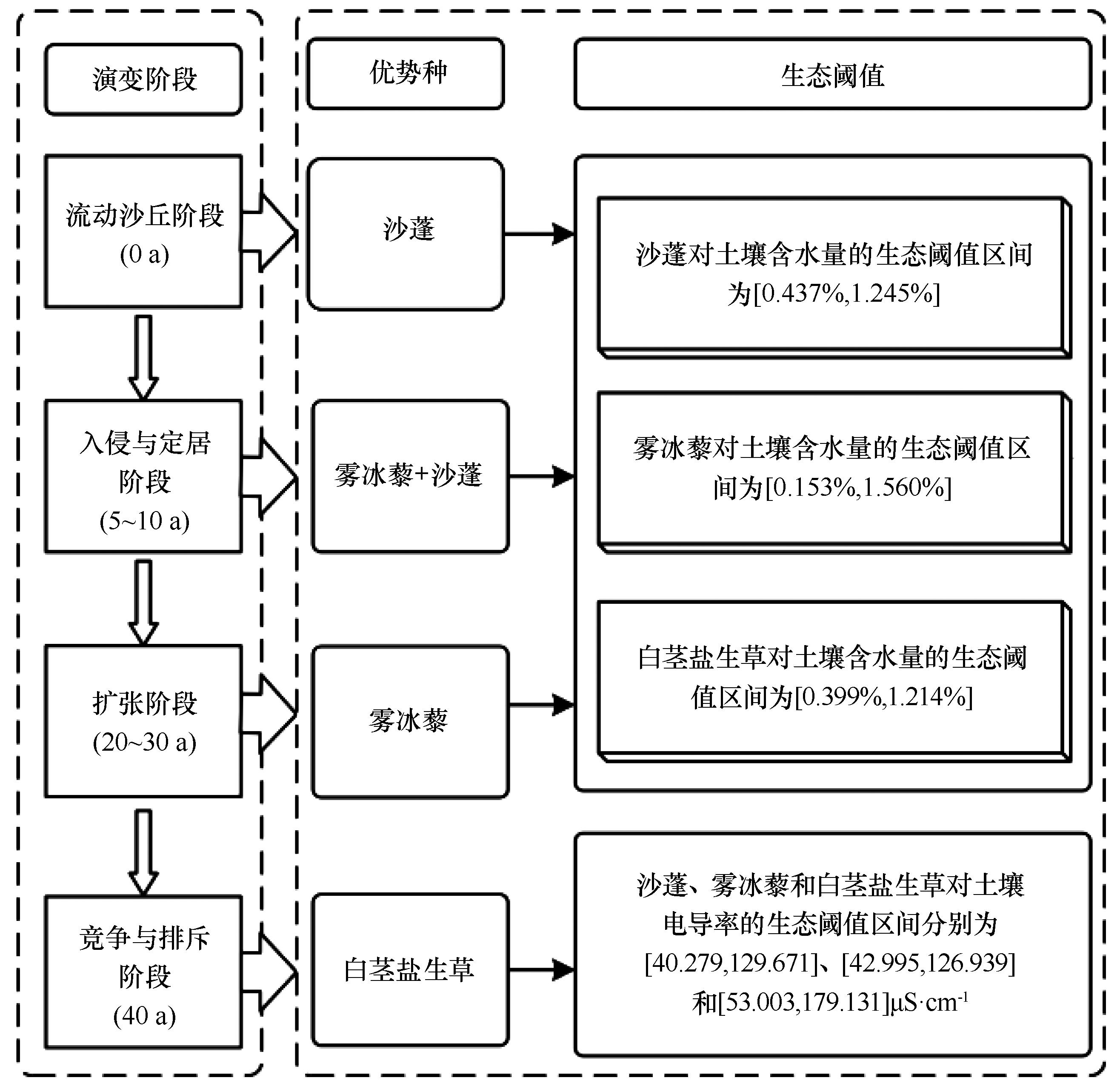
图11 不同演变阶段优势种概念图
Fig.11 Conceptual diagram of dominant species in different evolutionary stages
| [1] | 王蕙,赵文智,常学向.黑河中游荒漠绿洲过渡带土壤水分与植被空间变异[J].生态学报,2007(5):1731-1739. |
| [2] | 贾宝全,闫顺.绿洲-荒漠生态系统交错带环境演变过程初步研究:以新疆吐鲁番盆地为例[J].干旱区资源与环境,1995(3):58-64. |
| [3] | 李新荣,肖洪浪,刘立超,等.腾格里沙漠沙坡头地区固沙植被对生物多样性恢复的长期影响[J].中国沙漠,2005,25(2):31-39. |
| [4] | Zhai J J, Wang L, Liu Y,et al.Assessing the effects of China's three-north shelter forest program over 40 years[J].Science of the Total Environment,2023,857:159354. |
| [5] | Li C, Fu B, Wang S,et al.Drivers and impacts of changes in China's drylands[J].Nature Reviews Earth & Environment,2021,2(12):858-873. |
| [6] | 余锦亚南,张杰铭,宁晓梅,等.晋西北黄土区典型人工林草本多样性与土壤理化性质[J].水土保持学报,2025,39(4):158-167. |
| [7] | 孙帆,王弋,陈亚宁.塔里木盆地荒漠-绿洲过渡带动态变化及其影响因素[J].生态学杂志,2020,39(10):3397-3407. |
| [8] | Chudomelová M, Zelený D, Li C F.Contrasting patterns of fine-scale herb layer species composition in temperate forests[J].Acta Oecologica,2017,80:24-31. |
| [9] | 席璐璐,缑倩倩,王国华,等.荒漠绿洲过渡带一年生草本植物对干旱胁迫的响应[J].生态学报,2021,41(13):5425-5434. |
| [10] | Manning P, Fons V D P, Soliveres S,et al.Redefining ecosystem multifunctionality[J].Nature Ecology & Evolution,2018,2(9):427-436. |
| [11] | 张景光,周海燕,王新平,等.沙坡头地区一年生植物的生理生态特性研究[J].中国沙漠,2002,22(4):350-353. |
| [12] | 曾露婧,王国华.干旱及复水对荒漠绿洲过渡带一年生草本植物生长及生理特性的影响[J].草业学报,2024,33(5):41-57. |
| [13] | 胡尔查,王晓江,王铮,等.毛乌素沙地杨树人工林林下植物群落特征[J].林业科学研究,2023,36(5):189-197. |
| [14] | 杨曦娅,薛娴,赵丹,等.民勤湖区荒漠绿洲过渡带盐生植物群落空间分布及指示意义[J].生态学报,2025,45(15):7500-7512. |
| [15] | 何明珠.阿拉善高原荒漠植被组成分布特征及其环境解释:Ⅴ.一年生植物层片物种多样性及其分布特征[J].中国沙漠,2010,30(3):528-533. |
| [16] | 滕玉风,陈斌,马剑,等.甘肃省张掖市荒漠-绿洲过渡带植被群落物种多样性及土壤水分变化特征[J].水土保持通报,2024,44(4):45-54. |
| [17] | Sun J, Wang N, Niu Z.Effect of soil environment on species diversity of desert plant communities[J].Plants,2023,12(19):3465. |
| [18] | 解婷婷,苏培玺,周紫鹃,等.荒漠绿洲过渡带不同立地条件下物种多样性及其与土壤理化因子的关系[J].中国沙漠,2013,33(2):508-514. |
| [19] | 张景光,李新荣,王新平,等.沙坡头地区固定沙丘一年生植物小画眉草种群动态研究[J].中国沙漠,2001,21(3):18-21. |
| [20] | 苏永中,赵哈林,张铜会,等.科尔沁沙地不同年代小叶锦鸡儿人工林植物群落特征及其土壤特性[J].植物生态学报,2004(1):93-100. |
| [21] | 何文强,王瑞霞,田英,等.毛乌素沙地南缘柠条固沙林演替过程中林下草本植物多样性与群落稳定性动态变化及其驱动因素[J].生态学报,2025,45(22):1-13. |
| [22] | 赵鹏,徐先英,屈建军,等.民勤绿洲荒漠过渡带人工梭梭群落与水土因子的关系[J].生态学报,2017,37(5):1496-1505. |
| [23] | 苏永中,刘婷娜.流动沙地建植人工固沙梭梭林的土壤演变过程[J].土壤学报,2020,57(1):84-91. |
| [24] | 王子婷,刘继亮,罗永忠,等.荒漠绿洲过渡带梭梭(Haloxylon ammodendron)林建植对表层土壤碳氮磷化学计量特征及储量的长期影响[J].中国沙漠,2025,45(5):241-252. |
| [25] | 安芳娇,牛子儒,刘婷娜,等.西北荒漠绿洲过渡带土壤细菌结构和氮代谢对梭梭恢复的响应[J].生态学报,2023,43(20):8454-8464. |
| [26] | An F, Niu Z, Liu T,et al.Succession of soil bacterial community along a 46-year choronsequence artificial revegetation in an arid oasis-desert ecotone[J].Science of the Total Environment,2022,814:152496. |
| [27] | 王佳琪,王国华,缑倩倩.荒漠绿洲过渡带人工梭梭(Haloxylon ammodendron)林下典型一年生草本植物空间格局[J].中国沙漠,2025,45(2):83-96. |
| [28] | Su Y Z, Zhao W Z, Su P X,et al. Ecological effects of desertification control and desertified land reclamation in an oasis-desert ecotone in an arid region:a case study in Hexi Corridor,Northwest China[J].Ecological Engineering,2007,29(2):117-124. |
| [29] | 马克平,刘灿然,刘玉明.生物群落多样性的测度方法Ⅱ:β多样性的测度方法[J].生物多样性,1995(1):38-43. |
| [30] | 崔保山,贺强,赵欣胜.水盐环境梯度下翅碱蓬(Suaeda salsa)的生态阈值[J].生态学报,2008,28(4):1408-1418. |
| [31] | 张继义,赵哈林,崔建垣,等.科尔沁沙地流动沙丘沙米群落生物量特征及其防风固沙作用[J].水土保持学报,2003(3):152-154. |
| [32] | 贺慧,燕玲,郑彬.5种荒漠植物种子萌发特性及其吸水特性的研究[J].干旱区资源与环境,2008(1):184-188. |
| [33] | 董蕾,李吉跃.植物干旱胁迫下水分代谢、碳饥饿与死亡机理[J].生态学报,2013,33(18):5477-5483. |
| [34] | 李小雁.干旱地区土壤-植被-水文耦合、响应与适应机制[J].中国科学:地球科学,2011,41(12):1721-1730. |
| [35] | 郗金标,张福锁,陈阳,等.盐生植物根冠区土壤盐分变化的初步研究[J].应用生态学报,2004(1):53-58. |
| [36] | Zhou H, Zhao W, Yang Q.Root biomass distribution of planted Haloxylon ammodendron in a duplex soil in an oasis:desert boundary area[J].Ecological Research,2016,31(5):673-681. |
| [37] | 吕朋,左小安,张婧,等.放牧强度对科尔沁沙地沙质草地植被的影响[J].中国沙漠,2016,36(1):34-39. |
| [38] | 梁存柱,刘钟玲,朱宗元,等.阿拉善荒漠区一年生植物层片物种多样性及其分布特征[J].应用生态学报,2003,14(6):897-903. |
| [39] | Zhang G F, Zhao L W, Yang Q Y,et al.Effects of desert shrubs on fine-scale spatial patterns of understory vegetation in dry-land[J].Plant Ecology,2016,217:1141-1155. |
| [40] | 李彦,张英鹏,孙明,等.盐分胁迫对植物的影响及植物耐盐机理研究进展[J].中国农学通报,2008(1):258-265. |
| [1] | 刘新平, 胡鸿姣, 何玉惠, 徐远志, 景家琪, 张尧. 科尔沁沙质草地关键植物种群动态对降水变化的响应[J]. 中国沙漠, 2025, 45(4): 43-56. |
| [2] | 王乐, 陆文家, 南益聪, 牛富荣, 鱼小军, 白冰心, 石亚飞. 固沙年限对沙坡头荒漠土壤种子库及其与地上植被关系的影响[J]. 中国沙漠, 2025, 45(3): 253-261. |
| [3] | 陈冠光, 苗杨慧子, 李强, 周永芳, 王海. 甘肃敦煌西湖荒漠-湿地草本植物多样性与地下水埋深的关系[J]. 中国沙漠, 2025, 45(3): 357-368. |
| [4] | 郝芳唯, 宋兆斌, 李香云, 岳平, 张晓雪, 王怀海, 赵杏花, 左小安. 5年降水限制后荒漠草原植物多样性和生产力恢复特征[J]. 中国沙漠, 2025, 45(1): 112-120. |
| [5] | 陶海璇, 郭春秀, 马俊梅, 王忠文, 赵赫然, 宋达成, 何芳兰. 干旱沙区土壤结皮发育对草本植物土壤种子库的影响[J]. 中国沙漠, 2023, 43(4): 89-97. |
| [6] | 韩高玲, 霍建强, 赵燕翘, 虎瑞, 张志山, 黄日辉, 薛书文. 鄂尔多斯高原砒砂岩地区草本物种组成及多样性[J]. 中国沙漠, 2023, 43(3): 243-251. |
| [7] | 王生棠, 盖迎春, 王少昆, 张晓龙, 杨映. 黑河流域植物物种多样性对土地利用变化的响应[J]. 中国沙漠, 2022, 42(6): 221-232. |
| [8] | 许文文, 赵燕翘, 王楠, 赵洋. 人工生物土壤结皮对草本植物群落组成与多样性的影响[J]. 中国沙漠, 2022, 42(5): 204-211. |
| [9] | 宋兆斌, 辛智鸣, 朱雅娟. 内蒙古荒漠-草原过渡带灌木群落特征[J]. 中国沙漠, 2022, 42(2): 104-112. |
| [10] | 赵啸龙, 谢玉鸿, 马旭君, 王少昆. 科尔沁沙质草地不同恢复年限草本层群落结构及其与土壤理化性质的关系[J]. 中国沙漠, 2022, 42(2): 134-141. |
| [11] | 常学向, 陈怀顺, 李志刚, 张红萍. 西藏雅鲁藏布江流域典型沙漠区生态修复植物群落物种多样性[J]. 中国沙漠, 2021, 41(6): 187-194. |
| [12] | 苏郎嘎, 田桂泉, 红霞. 浑善达克沙地苔藓物种多样性[J]. 中国沙漠, 2020, 40(3): 51-59. |
| [13] | 张蕊, 赵学勇, 左小安, 刘新平, 曲浩, 马旭君, 刘良旭, 陈娟丽, 刘立平. 荒漠草原沙生针茅(Stipa glareosa)群落物种多样性和地上生物量对降雨量的响应[J]. 中国沙漠, 2019, 39(2): 45-52. |
| [14] | 马俊梅, 满多清, 李得禄, 刘有军, 郭春秀. 干旱荒漠区退耕地植被演替及土壤水分变化[J]. 中国沙漠, 2018, 38(4): 800-807. |
| [15] | 何芳兰, 金红喜, 郭春秀, 马俊梅, 吴昊. 民勤绿洲边缘人工梭梭(Haloxylon ammodendron)林衰败过程中植被组成动态及群落相似性[J]. 中国沙漠, 2017, 37(6): 1135-1141. |
| 阅读次数 | ||||||
|
全文 |
|
|||||
|
摘要 |
|
|||||
©2018中国沙漠 编辑部
地址: 兰州市天水中路8号 (730000)
电话:0931-8267545
Email:caiedit@lzb.ac.cn;desert@lzb.ac.cn


 甘公网安备 62010202000688号