
- CN 62-1070/P
- ISSN 1000-694X
- Bimonthly 1981
Journal of Desert Research ›› 2025, Vol. 45 ›› Issue (2): 225-235.DOI: 10.7522/j.issn.1000-694X.2025.00005
Zhuanling Yang1( ), Guangqiang Qian2, Xuegang Xing1(), Zhibao Dong3, Youyuan Guo2
Received:2024-12-16
Revised:2025-01-08
Online:2025-03-20
Published:2025-03-26
Contact:
Xuegang Xing
CLC Number:
Zhuanling Yang, Guangqiang Qian, Xuegang Xing, Zhibao Dong, Youyuan Guo. Morphology and surface flow patterns of granule ripples in the Sanlongsha dune field of the northern Kumtagh Sand Sea[J]. Journal of Desert Research, 2025, 45(2): 225-235.
Add to citation manager EndNote|Ris|BibTeX
URL: http://www.desert.ac.cn/EN/10.7522/j.issn.1000-694X.2025.00005
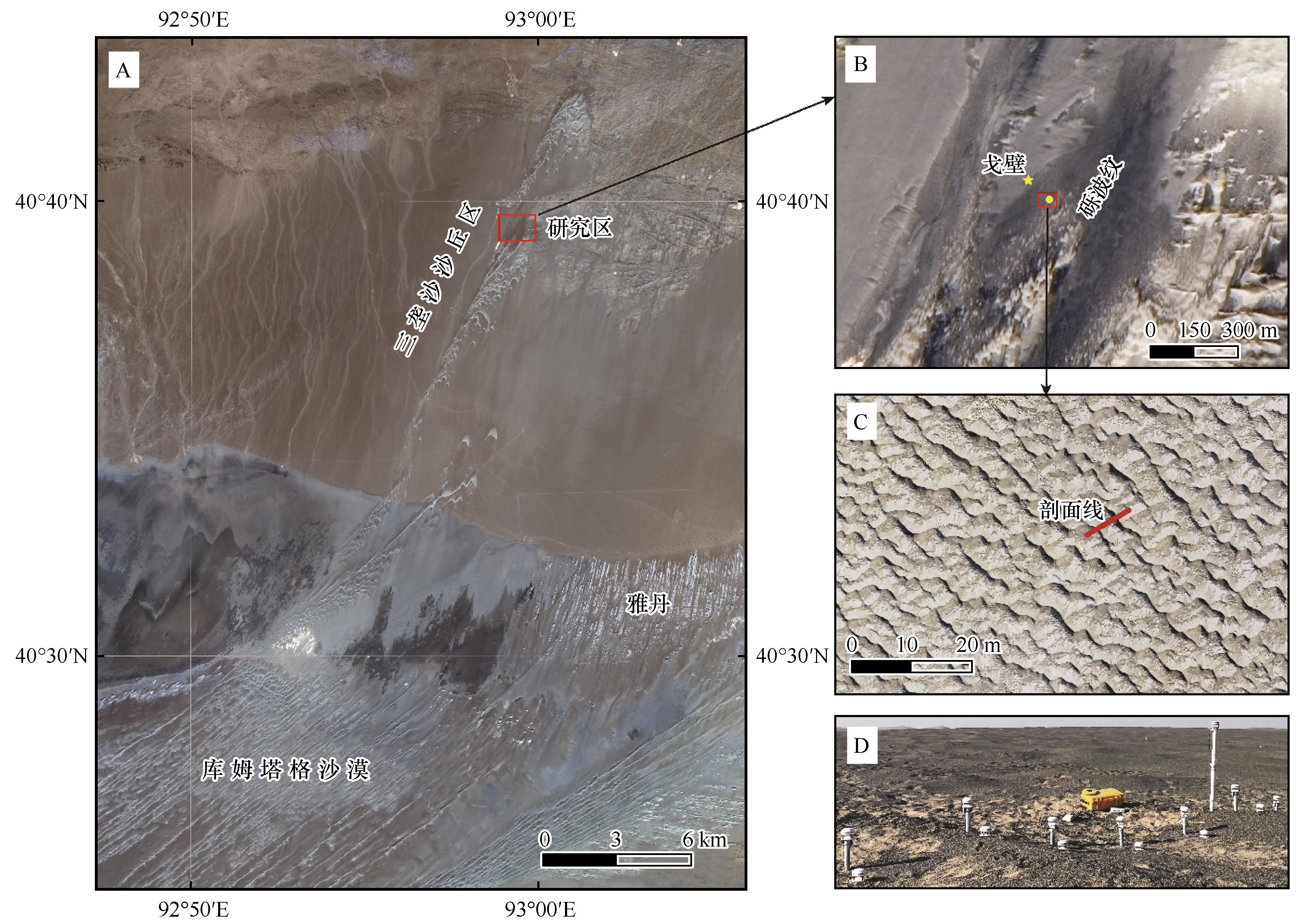
Fig.1 Location of the study area. A. The Sentinel-2 Satellite image. B. The Gaofen-1 (GF-1) satellite image. Star and circle indicate experiment location of gobi and granule ripples. C. The aerial photograph of granule ripples by unmanned aerial vehicle (UAV). The line indicates the profile line of experiment area. D. Photos of Anemometer placement
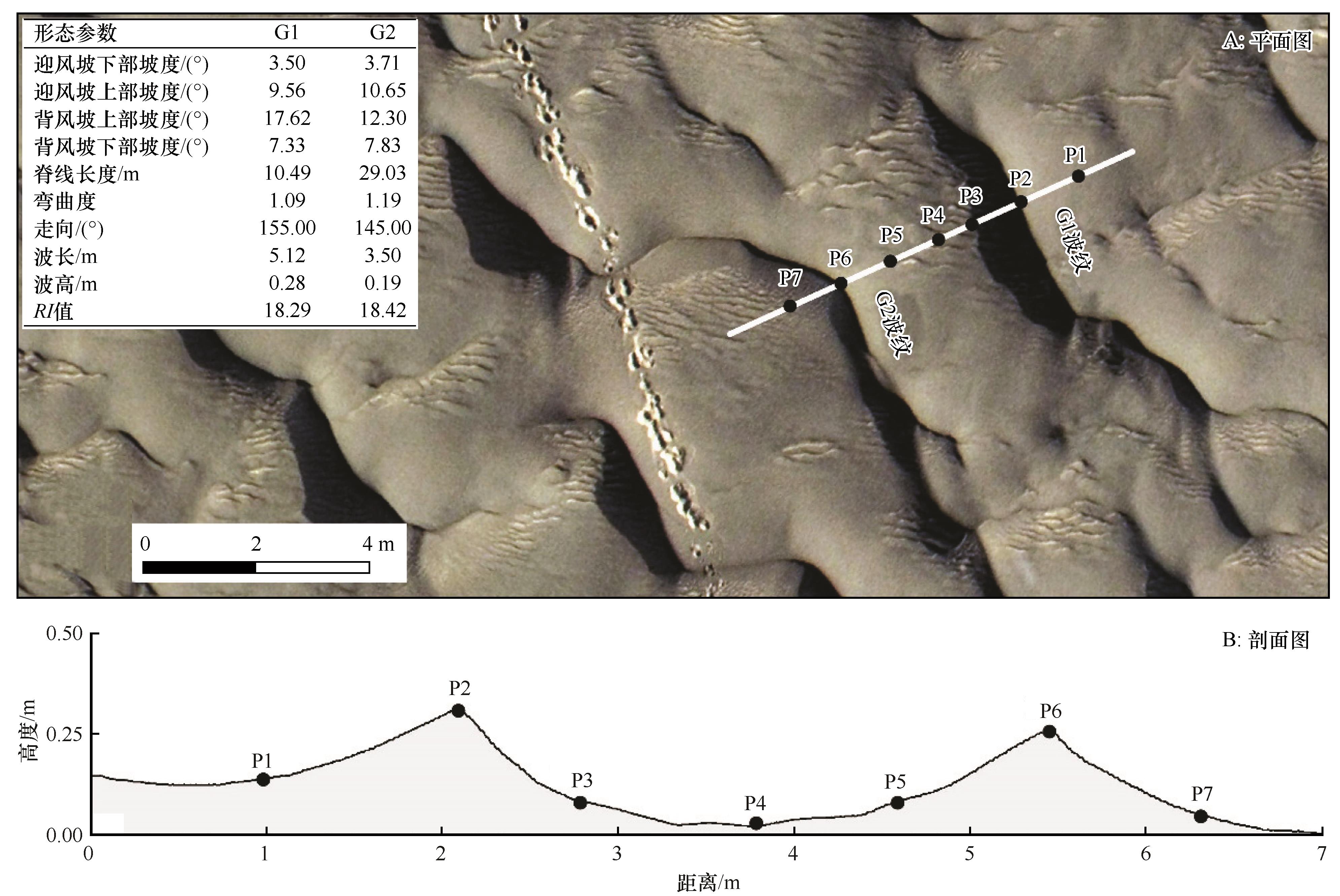
Fig.2 Granule ripples anemometer positions
| 形态参数 | 样本量 | 平均值 | 标准差 | 最小值 | 中位数 | 最大值 |
|---|---|---|---|---|---|---|
| 迎风坡下部坡度/(°) | 120 | 6.71 | 1.77 | 3.47 | 6.58 | 11.56 |
| 迎风坡上部坡度/(°) | 120 | 8.71 | 1.95 | 5.45 | 8.63 | 14.04 |
| 背风坡上部坡度/(°) | 120 | 16.19 | 3.11 | 10.26 | 16.09 | 24.62 |
| 背风坡下部坡度/(°) | 120 | 12.22 | 3.65 | 7.25 | 11.31 | 21.80 |
| 脊线长度/m | 340 | 7.93 | 7.16 | 0.89 | 5.55 | 38.67 |
| 弯曲度 | 340 | 1.11 | 0.07 | 1.00 | 1.10 | 1.36 |
| 走向/(°) | 340 | 119.56 | 17.09 | 56.24 | 121.01 | 155.75 |
| 波长/m | 120 | 3.37 | 0.97 | 1.14 | 3.40 | 5.28 |
| 波高/m | 120 | 0.18 | 0.06 | 0.04 | 0.18 | 0.32 |
| RI值 | 120 | 18.76 | 3.19 | 13.35 | 18.81 | 25.93 |
Table 1 Statistical results of granule ripple morphological parameters
| 形态参数 | 样本量 | 平均值 | 标准差 | 最小值 | 中位数 | 最大值 |
|---|---|---|---|---|---|---|
| 迎风坡下部坡度/(°) | 120 | 6.71 | 1.77 | 3.47 | 6.58 | 11.56 |
| 迎风坡上部坡度/(°) | 120 | 8.71 | 1.95 | 5.45 | 8.63 | 14.04 |
| 背风坡上部坡度/(°) | 120 | 16.19 | 3.11 | 10.26 | 16.09 | 24.62 |
| 背风坡下部坡度/(°) | 120 | 12.22 | 3.65 | 7.25 | 11.31 | 21.80 |
| 脊线长度/m | 340 | 7.93 | 7.16 | 0.89 | 5.55 | 38.67 |
| 弯曲度 | 340 | 1.11 | 0.07 | 1.00 | 1.10 | 1.36 |
| 走向/(°) | 340 | 119.56 | 17.09 | 56.24 | 121.01 | 155.75 |
| 波长/m | 120 | 3.37 | 0.97 | 1.14 | 3.40 | 5.28 |
| 波高/m | 120 | 0.18 | 0.06 | 0.04 | 0.18 | 0.32 |
| RI值 | 120 | 18.76 | 3.19 | 13.35 | 18.81 | 25.93 |
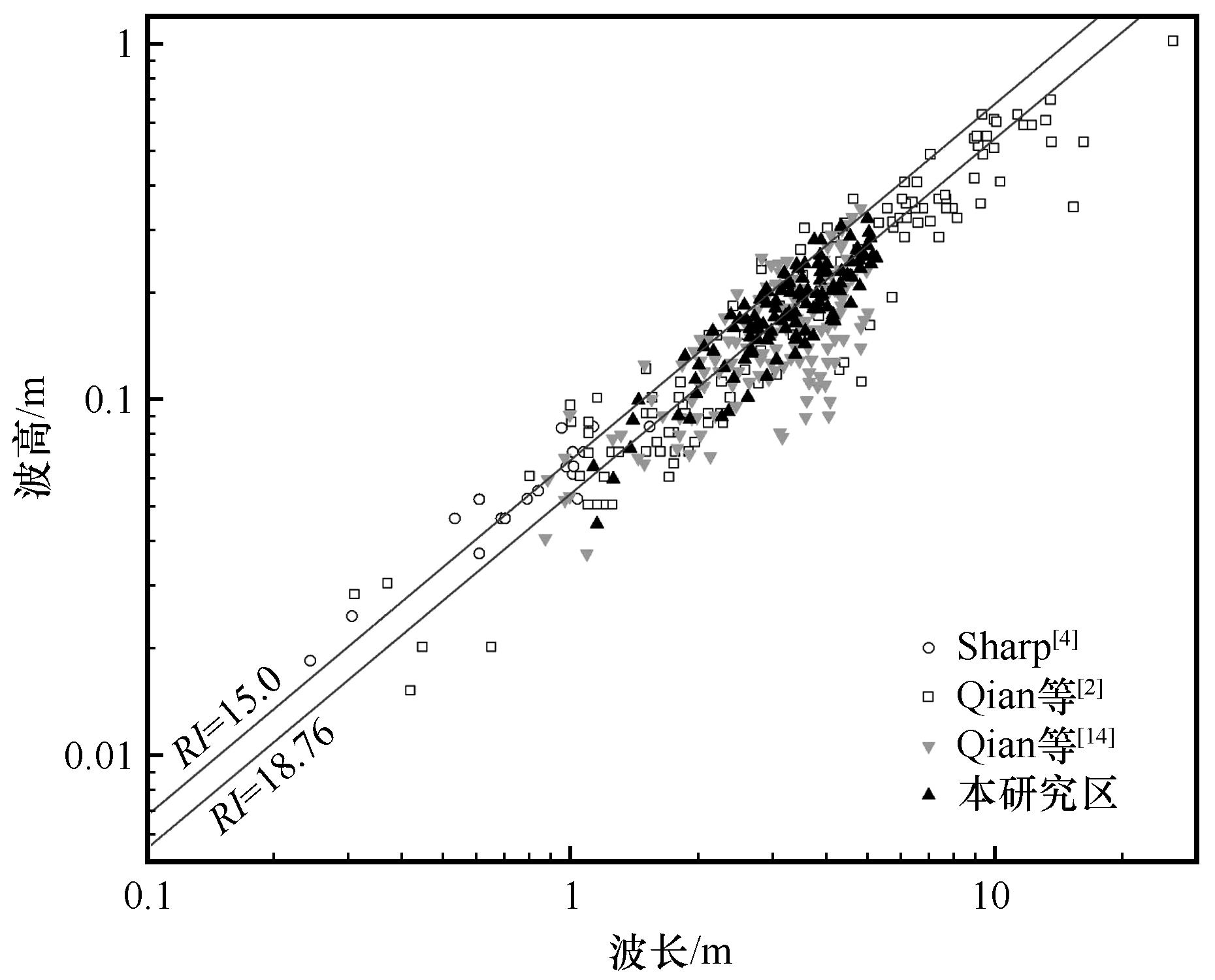
Fig.3 The relationship between wavelength and height of granule ripples
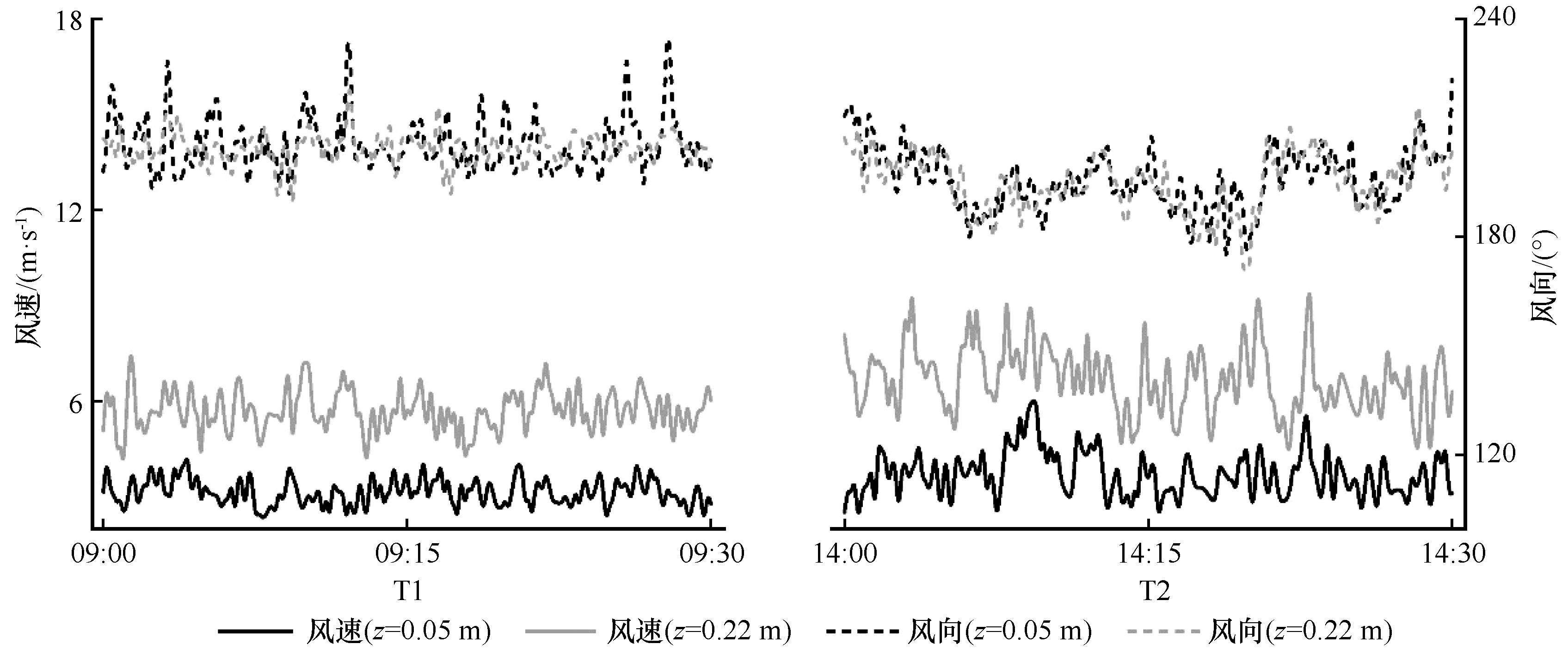
Fig.4 T1 and T2 periods average wind speed and direction at the gobi reference points
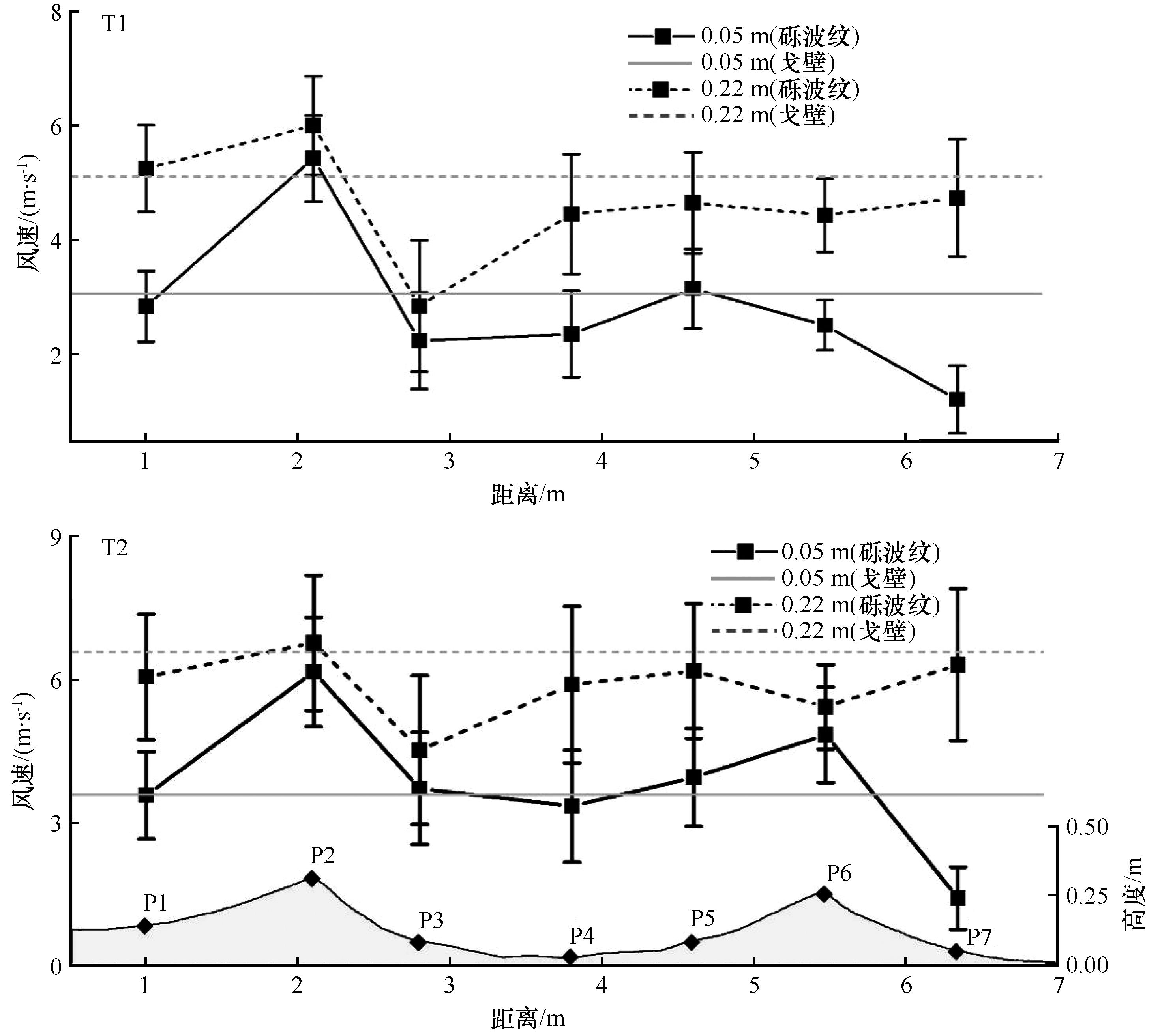
Fig.5 T1 and T2 periods average wind speed at different positions of the granule ripple surface and gobi reference point
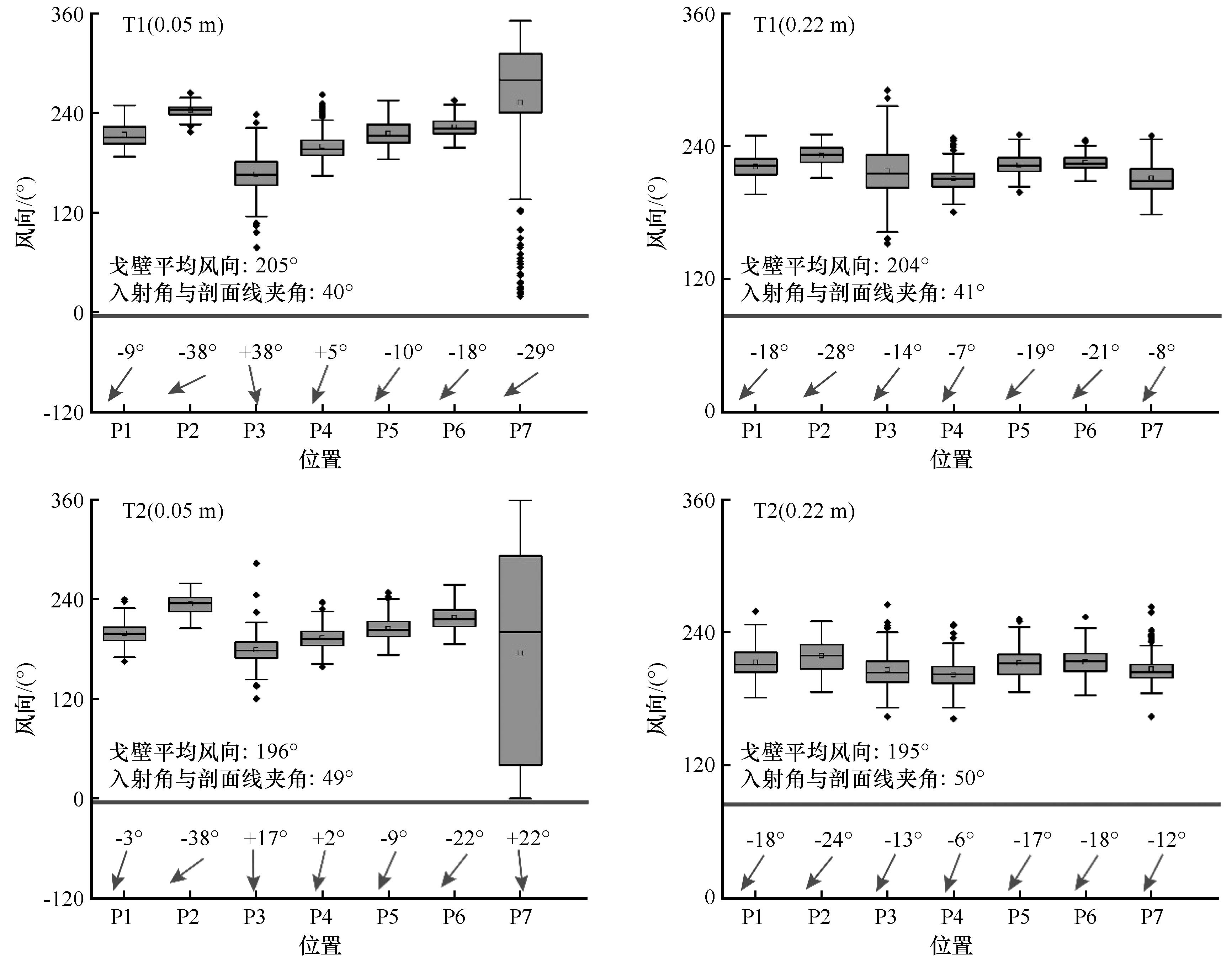
Fig.6 T1 and T2 periods wind direction statistics at different positions of the granule ripple surface. Notes: A deflection to the west is considered negative, while a deflection to the east is positive
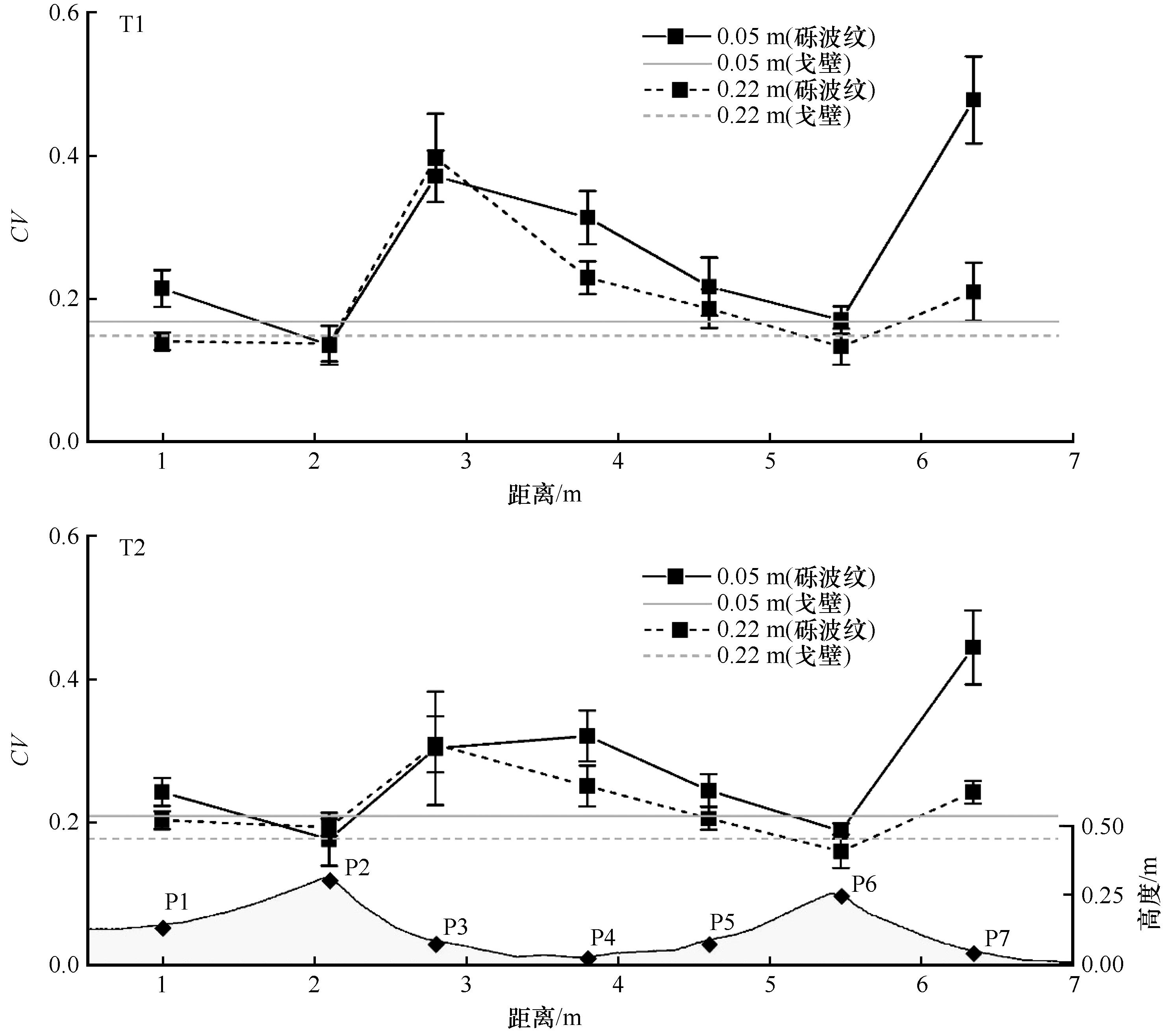
Fig.7 T1 and T2 periods turbulence intensity changes at different positions of the granule ripple and gobi reference point
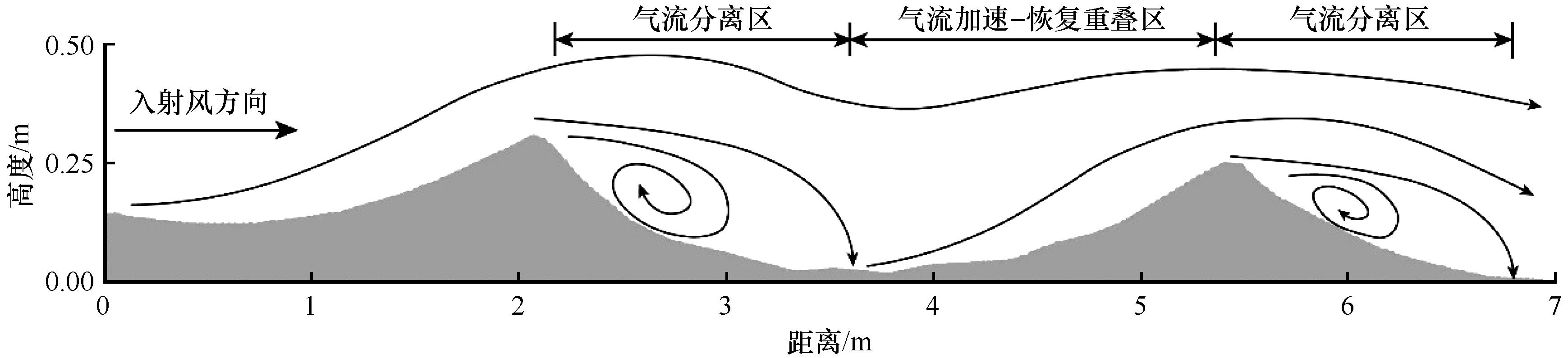
Fig.8 Schematic diagram of airflow structure over the surface of the granule ripple
| 1 | Yizhaq H, Katra I, Isenberg O,et al.Evolution of megaripples from a flat bed[J].Aeolian Research,2012,6:1-12. |
| 2 | Qian G, Dong Z, Zhang Z,et al.Granule ripples in the Kumtagh Desert,China:morphology,grain size and influencing factors[J].Sedimentology,2012,59(6):1888-1901. |
| 3 | Fryberger S G, Hesp P, Hastings K.Aeolian granule ripple deposits,Namibia[J].Sedimentology,1992,39(2):319-331. |
| 4 | Sharp R P.Wind ripples[J].Journal of Geology,1963,71:617-636. |
| 5 | Bagnold R A.The Physics of Blown Sand and Desert Dunes[M].London,UK:Methuen,1941:265. |
| 6 | Ellwood J M, Evans P D, Wilson I G.Small scale aeolian bedforms[J].Journal of Sedimentary Petrology,1975,45(2):554-561. |
| 7 | Sakamoto-Arnold C M.Eolian features produced by the December 1977 windstorm,southern San Joaquin Valley,California[J].The Journal of Geology,1981,89(1):129-137. |
| 8 | 杨根生,丛自立.鉴别风力的一种地貌标志:砾浪[J].新疆环境保护,1984(4):33-37. |
| 9 | Jerolmack D J, Mohrig D, Grotzinger J P,et al.Spatial grain size sorting in eolian ripples and estimation of wind conditions on planetary surfaces:application to Meridiani Planum,Mars[J].Journal of Geophysical Research:Planets,2006,111:E12S. |
| 10 | Isenberg O, Yizhaq H, Tsoar H,et al.Megaripple flattening due to strong winds[J].Geomorphology,2011,131:69-84. |
| 11 | Wang L, Xiao F, Dong Z,et al.Megaripple stripes in the Qaidam Basin,China:morphology,grain size and sedimentary characteristics[J].Geomorphology,2024,461:109301. |
| 12 | 董治宝,吕萍,李超,等.火星大沙波纹特征及其形成机制[J].地球科学进展,2020,35(10):1006-1015. |
| 13 | 钱广强,杨转玲,邢学刚,等.砾波纹地表风沙颗粒蠕移特征及其地貌学意义[J].中国沙漠,2024,44(6):1-12. |
| 14 | Qian G, Yang Z, Xing X,et al.Seasonal morphological evolution and migration of granule ripples in the Sanlongsha Dune Field,northern Kumtagh Sand Sea,China[J].Geomorphology,2024,444:108951. |
| 15 | Yizhaq H, Katra I.Longevity of aeolian megaripples[J].Earth and Planetary Science Letters,2015,422:28-32. |
| 16 | Milana J P.Largest wind ripples on Earth?[J].Geology,2009,37(4):343-346. |
| 17 | Foroutan M, Steinmetz G, Zimbelman J R,et al.Megaripples at Wau-an-Namus,Libya:a new analog for similar features on Mars[J].Icarus,2019,319:840-851. |
| 18 | Yizhaq H, Isenberg O, Wenkart R,et al.Morphology and dynamics of aeolian mega-ripples in Nahal Kasuy,southern Israel[J].Israel Journal of Earth Sciences,2009,57(3):149-165. |
| 19 | Gough T R, Hugenholtz C H.Statistical perspectives on the ripple index from a case study of aeolian megaripples[J].Geomorphology,2024,447:109025. |
| 20 | Tholen K, Phtz T, Yizhaq H,et al.Megaripple mechanics:bimodal transport ingrained in bimodal sands[J].Nature Communications,2022,13(1):1-11. |
| 21 | Qian G, Yang Z, Tian M,et al.From dome dune to barchan dune:airflow structure changes measured with particle image velocimetry in a wind tunnel[J].Geomorphology,2021,382:107681. |
| 22 | Hesp P A, Smyth T A, Nielsen P,et al.Flow deflection over a foredune[J].Geomorphology,2015,230:64-74. |
| 23 | Qian G, Dong Z, Luo W,et al.Airflow patterns upwind of obstacles and their significance for echo dune formation:a field measurement of the effects of the windward slope angle[J].Science China Earth Sciences,2012,55(4):545-553. |
| 24 | Dong Z, Qinan G, Lu P,et al.Turbulence fields in the lee of two-dimensional transverse dunes simulated in a wind tunnel[J].Earth Surface Processes and Landforms,2009,34(2):204-216. |
| 25 | Davidson S G, Hesp P A, Dasilva M,et al.Flow dynamics over a high,steep,erosional coastal dune slope[J].Geomorphology,2022,402:108111. |
| 26 | Zhang Z, Dong Z.Field measurements of crestal flow direction and turbulent flow over two transverse dune ridges[J].Geomorphology,2021,383:107699. |
| 27 | 潘凯佳,张正偲,梁爱民.反向沙丘近地层气流变化及其对沙丘形态的影响[J].中国沙漠,2021,41(2):1-8. |
| 28 | Weaver C M, Wiggs G F S.Field measurements of mean and turbulent airflow over a barchan sand dune[J].Geomorphology,2011,128:32-41. |
| 29 | 罗霖炎,高鑫,赵永成.新月形沙丘表面流场特征[J].中国沙漠,2023,43(4):41-54. |
| 30 | Baddock M C, Wiggs G F, Livingstone I.A field study of mean and turbulent flow characteristics upwind,over and downwind of barchan dunes[J].Earth Surface Processes and Landforms,2011,36(11):1435-1448. |
| 31 | 钱广强,董治宝,罗万银,等.横向沙丘背风侧气流重附风洞模拟[J].中国沙漠,2008,28(1):16-20. |
| 32 | Wang P, Zhang J, Huang N.A theoretical model for aeolian polydisperse-sand ripples[J].Geomorphology,2019,335:28-36. |
| 33 | Manukyan E, Prigozhin L.Formation of aeolian ripples and sand sorting[J].Physical Review E:Statistical,Nonlinear,and Soft Matter Physics,2009,79(3):31303. |
| 34 | Yizhaq H.A simple model of aeolian megaripples[J].Physica A:Statistical Mechanics and its Applications,2004,338(1/2):211-217. |
| 35 | Yang Z, Qian G, Dong Z,et al.Migration of barchan dunes and factors that influence migration in the Sanlongsha dune field of the northern Kumtagh Sand Sea,China[J].Geomorphology,2021,378:107615. |
| 36 | 郭酉元,钱广强,杨转玲,等.库姆塔格沙漠三垄沙地区砾波纹形态、粒度及环境风况[J].中国沙漠,2024,44(4):37-45. |
| 37 | 钱广强,杨转玲,董治宝,等.基于多旋翼无人机倾斜摄影测量的沙丘三维形态研究[J].中国沙漠,2019,39(1):18-25. |
| 38 | Solazzo D, Sankey J B, Sankey T T,et al.Mapping and measuring aeolian sand dunes with photogrammetry and LiDAR from unmanned aerial vehicles (UAV) and multispectral satellite imagery on the Paria Plateau,AZ,USA[J].Geomorphology,2018,319:174-185. |
| 39 | Sullivan R, Baker M, Newman C,et al.The aeolian environment in Glen Torridon,Gale crater,Mars[J].Journal of Geophysical Research:Planets,2022,127(8):e2021JE007174. |
| 40 | 邹桐,杨转玲,韦锦芝,等.柴达木盆地西南缘新月形沙丘移动特征及其影响因素[J].中国沙漠,2023,43(1):212-221. |
| 41 | Landry W, Werner B T.Computer simulations of self-organized wind ripple patterns[J].Physica D:Nonlinear Phenomena,1994,77(1/3):238-260. |
| 42 | Frank A J, Kocurek G.Airflow up the stoss slope of sand dunes:limitations of current understanding[J].Geomorphology,1996,17:47-54. |
| 43 | Smyth T A G, Jackson D, Cooper A.Airflow and aeolian sediment transport patterns within a coastal trough blowout during lateral wind conditions[J].Earth Surface Processes and Landforms,2014,39(14):1847-1854. |
| 44 | Bauer B O, Davidson Arnott R G, Walker I J,et al.Wind direction and complex sediment transport response across a beach-dune system[J].Earth Surface Processes and Landforms,2012,37(15):1661-1677. |
| 45 | Walker I J, Hesp P A, Davidson-Arnott R G,et al.Responses of three-dimensional flow to variations in the angle of incident wind and profile form of dunes:Greenwich Dunes,Prince Edward Island,Canada[J].Geomorphology,2009,105:127-138. |
| [1] | Yiying Yang, Silin Su, Enzhi Cao, Hongyou Li, Hongming Chi, Kai Lin, Xudong Wu, Wenqiang He, Haotian Yang. Impacts of large-scale desert photovoltaic power stations on the phenotype and biomass distribution characteristics of sand-fixing plants [J]. Journal of Desert Research, 2025, 45(1): 162-172. |
| [2] | Yiru Liang, Ping Lv, Min Cao, Fang Ma, Zishu Xia, Junlin Yu, Jingyan Wu. Wind tunnel research into the effect of particle size distribution on sand ripple morphology [J]. Journal of Desert Research, 2025, 45(1): 20-31. |
| [3] | Kun Zhou, Qingjie Han, Jianjun Qu, Ruiping Zu, Bing Liu. Study on the grain size characteristics of granule ripples: Taking Dunhuang Yardang, Sanlongsha and Tokexun areas as examples [J]. Journal of Desert Research, 2025, 45(1): 44-54. |
| [4] | Jiaqi Chu, Ping Yan, Zhizhu Su, Wenjie Yuan, Xiaoxu Wang, Xiao Zhang, Huagang Zhao. Morphological evolution and migration characteristics of a climbing dune in Mainling Great Valley section of Yarlung Zangbo River [J]. Journal of Desert Research, 2024, 44(6): 220-230. |
| [5] | Guangqiang Qian, Zhuanling Yang, Xuegang Xing, Zhibao Dong, Kaijia Pan, Yuxuan Meng, Youyuan Guo. Creep of aeolian sediments on the surface of granule ripples and its geomorphological significance [J]. Journal of Desert Research, 2024, 44(6): 287-298. |
| [6] | Youyuan Guo, Guangqiang Qian, Zhuanling Yang, Xuegang Xing. Morphology, grain size and environmental wind regine of granule ripples in the Sanlongsha area of the Kumtagh Desert [J]. Journal of Desert Research, 2024, 44(4): 37-45. |
| [7] | Chao Guan, Zifeng Wu, Hasi Eerdun. Dynamic characteristics and genesis of reticulate dunes on the western fringe of the Hobq Desert [J]. Journal of Desert Research, 2024, 44(2): 239-253. |
| [8] | Mei Shao, Wanyin Luo, Yaoquan Dun, Junfeng Lu, Fang Wang, Delu Li, Duoqing Man, Fengfeng Lei, Caixia Zhang. Differences in micromorphology and chemical element composition of topsoil and dust from degraded lake basins in arid region [J]. Journal of Desert Research, 2023, 43(6): 187-196. |
| [9] | Funing Yang, Lü Ping, Fang Ma, Min Cao, Nan Xiao, Lixia Gu, Ying Yang. Morphological evolution and migration characteristics of reticulate dunes at southern fringe of Tengger Desert [J]. Journal of Desert Research, 2023, 43(1): 107-115. |
| [10] | Wubin Jiang, Deguo Zhang, Xiaoping Yang. Response of dune morphology and grain-size characteristics to the change of wind regimes and vegetation cover [J]. Journal of Desert Research, 2022, 42(4): 120-129. |
| [11] | Chong Gao, Zhibao Dong, Weige Nan, Zhengyao Liu, Chunming Zhu, Xiaozhi Wang, Nan Xiao, Xin Zhang. Physicochemical characteristics and sedimentary environment of honeycomb dunes in Gurbantunggut Desert [J]. Journal of Desert Research, 2022, 42(2): 14-24. |
| [12] | Lin Yang. Research status and prospect of the synergistic response of coastal dunes morphology to monsoon/typhoon [J]. Journal of Desert Research, 2022, 42(1): 108-113. |
| [13] | Yuxiang Dong, Zhizhong Li. Review of coastal aeolian geomorphology research in China in the past 40 years [J]. Journal of Desert Research, 2022, 42(1): 12-22. |
| [14] | Xuyan Yang, Zhibao Dong, Qinke Yang, Chao Li. Comparison of networked dunes in the Earth and the Mars based on DEM [J]. Journal of Desert Research, 2021, 41(6): 88-98. |
| [15] | Qinni Huang, Zhibao Dong, Nan Xiao, Miaoyan Feng, Huanyu Shi, Guoxiang Chen, Ziyi Bai, Xin Zhang, Chong Gao, Xiaozhi Wang. Sediments and morphology of coastal Spinifex littoreus nebkhas on Jingxinjiao beach of Hainan Island, China [J]. Journal of Desert Research, 2021, 41(6): 157-168. |
| Viewed | ||||||
|
Full text |
|
|||||
|
Abstract |
|
|||||
Address: No. 8, Tianshui Middle Road, Chengguan District, Lanzhou City, Gansu Province, China (Postcode: 730000)
Tel:0931-8267545
Email:caiedit@lzb.ac.cn;desert@lzb.ac.cn
Support:Magtech
