
- CN 62-1070/P
- ISSN 1000-694X
- Bimonthly 1981
Journal of Desert Research ›› 2025, Vol. 45 ›› Issue (2): 236-251.DOI: 10.7522/j.issn.1000-694X.2025.00008
Bingfu Jin1( ), Jian Yu1,2, Bo Wu3,4(), Yunji Zhang1, Eerdun Hasi5, Zhizhu Su6, Deyong Kong7, Xujiao Han5
Received:2024-12-07
Revised:2025-01-10
Online:2025-03-20
Published:2025-03-26
Contact:
Bo Wu
CLC Number:
Bingfu Jin, Jian Yu, Bo Wu, Yunji Zhang, Eerdun Hasi, Zhizhu Su, Deyong Kong, Xujiao Han. Mineral characteristics and provenance indicators of medium to coarse silt from the northern and southern regions of the Kumtagh Desert[J]. Journal of Desert Research, 2025, 45(2): 236-251.
Add to citation manager EndNote|Ris|BibTeX
URL: http://www.desert.ac.cn/EN/10.7522/j.issn.1000-694X.2025.00008
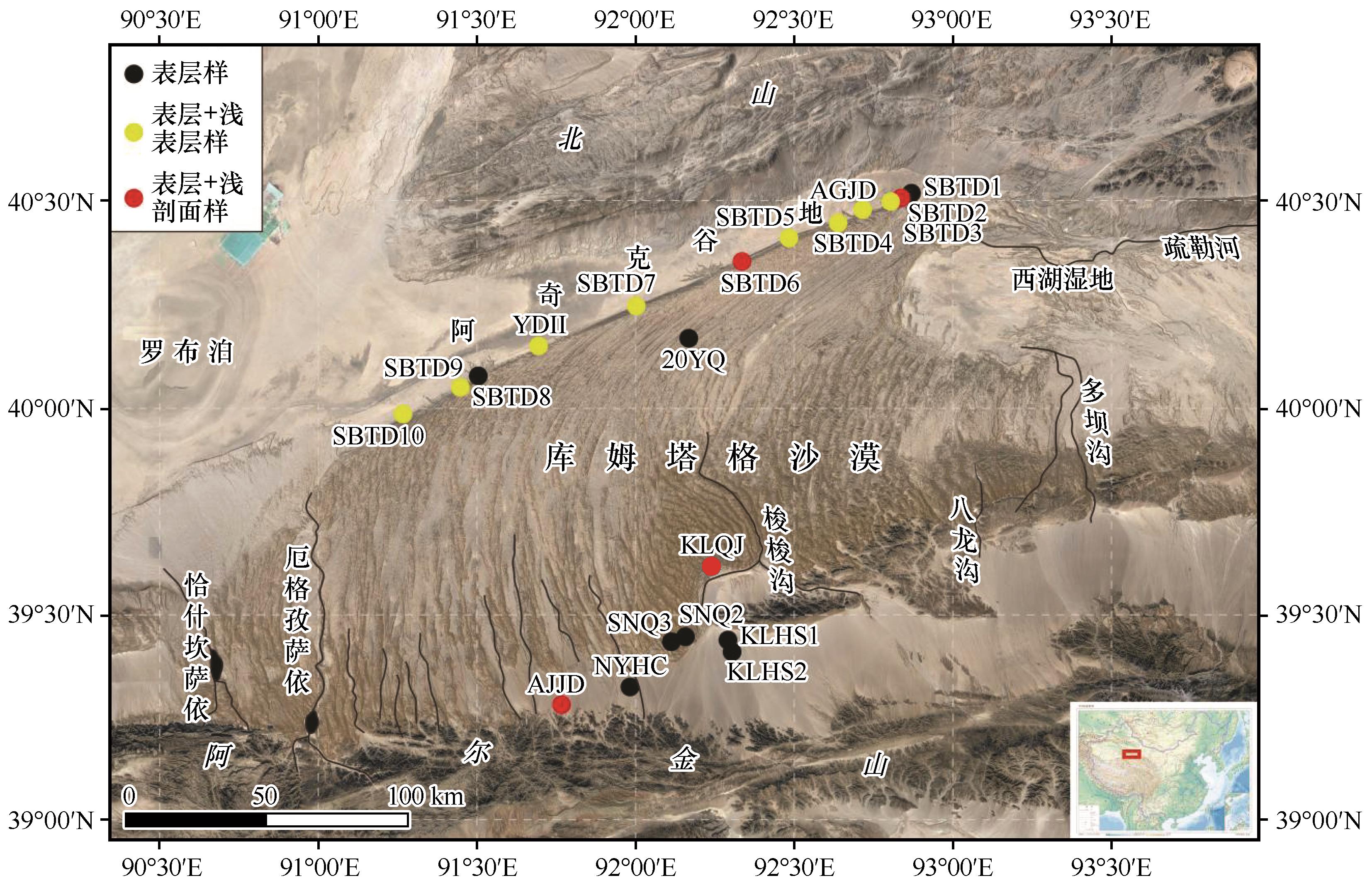
Fig.1 Remote sensing image of the Kumtagh Desert and diagram indicating sample location
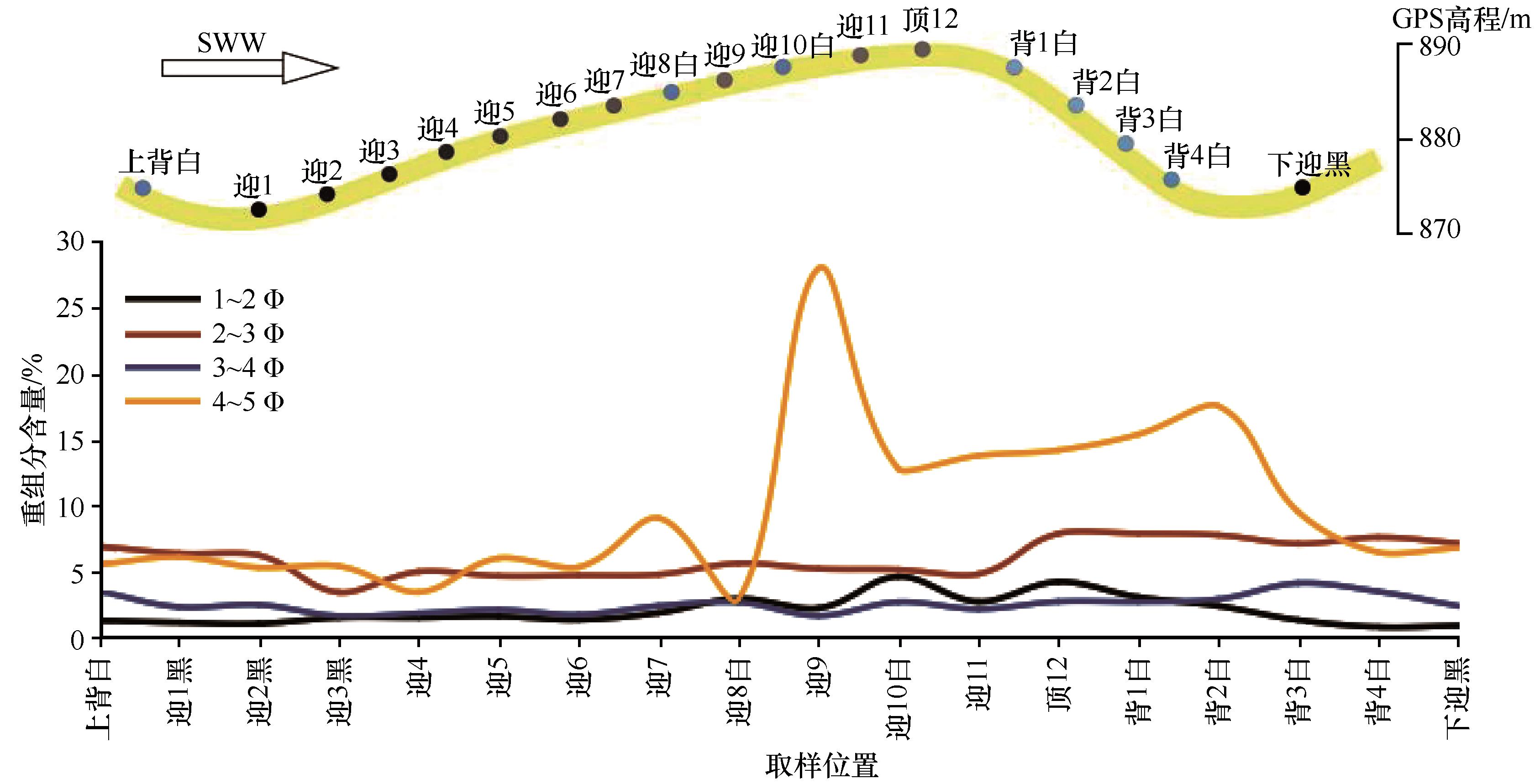
Fig.2 The variation of heavy component particle sizes in the feathery dune (20YQ) in the Kumtagh Desert between sampling points
密度区间/ (g·cm-3) | YDⅡ(沙漠北部台地平沙地样品) | 20YQ(羽毛状沙丘样品) | ||||||||
|---|---|---|---|---|---|---|---|---|---|---|
| 粒度/Φ | 黑色 | 灰色 | 褐色 | 黄色 | 白色 | 迎2 | 迎6 | 背2白 | 背4白 | |
| <2.50 | 0.5~1.0 | — | 0.02 | 0.11 | 0.32 | 3.31 | 0.22 | 0.53 | 0.17 | 0.70 |
| 2.50~2.60 | 1.02 | 4.17 | 20.38 | 20.05 | 4.30 | 31.20 | 37.61 | 26.51 | 22.41 | |
| 2.60~2.70 | 34.44 | 63.69 | 73.33 | 72.04 | 89.95 | 62.90 | 55.58 | 68.27 | 72.15 | |
| 2.70~2.80 | 28.65 | 17.00 | 4.49 | 3.20 | 1.73 | 3.14 | 3.72 | 3.70 | 2.50 | |
| 2.80~2.90 | 15.10 | 5.68 | 0.83 | 1.70 | 0.71 | 1.23 | 0.92 | 0.76 | 0.68 | |
| 2.90~3.00 | 10.39 | 4.58 | 0.75 | 1.20 | — | 1.31 | 0.70 | 0.53 | 0.80 | |
| 3.00~3.10 | 0.01 | 3.98 | 0.11 | 1.49 | — | — | 0.80 | 0.06 | 0.75 | |
| 3.10~3.20 | 7.39 | 0.88 | — | — | — | — | 0.01 | — | — | |
| 3.20~3.30 | 3.00 | — | — | — | — | — | 0.14 | — | — | |
| 加权密度 /(g·cm-3) | 0.5~1.0 | 2.79 | 2.71 | 2.64 | 2.65 | 2.64 | 2.63 | 2.62 | 2.63 | 2.64 |
| 0.0~0.5 | 2.71 | 2.67 | 2.60 | 2.63 | 2.65 | |||||
| -0.5~0.0 | 2.66 | 2.64 | 2.62 | 2.63 | 2.65 | |||||
| -1.0~-0.5 | 2.67 | 2.64 | 2.61 | 2.63 | 2.55 | |||||
Table 1 The density range, percentage and weighted density of colored clastics and granularity in representative samples from the Kumtagh Desert
密度区间/ (g·cm-3) | YDⅡ(沙漠北部台地平沙地样品) | 20YQ(羽毛状沙丘样品) | ||||||||
|---|---|---|---|---|---|---|---|---|---|---|
| 粒度/Φ | 黑色 | 灰色 | 褐色 | 黄色 | 白色 | 迎2 | 迎6 | 背2白 | 背4白 | |
| <2.50 | 0.5~1.0 | — | 0.02 | 0.11 | 0.32 | 3.31 | 0.22 | 0.53 | 0.17 | 0.70 |
| 2.50~2.60 | 1.02 | 4.17 | 20.38 | 20.05 | 4.30 | 31.20 | 37.61 | 26.51 | 22.41 | |
| 2.60~2.70 | 34.44 | 63.69 | 73.33 | 72.04 | 89.95 | 62.90 | 55.58 | 68.27 | 72.15 | |
| 2.70~2.80 | 28.65 | 17.00 | 4.49 | 3.20 | 1.73 | 3.14 | 3.72 | 3.70 | 2.50 | |
| 2.80~2.90 | 15.10 | 5.68 | 0.83 | 1.70 | 0.71 | 1.23 | 0.92 | 0.76 | 0.68 | |
| 2.90~3.00 | 10.39 | 4.58 | 0.75 | 1.20 | — | 1.31 | 0.70 | 0.53 | 0.80 | |
| 3.00~3.10 | 0.01 | 3.98 | 0.11 | 1.49 | — | — | 0.80 | 0.06 | 0.75 | |
| 3.10~3.20 | 7.39 | 0.88 | — | — | — | — | 0.01 | — | — | |
| 3.20~3.30 | 3.00 | — | — | — | — | — | 0.14 | — | — | |
| 加权密度 /(g·cm-3) | 0.5~1.0 | 2.79 | 2.71 | 2.64 | 2.65 | 2.64 | 2.63 | 2.62 | 2.63 | 2.64 |
| 0.0~0.5 | 2.71 | 2.67 | 2.60 | 2.63 | 2.65 | |||||
| -0.5~0.0 | 2.66 | 2.64 | 2.62 | 2.63 | 2.65 | |||||
| -1.0~-0.5 | 2.67 | 2.64 | 2.61 | 2.63 | 2.55 | |||||
| 样品系列/样数 | 1~2 Φ | 2~3 Φ | 3~4 Φ | 4~5 Φ |
|---|---|---|---|---|
| 阿奇克谷地南缘阶地AGJD表层/n=6 | 0.95 | 1.76 | 4.54 | 4.25 |
| 北部台地SBTD表层/n=10 | 2.12 | 2.18 | 5.51 | 12.91 |
| 北部台地SBTD次表层/n=8 | 1.83 | 2.07 | 5.46 | 11.76 |
| 北部台地SBTD2剖面/n=6 | 1.25 | 2.05 | 5.13 | 4.24 |
| 北部台地SBTD6剖面/n=11 | 1.78 | 2.18 | 5.30 | 12.83 |
| 羽毛状沙丘20YQ表层/n=18 | 1.99 | 2.54 | 6.10 | 8.94 |
| 南缘冲洪积物表层+阶地剖面/n=9 | 4.86 | 5.13 | 7.07 | 9.46 |
| 南缘沙丘SNQ2+SNQ3表层/n=9 | 6.69 | 3.95 | 8.26 | 10.27 |
Table 2 Average trimmean wt%contents of heavy components in four grain grades of samples from northern and southern of the Kumtagh Desert (%)
| 样品系列/样数 | 1~2 Φ | 2~3 Φ | 3~4 Φ | 4~5 Φ |
|---|---|---|---|---|
| 阿奇克谷地南缘阶地AGJD表层/n=6 | 0.95 | 1.76 | 4.54 | 4.25 |
| 北部台地SBTD表层/n=10 | 2.12 | 2.18 | 5.51 | 12.91 |
| 北部台地SBTD次表层/n=8 | 1.83 | 2.07 | 5.46 | 11.76 |
| 北部台地SBTD2剖面/n=6 | 1.25 | 2.05 | 5.13 | 4.24 |
| 北部台地SBTD6剖面/n=11 | 1.78 | 2.18 | 5.30 | 12.83 |
| 羽毛状沙丘20YQ表层/n=18 | 1.99 | 2.54 | 6.10 | 8.94 |
| 南缘冲洪积物表层+阶地剖面/n=9 | 4.86 | 5.13 | 7.07 | 9.46 |
| 南缘沙丘SNQ2+SNQ3表层/n=9 | 6.69 | 3.95 | 8.26 | 10.27 |
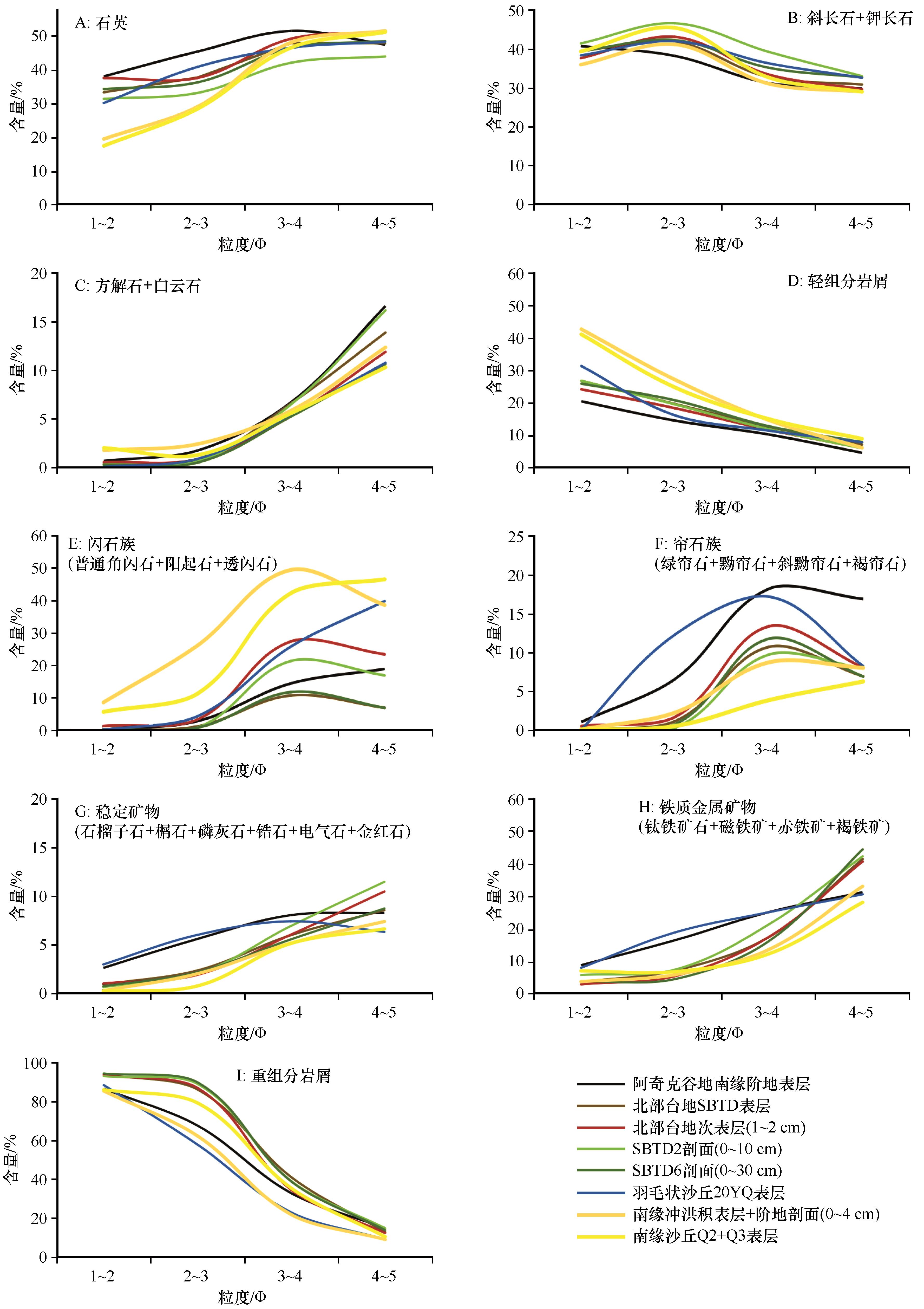
Fig.3 The content distribution of major light and heavy minerals and lithic fragments in different grain sizes in the Kumtagh Desert (light minerals and heavy minerals are measured separately by v%)
| 样品(样数) | 鉴定粒级 | 石英 /% | 斜长石 /% | 钾长石 /% | 方解石 /% | 白云石 /% | 常见轻矿物 合计/% | 轻岩屑 /% | Q/F | Q/(F+L) |
|---|---|---|---|---|---|---|---|---|---|---|
| 阿奇克谷地 南缘阶地+ 台地表层 /次表层 (n=24) | 1~2 Φ | 34.98 | 22.95 | 16.83 | 0.13 | 0.29 | 75.18 | 24.83 | 0.88 | 0.54 |
| 2~3 Φ | 38.09 | 24.09 | 18.35 | 0.44 | 0.44 | 81.41 | 18.57 | 0.90 | 0.62 | |
| 3~4 Φ | 47.52 | 19.69 | 14.72 | 4.51 | 1.58 | 88.02 | 11.84 | 1.38 | 1.03 | |
| 4~5 Φ | 47.86 | 20.20 | 11.02 | 9.87 | 3.93 | 92.88 | 6.34 | 1.53 | 1.27 | |
| 加权平均值 | 42.66 | 21.06 | 16.93 | 1.93 | 1.23 | 83.81 | 16.48 | 1.18 | 0.83 | |
| 羽毛状沙丘 20YQ (n=18) | 1~2 Φ | 30.22 | 24.21 | 14.16 | 0.01 | 0.04 | 68.64 | 31.36 | 0.79 | 0.43 |
| 2~3 Φ | 40.93 | 24.88 | 17.11 | 0.58 | 0.30 | 83.80 | 16.15 | 0.97 | 0.70 | |
| 3~4 Φ | 46.62 | 23.07 | 13.29 | 4.69 | 0.78 | 88.45 | 11.45 | 1.28 | 0.98 | |
| 4~5 Φ | 48.34 | 22.17 | 10.44 | 8.88 | 1.85 | 91.68 | 7.85 | 1.48 | 1.19 | |
| 加权平均值 | 38.57 | 24.27 | 14.81 | 1.61 | 0.35 | 79.61 | 20.34 | 1.00 | 0.69 | |
| 南缘沙丘 Q2+Q3 (n=9) | 1~2 Φ | 17.49 | 23.87 | 15.51 | 1.30 | 0.69 | 58.86 | 41.12 | 0.44 | 0.22 |
| 2~3 Φ | 28.49 | 26.22 | 19.25 | 0.72 | 0.55 | 75.23 | 24.77 | 0.63 | 0.41 | |
| 3~4 Φ | 46.67 | 19.42 | 13.32 | 4.36 | 1.21 | 84.98 | 15.02 | 1.43 | 0.98 | |
| 4~5 Φ | 51.24 | 21.94 | 7.07 | 8.30 | 1.97 | 90.52 | 8.90 | 1.77 | 1.35 | |
| 加权平均值 | 32.61 | 24.13 | 17.13 | 1.89 | 0.80 | 76.56 | 23.43 | 0.85 | 0.56 | |
| 沙漠南缘冲 洪积物 (n=3) | 1~2 Φ | 14.24 | 25.04 | 9.05 | 1.22 | 2.44 | 51.99 | 48.01 | 0.43 | 0.17 |
| 2~3 Φ | 26.50 | 28.27 | 10.96 | 2.41 | 2.00 | 70.14 | 29.77 | 0.68 | 0.40 | |
| 3~4 Φ | 49.46 | 18.53 | 11.73 | 4.08 | 2.58 | 86.38 | 13.55 | 1.64 | 1.13 | |
| 4~5 Φ | 49.35 | 21.34 | 7.33 | 10.70 | 2.79 | 91.51 | 7.56 | 1.75 | 1.36 | |
| 加权平均值 | 33.90 | 23.10 | 10.96 | 3.03 | 2.42 | 73.41 | 26.51 | 1.06 | 0.69 |
Table 3 Average v% content of particle size and mineral index of major light minerals in the Kumtagh Desert
| 样品(样数) | 鉴定粒级 | 石英 /% | 斜长石 /% | 钾长石 /% | 方解石 /% | 白云石 /% | 常见轻矿物 合计/% | 轻岩屑 /% | Q/F | Q/(F+L) |
|---|---|---|---|---|---|---|---|---|---|---|
| 阿奇克谷地 南缘阶地+ 台地表层 /次表层 (n=24) | 1~2 Φ | 34.98 | 22.95 | 16.83 | 0.13 | 0.29 | 75.18 | 24.83 | 0.88 | 0.54 |
| 2~3 Φ | 38.09 | 24.09 | 18.35 | 0.44 | 0.44 | 81.41 | 18.57 | 0.90 | 0.62 | |
| 3~4 Φ | 47.52 | 19.69 | 14.72 | 4.51 | 1.58 | 88.02 | 11.84 | 1.38 | 1.03 | |
| 4~5 Φ | 47.86 | 20.20 | 11.02 | 9.87 | 3.93 | 92.88 | 6.34 | 1.53 | 1.27 | |
| 加权平均值 | 42.66 | 21.06 | 16.93 | 1.93 | 1.23 | 83.81 | 16.48 | 1.18 | 0.83 | |
| 羽毛状沙丘 20YQ (n=18) | 1~2 Φ | 30.22 | 24.21 | 14.16 | 0.01 | 0.04 | 68.64 | 31.36 | 0.79 | 0.43 |
| 2~3 Φ | 40.93 | 24.88 | 17.11 | 0.58 | 0.30 | 83.80 | 16.15 | 0.97 | 0.70 | |
| 3~4 Φ | 46.62 | 23.07 | 13.29 | 4.69 | 0.78 | 88.45 | 11.45 | 1.28 | 0.98 | |
| 4~5 Φ | 48.34 | 22.17 | 10.44 | 8.88 | 1.85 | 91.68 | 7.85 | 1.48 | 1.19 | |
| 加权平均值 | 38.57 | 24.27 | 14.81 | 1.61 | 0.35 | 79.61 | 20.34 | 1.00 | 0.69 | |
| 南缘沙丘 Q2+Q3 (n=9) | 1~2 Φ | 17.49 | 23.87 | 15.51 | 1.30 | 0.69 | 58.86 | 41.12 | 0.44 | 0.22 |
| 2~3 Φ | 28.49 | 26.22 | 19.25 | 0.72 | 0.55 | 75.23 | 24.77 | 0.63 | 0.41 | |
| 3~4 Φ | 46.67 | 19.42 | 13.32 | 4.36 | 1.21 | 84.98 | 15.02 | 1.43 | 0.98 | |
| 4~5 Φ | 51.24 | 21.94 | 7.07 | 8.30 | 1.97 | 90.52 | 8.90 | 1.77 | 1.35 | |
| 加权平均值 | 32.61 | 24.13 | 17.13 | 1.89 | 0.80 | 76.56 | 23.43 | 0.85 | 0.56 | |
| 沙漠南缘冲 洪积物 (n=3) | 1~2 Φ | 14.24 | 25.04 | 9.05 | 1.22 | 2.44 | 51.99 | 48.01 | 0.43 | 0.17 |
| 2~3 Φ | 26.50 | 28.27 | 10.96 | 2.41 | 2.00 | 70.14 | 29.77 | 0.68 | 0.40 | |
| 3~4 Φ | 49.46 | 18.53 | 11.73 | 4.08 | 2.58 | 86.38 | 13.55 | 1.64 | 1.13 | |
| 4~5 Φ | 49.35 | 21.34 | 7.33 | 10.70 | 2.79 | 91.51 | 7.56 | 1.75 | 1.36 | |
| 加权平均值 | 33.90 | 23.10 | 10.96 | 3.03 | 2.42 | 73.41 | 26.51 | 1.06 | 0.69 |
| 矿物名称及 指标 | 鉴定粒级/Φ | ||||||
|---|---|---|---|---|---|---|---|
| 1.0~1.5 | 1.5~2.0 | 2.0~2.5 | 2.5~3.0 | 3.0~3.5 | 3.5~4.0 | 4.0~5.0 | |
| 普通角闪石 | — | — | — | 1.59 | 9.89 | 16.31 | 16.55 |
| 透闪石 | — | — | — | 0.20 | 0.43 | 0.42 | 0.34 |
| 阳起石 | — | — | 0.79 | 0.99 | 1.08 | 3.81 | 7.00 |
| 绿帘石 | — | 0.68 | 2.65 | 13.72 | 22.80 | 20.55 | 18.60 |
| 黝帘石 | — | — | — | — | — | 0.21 | 0.68 |
| 斜黝帘石 | — | — | — | — | — | — | 0.51 |
| 褐帘石 | — | — | — | 0.20 | — | — | — |
| 黑云母 | — | — | — | 0.20 | — | 0.21 | 0.34 |
| 白云母 | — | — | — | — | — | — | 0.17 |
| 水黑云母 | — | — | — | 0.20 | — | — | 0.17 |
| 符山石 | — | — | — | 0.20 | — | — | — |
| 石榴子石 | 2.03 | 3.72 | 5.29 | 5.17 | 4.73 | 2.33 | 3.24 |
| 榍石 | 0.51 | 0.34 | — | 1.59 | 3.23 | 2.75 | 3.58 |
| 磷灰石 | — | — | — | — | — | 0.64 | 0.17 |
| 电气石 | — | — | 0.26 | 0.60 | 0.22 | 0.42 | 0.17 |
| 锆石 | — | — | — | 0.40 | 1.08 | 1.06 | 1.19 |
| 金红石 | — | — | — | — | — | 0.21 | 0.34 |
| 透辉石 | — | — | — | — | — | — | 0.17 |
| 紫苏辉石 | — | — | — | — | — | 0.21 | — |
| 重晶石 | — | — | — | 0.80 | 1.08 | 1.69 | 6.66 |
| 白云石 | — | — | — | — | — | — | 1.37 |
| 钛铁矿 | — | — | — | 0.99 | 1.29 | 2.75 | 2.22 |
| 磁铁矿 | — | 0.34 | 1.06 | 4.57 | 6.02 | 7.42 | 6.14 |
| 赤铁矿 | — | — | 0.79 | 0.99 | 1.94 | 1.91 | 1.71 |
| 褐铁矿 | 8.12 | 9.12 | 10.32 | 13.92 | 12.04 | 14.83 | 13.31 |
主要和次要常见 重矿物含量合计 | 10.66 | 14.20 | 21.16 | 46.33 | 65.83 | 77.73 | 84.63 |
| 浅色岩屑 | 16.24 | 23.99 | 39.42 | 35.59 | 22.80 | 13.35 | 12.97 |
| 深色岩屑 | 73.10 | 61.82 | 39.42 | 18.09 | 11.40 | 8.90 | 2.39 |
| 闪石族 | — | — | 0.79 | 2.78 | 11.40 | 20.55 | 23.89 |
| 帘石族 | — | 0.68 | 2.65 | 13.92 | 22.80 | 20.76 | 19.80 |
| 稳定矿物 | 2.54 | 4.05 | 5.56 | 7.75 | 9.25 | 7.42 | 8.70 |
| 铁质金属矿物 | 8.12 | 9.46 | 12.17 | 20.48 | 21.29 | 26.91 | 23.38 |
| UM/SM | — | — | 0.14 | 0.38 | 1.19 | 2.77 | 2.78 |
| ZTR | — | — | 0.26 | 0.99 | 1.29 | 1.69 | 1.71 |
| GZi | 100 | 100 | 100 | 92.86 | 81.48 | 68.75 | 73.08 |
| 重组分体积百分含量 | 1.38 | 1.61 | 1.77 | 2.61 | 3.68 | 6.22 | 4.96 |
Table 4 v% contents of heavy minerals and lithic fragment of different grain sizes in terrace AGJD6 samples of the southern edge of the Aqik Valley (%)
| 矿物名称及 指标 | 鉴定粒级/Φ | ||||||
|---|---|---|---|---|---|---|---|
| 1.0~1.5 | 1.5~2.0 | 2.0~2.5 | 2.5~3.0 | 3.0~3.5 | 3.5~4.0 | 4.0~5.0 | |
| 普通角闪石 | — | — | — | 1.59 | 9.89 | 16.31 | 16.55 |
| 透闪石 | — | — | — | 0.20 | 0.43 | 0.42 | 0.34 |
| 阳起石 | — | — | 0.79 | 0.99 | 1.08 | 3.81 | 7.00 |
| 绿帘石 | — | 0.68 | 2.65 | 13.72 | 22.80 | 20.55 | 18.60 |
| 黝帘石 | — | — | — | — | — | 0.21 | 0.68 |
| 斜黝帘石 | — | — | — | — | — | — | 0.51 |
| 褐帘石 | — | — | — | 0.20 | — | — | — |
| 黑云母 | — | — | — | 0.20 | — | 0.21 | 0.34 |
| 白云母 | — | — | — | — | — | — | 0.17 |
| 水黑云母 | — | — | — | 0.20 | — | — | 0.17 |
| 符山石 | — | — | — | 0.20 | — | — | — |
| 石榴子石 | 2.03 | 3.72 | 5.29 | 5.17 | 4.73 | 2.33 | 3.24 |
| 榍石 | 0.51 | 0.34 | — | 1.59 | 3.23 | 2.75 | 3.58 |
| 磷灰石 | — | — | — | — | — | 0.64 | 0.17 |
| 电气石 | — | — | 0.26 | 0.60 | 0.22 | 0.42 | 0.17 |
| 锆石 | — | — | — | 0.40 | 1.08 | 1.06 | 1.19 |
| 金红石 | — | — | — | — | — | 0.21 | 0.34 |
| 透辉石 | — | — | — | — | — | — | 0.17 |
| 紫苏辉石 | — | — | — | — | — | 0.21 | — |
| 重晶石 | — | — | — | 0.80 | 1.08 | 1.69 | 6.66 |
| 白云石 | — | — | — | — | — | — | 1.37 |
| 钛铁矿 | — | — | — | 0.99 | 1.29 | 2.75 | 2.22 |
| 磁铁矿 | — | 0.34 | 1.06 | 4.57 | 6.02 | 7.42 | 6.14 |
| 赤铁矿 | — | — | 0.79 | 0.99 | 1.94 | 1.91 | 1.71 |
| 褐铁矿 | 8.12 | 9.12 | 10.32 | 13.92 | 12.04 | 14.83 | 13.31 |
主要和次要常见 重矿物含量合计 | 10.66 | 14.20 | 21.16 | 46.33 | 65.83 | 77.73 | 84.63 |
| 浅色岩屑 | 16.24 | 23.99 | 39.42 | 35.59 | 22.80 | 13.35 | 12.97 |
| 深色岩屑 | 73.10 | 61.82 | 39.42 | 18.09 | 11.40 | 8.90 | 2.39 |
| 闪石族 | — | — | 0.79 | 2.78 | 11.40 | 20.55 | 23.89 |
| 帘石族 | — | 0.68 | 2.65 | 13.92 | 22.80 | 20.76 | 19.80 |
| 稳定矿物 | 2.54 | 4.05 | 5.56 | 7.75 | 9.25 | 7.42 | 8.70 |
| 铁质金属矿物 | 8.12 | 9.46 | 12.17 | 20.48 | 21.29 | 26.91 | 23.38 |
| UM/SM | — | — | 0.14 | 0.38 | 1.19 | 2.77 | 2.78 |
| ZTR | — | — | 0.26 | 0.99 | 1.29 | 1.69 | 1.71 |
| GZi | 100 | 100 | 100 | 92.86 | 81.48 | 68.75 | 73.08 |
| 重组分体积百分含量 | 1.38 | 1.61 | 1.77 | 2.61 | 3.68 | 6.22 | 4.96 |
| 样品系列/样数 | 沉积物粒度/Φ | 平均 粒径 /Φ | ||||||
|---|---|---|---|---|---|---|---|---|
砾 <-1.0 | 极粗砂 -1.0~0.0 | 粗砂 0.0~1.0 | 中砂 1.0~2.0 | 细砂 2.0~3.0 | 极细砂 3.0~4.0 | 粉砂 >4.0 | ||
| 阿奇克谷地南缘阶地/n=8 | 40.17 | 13.84 | 12.99 | 11.09 | 15.66 | 5.74 | 0.52 | 0.12 |
| 北部台地表层/n=10 | 21.33 | 19.25 | 12.39 | 8.50 | 20.51 | 17.01 | 1.00 | 0.93 |
| 北部台地次表层/n=8 | 11.42 | 15.29 | 10.72 | 8.80 | 27.67 | 24.72 | 1.38 | 1.58 |
| SBTD2剖面/n=5* | 15.08 | 0.71 | 4.93 | 17.36 | 48.87 | 12.48 | 0.57 | 1.77 |
| SBTD6剖面/n=10* | 2.30 | 26.15 | 7.36 | 8.68 | 21.62 | 32.28 | 1.61 | 1.72 |
| 20YQ沙丘表层/n=18 | — | 5.54 | 43.46 | 20.75 | 16.96 | 12.52 | 1.09 | 1.48 |
| 南缘沙丘(Q2+Q3)/n=9 | — | 3.26 | 15.07 | 8.27 | 48.95 | 23.55 | 0.67 | 2.31 |
| 南缘丘间地/n=3 | 7.94 | 3.55 | 1.75 | 2.32 | 30.48 | 38.46 | 15.49 | 2.77 |
| 阿尔金山前二级阶地/n=3 | 4.32 | 15.60 | 3.63 | 3.15 | 26.08 | 37.01 | 10.22 | 2.38 |
| 南缘冲洪积物/n=3 | 9.01 | 20.34 | 23.09 | 11.63 | 14.25 | 19.56 | 2.12 | 1.15 |
Table 5 Average grain size of sediments in different regions of the Kumtagh Desert (%)
| 样品系列/样数 | 沉积物粒度/Φ | 平均 粒径 /Φ | ||||||
|---|---|---|---|---|---|---|---|---|
砾 <-1.0 | 极粗砂 -1.0~0.0 | 粗砂 0.0~1.0 | 中砂 1.0~2.0 | 细砂 2.0~3.0 | 极细砂 3.0~4.0 | 粉砂 >4.0 | ||
| 阿奇克谷地南缘阶地/n=8 | 40.17 | 13.84 | 12.99 | 11.09 | 15.66 | 5.74 | 0.52 | 0.12 |
| 北部台地表层/n=10 | 21.33 | 19.25 | 12.39 | 8.50 | 20.51 | 17.01 | 1.00 | 0.93 |
| 北部台地次表层/n=8 | 11.42 | 15.29 | 10.72 | 8.80 | 27.67 | 24.72 | 1.38 | 1.58 |
| SBTD2剖面/n=5* | 15.08 | 0.71 | 4.93 | 17.36 | 48.87 | 12.48 | 0.57 | 1.77 |
| SBTD6剖面/n=10* | 2.30 | 26.15 | 7.36 | 8.68 | 21.62 | 32.28 | 1.61 | 1.72 |
| 20YQ沙丘表层/n=18 | — | 5.54 | 43.46 | 20.75 | 16.96 | 12.52 | 1.09 | 1.48 |
| 南缘沙丘(Q2+Q3)/n=9 | — | 3.26 | 15.07 | 8.27 | 48.95 | 23.55 | 0.67 | 2.31 |
| 南缘丘间地/n=3 | 7.94 | 3.55 | 1.75 | 2.32 | 30.48 | 38.46 | 15.49 | 2.77 |
| 阿尔金山前二级阶地/n=3 | 4.32 | 15.60 | 3.63 | 3.15 | 26.08 | 37.01 | 10.22 | 2.38 |
| 南缘冲洪积物/n=3 | 9.01 | 20.34 | 23.09 | 11.63 | 14.25 | 19.56 | 2.12 | 1.15 |
| 样品系列/样数 | Q/F | Q/(F+L) | UM/SM | ZTR | GZi |
|---|---|---|---|---|---|
| 阿奇克谷地南缘阶地/n=8 | 1.67 | 1.25 | 1.85 | 0.72 | 86.49 |
| 北部台地表层/n=10 | 1.49 | 1.07 | 4.52 | 0.38 | 95.19 |
| 北部台地次表层/n=8 | 1.51 | 1.11 | 4.62 | 0.42 | 96.24 |
| SBTD2剖面/n=6 | 1.09 | 0.83 | 3.21 | 0.39 | 89.16 |
| SBTD6剖面n=11 | 1.35 | 0.98 | 5.00 | 0.17 | 96.40 |
| 20YQ沙丘表层/n=18 | 1.32 | 1.01 | 3.58 | 0.64 | 88.30 |
| 南缘沙丘(Q2+Q3)/n=9 | 1.45 | 0.98 | 8.44 | 0.28 | 96.68 |
| 南缘丘间地/n=3 | 1.64 | 1.12 | 7.34 | 0.52 | 98.33 |
| 阿尔金山前二级阶地/n=3 | 1.43 | 0.96 | 9.36 | 0.27 | 100.00 |
| 南缘冲洪积物/n=3 | 1.64 | 1.13 | 13.31 | 0.29 | 100.00 |
Table 6 Average values of mineral maturity indexes in different regions of very fine sand (3~4 Φ) in the Kumtagh Desert
| 样品系列/样数 | Q/F | Q/(F+L) | UM/SM | ZTR | GZi |
|---|---|---|---|---|---|
| 阿奇克谷地南缘阶地/n=8 | 1.67 | 1.25 | 1.85 | 0.72 | 86.49 |
| 北部台地表层/n=10 | 1.49 | 1.07 | 4.52 | 0.38 | 95.19 |
| 北部台地次表层/n=8 | 1.51 | 1.11 | 4.62 | 0.42 | 96.24 |
| SBTD2剖面/n=6 | 1.09 | 0.83 | 3.21 | 0.39 | 89.16 |
| SBTD6剖面n=11 | 1.35 | 0.98 | 5.00 | 0.17 | 96.40 |
| 20YQ沙丘表层/n=18 | 1.32 | 1.01 | 3.58 | 0.64 | 88.30 |
| 南缘沙丘(Q2+Q3)/n=9 | 1.45 | 0.98 | 8.44 | 0.28 | 96.68 |
| 南缘丘间地/n=3 | 1.64 | 1.12 | 7.34 | 0.52 | 98.33 |
| 阿尔金山前二级阶地/n=3 | 1.43 | 0.96 | 9.36 | 0.27 | 100.00 |
| 南缘冲洪积物/n=3 | 1.64 | 1.13 | 13.31 | 0.29 | 100.00 |
| 沙漠产出的主要重矿物 | 重矿物产状和主要赋存的岩类[ | 阿尔金山赋存重矿物岩石存量[ |
|---|---|---|
普通 角闪石 | 火成岩重要的造岩矿物,在各类岩性中均有较高含量;在变质岩的斜长角闪岩、角闪斜长片麻岩、角闪岩中含量高 | 存在广泛:米兰群、达肯达坂群、各期次中酸性侵入岩 |
| 绿帘石 | 在低级变质岩、晚期矽卡岩及热液蚀变岩中分布广泛,是辉石、角闪石、斜长石、黑云母、石榴子石等的次生蚀变矿物 | 存在较广:拉配泉群浅变质岩和红柳沟-拉配泉蛇绿岩、海西期岩浆岩及各种活动热液蚀变岩 |
黝帘石/ 斜黝帘石 | 典型岩浆期后矿物,常见于区域变质岩、接触变质岩和结晶片岩中,热液蚀变时交代中基性斜长石、辉石和角闪石形成钠黝帘石化蚀变岩 | 存在较广:拉配泉群浅变质岩和红柳沟-拉配泉蛇绿岩、海西期岩浆岩及各种活动热液蚀变岩 |
| 阳起石 | 常赋存在低级变质的绿片岩或结晶片岩中,也是晚期矽卡岩和热液蚀变矿物 | 局部较多:巴什库尔干群中变质岩、拉配泉群浅变质岩 |
| 石榴子石 | 钙铝榴石和钙铁榴石多分布于矽卡岩和结晶灰岩中,铝质石榴石分布于结晶片岩、片麻岩、榴辉岩、斜长角闪岩、斜长辉岩和麻粒岩中,也产于伟晶岩和火成岩中 | 局部较多:米兰群深变质岩、巴什库尔干群中变质岩、碳酸盐岩与中酸性侵入岩接触带矽卡岩 |
| 榍石 | 在酸性岩、碱性岩如花岗岩、正长岩、闪长岩、粗面岩、安山岩中分布较广,还见于矽卡岩或混染岩、片麻岩、变质灰岩、结晶片岩 | 分布较多:从吕梁期—加里东期—海西期—印支至燕山期分布较广的中酸性火成岩 |
| 电气石 | 为气成矿物,产于花岗伟晶岩、高温热液石英脉、云英岩和花岗岩中,变质岩中作为交代或重结晶作用的产物 | 分布一般:各期次酸性侵入岩派生出岩墙或岩脉 |
| 锆石 | 为重要副矿物存在于火成岩中,特别与富钠的深成岩有关,在花岗岩、正长岩、花岗闪长岩及霞石正长岩中多见,片麻岩也常见 | 分布较多:从吕梁期—加里东期—海西期—印支至燕山期分布较广的酸性火成岩 |
| 金红石 | 广泛产于各种变质岩,如角闪岩、榴辉岩、片岩、片麻岩及变质灰岩,也常产于酸性火成岩,粗大晶体则见于花岗伟晶岩 | 分布较广,但含量很低 |
| 磁铁矿 | 分布广泛,是火成岩常见副矿物,在碧玉铁质岩、磁铁岩及矽卡岩、磁铁石英岩作为主要矿物,在高温热液矿脉中也常见 | 广泛存在:太古界、元古界和下古生界变质岩、各期次火成岩 |
| 钛铁矿 | 在铁镁质岩石中,特别是在辉绿岩、粗玄岩、碱性岩中常见,也见于片麻岩、云母片岩、角闪岩等 | 分布一般:拉配泉群浅变质岩和红柳沟-拉配泉蛇绿岩 |
| 赤铁矿 | 成因复杂,可形成于内生、外生和变质作用下,在三大岩类分布较广,也常产于各种铁质矿脉以及不同类型的矿床中 | 分布较多:无特殊岩性或岩类 |
| 褐铁矿 | 是针铁矿、纤铁矿、水针铁矿以及黏土物质的混合物,为常见的次生矿物,由各种铁矿及含铁矿物风化分解而成 | 广泛存在:无特殊岩性或岩类 |
Table 7 The output state of major heavy minerals in the study area
| 沙漠产出的主要重矿物 | 重矿物产状和主要赋存的岩类[ | 阿尔金山赋存重矿物岩石存量[ |
|---|---|---|
普通 角闪石 | 火成岩重要的造岩矿物,在各类岩性中均有较高含量;在变质岩的斜长角闪岩、角闪斜长片麻岩、角闪岩中含量高 | 存在广泛:米兰群、达肯达坂群、各期次中酸性侵入岩 |
| 绿帘石 | 在低级变质岩、晚期矽卡岩及热液蚀变岩中分布广泛,是辉石、角闪石、斜长石、黑云母、石榴子石等的次生蚀变矿物 | 存在较广:拉配泉群浅变质岩和红柳沟-拉配泉蛇绿岩、海西期岩浆岩及各种活动热液蚀变岩 |
黝帘石/ 斜黝帘石 | 典型岩浆期后矿物,常见于区域变质岩、接触变质岩和结晶片岩中,热液蚀变时交代中基性斜长石、辉石和角闪石形成钠黝帘石化蚀变岩 | 存在较广:拉配泉群浅变质岩和红柳沟-拉配泉蛇绿岩、海西期岩浆岩及各种活动热液蚀变岩 |
| 阳起石 | 常赋存在低级变质的绿片岩或结晶片岩中,也是晚期矽卡岩和热液蚀变矿物 | 局部较多:巴什库尔干群中变质岩、拉配泉群浅变质岩 |
| 石榴子石 | 钙铝榴石和钙铁榴石多分布于矽卡岩和结晶灰岩中,铝质石榴石分布于结晶片岩、片麻岩、榴辉岩、斜长角闪岩、斜长辉岩和麻粒岩中,也产于伟晶岩和火成岩中 | 局部较多:米兰群深变质岩、巴什库尔干群中变质岩、碳酸盐岩与中酸性侵入岩接触带矽卡岩 |
| 榍石 | 在酸性岩、碱性岩如花岗岩、正长岩、闪长岩、粗面岩、安山岩中分布较广,还见于矽卡岩或混染岩、片麻岩、变质灰岩、结晶片岩 | 分布较多:从吕梁期—加里东期—海西期—印支至燕山期分布较广的中酸性火成岩 |
| 电气石 | 为气成矿物,产于花岗伟晶岩、高温热液石英脉、云英岩和花岗岩中,变质岩中作为交代或重结晶作用的产物 | 分布一般:各期次酸性侵入岩派生出岩墙或岩脉 |
| 锆石 | 为重要副矿物存在于火成岩中,特别与富钠的深成岩有关,在花岗岩、正长岩、花岗闪长岩及霞石正长岩中多见,片麻岩也常见 | 分布较多:从吕梁期—加里东期—海西期—印支至燕山期分布较广的酸性火成岩 |
| 金红石 | 广泛产于各种变质岩,如角闪岩、榴辉岩、片岩、片麻岩及变质灰岩,也常产于酸性火成岩,粗大晶体则见于花岗伟晶岩 | 分布较广,但含量很低 |
| 磁铁矿 | 分布广泛,是火成岩常见副矿物,在碧玉铁质岩、磁铁岩及矽卡岩、磁铁石英岩作为主要矿物,在高温热液矿脉中也常见 | 广泛存在:太古界、元古界和下古生界变质岩、各期次火成岩 |
| 钛铁矿 | 在铁镁质岩石中,特别是在辉绿岩、粗玄岩、碱性岩中常见,也见于片麻岩、云母片岩、角闪岩等 | 分布一般:拉配泉群浅变质岩和红柳沟-拉配泉蛇绿岩 |
| 赤铁矿 | 成因复杂,可形成于内生、外生和变质作用下,在三大岩类分布较广,也常产于各种铁质矿脉以及不同类型的矿床中 | 分布较多:无特殊岩性或岩类 |
| 褐铁矿 | 是针铁矿、纤铁矿、水针铁矿以及黏土物质的混合物,为常见的次生矿物,由各种铁矿及含铁矿物风化分解而成 | 广泛存在:无特殊岩性或岩类 |
| 1 | 张新毅,范小露,田明中.巴丹吉林沙漠晚更新世沉积物矿物学特征及其指示意义[J].干旱区地理,2022,45(6):1773-1783. |
| 2 | Wang Z Y, Wu Y Q, Tan L H.Provenance studies of aeolian sand in Mu Us Desert based on heavy-mineral analysis[J].Aeolian Research,2019,40:15-22. |
| 3 | 鲍锋,董治宝.柴达木盆地沙漠地表沉积物矿物构成特征[J].西北大学学报(自然科学版),2015,45(1):90-96. |
| 4 | 谢静,丁仲礼.中国东北部沙地重矿物组成及沙源分析[J].中国科学(D辑:地球科学),2007,37(8):1065-1072. |
| 5 | 夏训诚.库姆塔格沙漠的基本特征[M]//夏训诚.罗布泊科学考察与研究.北京:科学出版社,1987:78-94. |
| 6 | 王继和.库姆塔格沙漠综合科学考察[M].兰州:甘肃科学技术出版社,2008:18-38. |
| 7 | 徐志伟,鹿化煜,赵存法,等.库姆塔格沙漠地表物质组成、来源和风化过程[J].地理学报,2010,65(1):53-64. |
| 8 | 唐进年.库姆塔格沙漠沉积物特征与沉积环境研究[D].北京:中国林业科学研究院,2018. |
| 9 | 梁爱民.库姆塔格沙漠沉积物来源、搬运过程及贡献量化研究[D].兰州:中国科学院西北生态环境资源研究院,2020. |
| 10 | Liang A M, Dong Z B, Su Z Z,et al.Provenance and transport process for interdune sands in the Kumtagh Sand Sea,Northwest China[J].Geomorphology,2020,367:107310. |
| 11 | 库姆塔格沙漠综合科学考察队.库姆塔格沙漠研究[M].北京:科学出版社,2012:1-306. |
| 12 | Morton A C, Hallsworth C R.Processes controlling the composition of heavy mineral assemblages in sandstones[J].Sedimentary Geology,1999,124(1):3-29. |
| 13 | 徐杰,姜在兴.碎屑岩物源研究进展与展望[J].古地理学报,2019,21(3):379-396. |
| 14 | Folk R L.Petrology of Sedimentary Rocks[M].Austin,USA:Hemphill Publishing Company,1980:1-182. |
| 15 | Garzanti E.Petrographic classification of sand and sandstone[J].Earth Science Reviews,2019,192:545-563. |
| 16 | 刘虎俊,王继和,廖空太,等.库姆塔格沙漠“羽毛状沙丘”形态的示量特征[J].干旱区地理,2006,29(3):314-320. |
| 17 | 董治宝,屈建军.《库姆塔格沙漠地貌图》说明书[M].北京:科学出版社,2009:13-43. |
| 18 | 郭召杰,张志诚.阿尔金盆地群构造类型与演化[J].地质论评,1998,44(4):357-364. |
| 19 | 屈建军,左国朝,张克存,等.库姆塔格沙漠形成演化与区域新构造运动关系研究[J].干旱区地理,2005,28(4):424-428. |
| 20 | 康延臻,陈世红,张莹,等.2008-2013年库姆塔格沙漠及阿尔金山降水特征[J].中国沙漠,2015,35(1):203-210. |
| 21 | 廖空太,李耀辉,刘虎俊,等.库姆塔格沙漠羽毛状沙垄风沙活动强度特征[J].中国沙漠,2008,28(3):399-404. |
| 22 | Dong Z B, Qian G Q, Luo W Y,et al.Dune types and their distribution in the Kumtagh Sand Sea,northwestern China[J].Zeitschrift Für Geomorphologie,2013,57(2):207-224. |
| 23 | Yang Z L, Qian G Q, Han Z W,et al.Variation in grain-size characteristics as a function of wind direction and height in the Sanlongsha dune field of the northern Kumtagh Desert,China[J].Aeolian Research,2019,40:53-64. |
| 24 | 佩蒂庄F J.沉积岩[M].李汉瑜等,译.北京:石油工业出版社,1981:166-199. |
| 25 | Jin B F, Wang M Y, Yue W.Comparative analysis of heavy mineral characteristics of sediments from the Huanghe River and the Changjiang River based on the multiple-window grain size strategy[J].Continental Shelf Research,2021,216:104326. |
| 26 | Hubert J F.A zircon-tourmaline-rutile maturity index and the interdependence of the composition of heavy mineral assemblages with the gross composition and texture of sandstones[J].Journal of Sedimentary Research,1962,32(3):440-450. |
| 27 | 操应长,宋玲,王健,等.重矿物资料在沉积物物源分析中的应用:以涠西南凹陷古近系流三段下亚段为例[J].沉积学报,2011,29(5):835-841. |
| 28 | 张鑫茹,谢远云,迟云平,等.东北沙地重矿物组成及其对物源的指示[J].海洋地质与第四纪地质,2023,43(6):181-190. |
| 29 | 金秉福,张云吉,哈斯额尔敦,等.库姆塔格沙漠北部沉积物色度特征与沙丘表面明暗色斑成因分析[J].地理学报,2024,79(9):2297-2311. |
| 30 | 马收先,孟庆任,曲永强.轻矿物物源分析研究进展[J].岩石学报,2014,30(2):597-608. |
| 31 | 金秉福,吴波,张云吉,等.库姆塔格沙漠岩屑的岩石学分析及其物源指示[J].地质论评,2024,70(5):1998-2014. |
| 32 | 方世虎,郭召杰,贾承造,等.准噶尔盆地南缘中-新生界沉积物重矿物分析与盆山格局演化[J].地质科学,2006,41(4):648-662. |
| 33 | 刘宝珺.沉积岩石学[M].北京:地质出版社,1980:18-26,286-294. |
| 34 | 唐进年,苏志珠,丁峰,等.库姆塔格沙漠的形成时代与演化[J].干旱区地理,2010,33(3):325-332. |
| 35 | 王小凤,陈宣华,陈正乐,等.阿尔金地区成矿地质条件与远景预测[M].北京:地质出版社,2004:1-23. |
| 36 | 刘永顺,辛后田,周世军,等.阿尔金山东段拉配泉地区前寒武纪及古生代构造演化[M].北京:地质出版社,2010:136-148. |
| 37 | 刘东生.黄土与环境[M].北京:科学出版社,1985:191-365. |
| 38 | 常丽华,陈曼云,金巍,等.透明矿物薄片鉴定手册[M].北京:地质出版社,2006:1-224. |
| 39 | 武汉地质学院矿物教研室.结晶学与矿物学[M].北京:地质出版社,1979:1-266. |
| 40 | Pang Y J, Wu B, Gao J L,et al.Provenance of aeolian sand in the Kumtag Desert,northwestern China,inferred from geochemical data[J].Arabian Journal of Geosciences,2022,15:1415. |
| 41 | 王永,赵振宏.罗布泊东部阿奇克谷地第四纪古地理[J].古地理学报,2001:3(2):23-28. |
| 42 | 俄有浩,王继和,严平,等.库姆塔格沙漠古水系变迁与沙漠地貌的形成[J].地理学报,2008,63(7):725-734. |
| 43 | 吕萍,董治宝.库姆塔格沙漠春季近地面风场、温度场特征[J].中国沙漠,2012,32(2):442-446. |
| 44 | 曾晓青,王式功,尚可政,等.库姆塔格沙漠大尺度风场特征分析[J].中国沙漠,2009,29(3):391-396. |
| 45 | 严平,李文赞,俄有浩,等.库姆塔格沙漠水文调查初步结果[J].中国沙漠,2011,31(1):242-246. |
| 46 | 屈建军,郑本兴,俞祁浩,等.罗布泊东阿奇克谷地雅丹地貌与库姆塔格沙漠形成的关系[J].中国沙漠,2004,24(3):294-300. |
| 47 | 宋昊泽,杨小平,穆桂金,等.罗布泊地区雅丹形态特征及演化过程[J].地理学报,2021,76(9):2187-2202. |
| [1] | Jingjing Yu, Deru Xu, Dingding Du, Zhiwen Li, Liuqin Chen. Provenance tracing of sand hills in the southern Poyang Lake during the Last Glacial Period [J]. Journal of Desert Research, 2024, 44(6): 342-351. |
| [2] | Youyuan Guo, Guangqiang Qian, Zhuanling Yang, Xuegang Xing. Morphology, grain size and environmental wind regine of granule ripples in the Sanlongsha area of the Kumtagh Desert [J]. Journal of Desert Research, 2024, 44(4): 37-45. |
| [3] | Xiaoyu Han, Yunping Chi, Yuanyun Xie, Chunguo Kang, Peng Wu, Yehui Wang, Lei Sun, Zhengyu Wei. Material composition characteristics of fine particles of eolian sand in Horqin Sandy Land and its indication to provenance [J]. Journal of Desert Research, 2024, 44(3): 231-246. |
| [4] | Junhe Liu, Yunping Chi, Yuanyun Xie, Chunguo Kang, Zhenyu Wei, Peng Wu, Lei Sun. Geochemical characteristics of Songnen Sandy Land and its indication of contribution to aeolian dust [J]. Journal of Desert Research, 2023, 43(3): 252-263. |
| [5] | Jinqiu Wang, Yuanyun Xie, Chunguo Kang, Yunping Chi, Lei Sun, Peng Wu, Zhenyu Wei. Changing provenance of Harbin loess since the Middle Pleistocene: evidence from TIMA automated quantification of minerals [J]. Journal of Desert Research, 2022, 42(5): 25-35. |
| [6] | Baicheng Niu, Fenggui Liu, Qiang Zhou, Qiong Chen, Benli Liu. Comparative analysis of discriminant ability of quantitative discriminant models for reservoir sediment sources [J]. Journal of Desert Research, 2022, 42(2): 36-43. |
| [7] | Weixin Zhou, Xiaohao Wen, Baosheng Li, Chen Wang, Mengyuan Tian, Mingqun Qiu. Geochemical characteristics of holocene lacustrine sediments in Gangouzi section and its sedimentary sources in the Salawusu River Valley [J]. Journal of Desert Research, 2022, 42(1): 114-122. |
| [8] | Yan Zhang, Pengfei Ma, Lin Zeng, Aimin Liang, Zhengcai Zhang. Study on silt and clay provenance in the Yarlung Zangbo River middle reaches using sediment physicochemical characteristics [J]. Journal of Desert Research, 2021, 41(3): 92-100. |
| [9] | Fangming Zeng, Hongpan Xue. Elemental compositions of the late Quaternary loess-paleosol on the northeastern Qinghai-Tibet Plateau and their implications for provenance [J]. Journal of Desert Research, 2020, 40(6): 105-117. |
| [10] | Liang Aimin, Qu Jianjun, Dong Zhibao, Su Zhizhu, Wu Bo, Zhang Zhengcai, Qian Guangqiang, Gao Junliang, Pang Yingjun, Zhang Caixia. The characteristic of grain size end members in Kumtagh Desert and its implication for sediment source [J]. Journal of Desert Research, 2020, 40(2): 33-42. |
| [11] | Du Huirong, Xie Yuanyun, Kang Chunguo, Chi Yunping, Wang Jiaxin, Sun Lei. Grain-size and geochemical compositions of the Harbin loess deposits and their implications for eolian dust provenances [J]. Journal of Desert Research, 2020, 40(1): 64-76. |
| [12] | Li Jiyan, Zhao Erdan, Liu Wenlong, Yan Jialiang, Zhou Ling. Provenance and Transport Pathways of Linear Dunes in the Northern Margin of Qarhan Salt Lake of China [J]. Journal of Desert Research, 2018, 38(5): 909-918. |
| [13] | Ling Zhiyong, Wang Jianping, Chen Liang, Lu Baoliang. Rare Earth Elements' Geochemical Characteristics of Nebkhas in the Qaidam Basin and the Provenance [J]. Journal of Desert Research, 2018, 38(5): 963-971. |
| [14] | Yang Zhuanling, Qian Guangqiang, Dongzhibao, Luo Wanyin, Zhang Zhengcai, Lu Junfeng, Li Jiyan. Aeolian Sediment Transport in the Sanlongsha Area to the North of Kumtagh Desert [J]. JOURNAL OF DESERT RESEARCH, 2018, 38(1): 58-67. |
| [15] | Wang Youjun, Jia Jia, Gao Fuyuan, Lu Hao, Liu Hao, Xia Dunsheng. Magnetic Characteristics of Aeolian Sand and Ancient Underwater Sediments and Their Implications in Alxa Region of China [J]. JOURNAL OF DESERT RESEARCH, 2017, 37(4): 626-634. |
| Viewed | ||||||
|
Full text |
|
|||||
|
Abstract |
|
|||||
Address: No. 8, Tianshui Middle Road, Chengguan District, Lanzhou City, Gansu Province, China (Postcode: 730000)
Tel:0931-8267545
Email:caiedit@lzb.ac.cn;desert@lzb.ac.cn
Support:Magtech
