
- CN 62-1070/P
- ISSN 1000-694X
- Bimonthly 1981
Journal of Desert Research ›› 2025, Vol. 45 ›› Issue (2): 83-96.DOI: 10.7522/j.issn.1000-694X.2024.00091
Previous Articles Next Articles
Jiaqi Wang1( ), Guohua Wang1,2(), Qianqian Gou1
Received:2024-07-15
Revised:2024-09-27
Online:2025-03-20
Published:2025-03-26
Contact:
Guohua Wang
CLC Number:
Jiaqi Wang, Guohua Wang, Qianqian Gou. Spatial pattern of typical annual herbaceous species under planted Haloxylon ammodendron forest in a desert-oasis ecotone[J]. Journal of Desert Research, 2025, 45(2): 83-96.
Add to citation manager EndNote|Ris|BibTeX
URL: http://www.desert.ac.cn/EN/10.7522/j.issn.1000-694X.2024.00091
| 林龄/a | 地理坐标 | 海拔/m |
|---|---|---|
| 5 | 39°23′N,100°12′E | 1 400 |
| 10 | 39°25′N,100°12′E | 1 400 |
| 20 | 39°23′N,100°09′E | 1 390 |
| 30 | 39°22′N,100°08′E | 1 390 |
| 40 | 39°22′N,100°07′E | 1 390 |
Table 1 Specific geographic coordinates and elevation of sample plots
| 林龄/a | 地理坐标 | 海拔/m |
|---|---|---|
| 5 | 39°23′N,100°12′E | 1 400 |
| 10 | 39°25′N,100°12′E | 1 400 |
| 20 | 39°23′N,100°09′E | 1 390 |
| 30 | 39°22′N,100°08′E | 1 390 |
| 40 | 39°22′N,100°07′E | 1 390 |
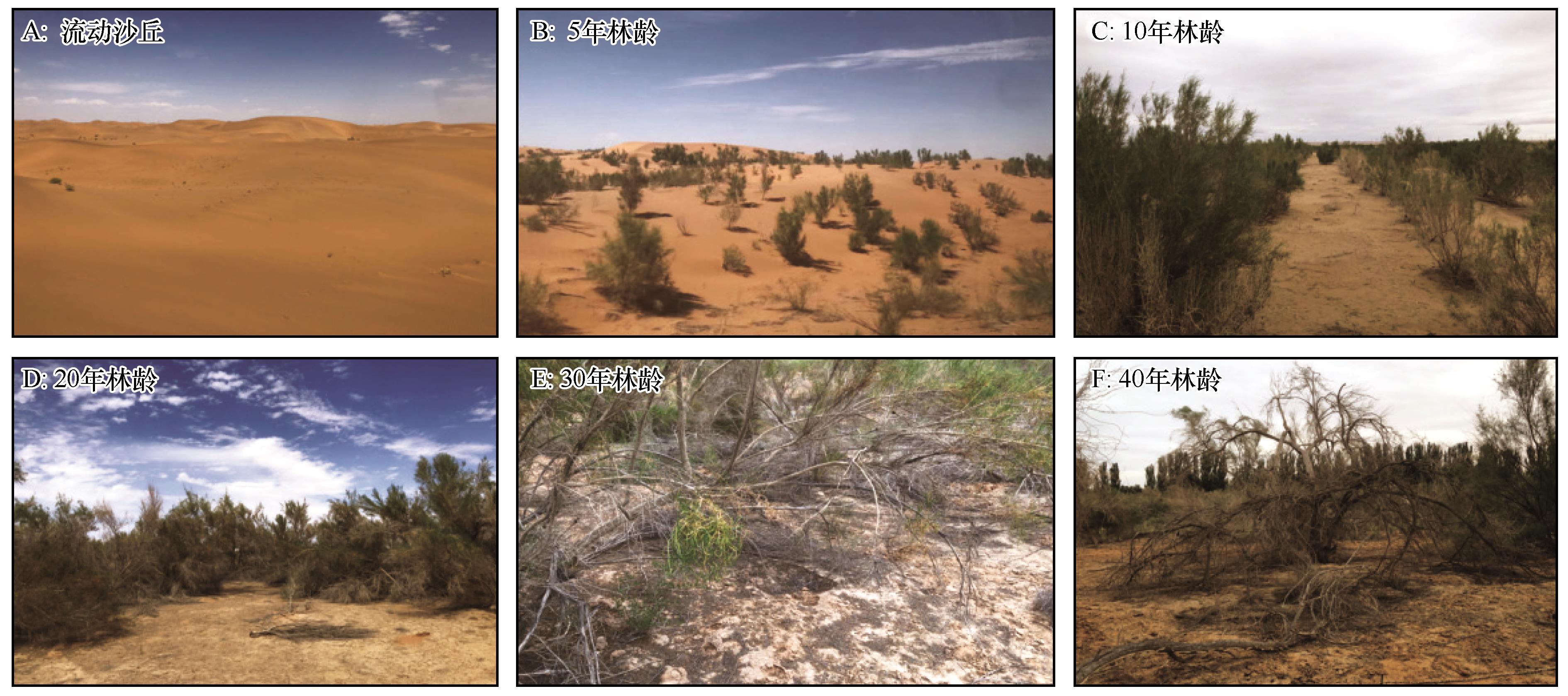
Fig.1 Haloxylon ammodendron plantations of different plantation ages
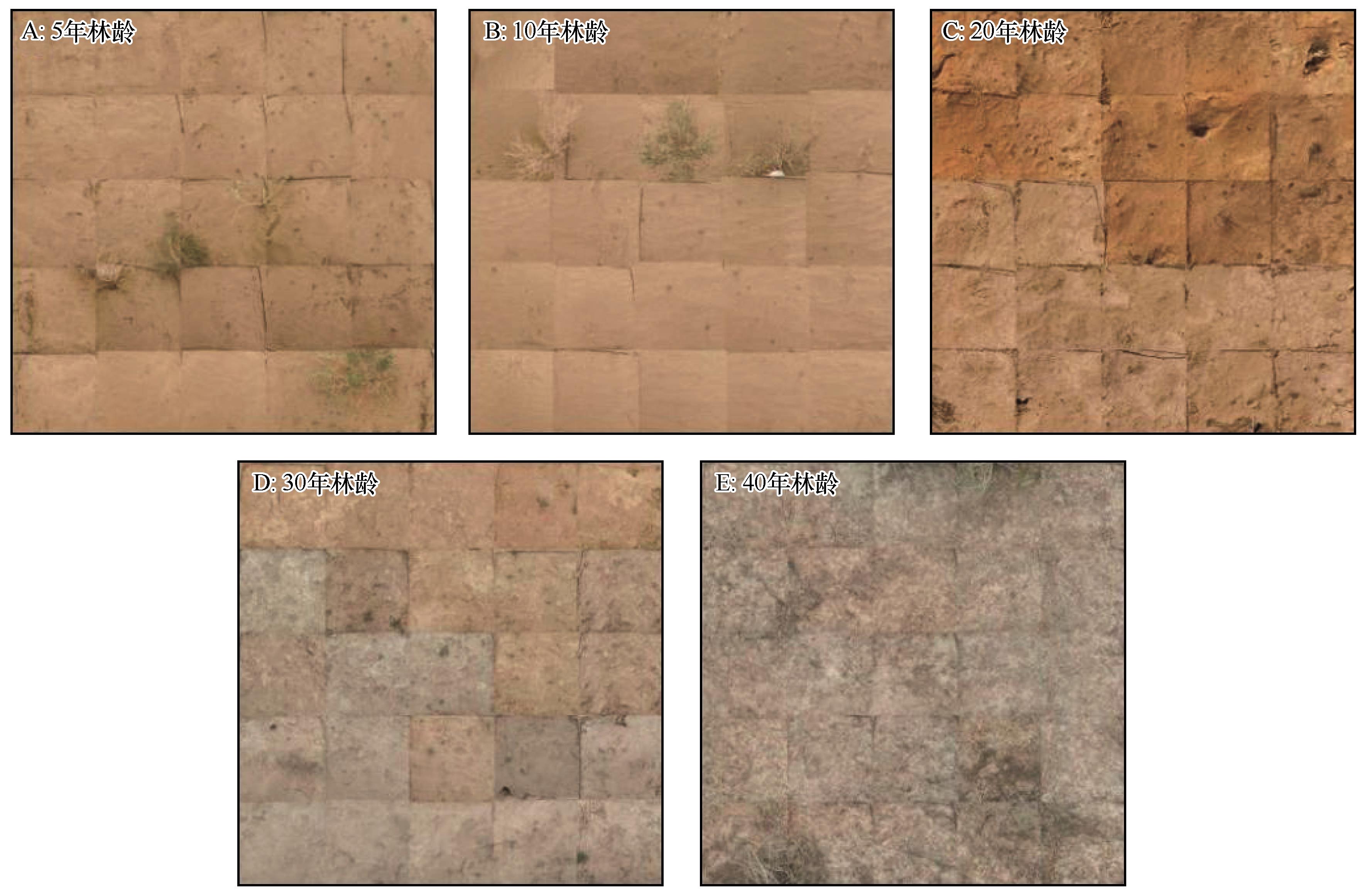
Fig.2 Sample areas of annual herbaceous species of Haloxylon ammodendron plantations with different plantation ages
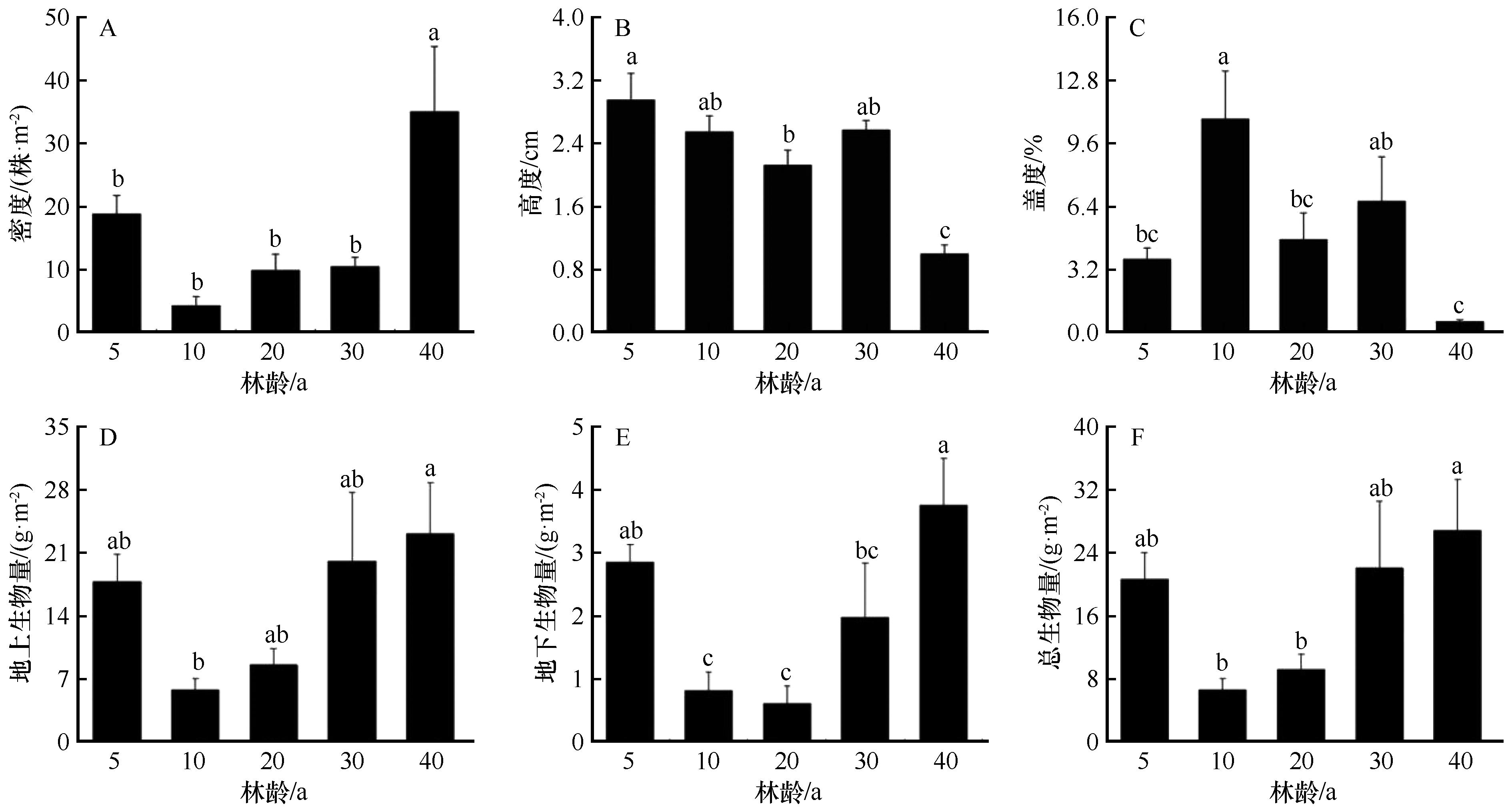
Fig.3 Density, height,coverage,biomass of 3 typical annual herbaceous species of Haloxylon ammodendron plantations with different plantation ages
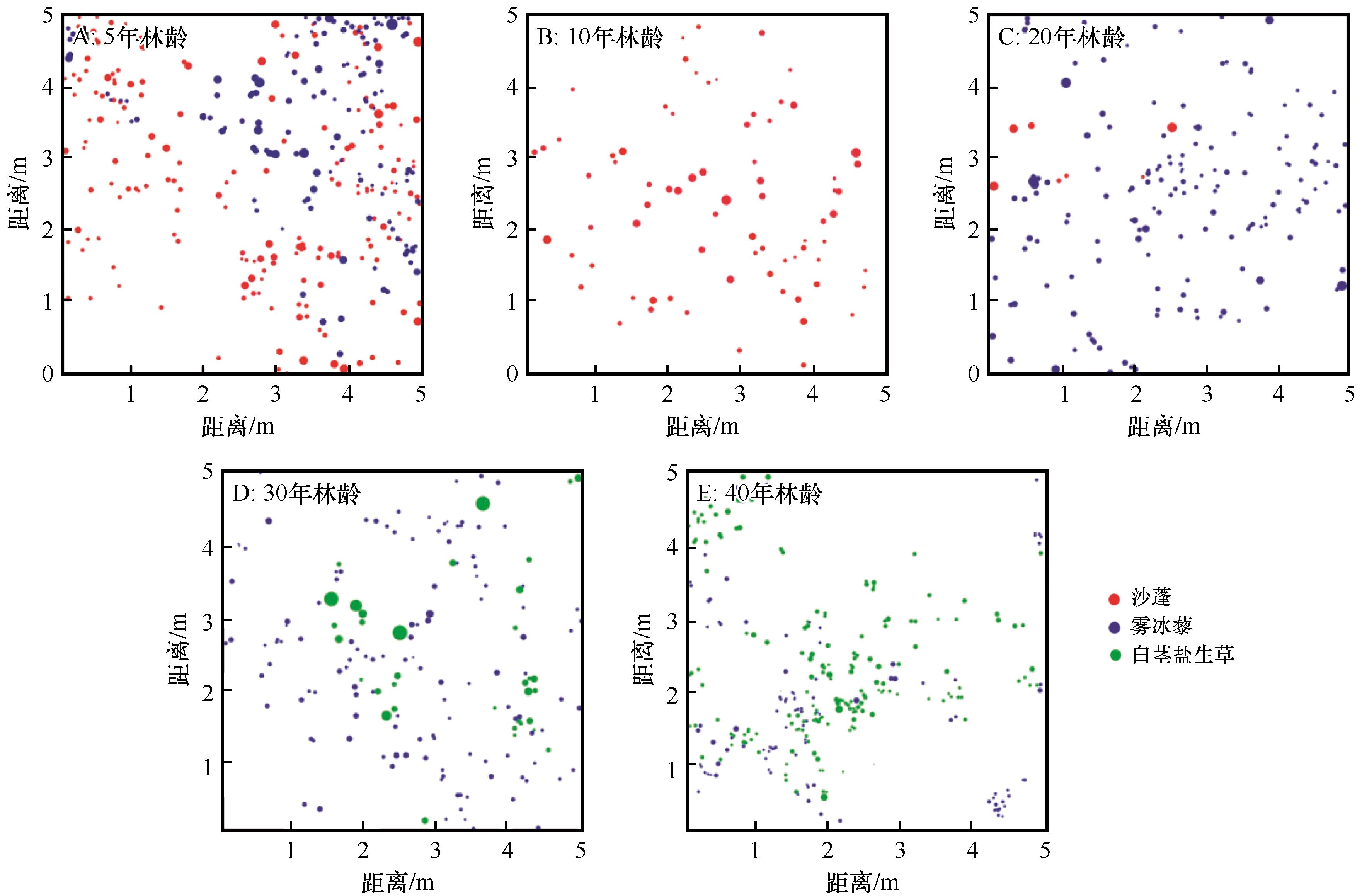
Fig.4 Spatial distribution of 3 typical annual herbaceous species of Haloxylon ammodendron plantations with different plantation ages
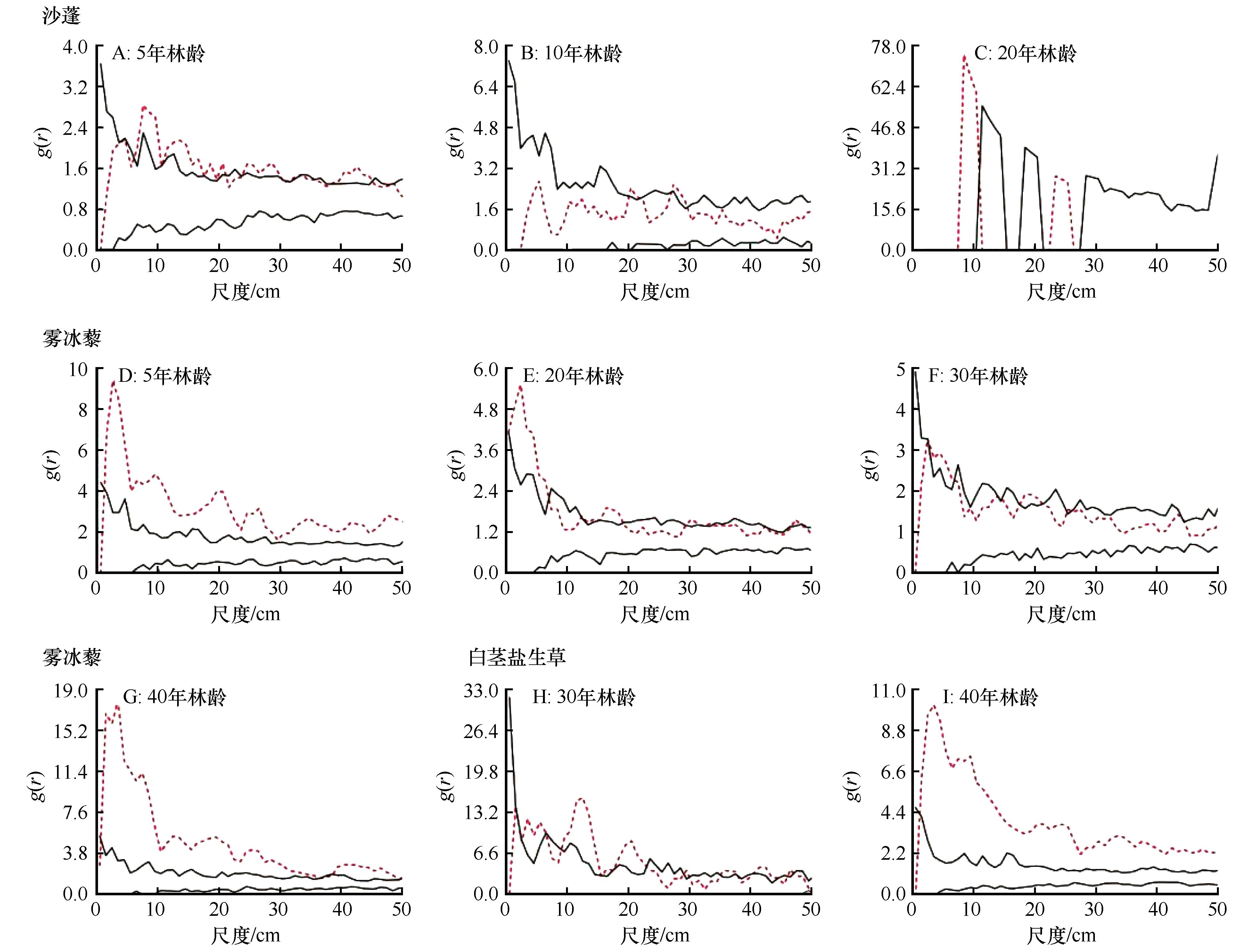
Fig.5 Spatial patterns of 3 typical annual herbaceous species of Haloxylon ammodendron plantations with different plantation ages
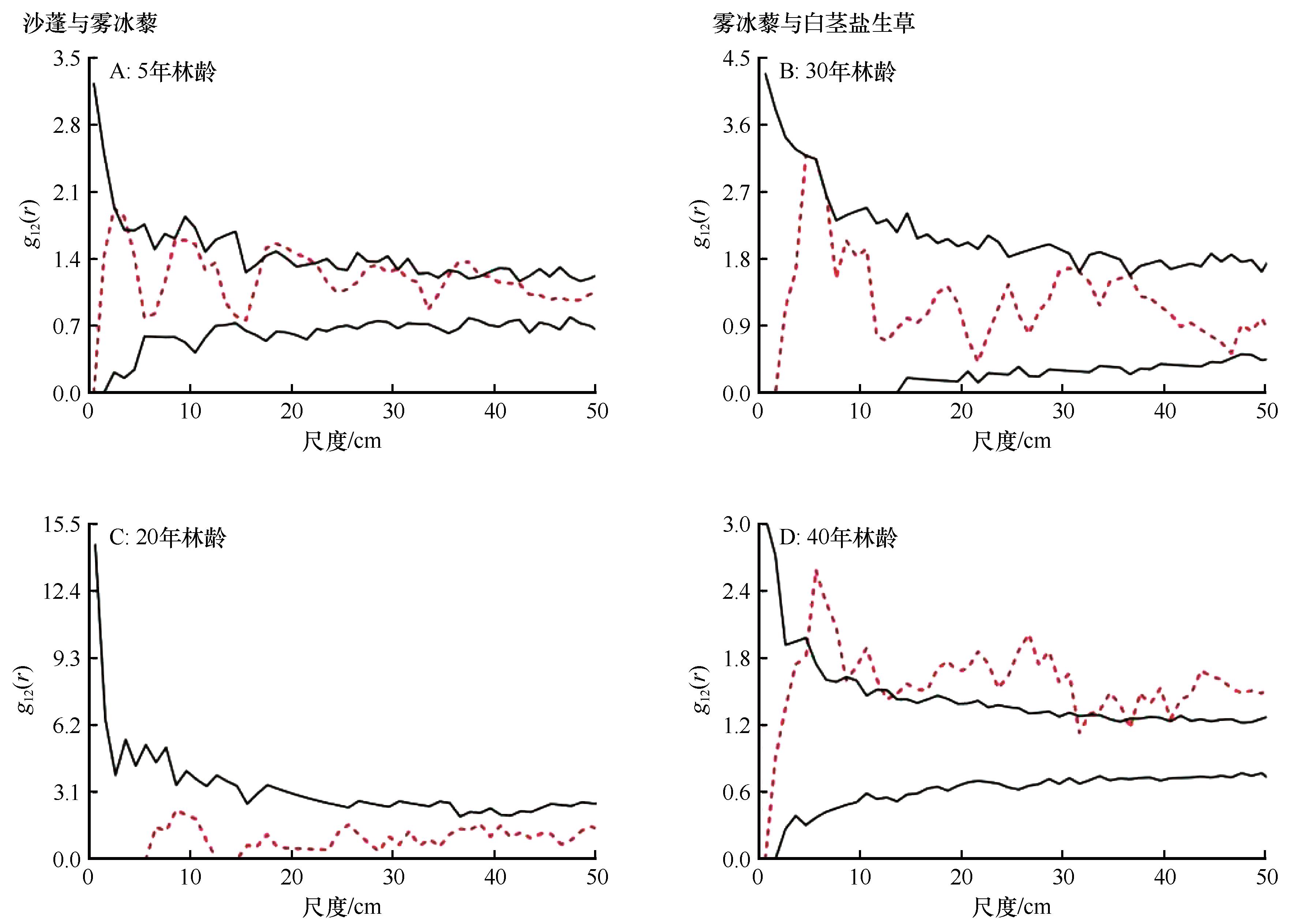
Fig.6 Interspecific correlation analysis of 3 typical annual herbaceous species of Haloxylon ammodendron plantations with different plantation ages
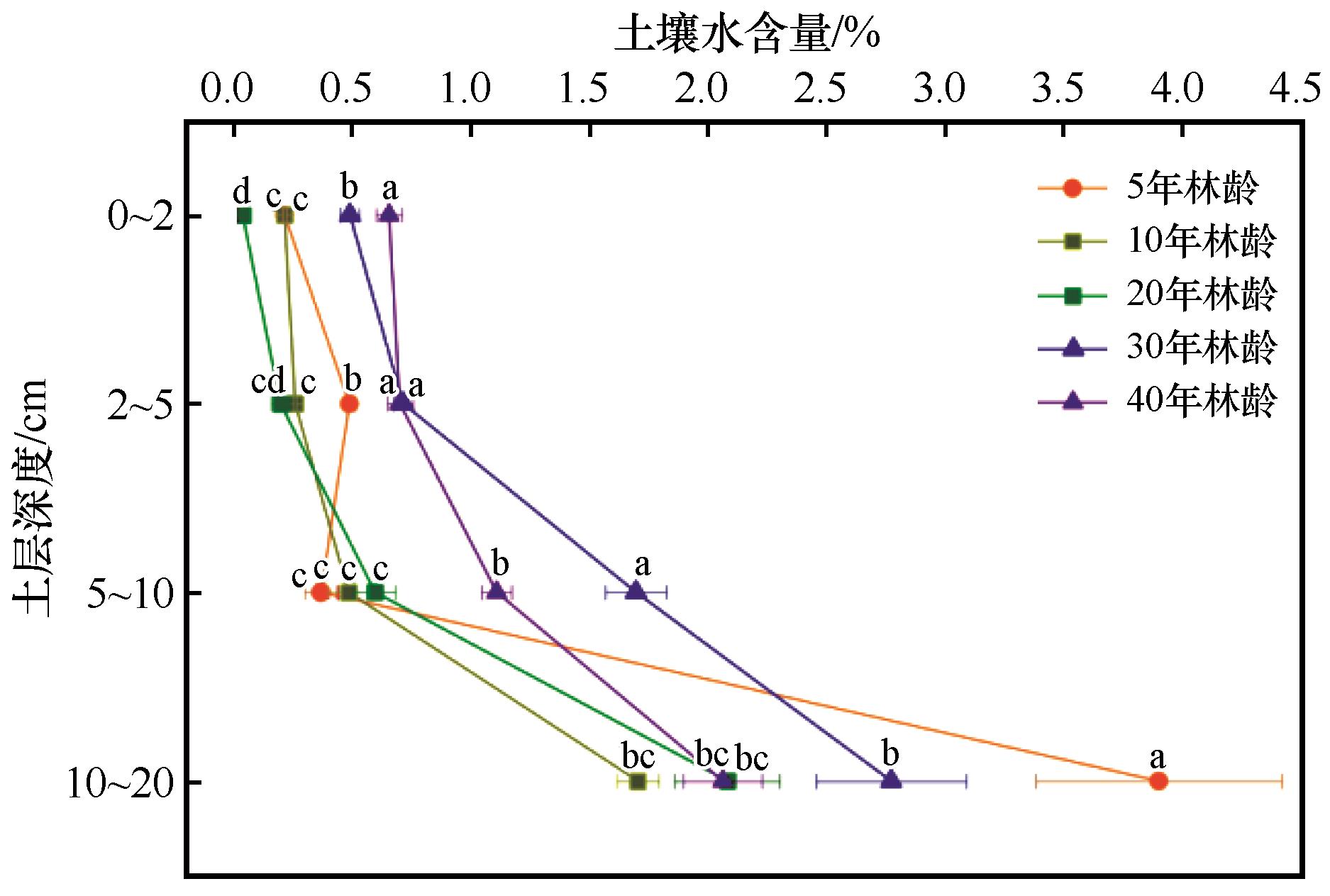
Fig.7 Soil water content of different soil layers in different plantation ages
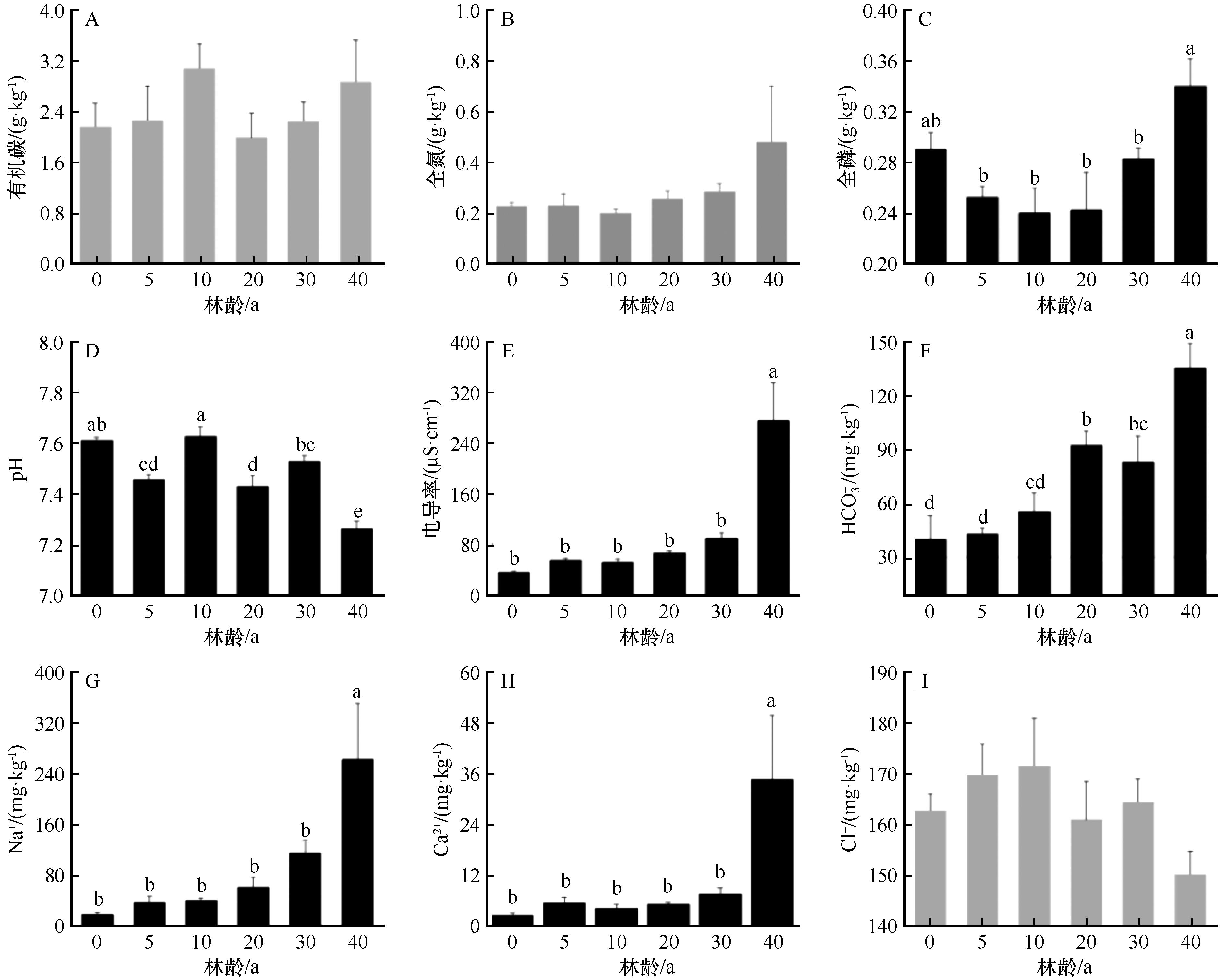
Fig.8 Soil nutrients, pH, electrical conductivity, and salt ions of Haloxylon ammodendron plantations with different plantation ages
| 解释方差 | 环境因子 | 解释率/% | F | P | RDA1 | RDA2 |
|---|---|---|---|---|---|---|
| 解释方差 | 0.6302 | 0.09 | ||||
| 解释方差(累计) | 63.02 | 72.01 | ||||
| 相关系数 | 0.9326 | 0.6205 | ||||
| Ca2+ | 39 | 53.0 | 0.002 | |||
| 2~5 cm土壤水含量 | 13.6 | 18.4 | 0.008 | |||
| Na+ | 7.7 | 10.4 | 0.022 | |||
| 10~20 cm土壤水含量 | 3.4 | 4.7 | 0.202 | |||
| HCO | 3.8 | 5.2 | 0.114 | |||
| 土壤全磷 | 2.9 | 4.0 | 0.190 | |||
| EC | 1.5 | 2.0 | 0.396 | |||
| 5~10 cm土壤水含量 | 1.2 | 1.7 | 0.412 | |||
| 0~2 cm土壤水含量 | 0.4 | 0.5 | 0.806 | |||
| pH | 0.1 | 0.2 | 0.946 |
Table 2 RDA ordination for annual herbaceous species community characteristics with soil environmental factors
| 解释方差 | 环境因子 | 解释率/% | F | P | RDA1 | RDA2 |
|---|---|---|---|---|---|---|
| 解释方差 | 0.6302 | 0.09 | ||||
| 解释方差(累计) | 63.02 | 72.01 | ||||
| 相关系数 | 0.9326 | 0.6205 | ||||
| Ca2+ | 39 | 53.0 | 0.002 | |||
| 2~5 cm土壤水含量 | 13.6 | 18.4 | 0.008 | |||
| Na+ | 7.7 | 10.4 | 0.022 | |||
| 10~20 cm土壤水含量 | 3.4 | 4.7 | 0.202 | |||
| HCO | 3.8 | 5.2 | 0.114 | |||
| 土壤全磷 | 2.9 | 4.0 | 0.190 | |||
| EC | 1.5 | 2.0 | 0.396 | |||
| 5~10 cm土壤水含量 | 1.2 | 1.7 | 0.412 | |||
| 0~2 cm土壤水含量 | 0.4 | 0.5 | 0.806 | |||
| pH | 0.1 | 0.2 | 0.946 |
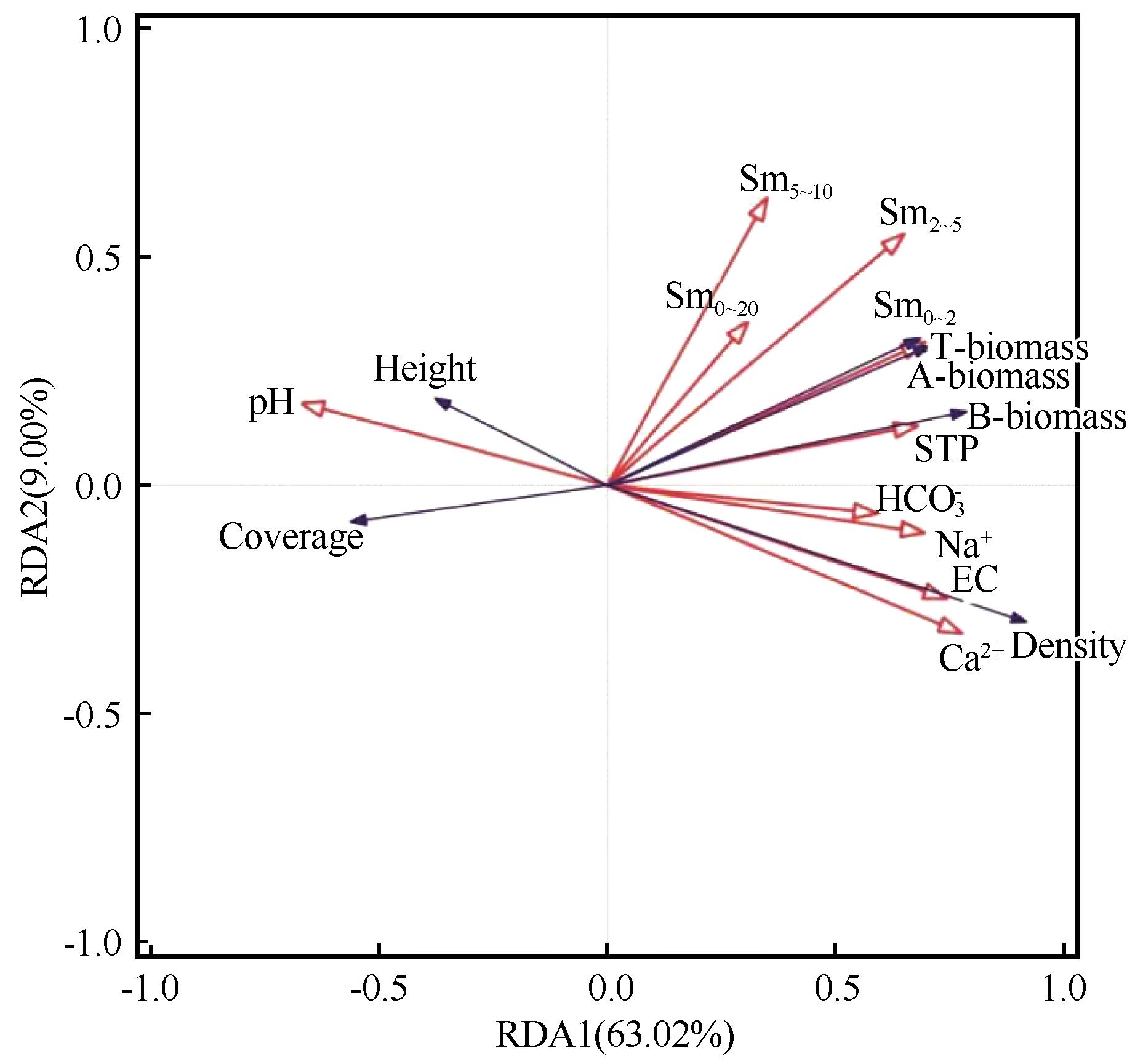
Fig.9 Redundancy analysis of community characteristics and soil environmental factors of annual herbaceous species
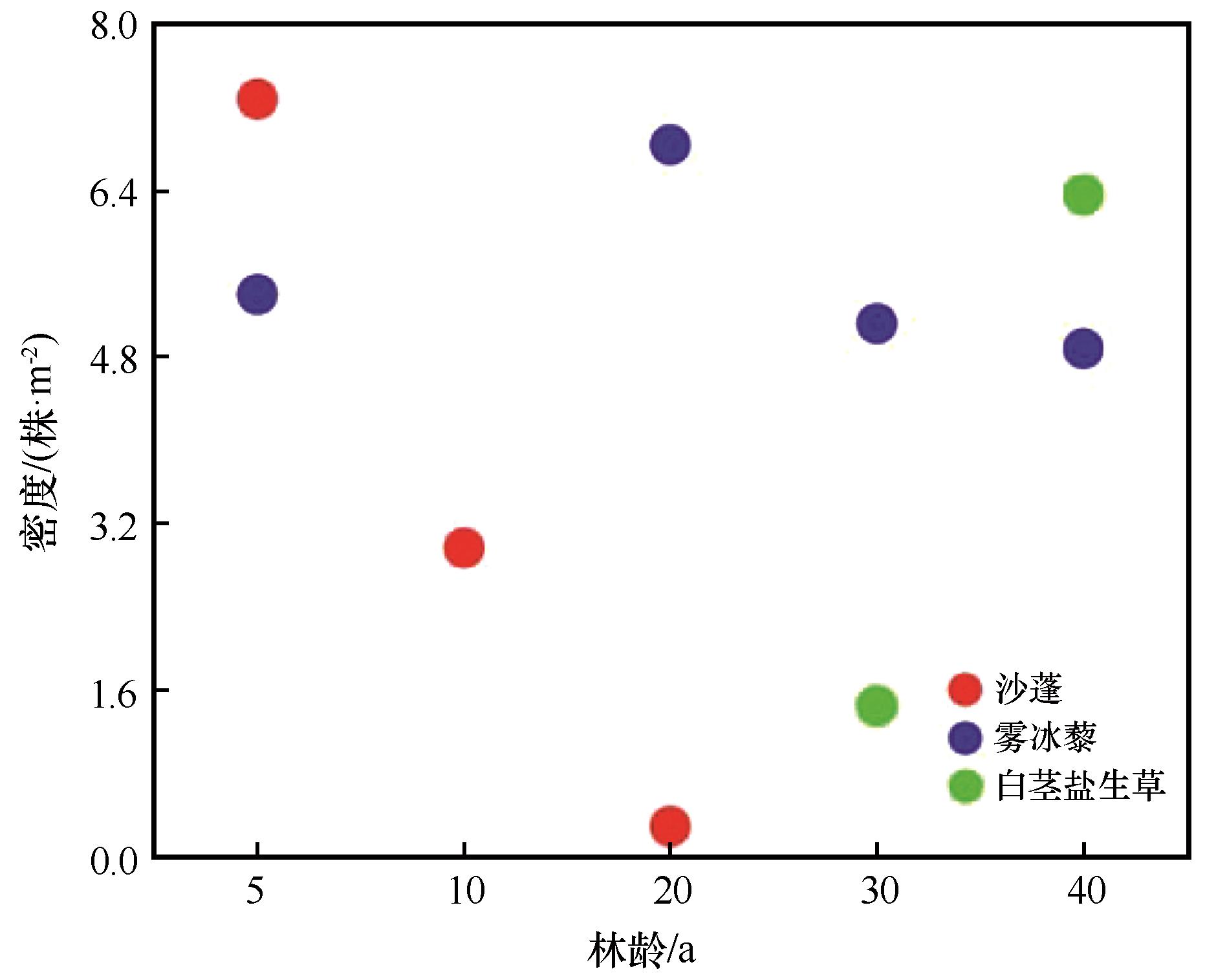
Fig.10 Density of 3 typical annual herbaceous species of Haloxylon ammodendron plantations with different plantation ages
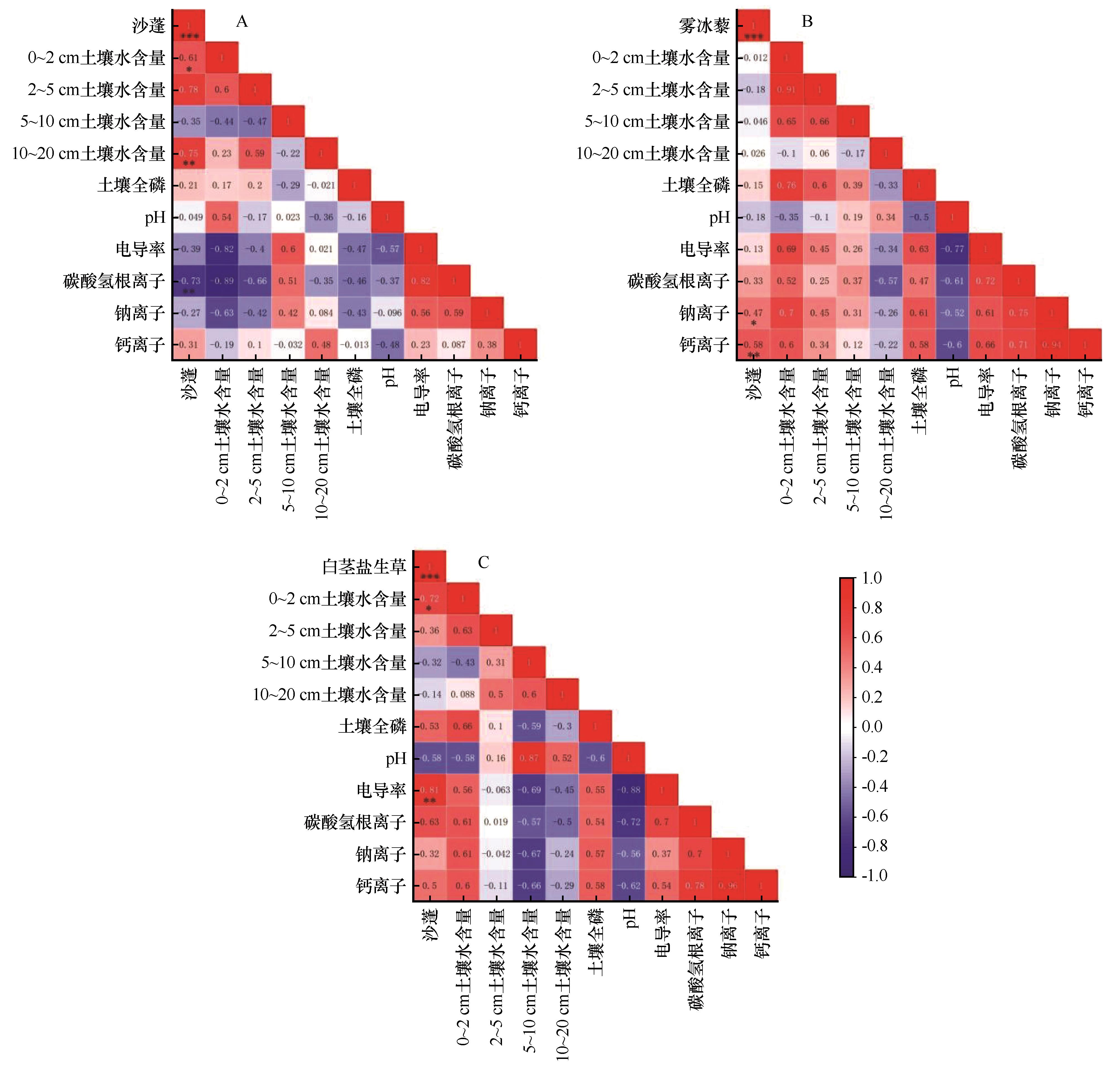
Fig.11 Heat map of correlation coefficients between density of 3 typical annual herbaceous species and soil environmental factors
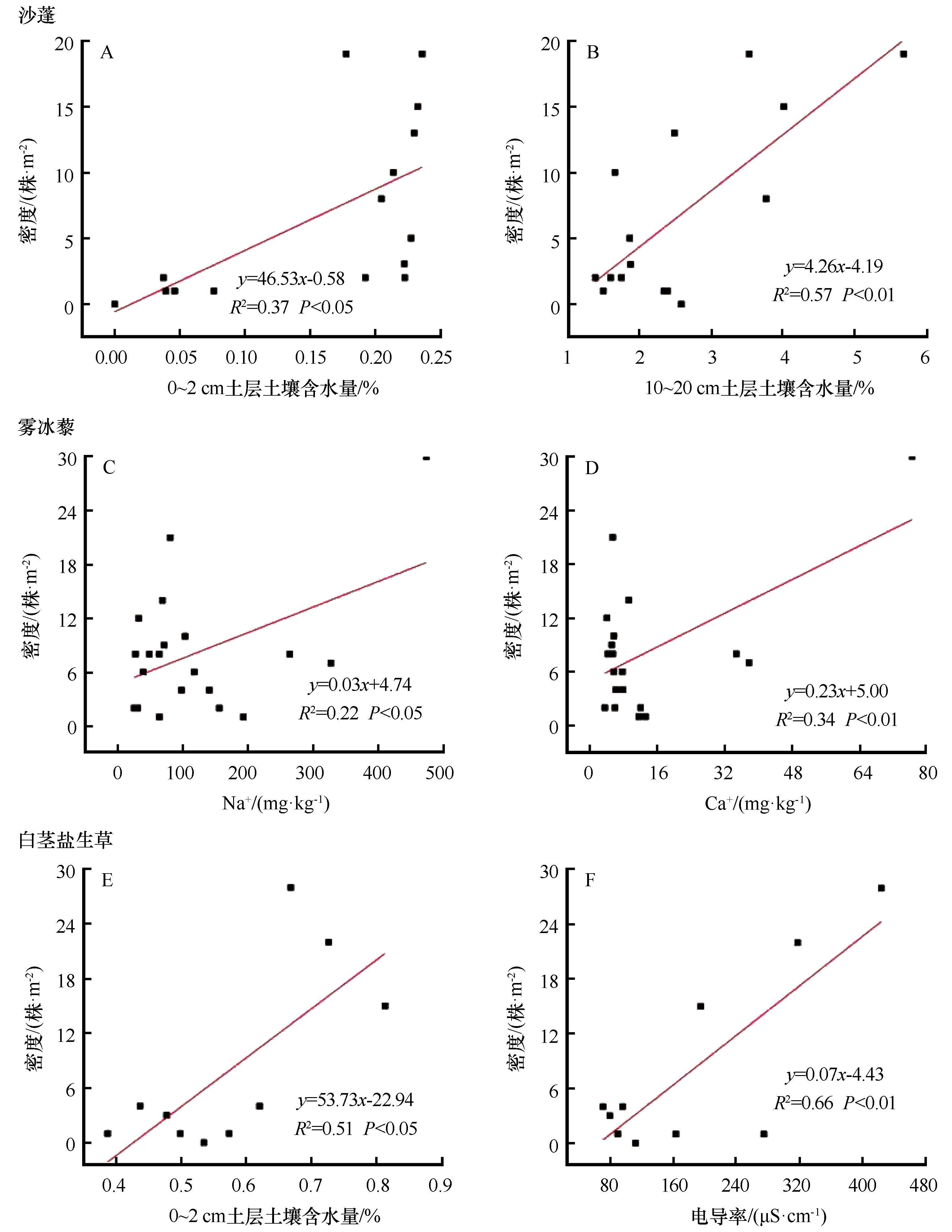
Fig.12 Regression analysis of density of 3 typical annual herbaceous species and soil environmental factors
| 1 | 赵学勇,安沙舟,曹广民,等.中国荒漠主要植物群落调查的意义、现状及方案[J].中国沙漠,2023,43(1):9-19. |
| 2 | 王国华,郭文婷,缑倩倩.钠盐胁迫对河西走廊荒漠绿洲过渡带典型一年生草本植物种子萌发的影响[J].应用生态学报,2020,31(6):1941-1947. |
| 3 | 党晶晶,赵成章,任珩,等.高寒草地狼毒与阴山扁蓿豆种群的空间格局[J].生态学杂志,2013,32(2):292-298. |
| 4 | Wiles J L.Spatial pattern analysis in plant ecology[J].Weed Technology,2001,15(1):195-196. |
| 5 | Tuda M.Understanding mechanism of spatial ecological phenomena:a preface to the special feature on “spatial statistics”[J].Ecological Research,2007,22(2):183-184. |
| 6 | 白小军,贾琳,谷会岩.大兴安岭次生林区优势种落叶松分布格局及竞争作用[J].生态学报,2021,41(10):4194-4202. |
| 7 | 杨华,李艳丽,沈林,等.长白山云冷杉林幼苗幼树空间分布格局及其更新特征[J].生态学报,2014,34(24):7311-7319. |
| 8 | 刘小恺,刘茂松,黄峥,等.宁夏沙湖4种干旱区群落中主要植物种间关系的格局分析[J].植物生态学报,2009,33(2):320-330. |
| 9 | 张金屯.植物种群空间分布的点格局分析[J].植物生态学报,1998,22(4):57-62. |
| 10 | 董雪,杜昕,孙志虎,等.生境梯度影响下的天然红松种群空间格局与种内关联[J].生态学报,2020,40(15):5239-5246. |
| 11 | 张文豪,张定海,张志山,等.腾格里沙漠半固定沙丘上油蒿种群的空间格局研究[J].草地学报,2023,31(7):2137-2145. |
| 12 | 许爱云,许冬梅,刘金龙,等.基于零模型的宁夏荒漠草原优势种群点格局分析[J].生态学报,2020,40(12):4180-4187. |
| 13 | 刘明伟,赵常明,陈聪琳,等.神农架小叶青冈种群的空间分布格局及种内种间空间关联[J].应用生态学报,2024,35(4):1033-1043. |
| 14 | 王丽萍,乌俊杰,柴勇,等.高黎贡山中山湿性常绿阔叶林优势种空间分布格局及其关联性[J].植物生态学报,2024,48(2):180-191. |
| 15 | 许爱云,刘金龙,米世明,等.宁夏荒漠草原蒙古冰草(Agropyron mongolicum)种群小尺度空间分布及其关联性[J].生态学报,2019,39(12):4551-4559. |
| 16 | 梁存柱,王炜,朱宗元,等.荒漠区一年生植物层片的组织格局与生态适应模式[J].干旱区资源与环境,2002(1):77-83. |
| 17 | 李雪华,李晓兰,蒋德明,等.干旱半干旱荒漠地区一年生植物研究综述[J].生态学杂志,2006,25(7):851-856. |
| 18 | 肖遥,陶冶,张元明.古尔班通古特沙漠4种荒漠草本植物不同生长期的生物量分配与叶片化学计量特征[J].植物生态学报,2014,38(9):929-940. |
| 19 | 张景光,张志山,王新平,等.沙坡头人工固沙区一年生植物小画眉草繁殖分配研究[J].中国沙漠,2005,25(2):60-64. |
| 20 | 苏永中,刘婷娜.流动沙地建植人工固沙梭梭林的土壤演变过程[J].土壤学报,2020,57(1):84-91. |
| 21 | Wang G, Munson M S, Yu K, et al.Ecological effects of establishing a 40-year oasis protection system in a northwestern China desert[J].Catena,2020,187:104374-104374. |
| 22 | 张德魁,马全林,魏林源,等.民勤沙区4种典型一年生植物构件特征[J].科学技术与工程,2020,20(34):14019-14026. |
| 23 | 张晶,左小安,吕朋.生长季降水格局变化对科尔沁沙地典型生境植物群落结构、功能和地上生物量的影响[J].中国沙漠,2024,44(4):1-13. |
| 24 | 梁存柱,刘钟龄,朱宗元,等.阿拉善荒漠区一年生植物层片物种多样性及其分布特征[J].应用生态学报,2003,14(6):897-903. |
| 25 | 何明珠.阿拉善高原荒漠植被组成分布特征及其环境解释Ⅴ.一年生植物层片物种多样性及其分布特征[J].中国沙漠,2010,30(3):528-533. |
| 26 | 何志斌,赵文智,方静.黑河中游地区植被生态需水量估算[J].生态学报,2005,25(4):705-710. |
| 27 | Su Y Z, Zhao W Z, Su P X,et al.Ecological effects of desertification control and desertified land reclamation in an oasis-desert ecotone in an arid region:a case study in Hexi Corridor, Northwest China[J].Ecological Engineering,2007,29:117-124. |
| 28 | 李苏,张定海,张志山,等.科尔沁沙地盐蒿种群的空间分布格局及关联性[J].生物资源,2022,44(1):63-72. |
| 29 | 何增丽,许涵,秦新生,等.海南尖峰岭热带山地雨林2种夹竹桃科植物的空间分布格局与关联性[J].生物多样性,2017,25(10):1065-1074. |
| 30 | 张金屯.数量生态学[M].北京:科学出版社,2011:277-280. |
| 31 | 魏卫东,刘育红,马辉,等.三江源区高寒草甸土壤与草地退化关系冗余分析[J].生态科学, 2018,37(3):9. |
| 32 | 贾恢先,孙学刚.中国西北内陆盐地植物图谱[M].北京:中国林业出版社,2005. |
| 33 | 苏永中,赵哈林,张铜会,等.科尔沁沙地不同年代小叶锦鸡儿人工林植物群落特征及其土壤特性[J].植物生态学报,2004(1):93-100. |
| 34 | 崔强.毛乌素沙地不同生境条件下油蒿群落格局分析研究[D].北京:北京林业大学,2012. |
| 35 | 贾美玉,张金屯,梁钰,等.五台山林线附近优势草本植物的分布格局、过程与尺度分析[J].生态学杂志,2019,38(2):343-353. |
| 36 | 贾成朕,苗百岭,姜威,等.阿拉善典型荒漠群落种群空间格局及种间关联的尺度依赖性[J].内蒙古大学学报(自然科学版),2017,48(2):142-148. |
| 37 | Thorsten W, Savitri G, Nimal G, et al.Analyzing the spatial structure of a Sri Lankan tree species with multiple scales of clustering[J].Ecology,2007,88(12):3088-3102. |
| 38 | 王鑫厅,侯亚丽,刘芳,等.羊草+大针茅草原退化群落优势种群空间点格局分析[J].植物生态学报,2011,35(12):1281-1289. |
| 39 | 张生楹,任彦文,柳小妮,等.高寒牧区醉马草草丛肥岛效应的研究[J].中国草地学报,2013,35(1):85-90. |
| 40 | Wang X, Liang C, Wang W.Balance between facilitation and competition determines spatial patterns in a plant population[J].Chinese Science Bulletin,2014,59(13):1405-1415. |
| 41 | 王皓,梁钰,周利杰,等.极小种群黄花绿绒蒿点格局分析[J].北京师范大学学报(自然科学版),2023,59(4):637-643. |
| 42 | 樊登星,余新晓.北京山区栓皮栎林优势种群点格局分析[J].生态学报,2016,36(2):318-325. |
| 43 | Clark P J, Evans F C.On some aspects of spatial pattern in bio-logical populations[J].Science,1955,121:3977-398. |
| 44 | Condit R, Ashton S P, Baker P, et al.Spatial patterns in the distribution of tropical tree species[J].Science,2000,288(5470):1414-1418. |
| 45 | Getzin S, Wiegand T, Wiegand K,et al.Heterogeneity influences spatial patterns and demographics in forest stands[J].Journal of Ecology,2008,96(4):807-820. |
| 46 | Bieng N A M, Perot T, Coligny F,et al.Spatial pattern of trees influences species productivity in a mature oak-pine mixed forest[J].European Journal of Forest Research,2013,132(5/6):841-850. |
| 47 | 黄建辉.物种多样性的空间格局及其形成机制初探[J].生物多样性,1994(2):103-107. |
| 48 | 刘旻霞.亚高寒草甸不同坡向金露梅种群的空间分布格局及空间关联[J].应用生态学报,2017,28(6):1817-1823. |
| 49 | Peter C.Mechanisms of maintenance of species diversity[J].Annual Review of Ecology and Systematics,2000,31(1):343-366. |
| [1] | Na Gao, Guangyin Hu, Zhibao Dong. Change characteristics of spatial distribution pattern of sandy land in Gonghe Basin [J]. Journal of Desert Research, 2025, 45(1): 204-214. |
| [2] | Yanan Wang, Wei Feng, Wenbin Yang. Soil microbial community diversity in low-coverage sand-fixing forest belts [J]. Journal of Desert Research, 2024, 44(4): 102-110. |
| [3] | Hongling Yang, Bo Yao, Yongzhong Su, Yulin Li. Distribution pattern of soil physical and chemical properties of plantation forest in northern agro-pastoral ecotone [J]. Journal of Desert Research, 2024, 44(2): 283-294. |
| [4] | Yuqing Chen, Haiyang Xi, Wenju Cheng, Xinyue Zhao. Characteristics of soil carbon and nitrogen change in three typical plant communities in desert riparian forest area [J]. Journal of Desert Research, 2023, 43(1): 150-159. |
| [5] | Xiangjie Li, Zhiwen Li, Dingding Du, Li Sun, Chu Hou, Shiqian Li, Wen Zhang. Sediments and spatial pattern characteristics of Vitex trifolia nebkhas in the Houtian sandy land of Nanchang, China [J]. Journal of Desert Research, 2022, 42(6): 211-220. |
| [6] | Shilong Li. Soil physicochemical properties of alpine grasslands under different desertification degrees in Maqu, Gansu, China [J]. Journal of Desert Research, 2022, 42(6): 44-52. |
| [7] | Heng Ren, Wenzhi Zhao, Zhitao Wang, Jiang Zhao. Spatial pattern of Psammochloa villosa population in patch landscape in dune habitat [J]. Journal of Desert Research, 2022, 42(4): 89-98. |
| [8] | Zheting Jia, Jiuyan Yang, Yanxia Sun, Qi Chen, Ruiling Yan. Spatial distribution pattern of Salsola passerina population in Alashan Plateau [J]. Journal of Desert Research, 2021, 41(1): 119-128. |
| [9] | Sun Yanxia, Yang Jiuyan, Qiao Yiqing, Guo Chaoli, Shao Yiming, Wang Jianyu. Spatial distribution pattern of Reaumuria songarica population in Alashan Plateau [J]. Journal of Desert Research, 2020, 40(1): 105-115. |
| [10] | Li Xiaomei, Yan Ping, Qian Yao, Wu Wei. Distribution Patterns and Its Classification at the Scale of Channel-Sand Dune in Different Climate Zones [J]. JOURNAL OF DESERT RESEARCH, 2017, 37(5): 821-829. |
| [11] | Zhang Jianpeng, Li Yuqiang, Zhao Xueyong, Zhang Tonghui, She Qiannan, Liu Min, Wei Shuilian. Effects of Exclosure on Soil Physicochemical Properties and Carbon Sequestration Potential Recovery of Desertified Grassland [J]. JOURNAL OF DESERT RESEARCH, 2017, 37(3): 491-499. |
| [12] | Liu Shumin, Yang Jiuyan, Qing Hua, Song Xuemei, Han Fenglin. Spatial Patterns of Reaumuria soongorica in the Desert Area of Inner Mongolia [J]. JOURNAL OF DESERT RESEARCH, 2016, 36(5): 1331-1339. |
| [13] | He Yiming, He Xiao, Bao Liying, Guo Chunyan, Gao Jianping, Li Qi. Spatial Pattern and Branching Architecture of Caryopteris mongolica [J]. JOURNAL OF DESERT RESEARCH, 2016, 36(4): 1007-1013. |
| [14] | ZhangYinghua, Liu Shizeng, Ji Yongfu, Liu Hujun, Li Faming, Li Yinke. Spatial Distribution Pattern and Spatial Association of Phragmites australis in the Middle Reaches of Shiyanghe River [J]. JOURNAL OF DESERT RESEARCH, 2016, 36(2): 342-348. |
| [15] | Lai Fengbing, Sun Hu, Zhang Zhanhe, Chen Shujiang, Huang Tiecheng, Mao Donglei. Morphological Characteristics and Spatial Pattern of Populus euphratica Nebkhas to the West of the Hotan River in the Taklimakan Desert [J]. JOURNAL OF DESERT RESEARCH, 2015, 35(2): 284-293. |
| Viewed | ||||||
|
Full text |
|
|||||
|
Abstract |
|
|||||
Address: No. 8, Tianshui Middle Road, Chengguan District, Lanzhou City, Gansu Province, China (Postcode: 730000)
Tel:0931-8267545
Email:caiedit@lzb.ac.cn;desert@lzb.ac.cn
Support:Magtech
