
- CN 62-1070/P
- ISSN 1000-694X
- Bimonthly 1981
Journal of Desert Research ›› 2026, Vol. 46 ›› Issue (2): 277-287.DOI: 10.7522/j.issn.1000-694X.2025.00202
Previous Articles Next Articles
Di An( ), Bo Zhang(), Xueying Zhang, Zhexi Wu
Received:2025-11-04
Revised:2025-12-25
Online:2026-03-20
Published:2026-04-13
Contact:
Bo Zhang
CLC Number:
Di An, Bo Zhang, Xueying Zhang, Zhexi Wu. Implications of intensive ecological intervention for vegetation productivity in arid and semi-arid areas of China[J]. Journal of Desert Research, 2026, 46(2): 277-287.
Add to citation manager EndNote|Ris|BibTeX
URL: http://www.desert.ac.cn/EN/10.7522/j.issn.1000-694X.2025.00202
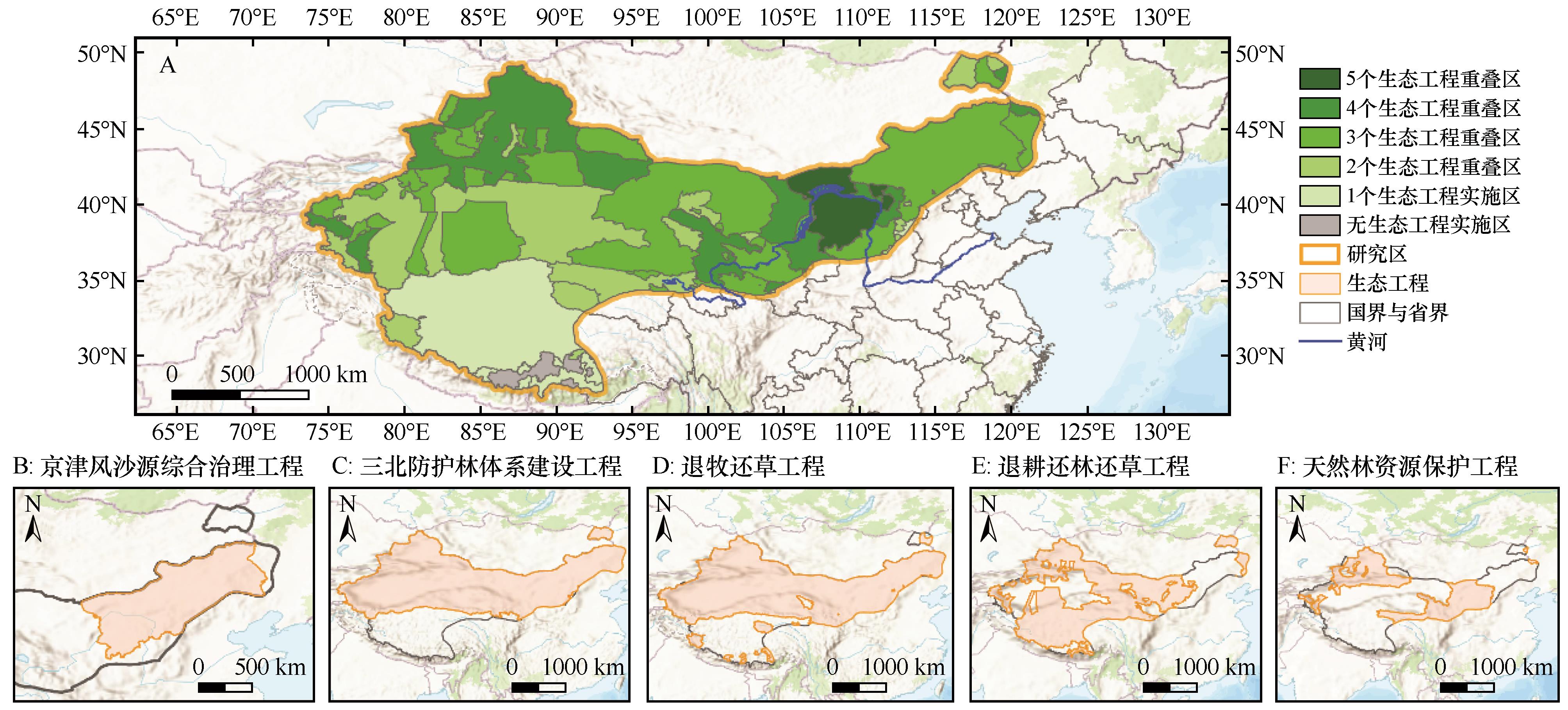
Fig.1 Spatial distribution of overlapping ecological project areas in the study area
| 数据名称 | 数据集名称 | 空间分辨率/m | 下载网址 |
|---|---|---|---|
| 土地利用 | MCD12Q1.061 | 1 000 | https://earthengine.geogle.com |
| NDVI | MOD13A1 | 500 | |
| GPP | MOD17A2H | 500 | |
| NPP | MOD17A2H | 500 | |
| 气温 | 中国1 km分辨率逐月气温数据集 | 1 000 | https://data.tpdc.ac.cn |
| 降水量 | 中国1 km分辨率逐月降水量数据集 | 1 000 | |
| 生态工程边界 | 中国重大生态工程生态效益评估数据集 | https://www.nesdc.org.cn |
Table 1 Data and source
| 数据名称 | 数据集名称 | 空间分辨率/m | 下载网址 |
|---|---|---|---|
| 土地利用 | MCD12Q1.061 | 1 000 | https://earthengine.geogle.com |
| NDVI | MOD13A1 | 500 | |
| GPP | MOD17A2H | 500 | |
| NPP | MOD17A2H | 500 | |
| 气温 | 中国1 km分辨率逐月气温数据集 | 1 000 | https://data.tpdc.ac.cn |
| 降水量 | 中国1 km分辨率逐月降水量数据集 | 1 000 | |
| 生态工程边界 | 中国重大生态工程生态效益评估数据集 | https://www.nesdc.org.cn |
| 驱动因素 | 驱动因素的划分标准 | 驱动因素的贡献率/% | |||
|---|---|---|---|---|---|
| 气候因素 | 非气候因素 | ||||
| >0 | CC&NC | >0 | >0 | ||
| CC | >0 | <0 | 100 | 0 | |
| NC | <0 | >0 | 0 | 100 | |
| <0 | CC&NC | <0 | <0 | ||
| CC | <0 | >0 | 100 | 0 | |
| NC | >0 | <0 | 0 | 100 | |
Table 2 Criteria for classifying drivers of vegetation productivity change and calculation methods for contribution rates
| 驱动因素 | 驱动因素的划分标准 | 驱动因素的贡献率/% | |||
|---|---|---|---|---|---|
| 气候因素 | 非气候因素 | ||||
| >0 | CC&NC | >0 | >0 | ||
| CC | >0 | <0 | 100 | 0 | |
| NC | <0 | >0 | 0 | 100 | |
| <0 | CC&NC | <0 | <0 | ||
| CC | <0 | >0 | 100 | 0 | |
| NC | >0 | <0 | 0 | 100 | |
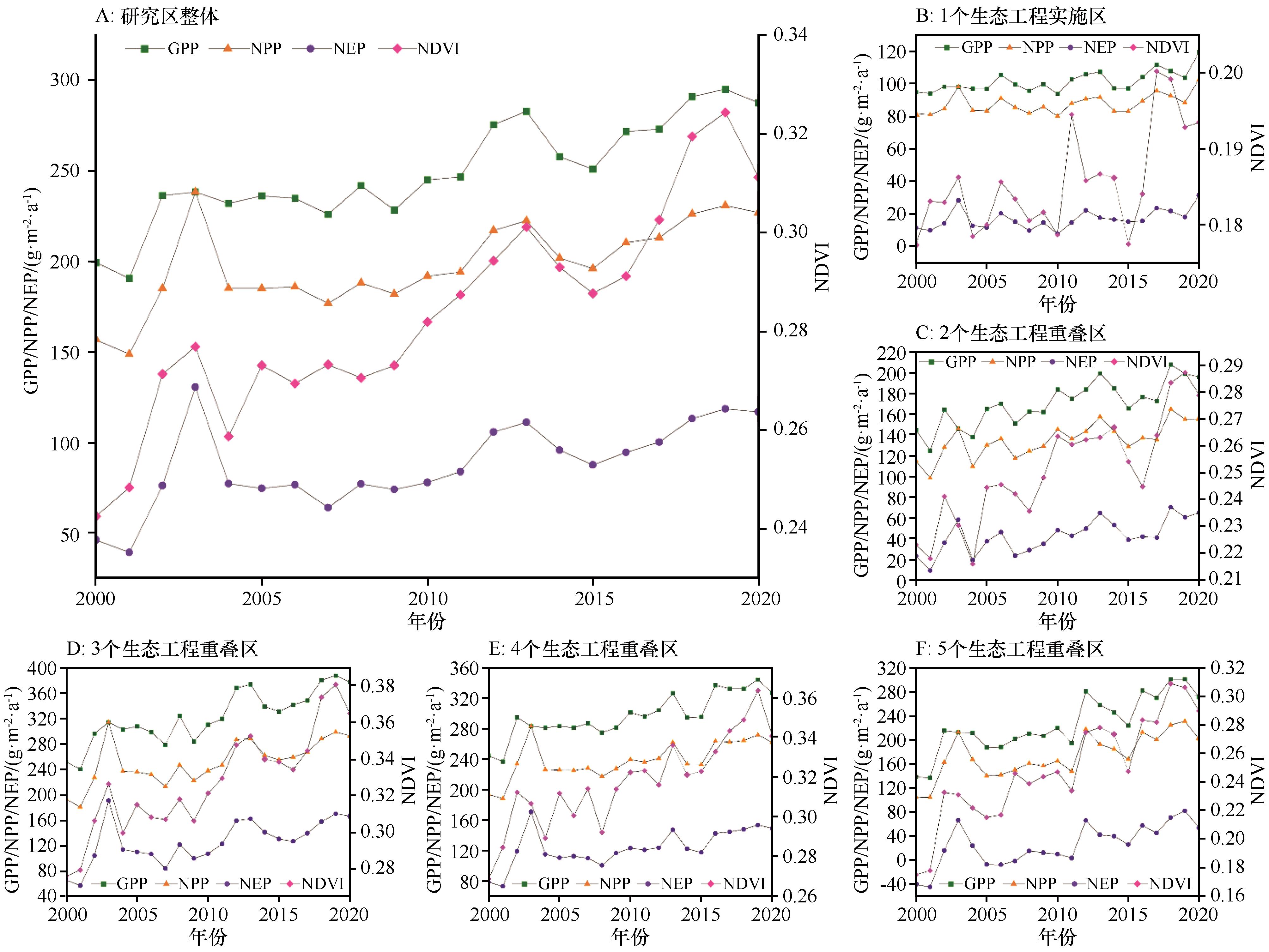
Fig.2 Interannual trends of vegetation productivity in the study area as a whole (A) and regions with ecological projects overlaps ranging from 1 to 5 (B-F)
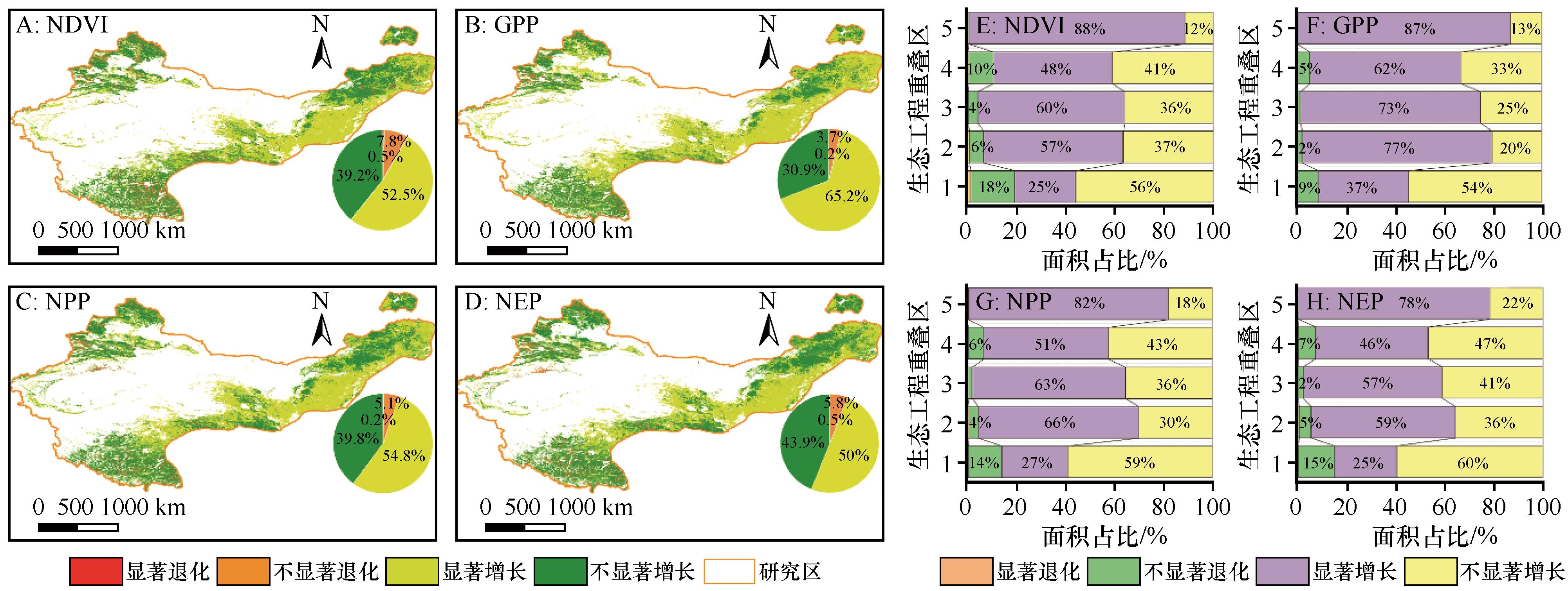
Fig.3 Spatial distribution of vegetation productivity in the study area as a whole (A-D), and spatial distribution of vegetation productivity in ecological project overlapping areas (E-H)
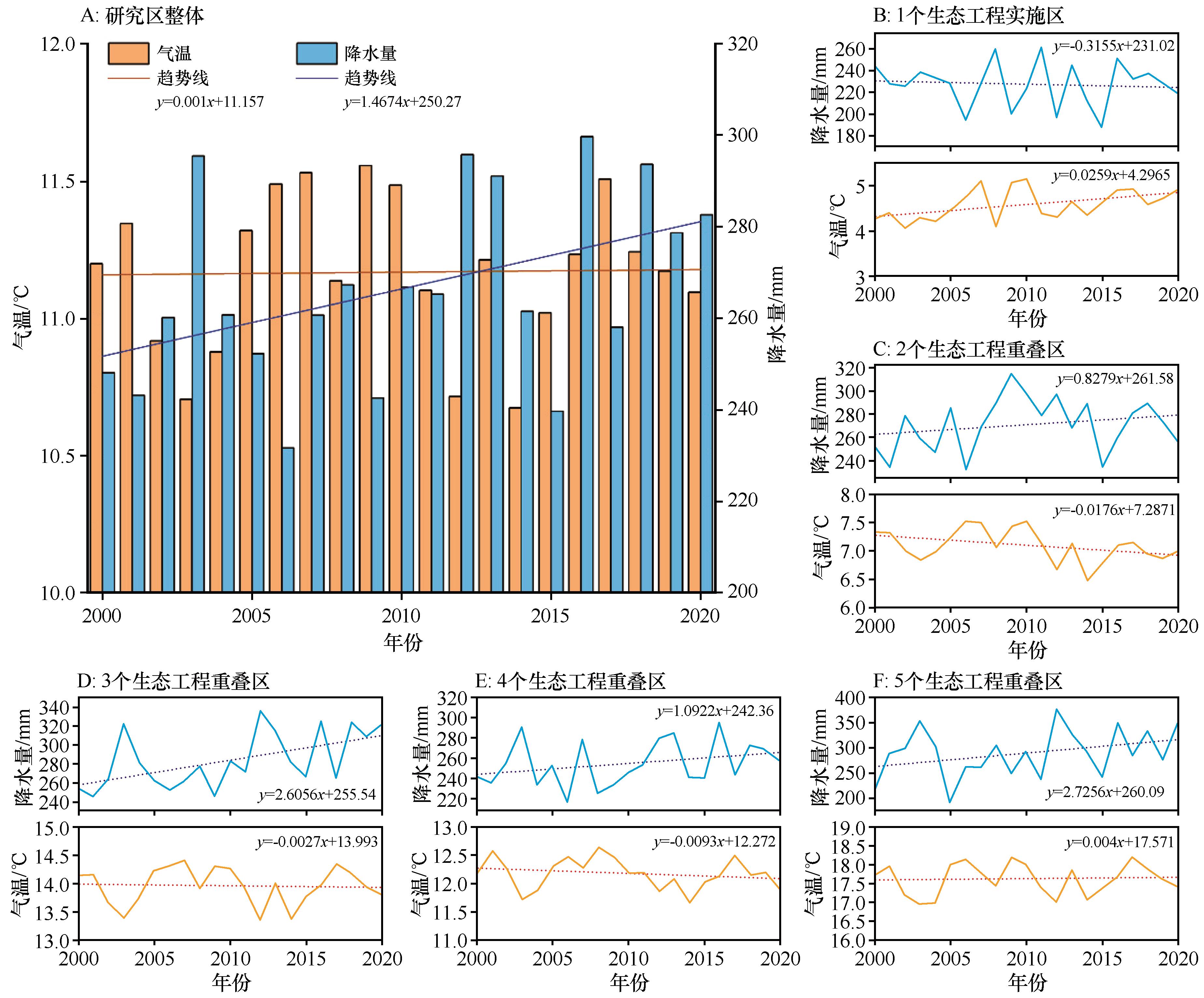
Fig.4 Interannual trends of climatic factors in the study area as a whole (A) and areas with 1-5 overlapping ecological projects (B-F)
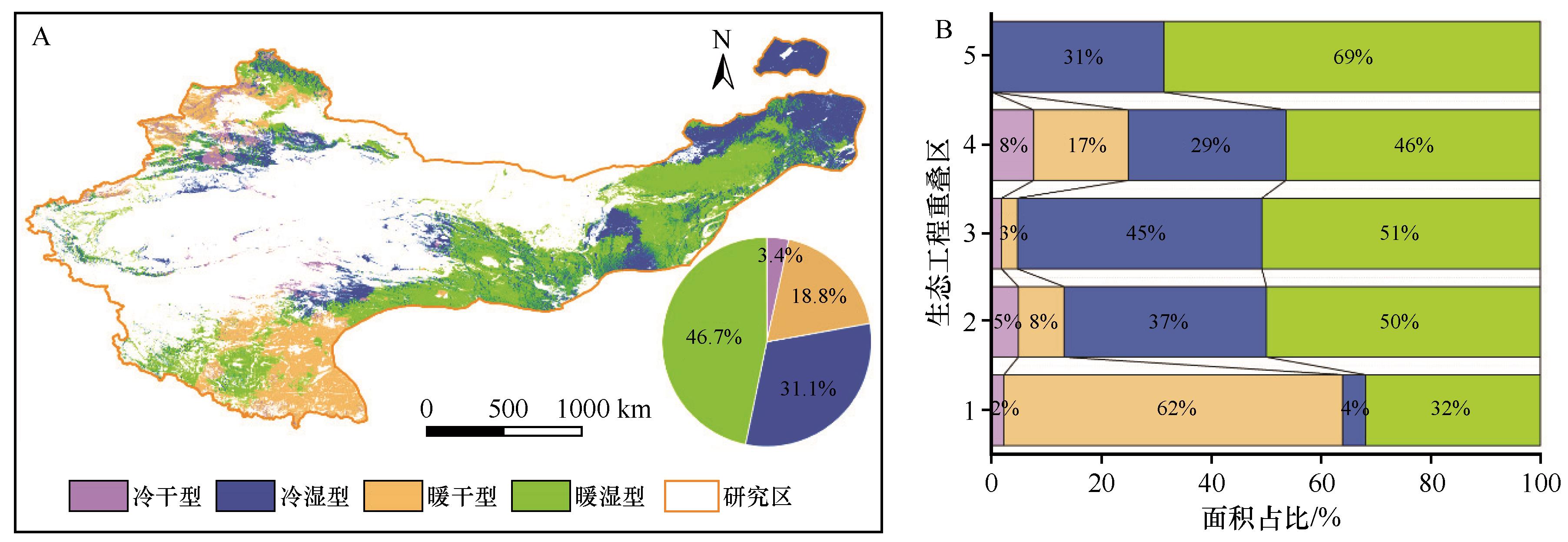
Fig.5 Spatial distribution of hydrothermal combination types in the study area as a whole (A), and area proportion of different hydrothermal combination types within each ecological project overlapping areas (B)
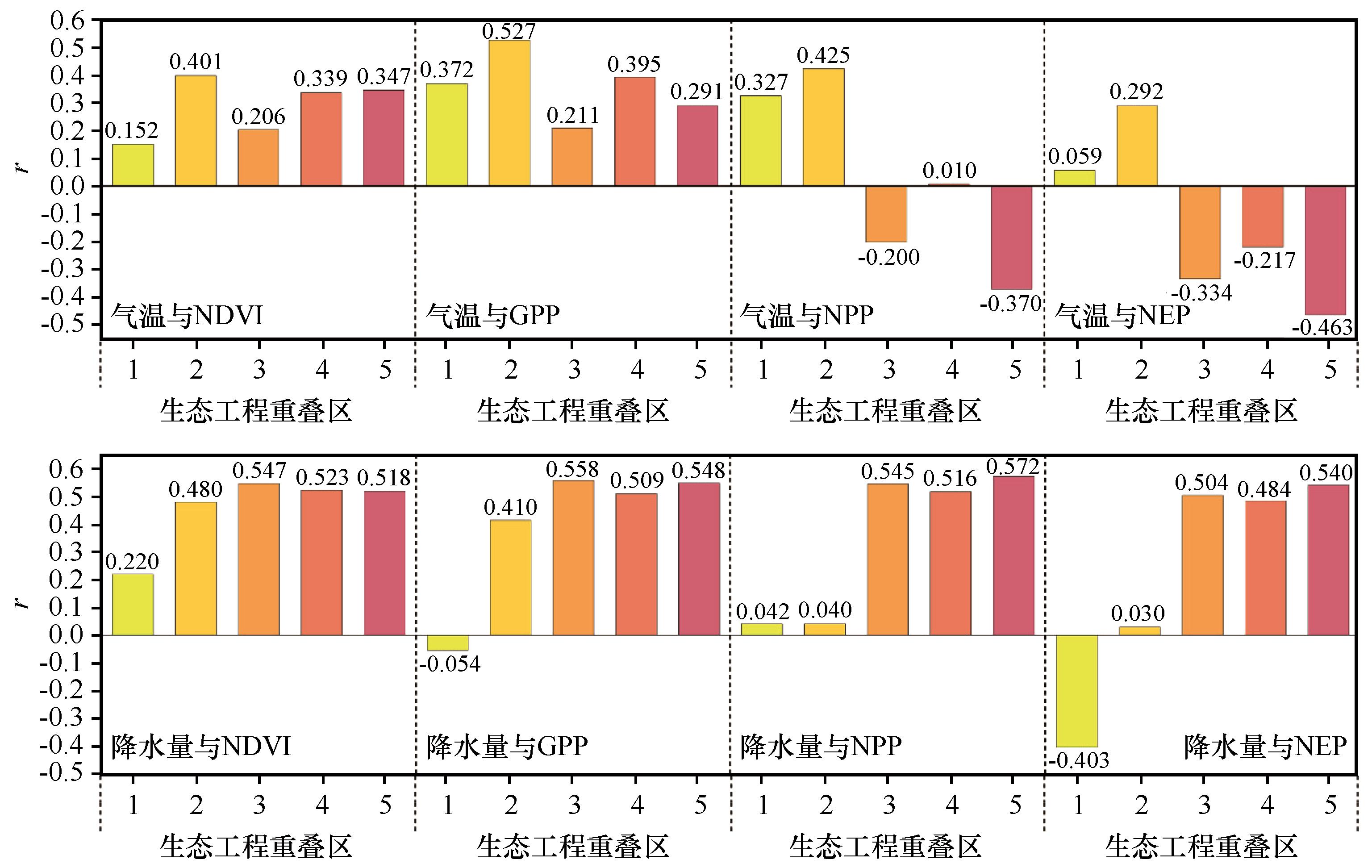
Fig.6 Correlation between vegetation productivity and air temperature and precipitation in ecological project overlapping areas
| 生态工程重叠区 | 主导水热组合类型 | 主导气候因子 | 植被生产力空间变化主导趋势 |
|---|---|---|---|
| 1 | 暖干型(62%) | 气温(57.72%) | 不显著增长 |
| 2 | 暖湿型(50%) | 气温(75.28%) | 显著增长 |
| 3 | 暖湿型(51%) | 降水量(83.16%) | 显著增长 |
| 4 | 暖湿型(46%) | 降水量(79.01%) | 显著增长 |
| 5 | 暖湿型(69%) | 降水量(68.80%) | 显著增长 |
Table 3 Dominant hydrothermal types, climatic factors, and vegetation productivity responses in ecological project overlapping areas
| 生态工程重叠区 | 主导水热组合类型 | 主导气候因子 | 植被生产力空间变化主导趋势 |
|---|---|---|---|
| 1 | 暖干型(62%) | 气温(57.72%) | 不显著增长 |
| 2 | 暖湿型(50%) | 气温(75.28%) | 显著增长 |
| 3 | 暖湿型(51%) | 降水量(83.16%) | 显著增长 |
| 4 | 暖湿型(46%) | 降水量(79.01%) | 显著增长 |
| 5 | 暖湿型(69%) | 降水量(68.80%) | 显著增长 |
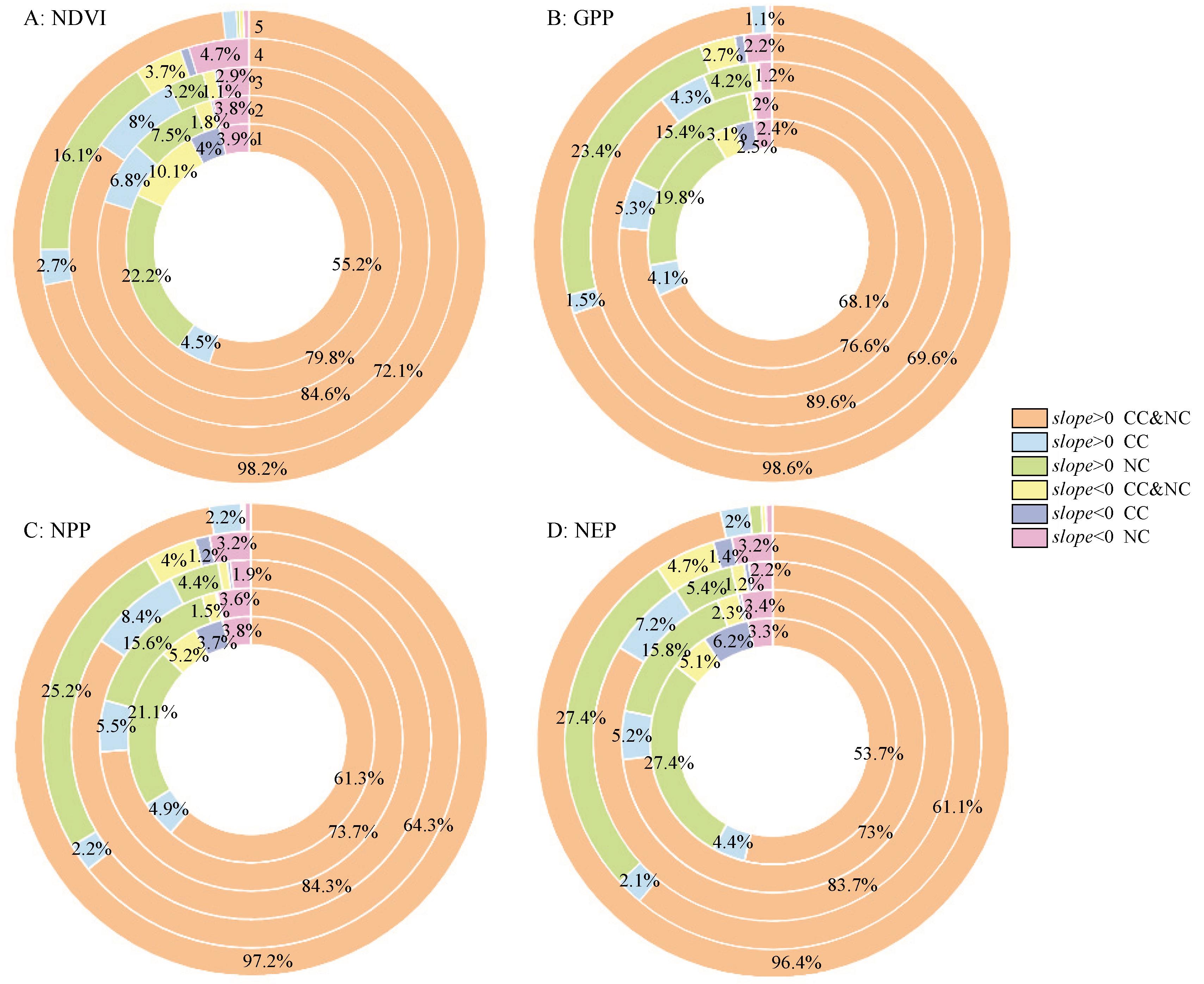
Fig.7 Proportion of driving forces in ecological project overlapping areas. Numbers 1-5 represent areas with 1-5 overlapping ecological projects
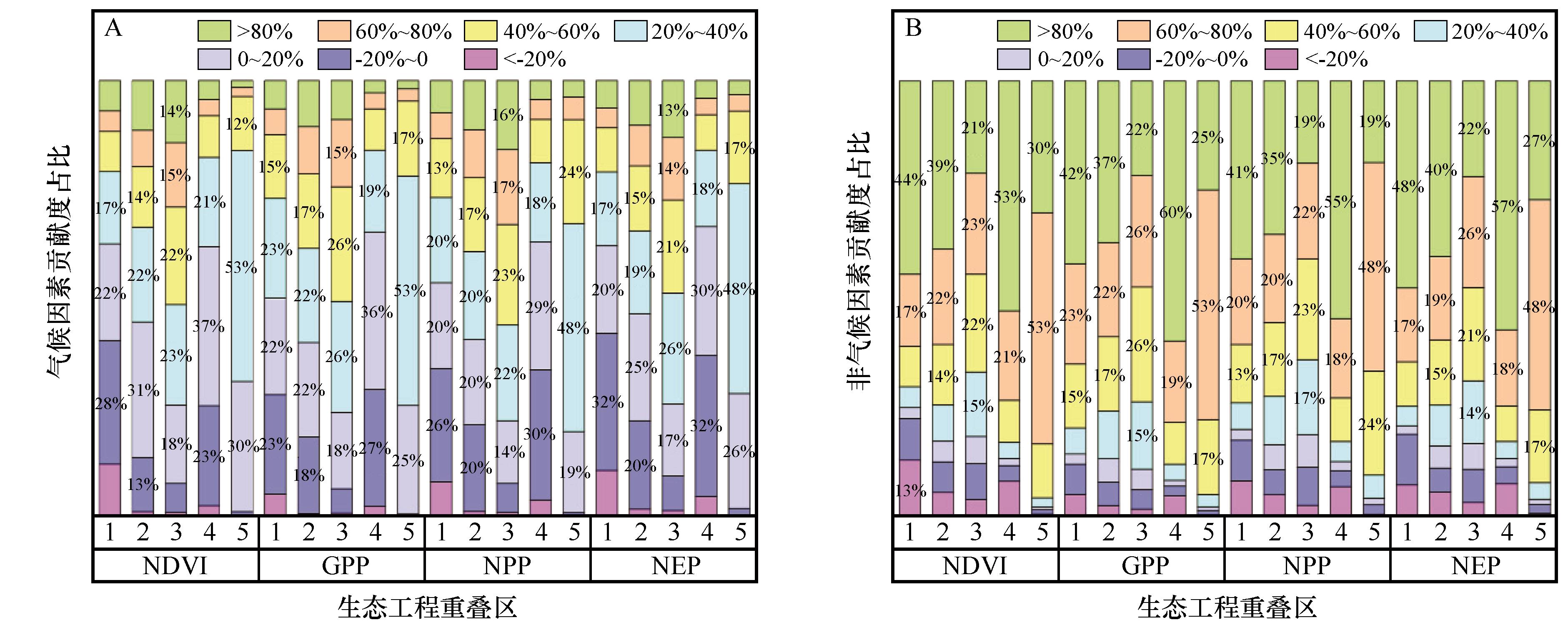
Fig.8 Relative contributions of climatic and non-climatic factors to vegetation productivity changes in ecological project overlapping areas. Numbers 1-5 represent areas with 1-5 overlapping ecological projects
| [1] | Board M E A.Ecosystems and Human Well-Being:Desertification Synthesis[M].Millennium Ecosystem Assessment Board,2005. |
| [2] | Reynolds J F, Smith D M S, Lambin E F,et al.Global desertification:building a science for dryland development[J].Science,2007,316(5826):847-851. |
| [3] | Guan X, Ma J, Huang J,et al.Impact of oceans on climate change in drylands[J].Science China Earth Sciences,2019,62(6):891-908. |
| [4] | Huang J, Li Y, Fu C,et al.Dryland climate change:recent progress and challenges[J].Reviews of Geophysics,2017,55(3):719-778. |
| [5] | 陈亚宁,李玉朋,李稚,等.全球气候变化对干旱区影响分析[J].地球科学进展,2022,37(2):111-119. |
| [6] | Li H, Gao W, Liu Y,et al.Attributing the impacts of ecological engineering and climate change on carbon uptake in Northeastern China[J].Landscape Ecology,2023,38(12):3945-3960. |
| [7] | Chen Y, Yi G, Zhu X,et al.Quantifying the vegetation restoration mechanism of ecological projects on the Qingzang Plateau[J].International Journal of Digital Earth,2025,18(1). |
| [8] | Jiang H, Xu X, Guan M,et al.Simulation of spatiotemporal land use changes for integrated model of socioeconomic and ecological processes in China[J].Sustainability,2019,11(13):3627. |
| [9] | 张耀文,张勃,姚荣鹏,等.2000-2020年渭河流域植被覆盖度及产水量时空变化[J].中国沙漠,2022,42(2):223-233. |
| [10] | Yan Y, Liu X, Wen Y,et al.Quantitative analysis of the contributions of climatic and human factors to grassland productivity in Northern China[J].Ecological Indicators,2019,103:542-553. |
| [11] | 陈珊珊,温兆飞,马茂华,等.气候变化背景下定量解析生态工程对植被动态的影响研究方法概述[J].生态学报,2022,42(15):6439-6449. |
| [12] | 邵全琴,刘树超,宁佳,等.2000-2019年中国重大生态工程生态效益遥感评估[J].地理学报,2022,77(9):2133-2153. |
| [13] | Zhang J, Meng F, Luo M,et al.Investigating spatiotemporal variability of drought and its impact on grassland GPP in Inner Mongolia[J].Journal of Arid Environments,2025,230:105425. |
| [14] | Hou X, Zhang B, Chen J,et al.Response of vegetation productivity to greening and drought in the Loess Plateau based on VIs and SIF[J].Forests,2024,15(2):339. |
| [15] | 邵全琴.2000-2019年中国重大生态工程生态效益评估数据集[DB/OL].国家生态科学数据中心,2022. |
| [16] | 彭守璋.中国1 km分辨率逐月降水量数据集(1901-2022) [DB/OL].国家青藏高原数据中心,2023. |
| [17] | 彭守璋.中国1 km分辨率逐月气温数据集(1901-2022) [DB/OL].国家青藏高原数据中心,2023. |
| [18] | Piao S, Fang J, Ciais P,et al.The carbon balance of terrestrial ecosystems in China[J].Nature,2009,458(7241):1009-1013. |
| [19] | 裴志永,周才平,欧阳华,等.青藏高原高寒草原区域碳估测[J].地理研究,2010,29(1):102-110. |
| [20] | Zhang X, Liu C, Jiang Y.Spatiotemporal dynamics of terrestrial vegetation carbon sinks and its response to climate change in Northwest China[J].Frontiers in Environmental Science,2025,13(13):1550501. |
| [21] | Hou X, Zhang B, He Q Q,et al.Spatial-temporal variations in the climate,net ecosystem productivity,and efficiency of water and carbon use in the middle reaches of the Yellow River[J].Remote Sensing,2024,16(17):3312. |
| [22] | Xue H, Chen Y, Dong G,et al.Quantitative analysis of spatiotemporal changes and driving forces of vegetation net primary productivity (NPP) in the Qimeng region of Inner Mongolia[J].Ecological Indicators,2023,154:110610. |
| [23] | Hirsch R M, Slack J R, Smith R A.Techniques of trend analysis for monthly water quality data[J].Water Resources Research,1982,18(1):107-121. |
| [24] | 徐勇,黄雯婷,郭振东,等.2000-2020年我国西南地区植被NEP时空变化及其驱动因素的相对贡献[J].环境科学研究,2023,36(3):557-570. |
| [25] | Evans J, Geerken R.Discrimination between climate and human-induced dryland degradation[J].Journal of Arid Environments,2004,57(4):535-554. |
| [26] | 修丽娜,颜长珍,钱大文,等.生态工程背景下黄土高原植被变化时空特征及其驱动力[J].水土保持通报,2019,39(4):214-221. |
| [27] | 金凯,王飞,韩剑桥,等.1982-2015年中国气候变化和人类活动对植被NDVI变化的影响[J].地理学报,2020,75(5):961-974. |
| [28] | Sun W, Song X, Mu X,et al.Spatiotemporal vegetation cover variations associated with climate change and ecological restoration in the Loess Plateau[J].Agricultural and Forest Meteorology,2015,209/210:87-99. |
| [29] | 张强,黄建平,杨金虎,等.中国干旱、半干旱区气候变化及影响研究百年进展[J].气象学报,2025,83(3):699-715. |
| [30] | 张强,杨金虎,王朋岭,等.西北地区气候暖湿化的研究进展与展望[J].科学通报,2023,68(14):1814-1828. |
| [31] | 郑艺,张丽,周宇,等.1982-2012年全球干旱区植被变化及驱动因子分析[J].干旱区研究,2017,34(1):59-66. |
| [32] | 王明宇,吴成永,陈克龙.青海湖流域植被绿度时空变化及影响因素[J].中国沙漠,2025,45(5):289-300. |
| [33] | Qi S, Zhang H, Zhang M.Evolutionary characteristics of carbon sources/sinks in Chinese terrestrial ecosystems regarding to temporal effects and geographical partitioning[J].Ecological Indicators,2024,160:111923. |
| [34] | 翟盘茂,余荣,郭艳君,等.2015/2016年强厄尔尼诺过程及其对全球和中国气候的主要影响[J].气象学报,2016,74(3):309-321. |
| [35] | WMO.WMO Statement on the Status of Global Climate in 2015[R].WMO,2016. |
| [36] | 钟诗瑶,李传华,乔鹏飞.2000-2020年干旱梯度下西北干旱半干旱区植被突变及归因[J].中国沙漠,2025,45(2):275-283. |
| [37] | 肖生春,司建华,彭小梅,等.雅布赖山周边沙害现状与防风固沙林草带构建技术体系集成[J].中国沙漠,2025,45(5):209-216. |
| [38] | 李森,杨宗英,赵鸿雁,等.1975-2020年黄河“几字弯”沙漠化时空变化[J].中国沙漠,2024,44(5):13-22. |
| [1] | Shiyu Wang, Xuesong Wang. Spatiotemporal variation and driving factors of soil wind erosion in the arid and semi-arid areas of northern China in 2001-2020 [J]. Journal of Desert Research, 2026, 46(2): 164-176. |
| [2] | Yue Zhang, Siyu Chen, Hongru Bi, Jiahui Cao, Yuan Luo, Yongqi Gong, Yu Chen. Characteristics and parameterization of farmland soil wind erosion in arid and semi-arid areas of China: progress and challenges [J]. Journal of Desert Research, 2022, 42(3): 105-117. |
| [3] | Xiaomei Zhang, Heling Jin, Bing Liu. Environment changes in the Hobq Desert since the Last Glacial Maximum [J]. Journal of Desert Research, 2021, 41(5): 81-93. |
| [4] | Tongliang Wang, Shaoxiu Ma, Yang Gao, Yulai Gong, Zhishan An. The hybrid of wavelet packet decomposition and machine learning models in wind speed forecasting [J]. Journal of Desert Research, 2021, 41(2): 38-50. |
| [5] | Xueshang Chang, Guoqiao Chang. Advances in research and prospect on soil moisture in arid and semi-arid areas [J]. Journal of Desert Research, 2021, 41(1): 156-163. |
| [6] | Ma Songyao, Chen Long, Ten Zeyu, Ding Aijun, He Zihao. Vegetation Changes in Wind Farm in Desert Steppe Region [J]. Journal of Desert Research, 2019, 39(2): 186-192. |
| [7] | LI Jing, SUN Hu, XING Dong-xing, WANG Xiang-ge. Characteristics of Wetland and Its Conservation in Arid and Semi-arid Areas in Northwest of China [J]. JOURNAL OF DESERT RESEARCH, 2003, 23(6): 670-674. |
| Viewed | ||||||
|
Full text |
|
|||||
|
Abstract |
|
|||||
©2018Journal of Desert Research
Tel:0931-8267545
Email:caiedit@lzb.ac.cn;desert@lzb.ac.cn
Support:Magtech
