
- CN 62-1070/P
- ISSN 1000-694X
- Bimonthly 1981
Journal of Desert Research ›› 2026, Vol. 46 ›› Issue (2): 336-347.DOI: 10.7522/j.issn.1000-694X.2026.00025
Yunji Yan1( ), Fei Bai2, Jiaqiong Zhang1,3(), Xin An1, Xiaoqiang Fan1, Ye Wang1,3
Received:2025-12-31
Revised:2026-02-11
Online:2026-03-20
Published:2026-04-13
Contact:
Jiaqiong Zhang
CLC Number:
Yunji Yan, Fei Bai, Jiaqiong Zhang, Xin An, Xiaoqiang Fan, Ye Wang. Spatiotemporal variations in wind erosion intensity and their main impact factors in the wind-water erosion crisscross region of the Loess Plateau from 1982 to 2020[J]. Journal of Desert Research, 2026, 46(2): 336-347.
Add to citation manager EndNote|Ris|BibTeX
URL: http://www.desert.ac.cn/EN/10.7522/j.issn.1000-694X.2026.00025
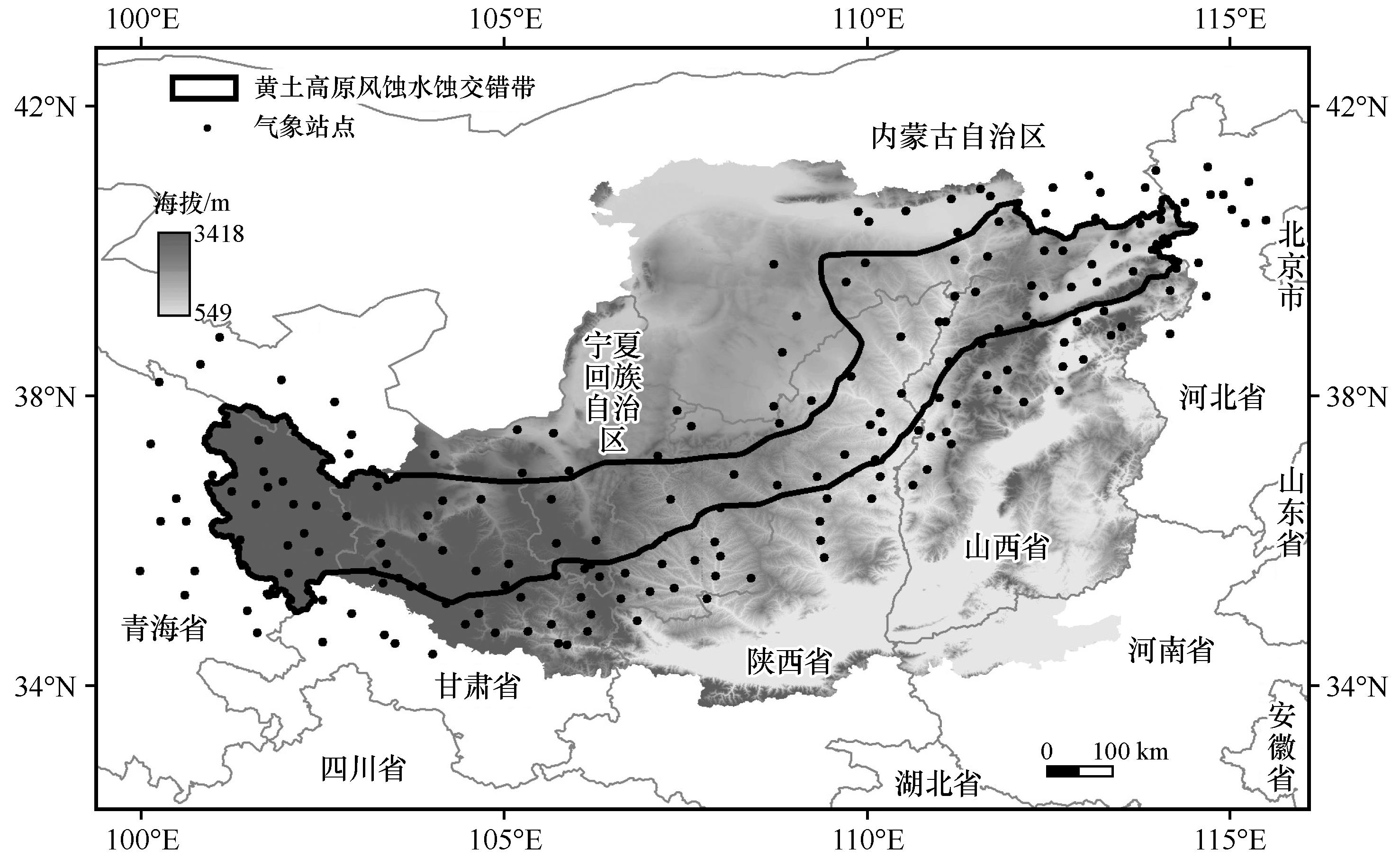
Fig.1 Location of the wind-water erosion crisscross region of the Loess Plateau and meteorological stations used for simulation
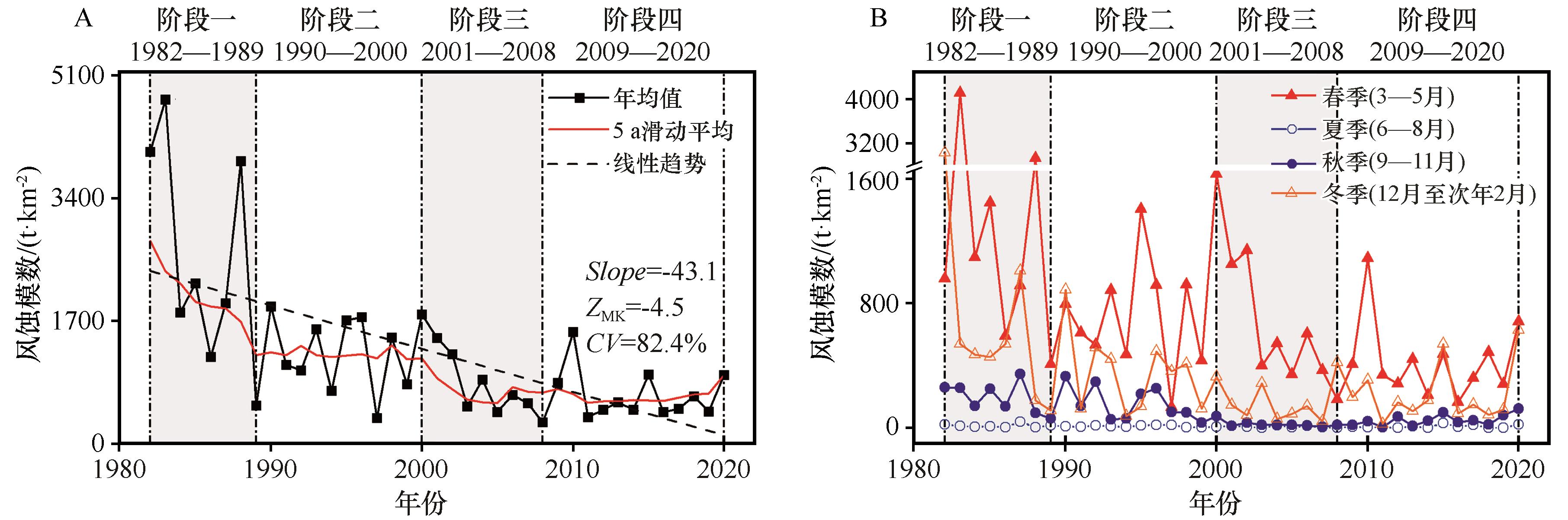
Fig.2 Temporal variations of wind erosion modulus in the wind-water erosion crisscross region of the Loess Plateau during 1982-2020
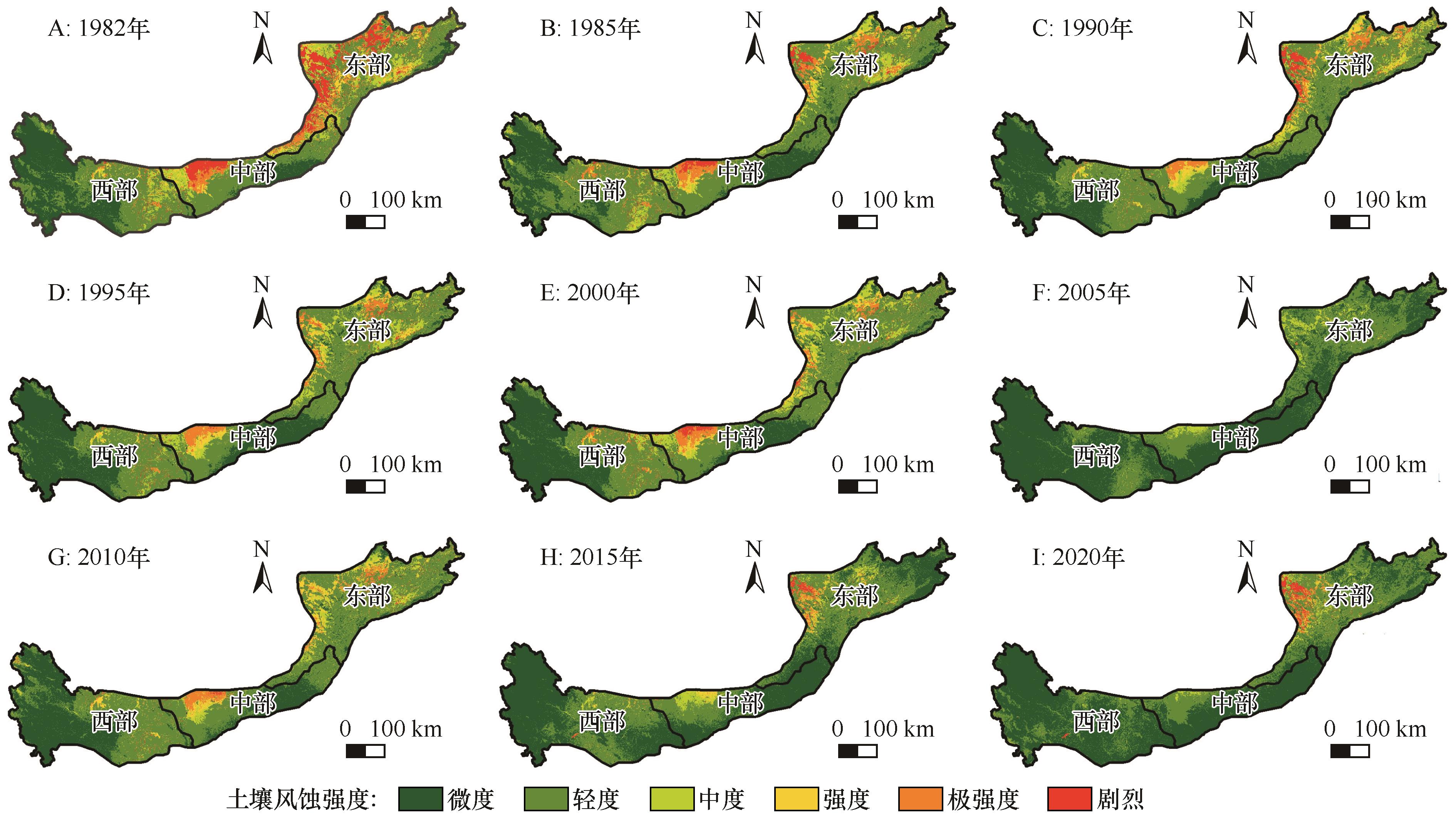
Fig.3 Spatial variation characteristics in wind erosion intensity in the wind-water erosion crisscross region of the Loess Plateau during 1982-2020 (A case of typical year with interval of 5 years)

Fig.4 Spatial distribution of soil erosion intensity transition in the wind-water erosion crisscross region of the Loess Plateau during 1982-2020
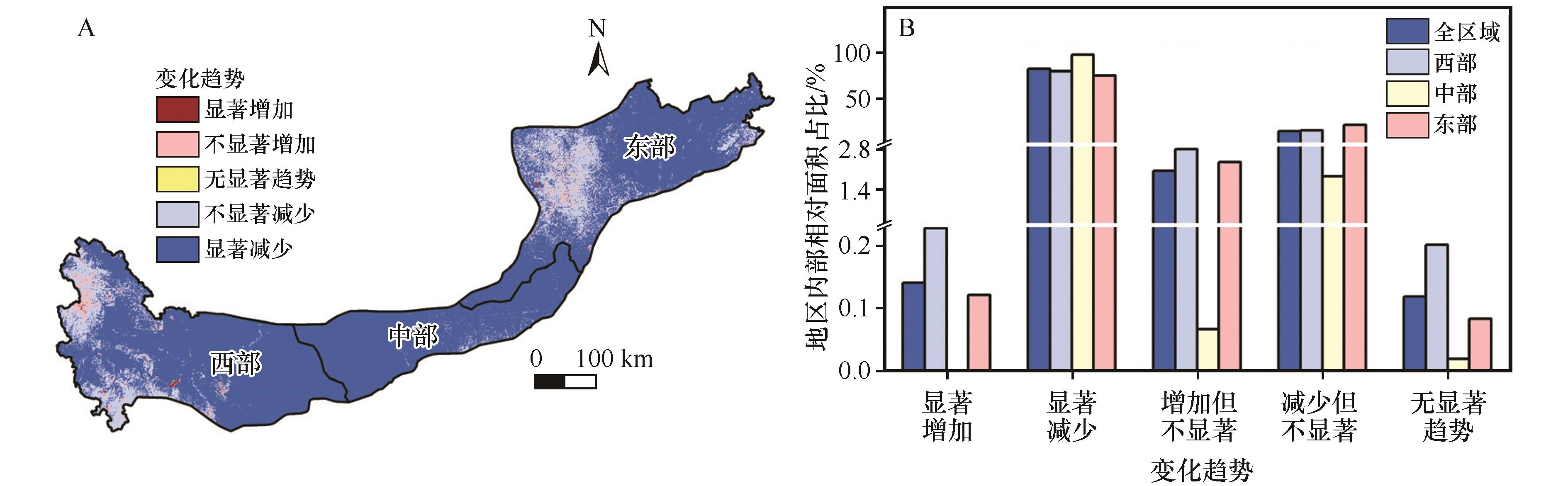
Fig.5 Spatial variation trends of wind erosion modulus in the wind-water erosion crisscross region on the Loess Plateau during 1982-2020 based of Theil-Sen median trend and Mann-Kendall significance analysis
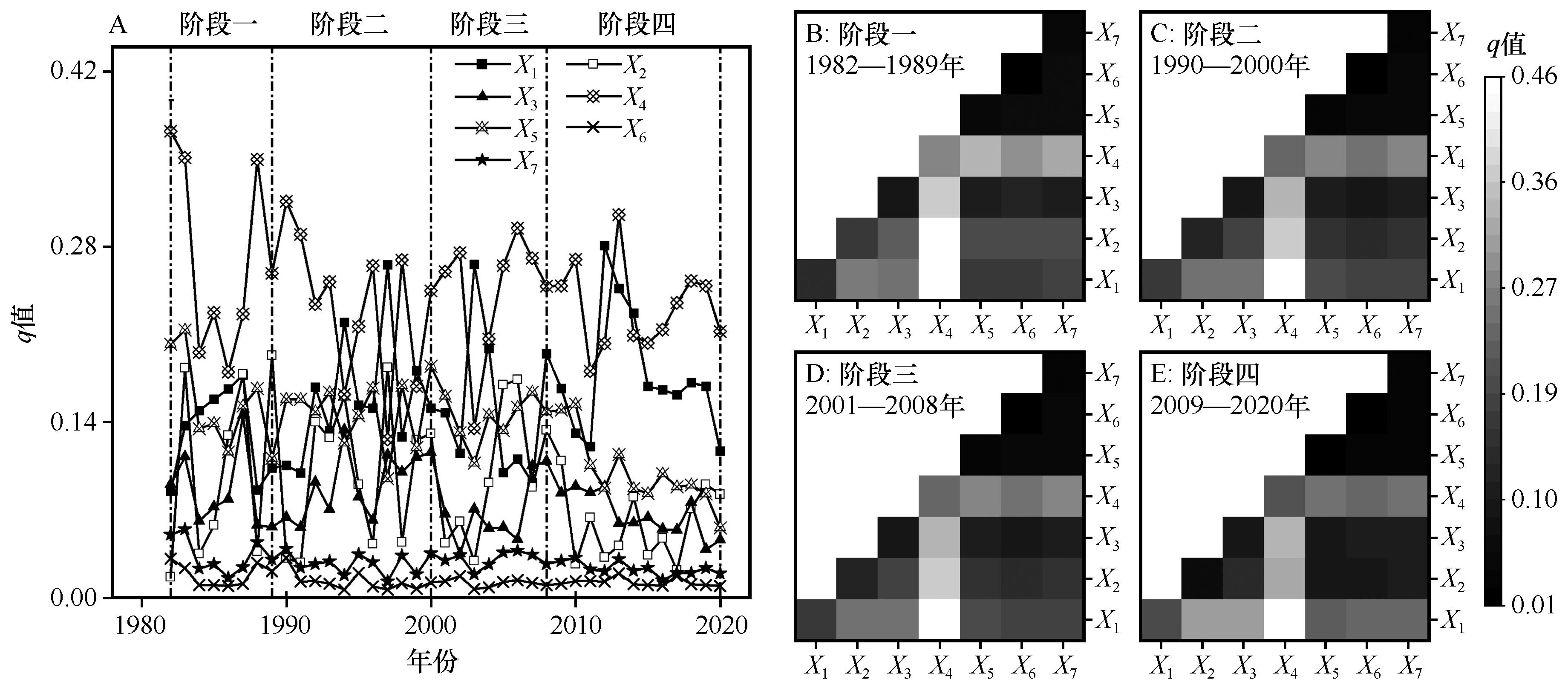
Fig.6 Main impact factors for wind erosion analysis based on the geographical detection results
| 区域/研究时期 | 研究方法 | 土壤总侵蚀模数/(t·km-2·a-1) | 土壤风蚀模数/(t·km-2·a-1) | 本文相应区域的风蚀模数/(t·km-2·a-1) | 数据来源 |
|---|---|---|---|---|---|
| 山西大同/2008年 | Cs-137示踪 | 17 500 | 4 375* | 1 052.7 | 姜洪涛[ |
| 宁夏彭阳/2007年 | 2 500~10 000 | 625~2 500* | 434.1 | 马远远等[ | |
| 陕西绥德/2005年 | 12 000 | 3 000* | 282.5 | 李勉等[ | |
| 陕西靖边/2020年左右 | 4 849~9 463 | 1420~3 138* | 1 210.6 | Zou等 [ | |
| 陕西神木/2014年 | 8 060~13 370 | 519~4 230* | 1 429.2 | Zhang等[ | |
| 陕西定边/2014年 | 1 513~8 314 | 378~2 079* | 3 414.6 | 脱登峰[ | |
| 陕西神木/2015—2016年 | Be-7示踪 | — | 141~771* | 1 362.2 | Zhang等[ |
| 建设三北防护林的黄土高原水蚀风蚀交错带丘陵沟壑区/2000—2018年§ | RWEQ | — | 600~1 700 | 295.2~1 792.5 | 张雄一等[ |
| 黄土高原水蚀风蚀交错带/1980、1990、2000、2010年和2020年 | 246 | 1 253.0 | 黎恩丹[ |
Table 1 Comparison of wind erosion modulus between this study and previous results
| 区域/研究时期 | 研究方法 | 土壤总侵蚀模数/(t·km-2·a-1) | 土壤风蚀模数/(t·km-2·a-1) | 本文相应区域的风蚀模数/(t·km-2·a-1) | 数据来源 |
|---|---|---|---|---|---|
| 山西大同/2008年 | Cs-137示踪 | 17 500 | 4 375* | 1 052.7 | 姜洪涛[ |
| 宁夏彭阳/2007年 | 2 500~10 000 | 625~2 500* | 434.1 | 马远远等[ | |
| 陕西绥德/2005年 | 12 000 | 3 000* | 282.5 | 李勉等[ | |
| 陕西靖边/2020年左右 | 4 849~9 463 | 1420~3 138* | 1 210.6 | Zou等 [ | |
| 陕西神木/2014年 | 8 060~13 370 | 519~4 230* | 1 429.2 | Zhang等[ | |
| 陕西定边/2014年 | 1 513~8 314 | 378~2 079* | 3 414.6 | 脱登峰[ | |
| 陕西神木/2015—2016年 | Be-7示踪 | — | 141~771* | 1 362.2 | Zhang等[ |
| 建设三北防护林的黄土高原水蚀风蚀交错带丘陵沟壑区/2000—2018年§ | RWEQ | — | 600~1 700 | 295.2~1 792.5 | 张雄一等[ |
| 黄土高原水蚀风蚀交错带/1980、1990、2000、2010年和2020年 | 246 | 1 253.0 | 黎恩丹[ |
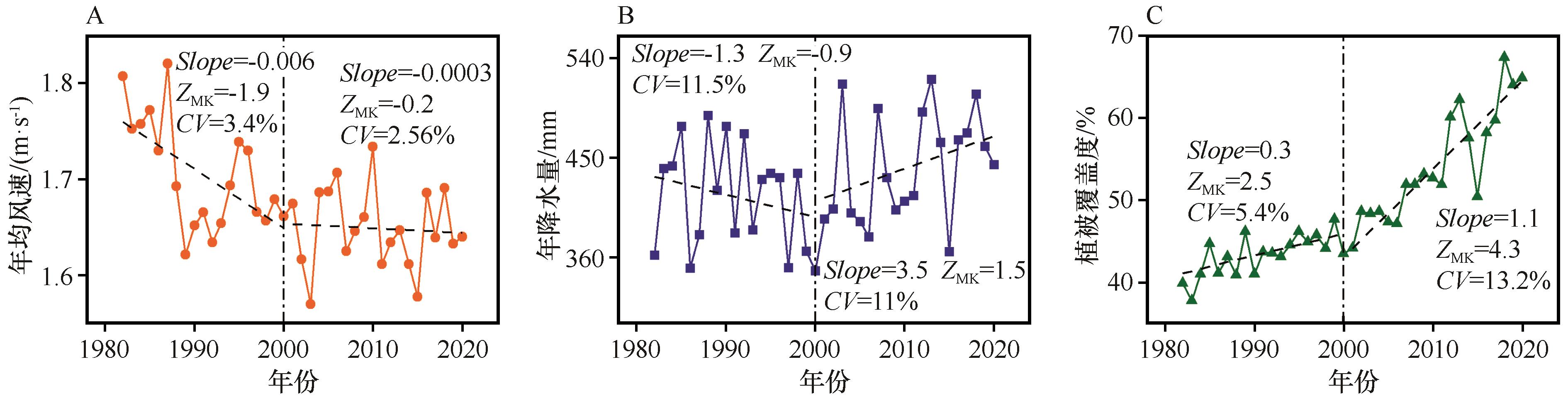
Fig.7 Variation trends in annual mean wind speed, precipitation, and vegetation cover from 1982 to 2020
| 时段 | 风蚀模数/(t·km-2·a-1) | 气候变化贡献/% | 植被建设贡献/% |
|---|---|---|---|
| 1982—1989(阶段一,基准期) | 2 553.04 | — | — |
| 1990—2000(阶段二) | 1 291.07 | 70.4 | 29.6 |
| 2001—2008(阶段三) | 757.19 | 53.0 | 47.0 |
| 2009—2020(阶段四) | 681.84 | 37.9 | 62.1 |
Table 2 Effects of climate change and vegetation restoration on wind erosion modulus in the wind-water erosion crisscross region of the Loess Plateau
| 时段 | 风蚀模数/(t·km-2·a-1) | 气候变化贡献/% | 植被建设贡献/% |
|---|---|---|---|
| 1982—1989(阶段一,基准期) | 2 553.04 | — | — |
| 1990—2000(阶段二) | 1 291.07 | 70.4 | 29.6 |
| 2001—2008(阶段三) | 757.19 | 53.0 | 47.0 |
| 2009—2020(阶段四) | 681.84 | 37.9 | 62.1 |
| [1] | 唐克丽.黄土高原水蚀风蚀交错区治理的重要性与紧迫性[J].中国水土保持,2000(11):11-12. |
| [2] | Zhang J, Yang M, Zhang F,et al.Revealing soil erosion characteristics using deposited sediment sources in a complex small catchment in the wind-water erosion crisscross region of the Chinese Loess Plateau[J].Geoderma,2020,379:114634. |
| [3] | 黄麟,祝萍,肖桐,等.近35年三北防护林体系建设工程的防风固沙效应[J].地理科学,2018,38(4):600-609. |
| [4] | 王泽宇,陈旭阳,马彩诗,等.陕北榆林市退耕还林前后土壤侵蚀及生态服务价值变化[J].西北林学院学报,2021,36(3):59-67. |
| [5] | 张欣欣,张堂堂,李江林,等.黄土高原退耕还林/草区土壤水热变化特征对比分析[J/OL].高原气象,1-11. . |
| [6] | Jing T, Fang N, Ni L,et al.Hydrological dynamics in response to vegetation restoration in a typical wind-water erosion crisscross catchment[J].Hydrological Processes,2024,38(11):e70009. |
| [7] | 张攀,姚文艺,刘国彬,等.土壤复合侵蚀研究进展与展望[J].农业工程学报,2019,35(24):154-161. |
| [8] | 査轩,唐克丽.水蚀风蚀交错带小流域生态环境综合治理模式研究[J].自然资源学报,2000,15(1):97-100. |
| [9] | 李秋艳,蔡强国,方海燕.风水复合侵蚀与生态恢复研究进展[J].地理科学进展,2010,29(1):65-72. |
| [10] | 黄晨璐.近40年黄土高原土壤侵蚀时空变化及其主控因子研究[D].西安:西北大学,2021. |
| [11] | 张卓佩,牛健植,樊登星,等.黄河中游多沙粗沙区土壤水蚀时空变化及动态驱动力分析[J].水土保持学报,2024,38(2):85-96. |
| [12] | 穆兴民,李朋飞,刘斌涛,等.1901-2016年黄土高原土壤侵蚀格局演变及其驱动机制[J].人民黄河,2022,44(9):36-45. |
| [13] | 黎恩丹.黄土高原风水复合侵蚀区土壤侵蚀计算与分析[D].西安:西北大学,2023. |
| [14] | 迟文峰,王月甜,党晓宏,等.黄河流域土壤侵蚀时空演变与格局特征[J].中国沙漠,2023,43(3):305-317. |
| [15] | 王旭洋,郭中领,常春平,等.中国北方农牧交错带土壤风蚀时空分布[J].中国沙漠,2020,40(1):12-22. |
| [16] | 柴茵超,左合君,闫敏,等.基于RWEQ模型的毛乌素沙地2000-2022年土壤风蚀量时空变化及驱动因素分析[J].西南农业学报,2025,38(3):647-654. |
| [17] | 刘珺,郭中领,常春平,等.基于RWEQ和WEPS模型的中国北方农牧交错带潜在风蚀模拟[J].中国沙漠,2021,41(2):27-37. |
| [18] | 蒋冲,陈爱芳,喻小勇,等.黄土高原风蚀和风水蚀复合区的风蚀气候侵蚀力变化[J].干旱区研究,2013,30(3):477-484. |
| [19] | 刘国彬,上官周平,姚文艺,等.黄土高原生态工程的生态成效[J].中国科学院院刊,2017,32(1):11-19. |
| [20] | 陈硕,赵文武,周奥.中国干旱半干旱区1990-2020年风蚀评估及归因分析[J].生态学报,2025,45(21):10387-10404. |
| [21] | 张雄一,邵全琴,宁佳,等.三北工程区植被恢复对土壤风蚀的影响及植被恢复潜力研究[J].地球信息科学学报,2022,24(11):2153-2170. |
| [22] | 王国宇,李晶,张娅.无定河流域防风固沙服务流动模拟[J].生态学报,2024,44(6):2323-2336. |
| [23] | 张秀娟,马珂昕,刘晓斌,等.实施禁牧前后宁夏草地防风固沙的时空变化特征[J].草业科学,2023,40(3):638-653. |
| [24] | 王金凤,刘小玲,李庆,等.黄土高原北部风蚀区防风固沙服务时空分异及驱动因素[J].中国沙漠,2023,43(4):220-230. |
| [25] | 常嘉乐,石昊,李方昊,等.科尔沁沙地土壤沙化进程与风蚀驱动因子关系[J].地理学报,2026,81(1):48-63. |
| [26] | 唐克丽,侯庆春,王斌科,等.黄土高原水蚀风蚀交错带和神木试区的环境背景及整治方向[J].中国科学院水利部西北水土保持研究所集刊,1993(2):2-15. |
| [27] | 王一,郝利娜,许强,等.2001-2019年黄土高原植被覆盖度时空演化特征及地理因子解析[J].生态学报,2023,43(6):2397-2407. |
| [28] | 唐克丽,陈永宗.黄土高原地区土壤侵蚀区域特征及其治理途径[M].北京:中国科学技术出版社,1990:1-2. |
| [29] | 黄帅元,董有福,李海鹏.黄土高原区SRTM1DEM高程误差校正模型构建及对比分析[J].地球信息科学学报,2023,25(3):669-681. |
| [30] | 杨灿,魏天兴,李亦然,等.黄土高原水蚀风蚀交错区退耕还林工程前后NDVI时空变化特征[J].北京林业大学学报,2021,43(6):83-91. |
| [31] | 孟庆香,刘国彬,杨勤科.基于GIS的黄土高原气象要素空间插值方法[J].水土保持研究,2010,17(1):10-14. |
| [32] | 董志南,郑拴宁,赵会兵,等.基于空间插值的风场模拟方法比较分析[J].地球信息科学学报,2015,17(1):37-44. |
| [33] | Fryrear D W, Saleh A, Bilbro J D.A single event wind erosion model[J].Transactions of the ASAE,1998,41(5):1369-1374. |
| [34] | 郭中领,常春平,王仁德.使用有限风速数据计算RWEQ模型的风因子[J].江苏农业科学,2015,43(1):350-353. |
| [35] | Xu J, Xiao Y, Xie G,et al.Computing payments for wind erosion prevention service incorporating ecosystem services flow and regional disparity in Yanchi County[J].Science of the Total Environment,2019,674:563-579. |
| [36] | 郭永强,王乃江,褚晓升,等.基于Google Earth Engine分析黄土高原植被覆盖变化及原因[J].中国环境科学,2019,39(11):4804-4811. |
| [37] | Fryrear D W, Bilbro J D, Saleh A,et al.RWEQ:improved wind erosion technology[J].Journal of Soil and Water Conservation,2000,55(2):183-189. |
| [38] | 申陆,田美荣,高吉喜,等.浑善达克沙漠化防治生态功能区防风固沙功能的时空变化及驱动力[J].应用生态学报,2016,27(1):73-82. |
| [39] | Di K, Chen W, Pang H,et al.Extension of GIMMS3g on MODIS NDVI for long-term global vegetation trend analysis[J].International Journal of Remote Sensing,2025,46(20):7866-7883. |
| [40] | Ma Z, Dong C, Lin K,et al.A global 250-m downscaled NDVI product from 1982 to 2018[J].Remote Sensing,2022,14(15):3639. |
| [41] | Akritas M G, Murphy S A, Lavalley M P.The TheilSen estimator with doubly censored data and applications to astronomy[J].Journal of the American Statistical Association,1995,90(429):170-177. |
| [42] | Mann H B.Nonparametric tests against trend[J].Econometrica:Journal of the Econometric Society,1945:245-259. |
| [43] | 中华人民共和国水利部.土壤侵蚀分类分级标准[M].北京:中国水利水电出版社,2007. |
| [44] | Zou H, Liu G, Zhang Q,et al.Investigating the effects of water and wind erosion on different hillslope aspects on the Loess Plateau of China by using 137Cs[J].Catena,2024,238:107879. |
| [45] | Zhang J, Yang M, Deng X,et al.Beryllium-7 measurements of wind erosion on sloping fields in the wind-water erosion crisscross region on the Chinese Loess Plateau [J].Science of the Total Environment,2018,615:240-252. |
| [46] | 李秋艳,蔡强国,方海燕.黄土高原风水蚀交错带风力作用对流域产沙贡献的空间特征研究[J].水资源与水工程学报,2011,22(4):39-45. |
| [47] | 姜洪涛.基于137Cs技术的中国北方农牧交错带土壤侵蚀研究[D].呼和浩特:内蒙古师范大学,2010. |
| [48] | 马远远,马琨,马斌,等.阳洼流域土壤137Cs的空间分布及侵蚀研究[J].水土保持通报,2008(2):27-30. |
| [49] | 李勉,杨剑锋,侯建才,等. 137Cs示踪法研究黄土丘陵区坡面侵蚀空间变化特征[J].核技术,2009,32(1):50-54. |
| [50] | Zhang J, Yang M, Sun X,et al.Estimation of wind and water erosion based on slope aspects in the crisscross region of the Chinese Loess Plateau[J].Journal of Soils and Sediments,2018,18(4):1620-1631. |
| [51] | 脱登峰.黄土高原水蚀风蚀交错区土壤退化机理研究[D].陕西杨凌:西北农林科技大学,2016. |
| [52] | 李庆,周娜,王盛,等.气候变化和人类活动对土壤风蚀影响的定量评估:以内蒙古自治区为例[J].中国沙漠,2024,44(1):178-188. |
| [53] | 胡梦甜,张慧,乔亚军,等.呼伦贝尔森林-草原生态交错带土壤风蚀量时空变化及驱动力分析[J].生态与农村环境学报,2023,39(8):999-1007. |
| Viewed | ||||||
|
Full text |
|
|||||
|
Abstract |
|
|||||
©2018Journal of Desert Research
Tel:0931-8267545
Email:caiedit@lzb.ac.cn;desert@lzb.ac.cn
Support:Magtech
