
- CN 62-1070/P
- ISSN 1000-694X
- Bimonthly 1981
Journal of Desert Research ›› 2026, Vol. 46 ›› Issue (4): 266-279.DOI: 10.7522/j.issn.1000-694X.2026.00080
Previous Articles Next Articles
Chenyu Li1( ), Weiming Miao1, Xuan Cao1, Suihong Li1, Yang Yang2
Received:2026-03-29
Revised:2026-05-12
Online:2026-07-20
Published:2026-08-27
CLC Number:
Chenyu Li, Weiming Miao, Xuan Cao, Suihong Li, Yang Yang. Spatial differentiation characteristics and optimization paths of agricultural ecological compensation demand in China's arid regions[J]. Journal of Desert Research, 2026, 46(4): 266-279.
Add to citation manager EndNote|Ris|BibTeX
URL: http://www.desert.ac.cn/EN/10.7522/j.issn.1000-694X.2026.00080
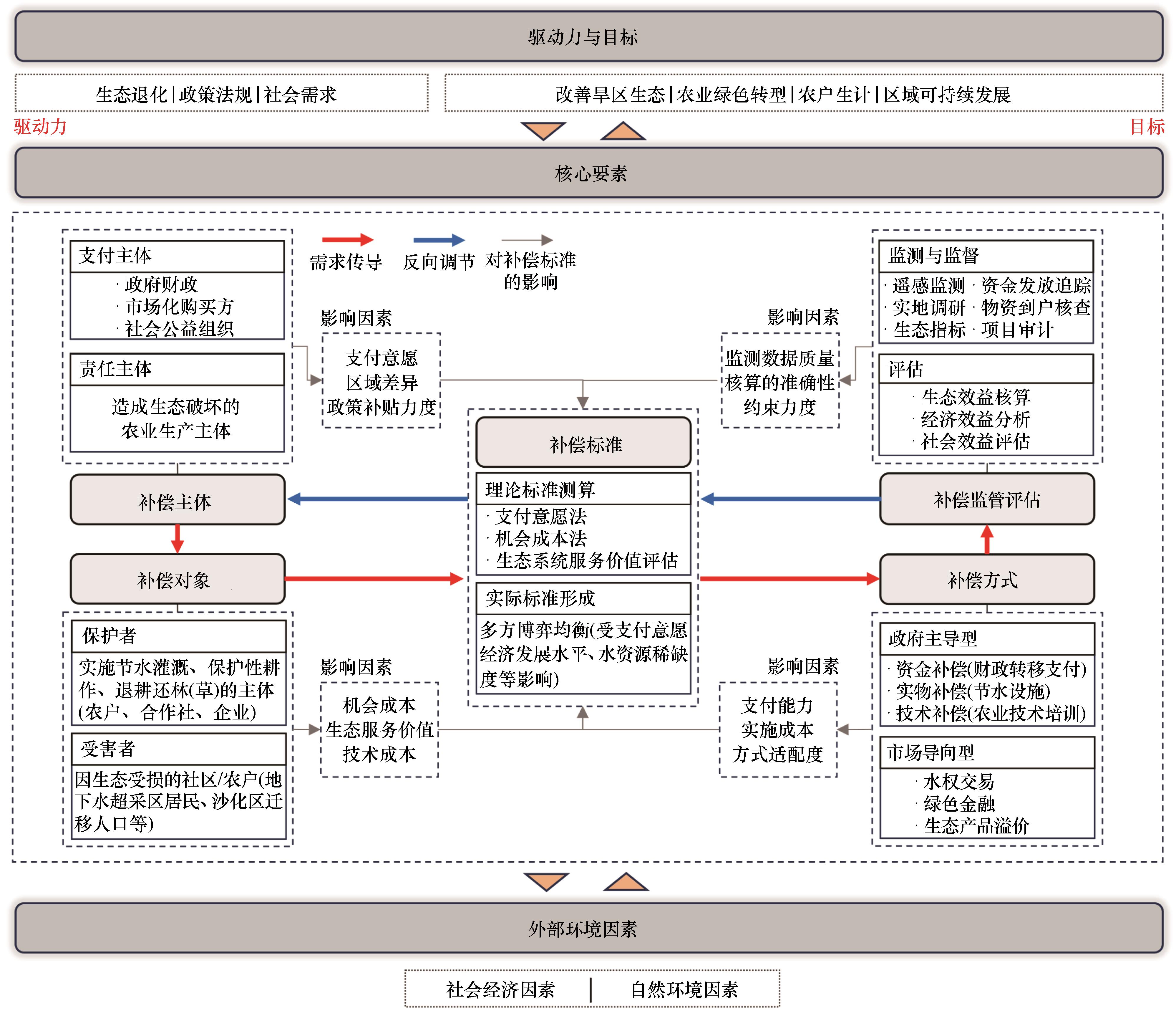
Fig.1 Operation logic of agricultural ecological compensation in arid regions
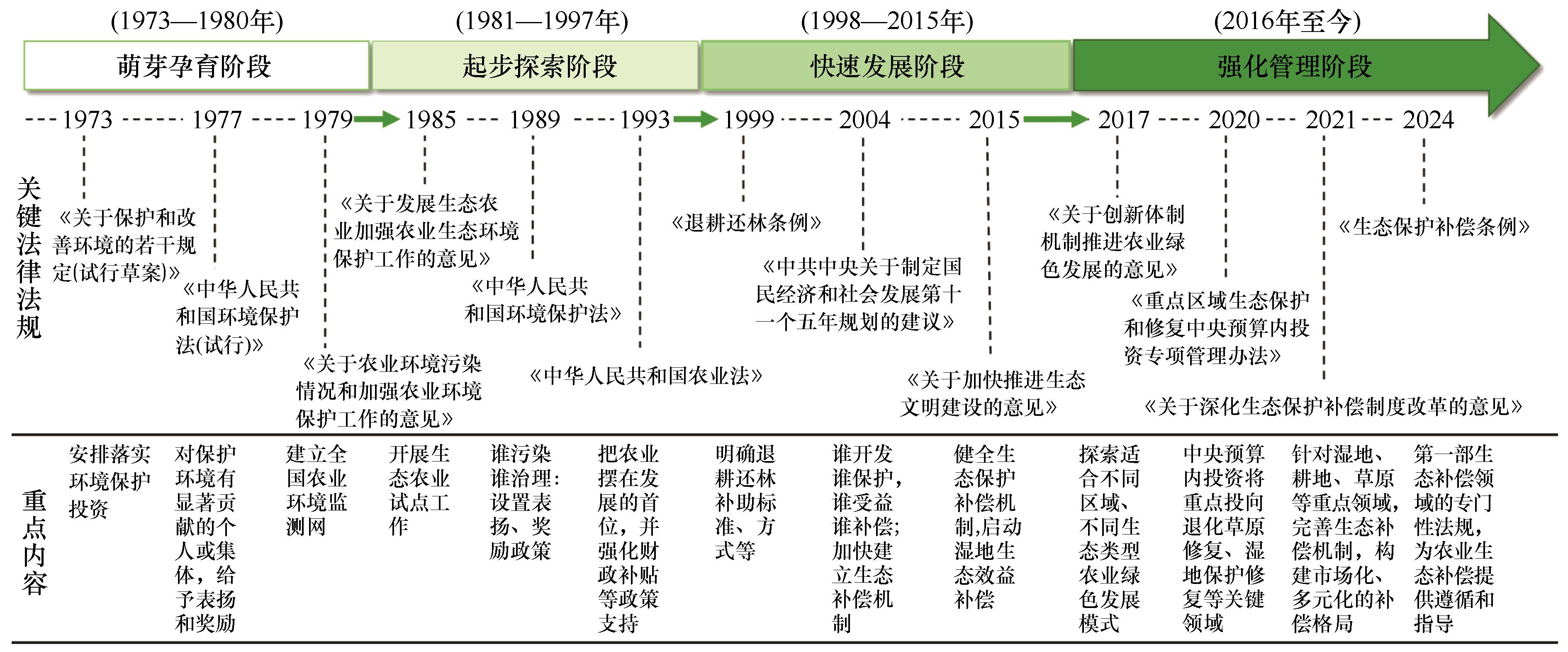
Fig.2 Evolution stages and regulations of agricultural ecological compensation policy and core laws in China
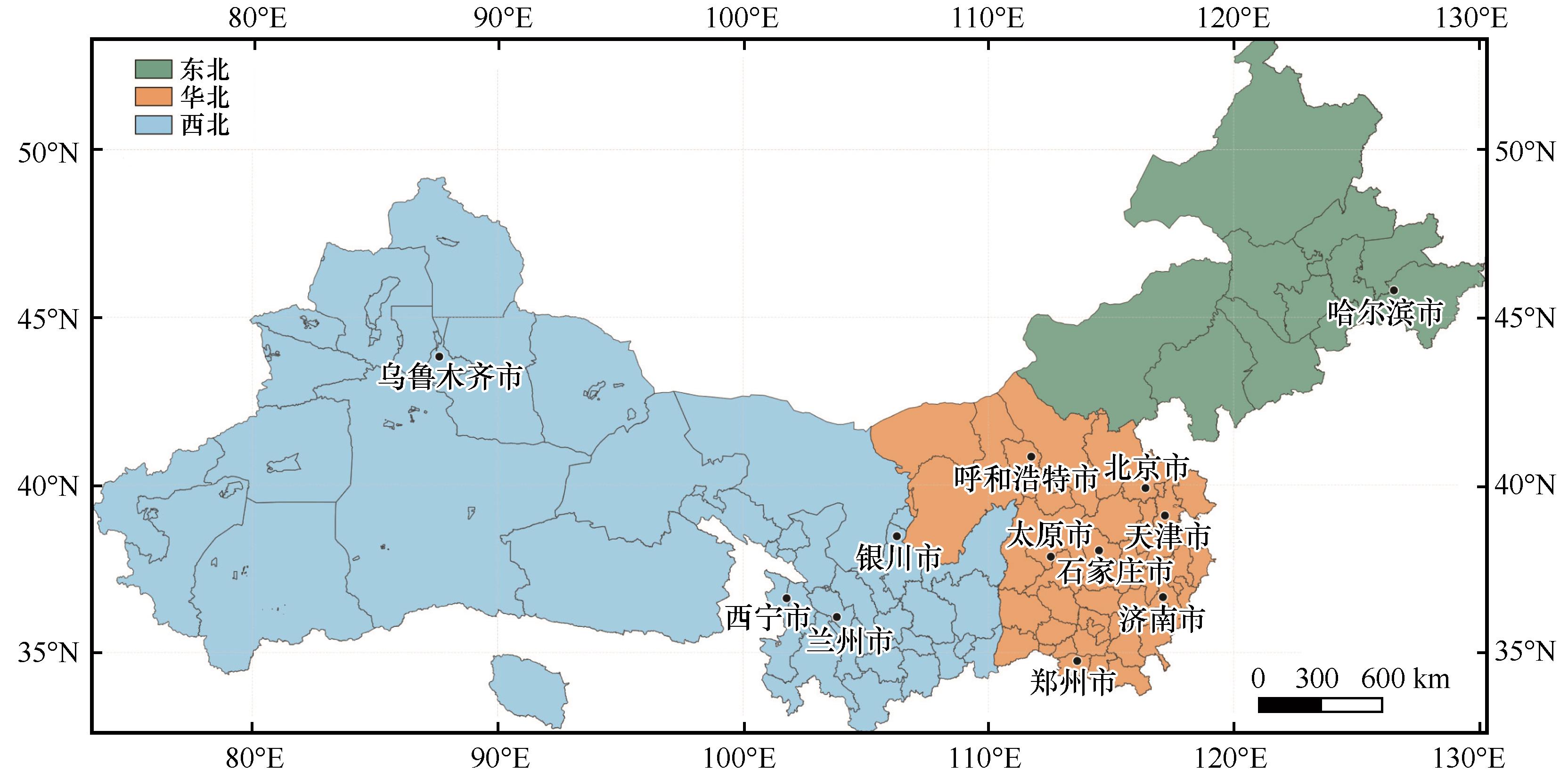
Fig.3 Overview of the study area
| 准则层 | 指标层/单位 | 属性 | 指标说明 |
|---|---|---|---|
| 旱区刚性约束 | 人均水资源量/m3 | 负向 | 水资源禀赋,指标值越低,水资源越匮乏,越需优先保障生态用水需求,避免过度开发引发生态退化。 |
| 农田灌溉水有效利用系数 | 负向 | 农业用水效率,指标值越低,农业用水浪费越严重,越需通过补偿推动节水技术应用,减少负外部性。 | |
| 人均用水量/m3 | 正向 | 水资源开发强度,指标值越高,水资源开发利用程度越高,生态承载余量越小,越需优先划定生态保护红线,保障生态系统稳定。 | |
| 是否属于国家重点生态功能区范畴 | 正向 | 生态保护责任,该类区域承担国家生态安全任务,提供的生态正外部性最强,应优先补偿。 | |
| 农业生计依赖 | 第一产业增加值占地区生产总值比重/% | 正向 | 经济对农业的依赖度,指标值越高,区域产业结构越单一,越需外部补偿支持产业转型。 |
| 农业用水量/亿m3 | 正向 | 农业用水压力,指标值越高,农业对水的依赖度越高,农民为维持生计过度取水的风险越大,越需补偿降低生计对生态的依赖。可与总用水量共同刻画出旱区整体生态约束与农业生计压力的双重特征。 | |
| 常住人口/万人 | 正向 | 生计保障压力,指标值越高,生态保护与民生保障的矛盾越突出,越需补偿维持二者平衡。 | |
| 城镇化率/% | 负向 | 非农就业能力,指标值越低,农村劳动力转移渠道越窄,发展受限程度越高,越需补偿拓宽增收途径。 | |
| 区域支付能力 | 人均地区生产总值/万元 | 负向 | 经济发展水平,区域自我发展能力越弱,越需上级财政转移支付给予补偿支持。 |
| 地区生产总值增长率/% | 负向 | 经济发展潜力,指标值越低,越难以通过自身发展积累生态保护资金,越需外部补偿培育发展动能。 | |
| 地方一般公共预算收入/亿元 | 负向 | 地方财政能力,指标值越低,区域可用于生态保护和民生改善的资金越少,越需外部补偿弥补财政缺口。 | |
| 第二产业增加值占地区生产总值比重/% | 负向 | 工业反哺农业的能力,指标值越低,农业生态保护越缺乏本地产业支撑,越需外部补偿。 | |
| 社会支撑条件 | 金融机构存款余额 /亿元 | 负向 | 金融支撑能力,指标值越低,生态保护和产业转型越难以获得本地金融支持,越需加大外部补偿资金投入力度。 |
| 第三产业增加值占地区生产总值比重/% | 负向 | 产业多元化水平,指标值越低,生态保护带来的产业调整成本越高,需通过补偿降低转型阻力。 | |
| 空气质量优良天数比例/% | 正向 | 生态环境敏感性,指标值越高,区域生态环境本底越好但越敏感,越需优先保护。 |
Table 1 Evaluation indexes of agricultural ecological compensation demand in arid region
| 准则层 | 指标层/单位 | 属性 | 指标说明 |
|---|---|---|---|
| 旱区刚性约束 | 人均水资源量/m3 | 负向 | 水资源禀赋,指标值越低,水资源越匮乏,越需优先保障生态用水需求,避免过度开发引发生态退化。 |
| 农田灌溉水有效利用系数 | 负向 | 农业用水效率,指标值越低,农业用水浪费越严重,越需通过补偿推动节水技术应用,减少负外部性。 | |
| 人均用水量/m3 | 正向 | 水资源开发强度,指标值越高,水资源开发利用程度越高,生态承载余量越小,越需优先划定生态保护红线,保障生态系统稳定。 | |
| 是否属于国家重点生态功能区范畴 | 正向 | 生态保护责任,该类区域承担国家生态安全任务,提供的生态正外部性最强,应优先补偿。 | |
| 农业生计依赖 | 第一产业增加值占地区生产总值比重/% | 正向 | 经济对农业的依赖度,指标值越高,区域产业结构越单一,越需外部补偿支持产业转型。 |
| 农业用水量/亿m3 | 正向 | 农业用水压力,指标值越高,农业对水的依赖度越高,农民为维持生计过度取水的风险越大,越需补偿降低生计对生态的依赖。可与总用水量共同刻画出旱区整体生态约束与农业生计压力的双重特征。 | |
| 常住人口/万人 | 正向 | 生计保障压力,指标值越高,生态保护与民生保障的矛盾越突出,越需补偿维持二者平衡。 | |
| 城镇化率/% | 负向 | 非农就业能力,指标值越低,农村劳动力转移渠道越窄,发展受限程度越高,越需补偿拓宽增收途径。 | |
| 区域支付能力 | 人均地区生产总值/万元 | 负向 | 经济发展水平,区域自我发展能力越弱,越需上级财政转移支付给予补偿支持。 |
| 地区生产总值增长率/% | 负向 | 经济发展潜力,指标值越低,越难以通过自身发展积累生态保护资金,越需外部补偿培育发展动能。 | |
| 地方一般公共预算收入/亿元 | 负向 | 地方财政能力,指标值越低,区域可用于生态保护和民生改善的资金越少,越需外部补偿弥补财政缺口。 | |
| 第二产业增加值占地区生产总值比重/% | 负向 | 工业反哺农业的能力,指标值越低,农业生态保护越缺乏本地产业支撑,越需外部补偿。 | |
| 社会支撑条件 | 金融机构存款余额 /亿元 | 负向 | 金融支撑能力,指标值越低,生态保护和产业转型越难以获得本地金融支持,越需加大外部补偿资金投入力度。 |
| 第三产业增加值占地区生产总值比重/% | 负向 | 产业多元化水平,指标值越低,生态保护带来的产业调整成本越高,需通过补偿降低转型阻力。 | |
| 空气质量优良天数比例/% | 正向 | 生态环境敏感性,指标值越高,区域生态环境本底越好但越敏感,越需优先保护。 |
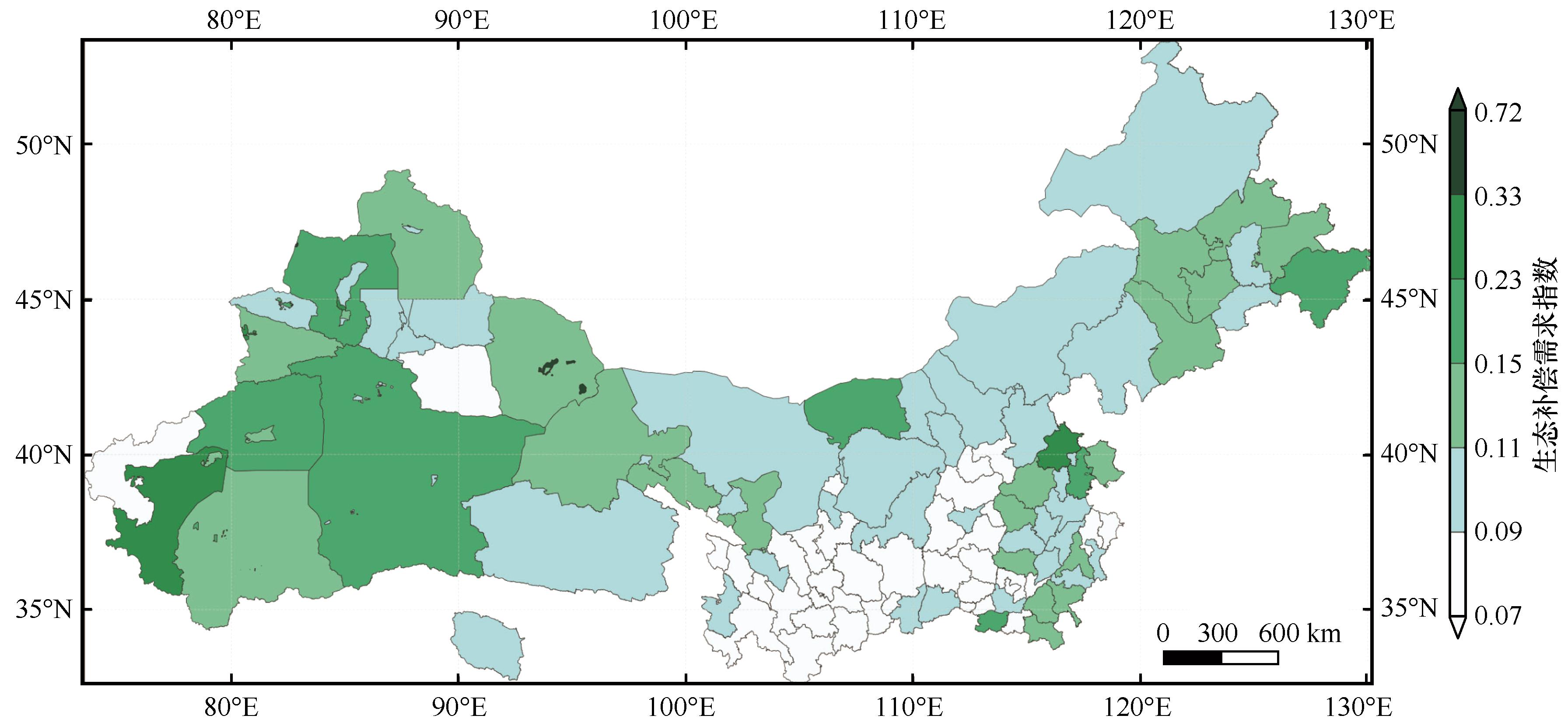
Fig.4 Spatial distribution of demand for agricultural ecological compensation in arid regions of China in 2023
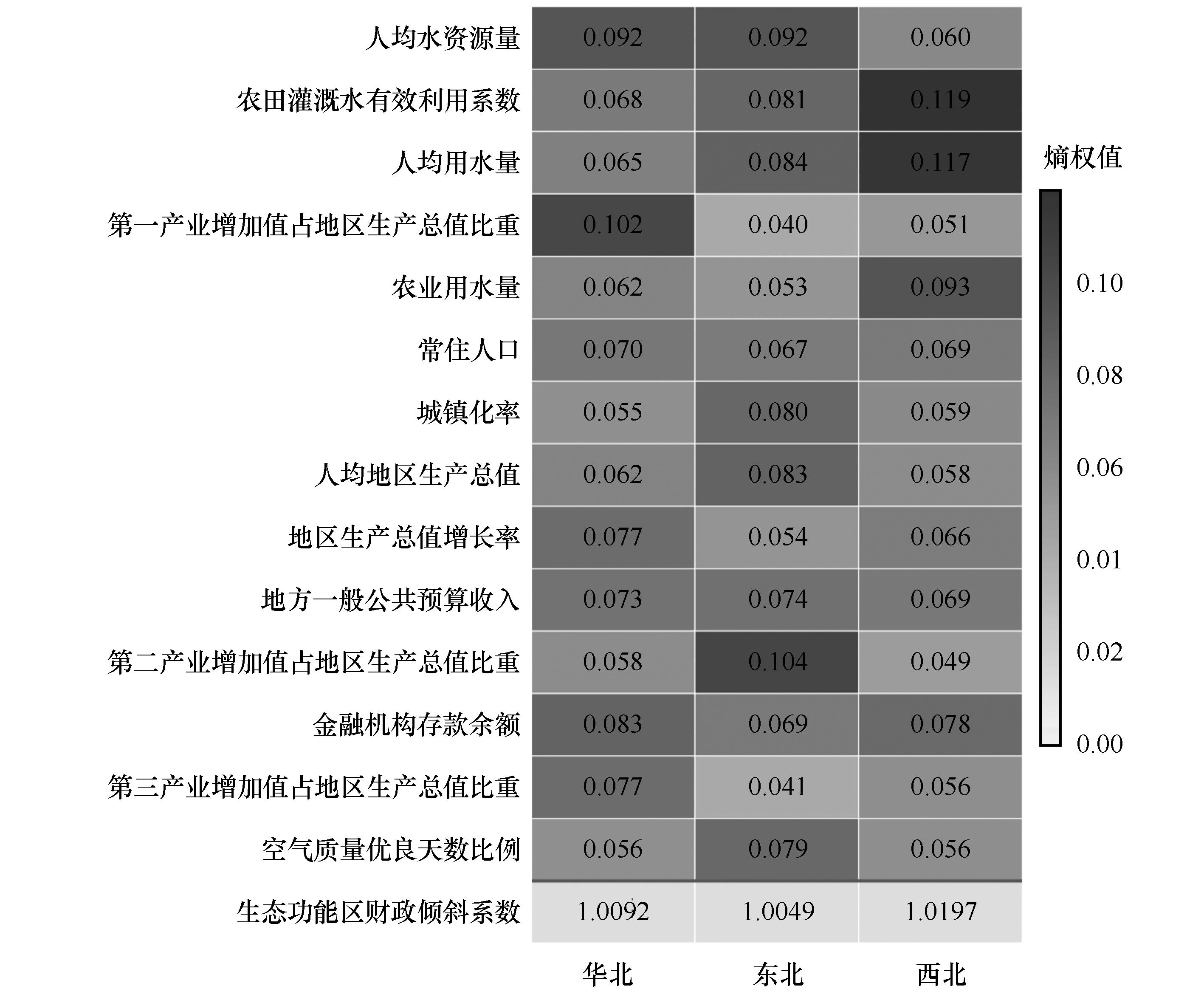
Fig.5 Heat map of weight of agricultural ecological compensation evaluation indicators in three major regions
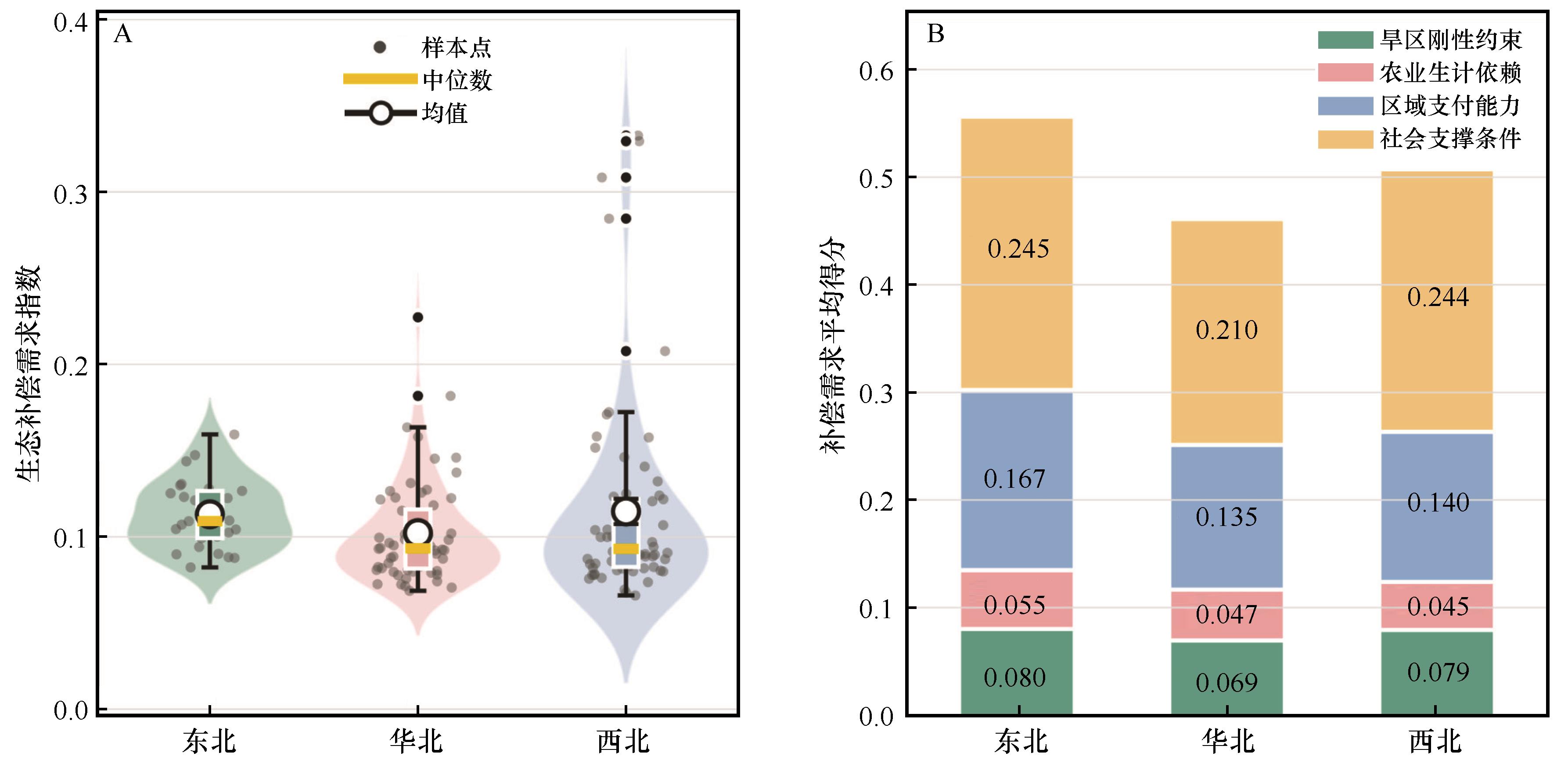
Fig.6 Distribution characteristics of compensation demand index and dimensional contributions of indicators
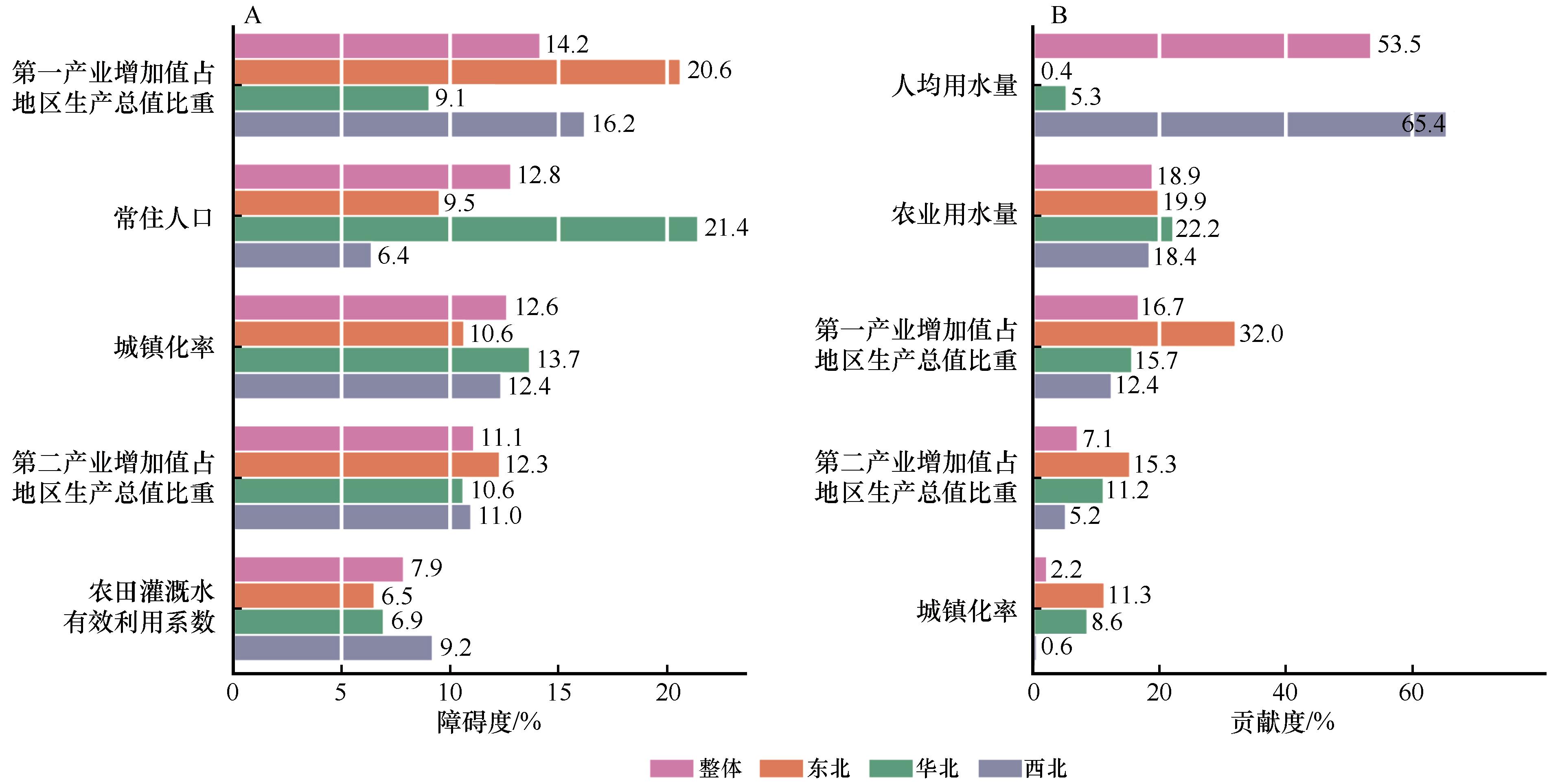
Fig.7 Results of obstacle degree and contribution to spatial differentiation
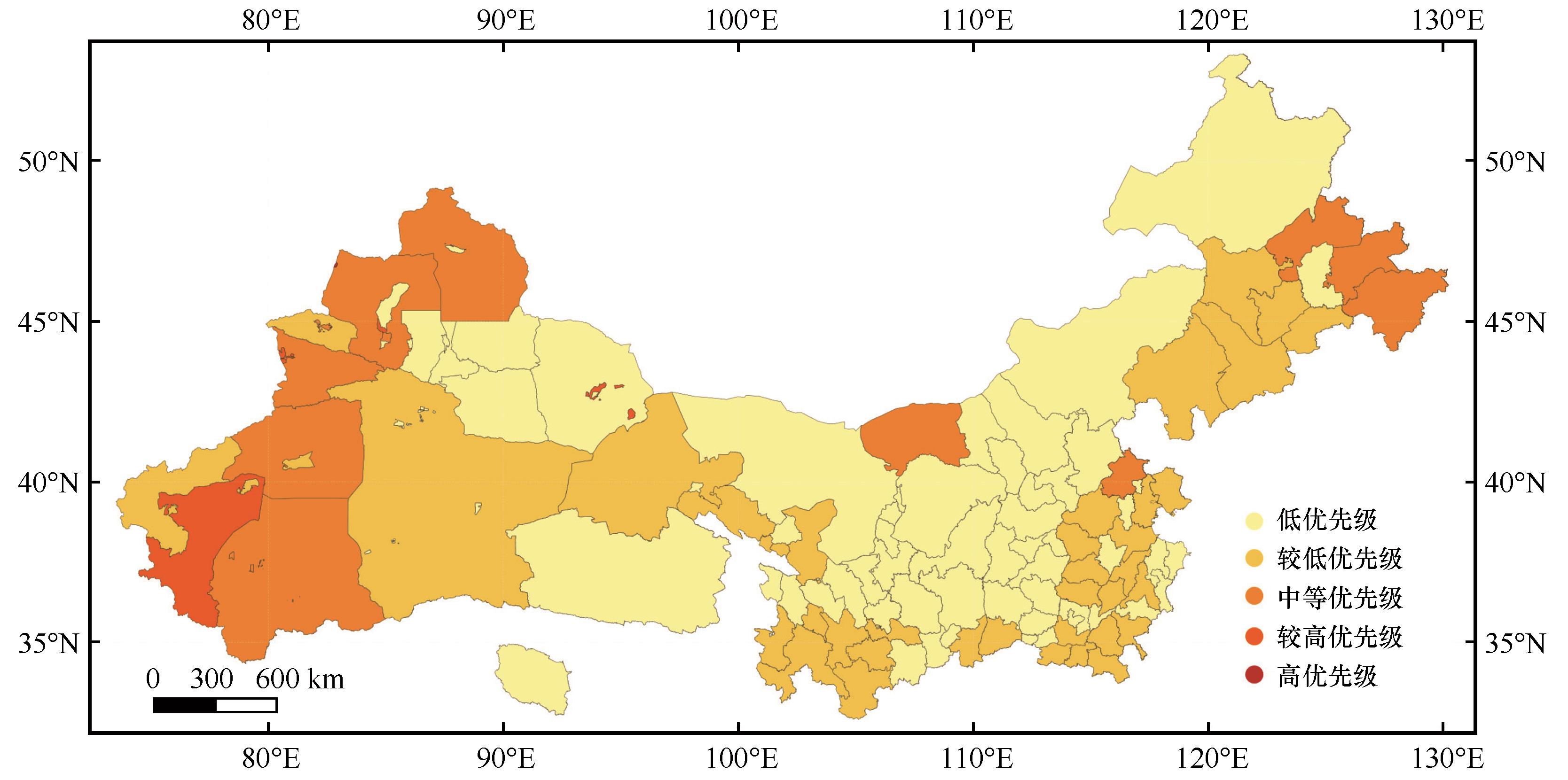
Fig.8 Spatial distribution of policy intervention priority
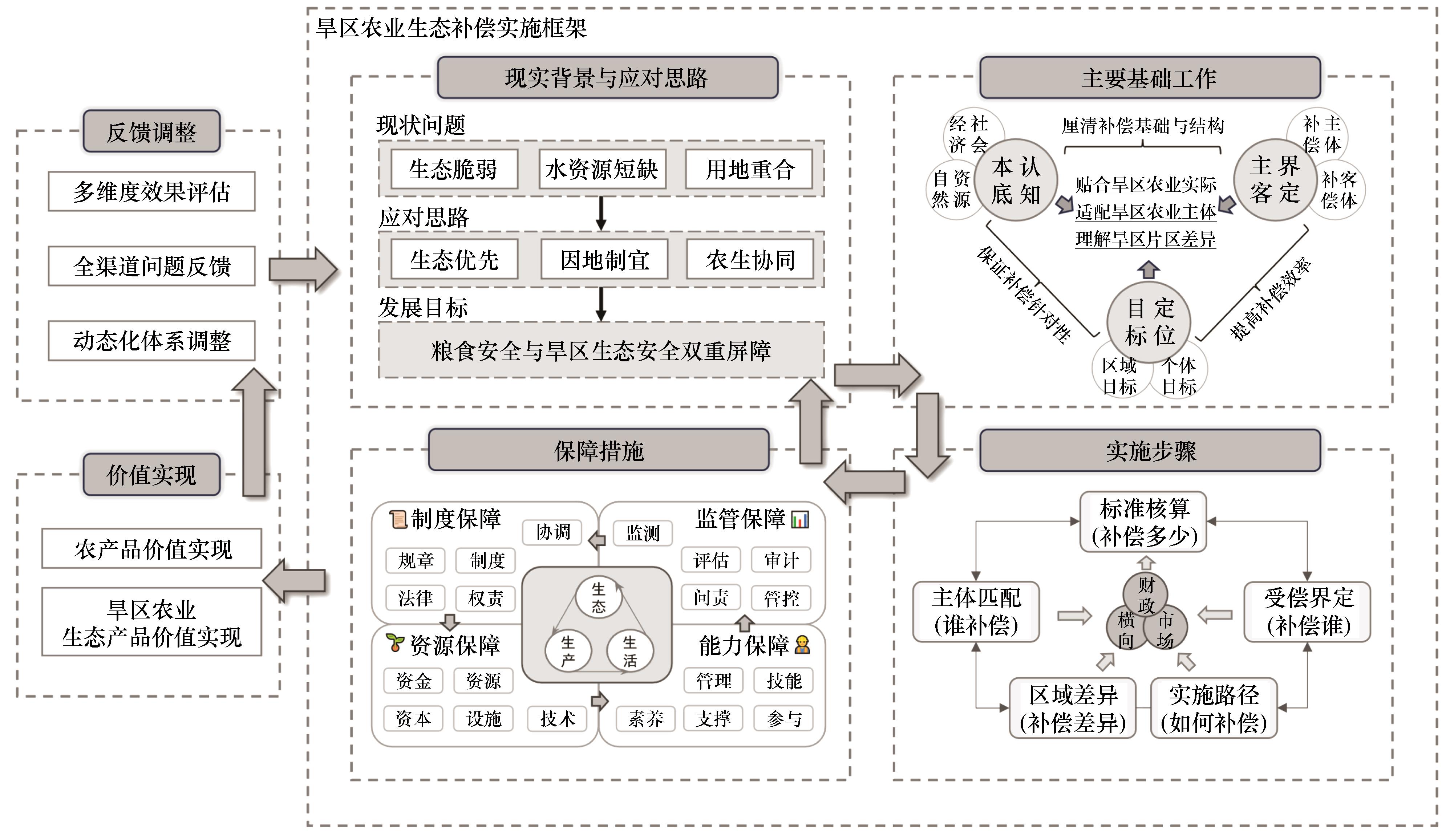
Fig.9 Optimization path of ecological compensation in arid regions
| [1] | 唐可欣,郭建斌,何亮,等.中国旱区GPP时空演变特征及影响因素研究[J].干旱区研究,2024,41(6):964-973. |
| [2] | 程姗岭,于海鹏,任钰,等.中国干旱半干旱区气候异常影响机理研究进展[J].中国沙漠,2023,43(3):21-35. |
| [3] | 陶汪海,邓铭江,王全九,等.西北旱区农业高质量发展体系的生态农业内涵与路径[J].农业工程学报,2023,39(20):221-232. |
| [4] | Elouafi I.Drylands under pressure:science and solutions for global stability[J].Science,2025,387(6735):eadv6563. |
| [5] | 刘焱序,傅伯杰,王帅,等.旱区人地耦合系统水-粮食-生态关联研究述评[J].地理研究,2021,40(2):541-555. |
| [6] | Shi H, Muhammad U.Balancing agricultural production and environmental sustainability:based on economic analysis from North China Plain[J].Environmental Research,2024,252:118784. |
| [7] | 吴普侠,蒋晋豫,方燕,等.对西北地区旱作农业高质量发展的思考[J].干旱地区农业研究,2023,41(3):21-24. |
| [8] | Wang Y, Richard E B, Zhang Q,et al.Effects of payment for ecosystem services and agricultural subsidy programs on rural household land use decisions in China:synergy or trade-off?[J].Land Use Policy,2019,81:785-801. |
| [9] | 牛坤玉,刘静,郭静利,等.农业生态补偿:内涵、要素特征与政策创设[J].中国农业资源与区划,2024,45(10):1-10. |
| [10] | 苏荟琰,李金燕,魏怡敏,等.基于机会成本的宁夏中南部调水工程水源区生态补偿标准研究[J].水利经济,2023,41(6):45-50. |
| [11] | 柳荻,胡振通.地下水超采区休耕生态补偿的农户意愿研究:基于河北省的动态调查[J].干旱区资源与环境,2021,35(10):98-104. |
| [12] | Liu B, Xu L, Long Y,et al.Public willingness to pay for farmland eco-compensation and allocation to farmers:an empirical study from Northeast China[J].Agriculture,2024,14(7):1166. |
| [13] | Zhao G, Tian S, Chen R,et al.Study on the ecosystem service value and inter-basin ecological compensation between provinces in China[J].Water Policy,2024,27(1):118-140. |
| [14] | 马元博,翟天林,毕庆生,等.基于调节服务流视角的黄河流域生态补偿优化研究[J].生态学报,2025,45(8):3763-3775. |
| [15] | 宋博,邢弘育,张盼盼,等.河南省小麦秸秆资源化利用的减排效应与生态补偿机制[J].资源科学,2025,47(5):1050-1062. |
| [16] | 姚石,张秋泽,刘俊娟,等.粮食安全与“双碳”视角下黄河流域农田生态补偿额度[J].水土保持通报,2024,44(3):399-407. |
| [17] | Ma Y, Chen H, Yang M,et al.Ecological compensation based on multiscale ecosystem carbon sequestration service flow[J].Journal of Environmental Management,2024,372:123396. |
| [18] | 赵茹,龙冬平,杨美玲,等.基于感知价值理论的农户生态补偿适应性研究:以北方农牧交错带盐池县为例[J].中国农业资源与区划,2023,44(2):252-263. |
| [19] | Yang Q, Liu Y, Yun Y,et al.Payments for desert ecosystem services in China[J].Journal of Arid Environments,2025,231:105454. |
| [20] | Hou L, Xia F, Chen Q,et al.Grassland ecological compensation policy in China improves grassland quality and increases herders' income[J].Nature Communications,2021,12(1):4683. |
| [21] | Zhang J, Zhang Y, Wang X,et al.National forest restoration projects in China:cost-efficiency,and trade-off between carbon sequestration and water consumption[J].Earth's Future,2024,12(12):e2024EF004976. |
| [22] | Li D, Xu D, Wang Z,et al.Ecological compensation for desertification control:a review[J].Journal of Geographical Sciences,2018,28(3):367-384. |
| [23] | 景来红,严登明,崔萌,等.南水北调西线工程生态环境影响及应对的关键科学问题[J].水科学进展,2024,35(4):521-529. |
| [24] | 张铁亮.农业生态补偿:内涵、演进与政策建议[J].当代经济管理,2026,48(2):58-69. |
| [25] | 乔玉辉,甄华杨,冯旭,等.农业生态补偿标准的量化方法研究与展望[J].中国生态农业学报(中英文),2025,33(4):783-793. |
| [26] | 牛志伟,邹昭晞.农业生态补偿的理论与方法:基于生态系统与生态价值一致性补偿标准模型[J].管理世界,2019,35(11):133-143. |
| [27] | 崔树强,周国华,尚鹏,等.近40余年中国生态补偿研究进展与实践探索综述[J].生态科学,2024,43(1):247-256. |
| [28] | Vandever M, Carter S, Assal T,et al.Evaluating establishment of conservation practices in the conservation reserve program across the central and western United States[J].Environmental Research Letters,2021,16(7):074011. |
| [29] | Trotter B, Wible T, Brink P,et al.Edge-of-field water quality impacts of EQIP-funded conservation practices on irrigated fields in Colorado[J].Journal of Soil and Water Conservation,2025,80(2):176-189. |
| [30] | José-Antonio M, Gema G, María-Auxiliadora S,et al.Appraising trapping efficiency of vegetative barriers in agricultural landscapes:strategy based on a probabilistic approach based on a review of available information[J].International Soil and Water Conservation Research,2024,12(3):615-634. |
| [31] | D'Alberto R, Targetti S, Schaller L,et al.A European perspective on acceptability of innovative agri-environment-climate contract solutions[J].Land Use Policy,2024,141:107120. |
| [32] | Troccoli A, Stone R, Bardi U,et al.Rebalancing regional and remote Australia:a vision for a global carbon sink while creating sustainable communities[J].Environmental Research Letters,2024,19(11):111003. |
| [33] | Khavhagali V, Reckien D, Biesbroek R,et al.Understanding the climate change adaptation policy landscape in South Africa[J].Climate Policy,2024,24(4):458-472. |
| [34] | Yu Y, Pi Y, Yu X,et al.Climate change,water resources and sustainable development in the arid and semi-arid lands of Central Asia in the past 30 years[J].Journal of Arid Land,2019,11(1):1-14. |
| [35] | Perevochtchikova M, Castro-Díaz R, Langle-Flores A,et al.A systematic review of scientific publications on the effects of payments for ecosystem services in Latin America,2000-2020[J].Ecosystem Services,2021,49:101270. |
| [36] | 蒋振,高雅罕,靳乐山.牧户的草原生态补偿政策满意度与支持度:基于CSI框架和SEM的检验[J].生态学报,2024,44(1):196-208. |
| [37] | 韩枫,张鑫,周荣柱.草原生态补偿及其对牧户行为影响:综述与展望[J].资源科学,2024,46(8):1447-1459. |
| [38] | 胡运禄,张明善.我国民族地区湿地生态价值核算与生态补偿标准研究[J].青海民族研究,2022,33(2):220-228. |
| [39] | 陈科屹,邱胜荣,赵晓迪,等.北京市湿地生态补偿标准研究[J].生态学报,2021,41(12):4786-4794. |
| [40] | Liu M, Bai Y, Yang L,et al.Calculation of ecological compensation standards for the kuancheng traditional chestnut cultivation system[J].Journal of Resources and Ecology,2021,12(4):471-479. |
| [41] | Li L, Li X, Fan H,et al.Quantifying and zoning ecological compensation for cultivated land in intensive agricultural areas:a case study in Henan Province,China[J].Land,2024,13(10):13101720. |
| [42] | 赵晋申,赵媛媛,王岳,等.中国旱区2000-2022年乡村振兴水平评估[J].水土保持通报,2025,45(3):319-330. |
| [43] | 邹磊,刘慧媛,王飞宇,等.长江中游城市群绿色发展水平的地区差异及其影响因素[J].中国科学:地球科学,2022,52(8):1462-1475. |
| [44] | Chen P.Effects of the entropy weight on TOPSIS[J].Expert Systems with Applications,2021,168:114186. |
| [45] | 谭学玲,虞虎,彭建.中国国家公园区域生态-经济-社会耦合协调发展及其障碍因素[J].生态学报,2026,46(10):1-14. |
| [46] | 吴昊,张广成,段志远.生态产品价值实现的经济效应:以东北地区为例[J].中国人口·资源与环境,2025,35(6):167-176. |
| [1] | Min Huang, Honglian Wan, Xiaoli Wang, Jingfeng Ni, Huiyue Liu, Wenzhe Zhang, Yiyi Cui. Characteristics of evolution of rural revitalization in counties in the Qinba Mountainous Region of Shaanxi, China [J]. Journal of Desert Research, 2025, 45(5): 308-317. |
| [2] | Bo Yao, Jie Lian, Xiangwen Gong, Xiaoming Mou, Yulin Li, Yuqiang Li, Xuyang Wang. Spatial patterns and influencing factors of soil microbial carbon, nitrogen and phosphorus stoichiometry in Horqin Sandy Land [J]. Journal of Desert Research, 2025, 45(4): 153-165. |
| [3] | Zhihan Xie, Min Liu, Xugang Yan, Yapeng Ren. Spatial pattern of important geological remains and evaluation of geotourism development potential in the Yellow River Basin [J]. Journal of Desert Research, 2024, 44(3): 128-139. |
| [4] | Jun Luo, Xuebin Zhang, Peiji Shi. Spatial evolution characteristics and zoning optimization of Lanzhou-Xining urban agglomeration in the upper reaches of the Yellow River [J]. Journal of Desert Research, 2024, 44(3): 182-193. |
| [5] | Jialong Ren, Jiliang Liu, Yongzhen Wang, Jing Fang, Yilin Feng, Anling Gao, Yuanxia Song, Weidong Xin. Response of ground arthropod assemblages to precipitation and temperature changes in the gobi desert [J]. Journal of Desert Research, 2024, 44(2): 207-219. |
| [6] | Caixia Hou, Juanjuan Zhang, Mengmeng Zhang, Mengjie Zhang, Xiaojie Zhang. Research on the influencing factors of farmers' grazing behavior based on the theory of expectation [J]. Journal of Desert Research, 2023, 43(6): 79-88. |
| [7] | Yushuo Zhang, Xuerui Shen, Renjing Sui, Jie Bao, Zhonglei Yu, Lin Zhao, Xuebin Zhang. Multi-scale analysis of spatial pattern and the influencing factors of A-grade scenic spots in the Yellow River Basin [J]. Journal of Desert Research, 2022, 42(6): 103-115. |
| [8] | Baoqi Xue. Spatial-temporal characteristics of urban innovation capability and impact factors analysis in the Yellow River Basin [J]. Journal of Desert Research, 2022, 42(6): 116-124. |
| [9] | Rui Zhao, Heng Zhao, Zhiwei Ding. Analysis on spatial pattern and influencing factors of A-level desert scenic spots in China based on network attention [J]. Journal of Desert Research, 2022, 42(5): 101-113. |
| [10] | Xiaoya Zhang, Fenglian Du. Influencing factors of residents’ willingness to pay for ecological compens-ation in sand area of Alxa Left Banner, Inner Mongolia, China [J]. Journal of Desert Research, 2022, 42(2): 54-61. |
| [11] | Zhiwei Ding, Rui Zhao, Zihan Jian, Yiwei Meng, Gaisu Zhang. Economics spatial pattern and its influencing factors of Yellow River Basin at town scale from the perspective of urban-rural integration [J]. Journal of Desert Research, 2021, 41(6): 195-204. |
| [12] | Liu Jiang, Xu Xianying, Zhang Rongjuan, Ding Aiqiang, Fu Guiquan, Zhao Peng. Fragmentation and Point Pattern of Mound Patches and Hole Collapse Patches of Rhombomys opimus in the Artificial Haloxylon ammodendron Plantations [J]. Journal of Desert Research, 2018, 38(3): 610-618. |
| [13] | Liu Jiang, Xu Xianying, Zhang Rongjuan, Ding Aiqiang, Fu Guiquan, Zhao Peng. Spatial Pattern of Holes of Rhombomys opimus in A Haloxylon ammodendron Plantation Site [J]. JOURNAL OF DESERT RESEARCH, 2017, 37(6): 1180-1188. |
| [14] | Hu Guanglu, Wang Dejin, Liao Yaxin, Zhang Hongwei, Chen Hongxiang, Zhao Chenyu. Intensity of Wind Erosion and Deposition in Patch Vegetation Area of Desert-Oasis Ecotone in the Middle Reaches of the Heihe River of China [J]. JOURNAL OF DESERT RESEARCH, 2016, 36(6): 1547-1554. |
| [15] | Liu Xiaoting, Chen Wenjun. Dynamics of Spatial Pattern of County's Economics during 2004-2013 in Xinjiang, China [J]. JOURNAL OF DESERT RESEARCH, 2015, 35(4): 1089-1095. |
| Viewed | ||||||
|
Full text |
|
|||||
|
Abstract |
|
|||||
©2018Journal of Desert Research
Tel:0931-8267545
Email:caiedit@lzb.ac.cn;desert@lzb.ac.cn
Support:Magtech
