
- CN 62-1070/P
- ISSN 1000-694X
- Bimonthly 1981
Journal of Desert Research ›› 2026, Vol. 46 ›› Issue (1): 1-10.DOI: 10.7522/j.issn.1000-694X.2025.00361
Wenzhi Zhao( ), Zhibin He
Received:2025-11-23
Revised:2025-12-29
Online:2026-01-20
Published:2026-03-09
CLC Number:
Wenzhi Zhao, Zhibin He. A review of ecohydrology research progress at Linze Station in the inland river basins of the Hexi Corridor[J]. Journal of Desert Research, 2026, 46(1): 1-10.
Add to citation manager EndNote|Ris|BibTeX
URL: http://www.desert.ac.cn/EN/10.7522/j.issn.1000-694X.2025.00361
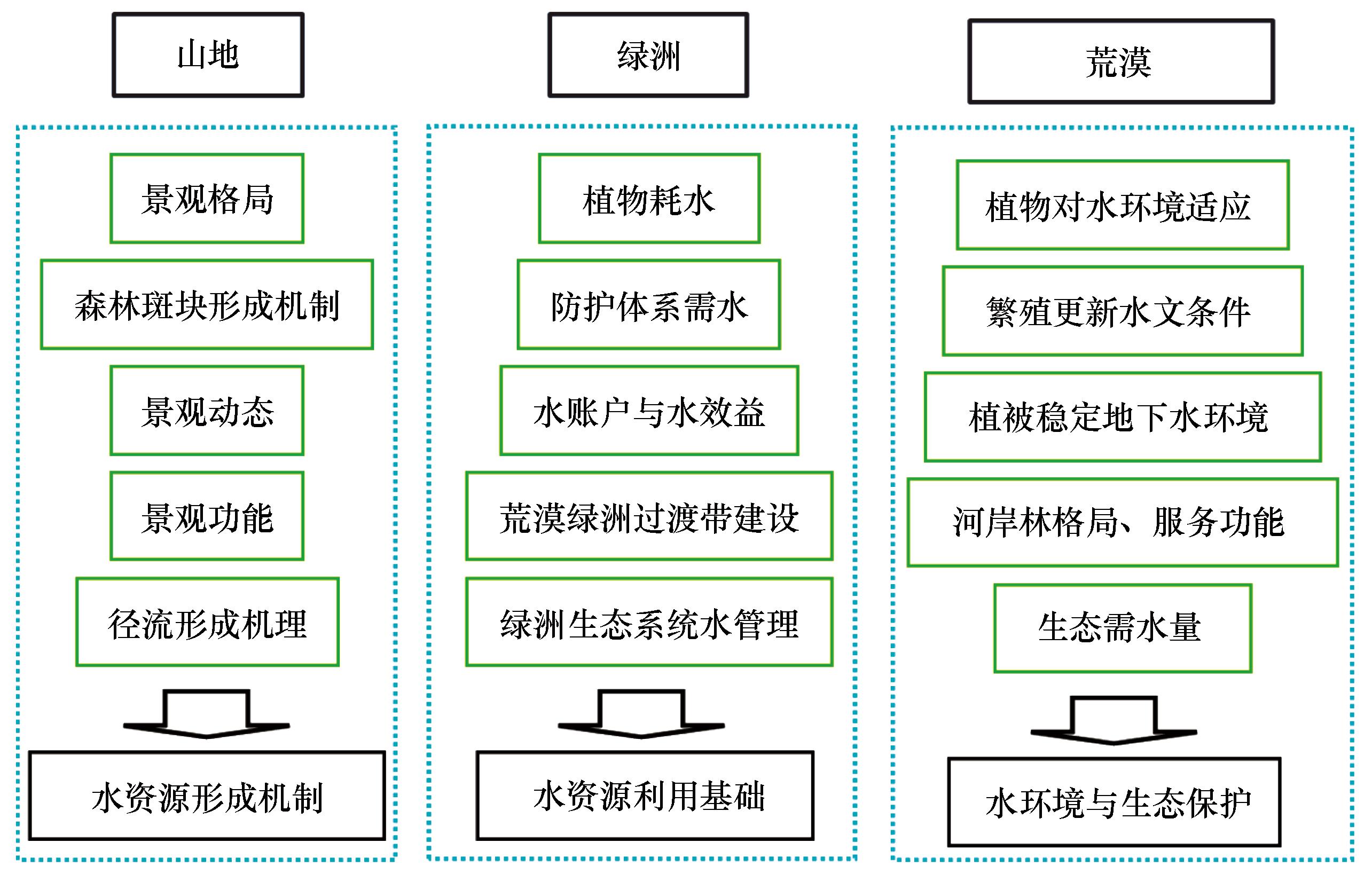
Fig.1 Eco-hydrological research framework of Linze Station established in 2006
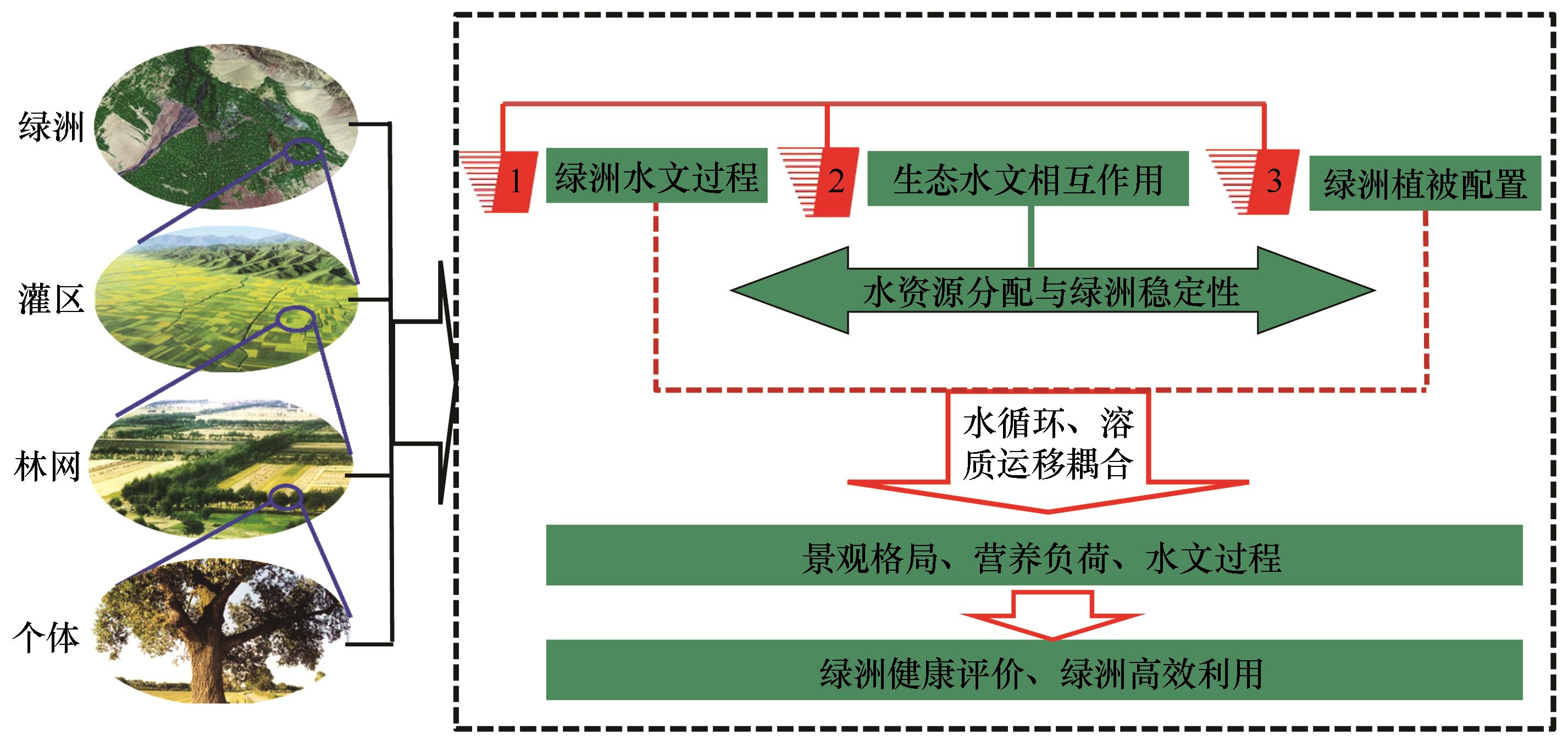
Fig.2 Eco-hydrological research framework of Linze Station established in 2011
| 科学问题 | 生态指标 | 水文指标 |
|---|---|---|
| 植被结构 | 盖度、高度、密度、长势、生产力、根系状况、更新能力 | 土壤湿度、水分活动层深度、降水响应 |
| 生物多样性 | 丰富度、均匀度、变异性、生活型 | 土壤水分垂直变异性、降水入渗深度、土壤水分异质性 |
| 生态系统功能 | 防风固沙功能、结皮厚度、局地起沙风速、土壤动物活动 | 降水的水平再分配(植被冠层、土壤表层) |
| 生态适应(抵抗力) | 气孔对降水和土壤湿度的调节(C4与C3) | 土壤水力传导度、优先流、植物水分阻力 |
| 生态恢复(恢复力) | 种子库、自然更新能力、忍受沙埋极限、忍耐干旱极限 | 去除植被后土壤水库恢复过程与时间 |
| 生态系统稳定性 | 自疏过程、植被组合、稳定性 | 降水脉动、土壤水分补给 |
Table 1 Eco-hydrological research framework of the desert ecosystem at Linze Station in 2016
| 科学问题 | 生态指标 | 水文指标 |
|---|---|---|
| 植被结构 | 盖度、高度、密度、长势、生产力、根系状况、更新能力 | 土壤湿度、水分活动层深度、降水响应 |
| 生物多样性 | 丰富度、均匀度、变异性、生活型 | 土壤水分垂直变异性、降水入渗深度、土壤水分异质性 |
| 生态系统功能 | 防风固沙功能、结皮厚度、局地起沙风速、土壤动物活动 | 降水的水平再分配(植被冠层、土壤表层) |
| 生态适应(抵抗力) | 气孔对降水和土壤湿度的调节(C4与C3) | 土壤水力传导度、优先流、植物水分阻力 |
| 生态恢复(恢复力) | 种子库、自然更新能力、忍受沙埋极限、忍耐干旱极限 | 去除植被后土壤水库恢复过程与时间 |
| 生态系统稳定性 | 自疏过程、植被组合、稳定性 | 降水脉动、土壤水分补给 |
| 国家战略需求 | 目标 | 科学问题 |
|---|---|---|
| 水土资源与国土空间配置 | 干旱区水土资源利用、山地-荒漠-绿洲协同管理 | 干旱区绿洲水效益、水平衡、水管理; 要素构成、运作效率、恢复力、可持续性; 绿洲生源要素运移、连通性及环境效应 |
| 能源基地生态保护与风险评估 | 风光电建设生态风险评估与生态恢复 | 光电、风电场的环境影响及生态风险评估; 能源基地生态恢复、重建及保护技术 |
| 区域生态系统保护 | 自然保护区、国家公园建设的科学依据 | 山水林田湖草沙生命共同体格局、要素构成及效能协同与权衡; 干旱区典型生态环境监测、预警及评估; 干旱区生态系统适应性管理的理论基础 |
| 黄河流域生态保护与高质量发展“一带一路”生态环境 | 水生态与水环境 关键生态系统对水环境的响应与适应 | 湿地-农田的水分交换及溶质运移; 面源污染、盐渍化调控; 北方风沙区水土保持; 中亚地下水变化对荒漠化的影响 |
Table 2 Eco-hydrological research framework of Linze Station established in 2020
| 国家战略需求 | 目标 | 科学问题 |
|---|---|---|
| 水土资源与国土空间配置 | 干旱区水土资源利用、山地-荒漠-绿洲协同管理 | 干旱区绿洲水效益、水平衡、水管理; 要素构成、运作效率、恢复力、可持续性; 绿洲生源要素运移、连通性及环境效应 |
| 能源基地生态保护与风险评估 | 风光电建设生态风险评估与生态恢复 | 光电、风电场的环境影响及生态风险评估; 能源基地生态恢复、重建及保护技术 |
| 区域生态系统保护 | 自然保护区、国家公园建设的科学依据 | 山水林田湖草沙生命共同体格局、要素构成及效能协同与权衡; 干旱区典型生态环境监测、预警及评估; 干旱区生态系统适应性管理的理论基础 |
| 黄河流域生态保护与高质量发展“一带一路”生态环境 | 水生态与水环境 关键生态系统对水环境的响应与适应 | 湿地-农田的水分交换及溶质运移; 面源污染、盐渍化调控; 北方风沙区水土保持; 中亚地下水变化对荒漠化的影响 |
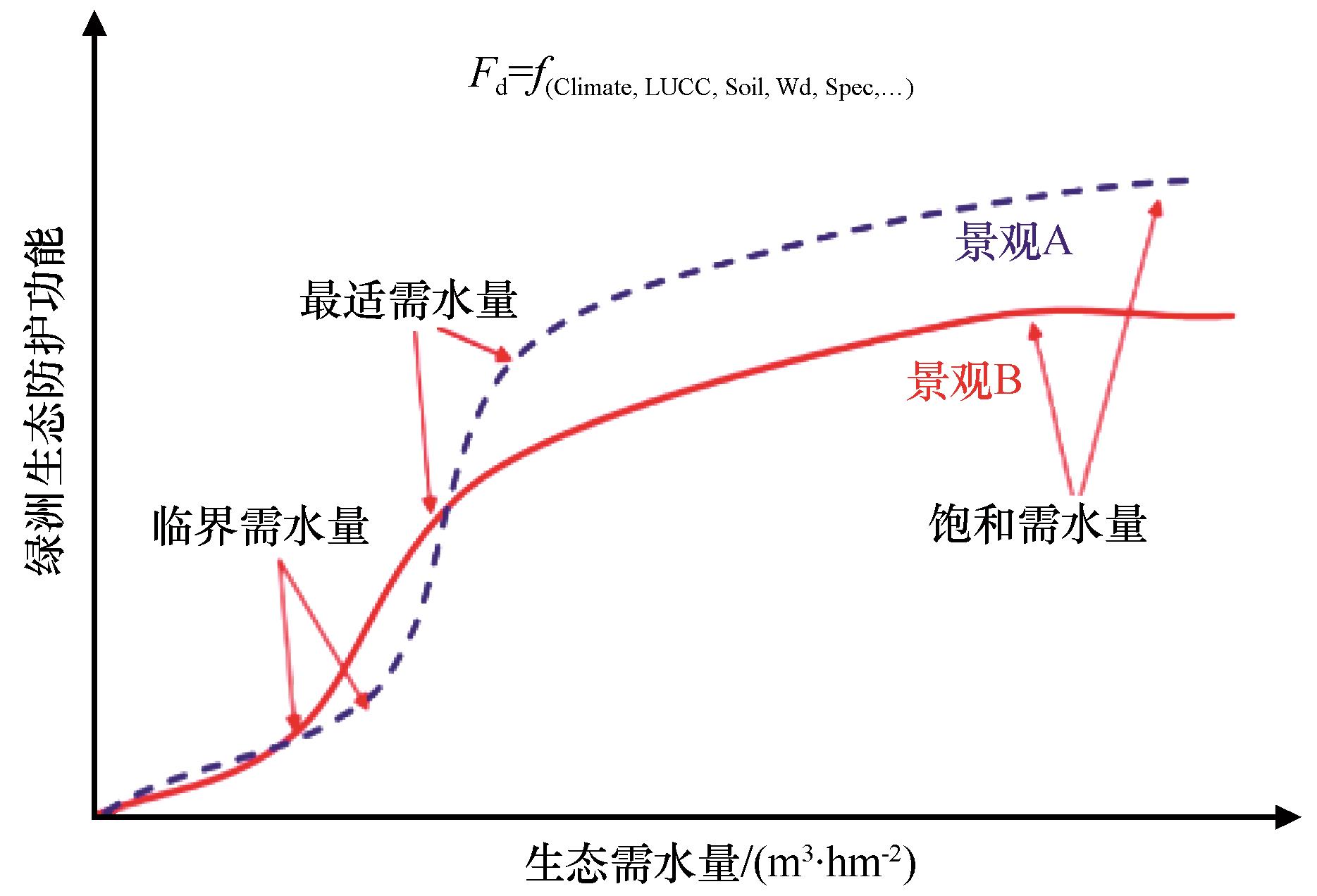
Fig.3 Relationship between the functions and water requirements of the oasis protection system
| [1] | Baird A J, Wilby R L.生态水文学:陆生环境与水生环境植物水分关系[M].赵文智,王根绪,译.北京:海洋出版社,2002. |
| [2] | 赵文智,程国栋.干旱区生态水文过程研究若干问题评述[J].科学通报,2001,46(22):1851-1857. |
| [3] | 赵文智,程国栋.生态水文研究前沿问题及生态水文观测试验[J].地球科学进展,2008,23(7):671-674. |
| [4] | 赵文智,程国栋.生态水文学:揭示生态过程和生态格局水文学机制的科学[J].冰川冻土,2001,23(4):450-457. |
| [5] | 程国栋,赵文智.绿水及其研究进展[J].地球科学进展,2006,21(3):221-227. |
| [6] | 常学向,赵文智.荒漠绿洲农田防护树种二白杨生长季节树干液流的变化[J].生态学报,2004,24(7):1436-1441. |
| [7] | Chang X, Zhao W, He Z.Radial pattern of sap flow and response to microclimate and soil moisture in Qinghai spruce (Picea crassifolia) in the upper Heihe River Basin of arid northwestern China[J].Agricultural and Forest Meteorology,2014,187:14-21. |
| [8] | Chang X, Zhao W, Zhang Z,et al.Sap flow and tree conductance of shelter-belt in arid region of China[J].Agricultural and Forest Meteorology,2006,138(1/4):132-141. |
| [9] | Zhao W, Chang X, Zhang Z.Transpiration of a Linze jujube orchard in an arid region of China[J].Hydrological Processes,2009,23(10):1461-1470. |
| [10] | 常学向,赵文智.黑河中游沙枣树干液流的动态变化及其与林木个体生长的关系[J].中国沙漠,2004,24(4):473-478. |
| [11] | 常学向,赵文智,张智慧.荒漠区固沙植物梭梭(Haloxylon ammodendron)耗水特征[J].生态学报,2007,27(5):1826-1837. |
| [12] | Ji X, Zhao W, Jin B,et al.Seasonal variations in energy exchange and evapotranspiration of an oasis-desert ecotone in an arid region[J].Hydrological Processes,2021,35:e14364. |
| [13] | Zhao L, Zhao W.Canopy transpiration obtained from leaf transpiration,sap flow and FAO-56 dual crop coefficient method[J].Hydrological Processes,2015,29(13):2983-2993. |
| [14] | Zhao L, Zhao W.Water balance and migration for maize in an oasis farmland of Northwest China[J].Chinese Science Bulletin,2014,59(34):4829-4837. |
| [15] | Zhao W, Niu Z, Chang X,et al.Water consumption in artificial desert oasis based on net primary productivity[J].Science in China Series D:Earth Sciences,2010,53(9):1358-1364. |
| [16] | Zhao W, Chang X, He Z,et al.Study on vegetation ecological water requirement in Ejina Oasis[J].Science in China Series D:Earth Sciences,2007,50(1):121-129. |
| [17] | Liu B, Zhao W, Chang X,et al.Water requirements and stability of oasis ecosystem in arid region,China[J].Environmental Earth Sciences,2010,59:1235-1244. |
| [18] | 张立杰,赵文智,何志斌.青海云杉(Picea crassifolia)种群格局的分形特征及其影响因素[J].生态学报,2008,28(4):1383-1389. |
| [19] | 何志斌,赵文智,张立杰,等.祁连山青海云杉林采伐干扰与恢复过程[J].林业科学,2009,45(2):12-16. |
| [20] | He Z, Zhao W, Liu H,et al.Successional process of Picea crassifolia forest after logging disturbance in semiarid mountains:a case study in the Qilian Mountains,northwestern China[J].Forest Ecology and Management,2010,260:396-402. |
| [21] | Liu H, Zhao W, He Z.Self-organized vegetation patterning effects on surface soil hydraulic conductivity:a case study in the Qilian Mountains,China[J].Geoderma,2013,192:362-367. |
| [22] | Fang S, He Z.Fifty years of change in a coniferous forest in the Qilian Mountains,China:advantages of high-definition remote sensing[J].Forests,2020,11:1188. |
| [23] | He Z, Zhao W, Zhang L,et al.Response of tree-ring growth to climate at treeline ecotones in the Qilian Mountains,northwestern China[J].Sciences in Cold and Arid Regions,2011,3:103-109. |
| [24] | He Z, Zhao W, Zhang L,et al.Response of tree recruitment to climatic variability in the alpine treeline ecotone of the Qilian Mountains,northwestern China[J].Forest Science,2013,59:118-126. |
| [25] | Du J, He Z, Yang J,et al.Detecting the effects of climate change on canopy phenology in coniferous forests in semi-arid mountain regions of China[J].International Journal of Remote Sensing,2014,35:6490-6507. |
| [26] | He Z, Du J, Zhao W,et al.Assessing temperature sensitivity of subalpine shrub phenology in semi-arid mountain regions of China[J].Agricultural and Forest Meteorology,2015,213:42-52. |
| [27] | He Z, Du J, Chen L,et al.Impacts of recent climate extremes on spring phenology in arid-mountain ecosystems in China[J].Agricultural and Forest Meteorology,2018,260:31-40. |
| [28] | He Z, Zhao W, Liu H,et al.Effect of forest on annual water yield in the mountains of an arid inland river basin: a case study in the Pailugou catchment on northwestern China's Qilian Mountains[J].Hydrological Processes,2012,26:613-621. |
| [29] | He Z, Zhao W, Liu H,et al.The response of soil moisture to rainfall event size in subalpine grassland and meadows in a semi-arid mountain range: a case study in northwestern China's Qilian Mountains[J].Journal of Hydrology,2012,420/421:183-190. |
| [30] | Liu H, Zhao W, He Z,et al.Stochastic modeling of soil moisture dynamics in a grassland of Qilian Mountain at point scale[J].Science in China Series D:Earth Sciences,2017,50:1844-1856. |
| [31] | Chen L, He Z, Du J,et al.Patterns and controls of soil organic carbon and nitrogen in alpine forests of northwestern China[J].Forest Science,2015,61:1033-1040. |
| [32] | Chen L, He Z, Du J,et al.Patterns and environmental controls of soil organic carbon and total nitrogen in alpine ecosystems of northwestern China[J].Catena,2016,137:37-43. |
| [33] | Chen L, He Z, Zhao W,et al.Empirical evidence for microbial regulation of soil respiration in alpine forests[J].Ecological Indicators,2021,126:107710. |
| [34] | Zhu X, He Z, Chen L,et al.Changes in species diversity,aboveground biomass,and distribution characteristics along an afforestation successional gradient in semiarid Picea crassifolia plantations of Northwestern China[J].Forest Science,2017,63(1):17-28. |
| [35] | He Z, Yang J, Du J,et al.Spatial variability of canopy interception in a spruce forest of the semiarid mountain regions of China[J].Agricultural and Forest Meteorology,2014,188:58-63. |
| [36] | Zhu X, He Z, Du J,et al.Temporal variability in soil moisture after thinning in semi-arid Picea crassifolia plantations in northwestern China[J].Forest Ecology and Management,2017,401:273-285. |
| [37] | He Z, Fang S, Chen L,et al.Spatial patterns in natural Picea crassifolia forests of northwestern China,as basis for close-to-nature forestry[J].Journal of Mountain Science,2018,15(9):1909-1919. |
| [38] | He Z, Zhao W, Chang X.The modifiable areal unit problem of spatial heterogeneity of plant community in the transitional zone between oasis and desert using semivariance analysis[J].Landscape Ecology,2007,22:95-104. |
| [39] | Zhao W, Hu G, Zhang Z,et al.Shielding effect of oasis-protection systems composed of various forms of wind break on sand fixation in an arid region:a case study in the Hexi Corridor,Northwest China[J].Ecological Engineering,2008,33(2):119-125. |
| [40] | Li Q, Zhao W, Fang H.Effects of sand burial depth and seed mass on seedling emergence and growth of Nitraria sphaerocarpa [J].Plant Ecology,2006,185:191-198. |
| [41] | Luo W, Zhao W.Effects of wind erosion and sand burial on growth and reproduction of a clonal shrub[J].Flora-Morphology,Distribution,Functional Ecology of Plants,2015,217:164-169. |
| [42] | He Z, Zhao W, Chang X,et al.Scale dependence in desert plant diversity[J].Biodiversity and Conservation,2005,15(9):3055-3064. |
| [43] | Luo W, Zhao W, He Z,et al.Spatial characteristics of two dominant shrub populations in the transition zone between oasis and desert in the Heihe River Basin,China[J].Catena,2018,170:356-364. |
| [44] | Zheng Y, Yang Q, Ren H,et al.Spatial pattern variation of artificial sand-binding vegetation based on UAV imagery and its influencing factors in an oasis-desert transitional zone[J].Ecological Indicators,2022,141:109868. |
| [45] | 赵文智,郑颖,张格非.绿洲边缘人工固沙植被自组织过程[J].中国沙漠,2018,38(1):1-7. |
| [46] | 郑颖,赵文智,张格非.基于V_Hegyi 竞争指数的绿洲边缘人工固沙植被梭梭 (Haloxylon ammodendron)的种群竞争[J].中国沙漠,2017,37(6):1127-1134. |
| [47] | Li F, Zhao W.Hydrologic thresholds and changes in ANPP of artificial sand-fixing vegetation in a desert-oasis ecotone in Northwest China[J].Journal of Arid Environments,2017,146:44-52. |
| [48] | 庄艳丽,赵文智,谢国勋,等.沙地生境沙拐枣(Calligonum mongolicum)种群特征及其扩张[J].生态学报,2008,28(4):1399-1406. |
| [49] | 苏培玺.C4植物生物学:荒漠植物生理生态适应性[M].北京:科学出版社,2019. |
| [50] | Liu B, Zhao W, Jin B.The response of sap flow in desert shrubs to environmental variables in an arid region of China[J].Ecohydrology,2011,4(3):448-457. |
| [51] | Yang Q, Zhao W, Liu B,et al.Physiological responses of Haloxylon ammodendron to rainfall pulses in temperate desert regions,northwestern China[J].Trees,2014,28(3):709-722. |
| [52] | Liu H, Wu C, Yu Y,et al.Modeling the physiological responses of a desert shrub to rainfall pulses in an arid environment in northwestern China[J].Journal of Arid Environments,2020,183:104277. |
| [53] | Li F, Zhao W, Liu H.The response of aboveground net primary productivity of desert vegetation to rainfall pulse in the temperate desert region of Northwest China[J].PLoS ONE,2013,8(9):e73003. |
| [54] | Li F, Zhao W, Liu H.Productivity responses of desert vegetation to precipitation patterns across a rainfall gradient[J].Journal of Plant Research,2014. |
| [55] | Zhou H, Feng X, He Z,et al.Contrasting water-use strategies of coexisting xerophyte shrubs in a desert groundwater-dependent vegetation ecosystem[J].Environmental and Experimental Botany,2025,106209. |
| [56] | 周海,赵文智.河西走廊典型荒漠区土壤水分对降水脉动响应的稳定同位素分析[J].中国沙漠,2016,36(6):1637-1645. |
| [57] | Chen W, Chen G, Feng X,et al.Seasonal water sources and response to precipitation events of Calligonum mongolicum at the oasis margin in the Hexi River Corridor[J].Hydrological Processes,2024,38(3):e15132. |
| [58] | Zhou H, Zhao W, He Z,et al.Stable isotopes reveal varying water sources of Caragana microphylla in a desert-oasis ecotone near the Badain Jaran Desert[J].Sciences in Cold and Arid Regions,2018,10(6):458-467 |
| [59] | Zhou H, Zhao W, Zhang G.Varying water utilization of Haloxylon ammodendron plantations in a desert-oasis ecotone[J].Hydrological Processes,2017,31(4):825-835. |
| [60] | Gu H, Zhou H, Chen G,et al.Isotopic evidence of hydrological niche segregation and species coexisting mechanism of desert shrubs Reaumuria songarica and Nitraria sphaerocarpa [J].Journal of Hydrology,2025,661:133803. |
| [61] | 周海,赵文智,何志斌.两种荒漠生境条件下泡泡刺水分来源及其对降水的响应[J].应用生态学报,2017,28(7):2083-2092. |
| [62] | He Z, Zhao W.Characterizing the spatial structure of riparian plant communities in the lower reaches of Heihe River in China using geostatistical techniques[J].Ecological Research,2006,21:551-559. |
| [63] | Zhao W, Chang X, He Z.Responses of distribution pattern of desert riparian forests to hydrologic process in Ejina Oasis[J].Science in China Series D:Earth Sciences,2004,47(Supp.):21-31. |
| [64] | 赵文智,常学礼,李秋艳.人工调水对胡杨荒漠河岸林繁殖的影响[J].生态学报,2005,25(8):1987-1993. |
| [65] | 王川,张勇勇,赵文智.黑河下游额济纳绿洲近20年生态输水的生态恢复效应[J].生态学杂志,2022,41(11):2189-2196. |
| [66] | Wang C, Zhao W, Zhang Y.Runoff controls the development of eco-hydrological and economic conditions in an arid oasis of the downstream inland river basin[J].Arid Land Research and Management,2022,36(3):265-282. |
| [1] | Xinru Deng, Qiang Bie, Chunlin Huang, Ying Shi, Xinzhang Li. Cold island effect of typical oasis landscape pattern in arid region [J]. Journal of Desert Research, 2025, 45(6): 12-25. |
| [2] | Yifan Cao, Dejin Wang, Jingyi Yang, Jinkai He, Jing Chen, Chenting Zhao. Characteristics and influencing factors of the priority flow of desert gravel pavement in the central Hexi Corridor [J]. Journal of Desert Research, 2025, 45(6): 220-230. |
| [3] | Meng Wang, Junfeng Lu, Peng Fu, Zhibao Dong, Fang Wang. Geochemical elements composition of surface sediment and its implications around Badain Jaran Desert [J]. Journal of Desert Research, 2025, 45(6): 239-248. |
| [4] | Qinghe Niu, Chunli Su, Jianhua Xiao, Bo Wang, Lei Xia, Qing Zhang, Lulu Liu. Impact of photovoltaic power stations on the aeolian sand environment of gobi in the Sugan Lake Basin, Qinghai-Xizang Plateau [J]. Journal of Desert Research, 2025, 45(6): 249-257. |
| [5] | Xiaohong Ma, Qi Feng, Yonghong Su, Bo Chang. Land use and land cover change of the Ejina Oasis from 1980 to 2020 [J]. Journal of Desert Research, 2025, 45(6): 26-36. |
| [6] | Nana He, Guanglu Hu, Kun Chen, Taoyang Jin, Kaifu Tian. Numerical simulation of wind-sand movement around typical sand-fixing plants in the middle reaches of the Heihe River desert-oasis transition zone [J]. Journal of Desert Research, 2025, 45(6): 300-311. |
| [7] | Guanghui Shen, Jianying Zhang, Yue Han, Long Jia. Spatial distribution pattern and driving factors of Tenebrionidae in the Badain Jaran Desert margin [J]. Journal of Desert Research, 2025, 45(6): 323-333. |
| [8] | Zhiwei Jiang, Zhibo Yang, Qing Yang, Jie Hu, Qianya Liu, Lingling Yu, Honghong Zhang, Zhaojing Dan, Lei Tian. Temporal and spatial variation of vegetation cover in Kubuqi Desert from 2000 to 2022 and its driving factors [J]. Journal of Desert Research, 2025, 45(5): 124-133. |
| [9] | Diwen Cai, Wanhua Liu, Yingyi Tan, Wenyong Ma, Junpeng Lou. Spatial-temporal characteristics of grassland degradation in Xinjiang from 2001 to 2023 based on climate production potential baseline [J]. Journal of Desert Research, 2025, 45(5): 134-144. |
| [10] | Qiantao Zhu, Chenhao Han. Construction of water resource accounts for fields, irrigation areas and watersheds in the middle reaches of the Heihe River Basin and a control strategy [J]. Journal of Desert Research, 2025, 45(5): 145-154. |
| [11] | Jun Liu, Haibing Wang, Hejun Zuo, Xue Zhang, Chengxian Liao. Sediment grain size characteristics and sedimentary environment of the gobi in periphery of the Badain Jaran Desert [J]. Journal of Desert Research, 2025, 45(5): 155-160. |
| [12] | Ziting Wang, Jiliang Liu, Yongzhong Luo, Quanlin Ma, Xiaogan Zhou, Xin Luo, Wenzhen Zong. Long-term effects of Haloxylon ammodendron plantations on topsoil carbon, nitrogen, phosphorus stoichiometry and stocks in the desert-oasis ecotone [J]. Journal of Desert Research, 2025, 45(5): 241-252. |
| [13] | Zongxi Che, Chengbing Gao, Zonghuan Che, Ling Wang, Tong Zhu, Hua Di, Junhui Li. Characteristics of water conservation function of Picea crassifolia forest in the Qilian Mountains [J]. Journal of Desert Research, 2025, 45(5): 301-307. |
| [14] | Shurui Yang, Tian Yang, Lu Zhang, Dinghai Zhang, Haidi Qi. Moisture influencing factors on semi-fixed sand dunes in southeast edge of Tengger Desert [J]. Journal of Desert Research, 2025, 45(5): 328-337. |
| [15] | Ke Meng, Zhongju Meng. Comprehensive benefit assessment of typical grid sand barriers for wind prevention and sand fixation in desert-area photovoltaic power stations [J]. Journal of Desert Research, 2025, 45(5): 360-368. |
| Viewed | ||||||
|
Full text |
|
|||||
|
Abstract |
|
|||||
©2018Journal of Desert Research
Tel:0931-8267545
Email:caiedit@lzb.ac.cn;desert@lzb.ac.cn
Support:Magtech
