img

官方微信

高级检索

中国沙漠 ›› 2026, Vol. 46 ›› Issue (3): 284-295.DOI: 10.7522/j.issn.1000-694X.2025.00231

• • 上一篇    

集束平铺式沙柳( Salix psammophila )沙障固沙性能风洞模拟

郑涛1,2(), 肖建华1, 马世军3, 秦超4, 李美琳1,2, 姚正毅1()   

  1. 1.中国科学院西北生态环境资源研究院 干旱区生态安全与可持续发展全国重点实验室,甘肃 兰州 730000
    2.中国科学院大学,北京 100049
    3.中国电建集团北京勘测设计研究院有限公司,北京 100024
    4.新疆华电天山发电有限公司,新疆 哈密 839000
  • 收稿日期:2025-04-02 修回日期:2025-09-22 出版日期:2026-05-20 发布日期:2026-06-11
  • 通讯作者: 姚正毅
  • 作者简介:郑涛(2002—),男,江西赣州人,硕士研究生,主要从事沙漠化与风沙工程研究。E-mail: zhengtao24@mails.ucas.ac.cn
  • 基金资助:
    中国华电有限公司重点科技项目(HDKJ23-04-01-61);内蒙古自治区科技重大专项(2021ZD0008)

Wind tunnel simulation of sand fixation efficiency for clustered and horizontally laid Salix psammophila sand barriers

Tao Zheng1,2(), Jianhua Xiao1, Shijun Ma3, Chao Qin4, Meilin Li1,2, Zhengyi Yao1()   

  1. 1.State Key Laboratory of Ecological Safety and Sustainable Development in Arid Lands,Northwest Institute of Eco-Environment and Resources,Chinese Academy of Sciences,Lanzhou 730000,China
    2.University of Chinese Academy of Sciences,Beijing 100049,China
    3.PowerChina Beijing Engineering Corporation Limited,Beijing 100024,China
    4.Xinjiang Huadian Tianshan Power Generation Company Limited,Hami 839000,Xinjiang,China
  • Received:2025-04-02 Revised:2025-09-22 Online:2026-05-20 Published:2026-06-11
  • Contact: Zhengyi Yao

摘要:

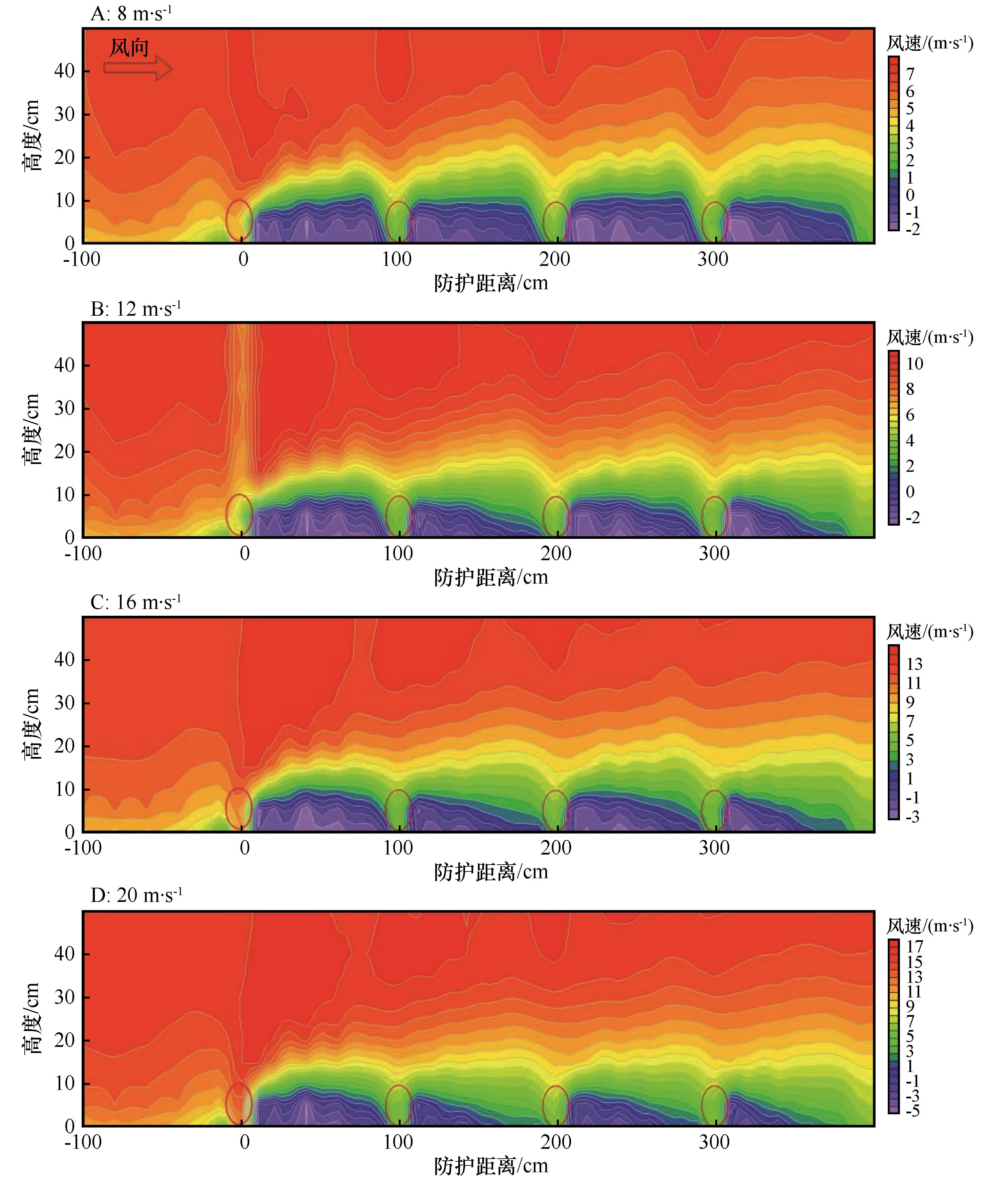
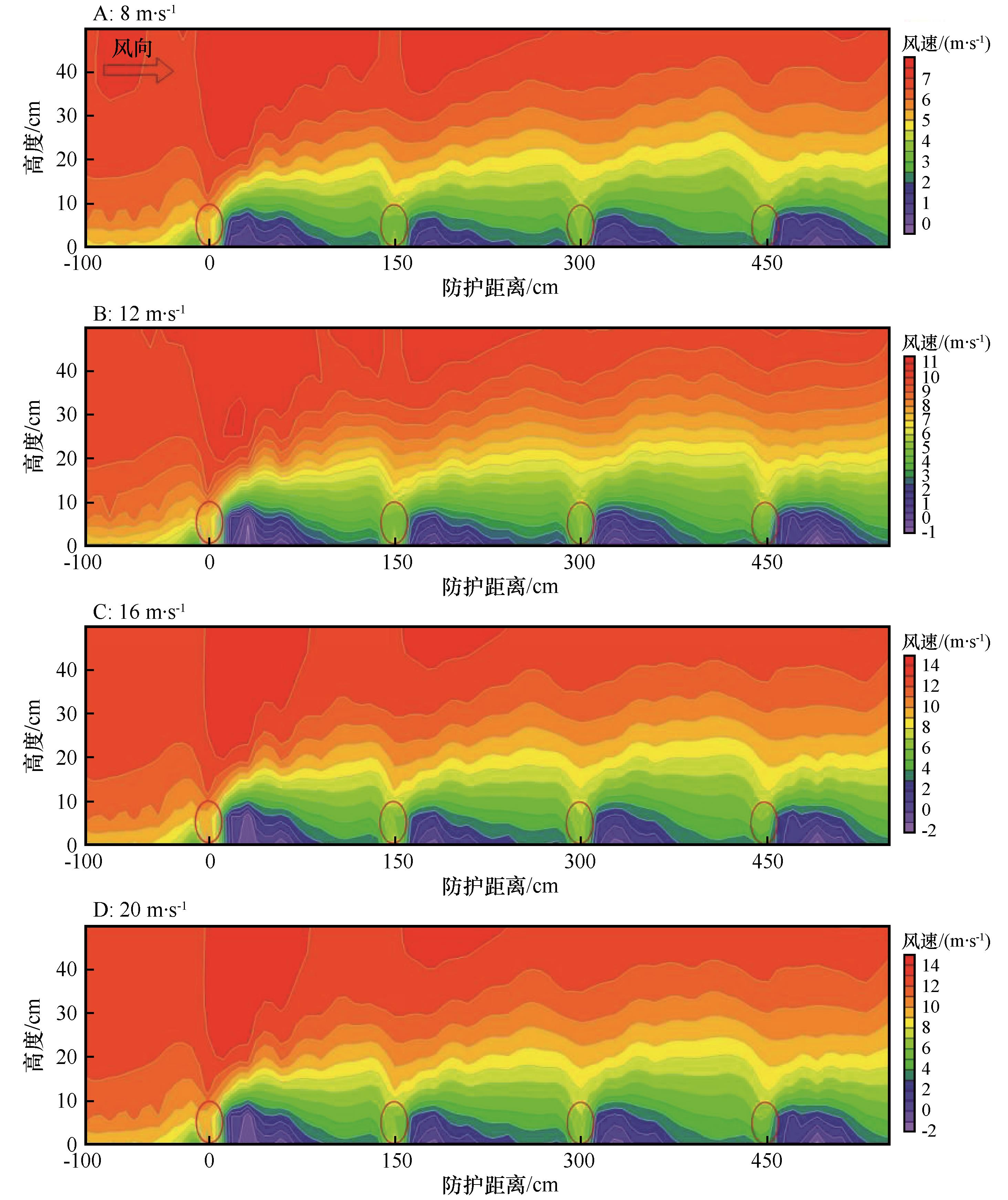
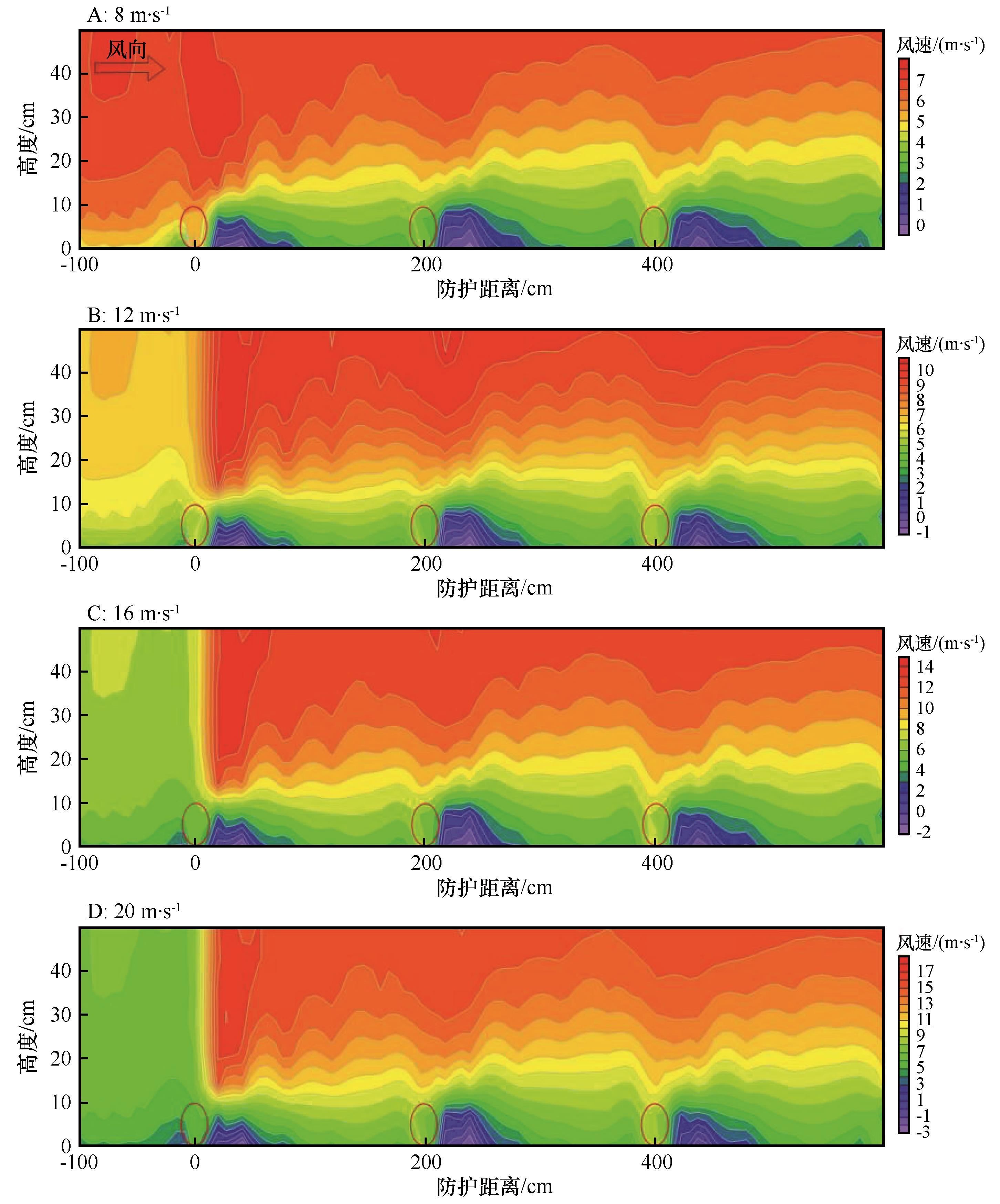
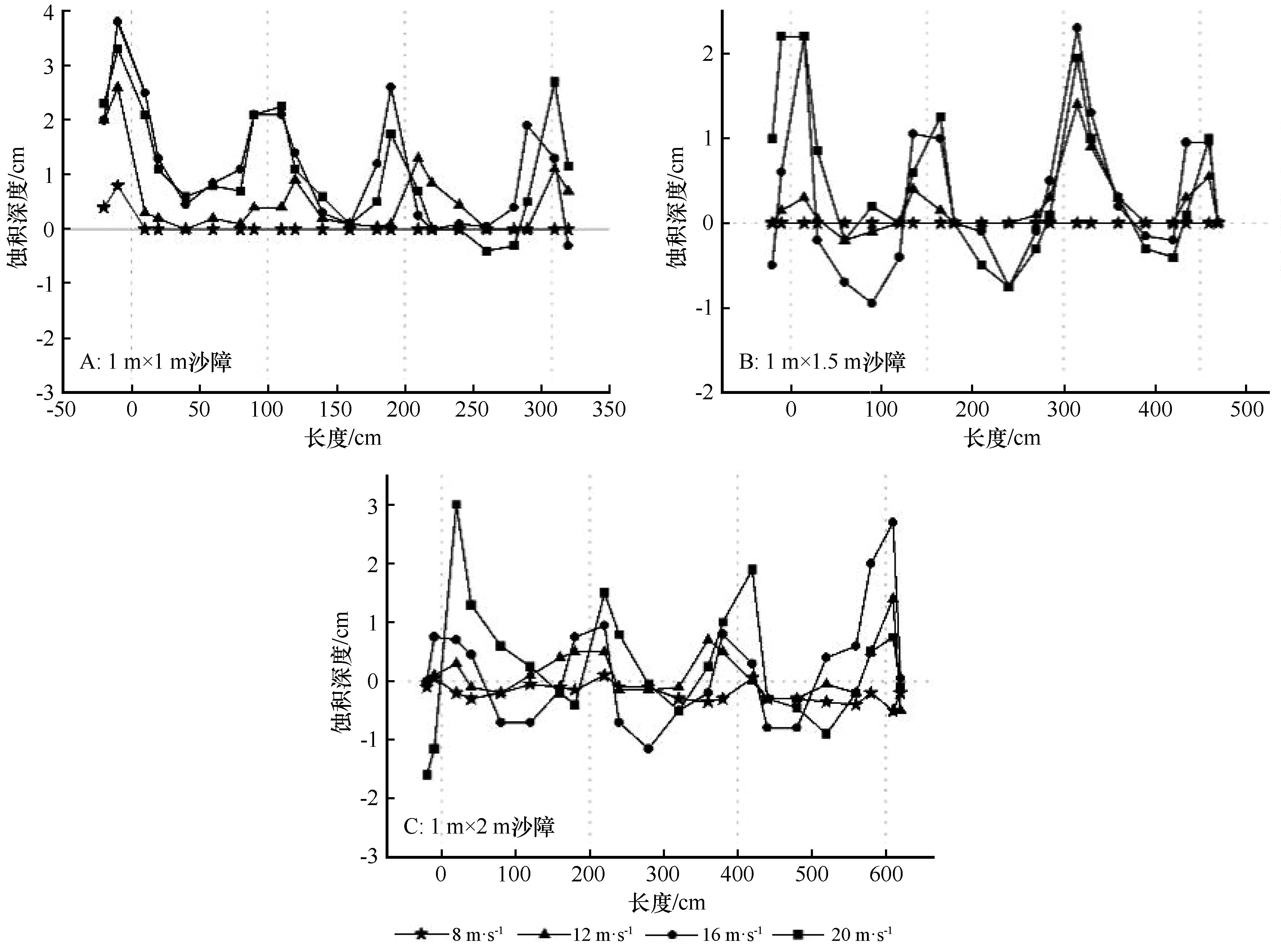
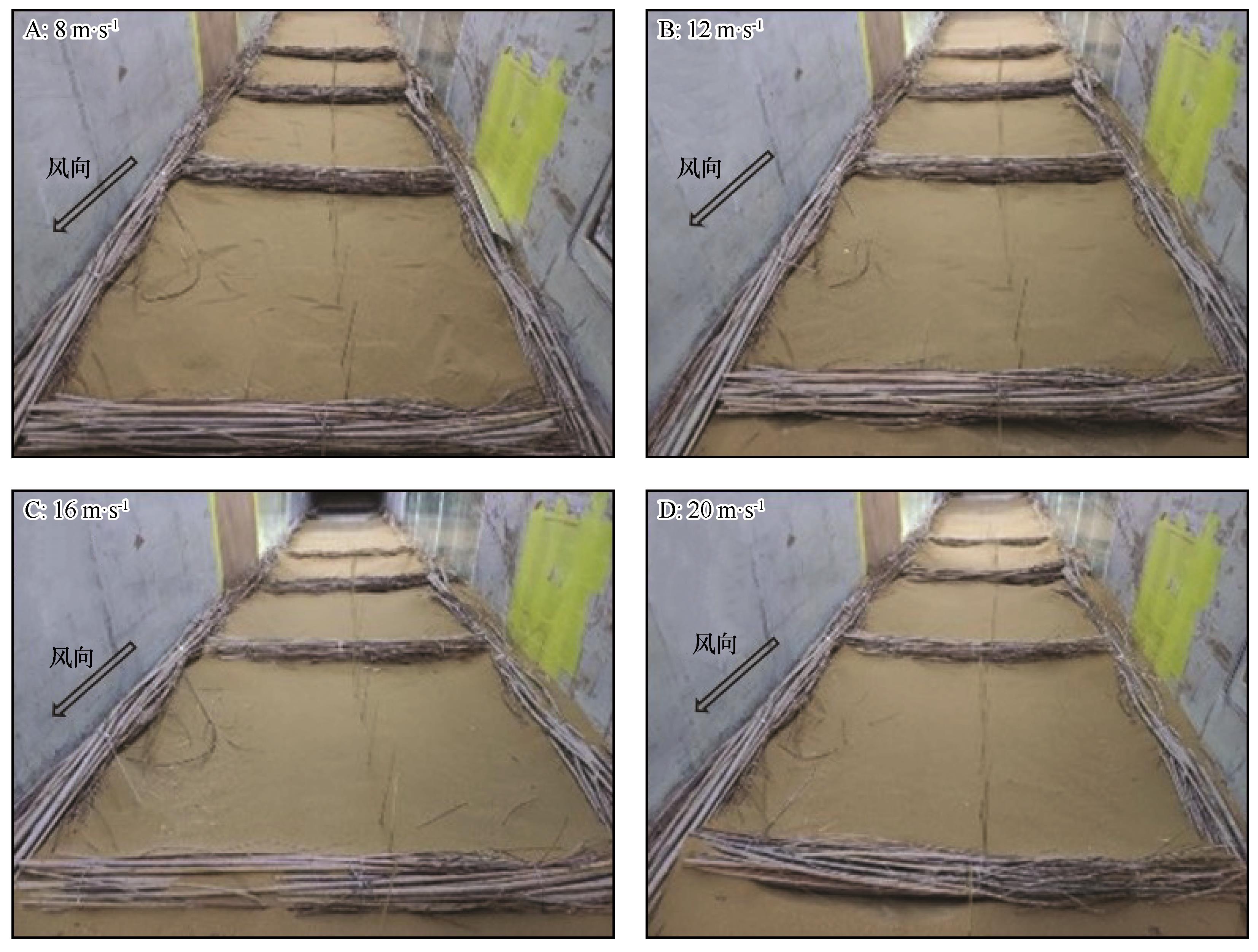
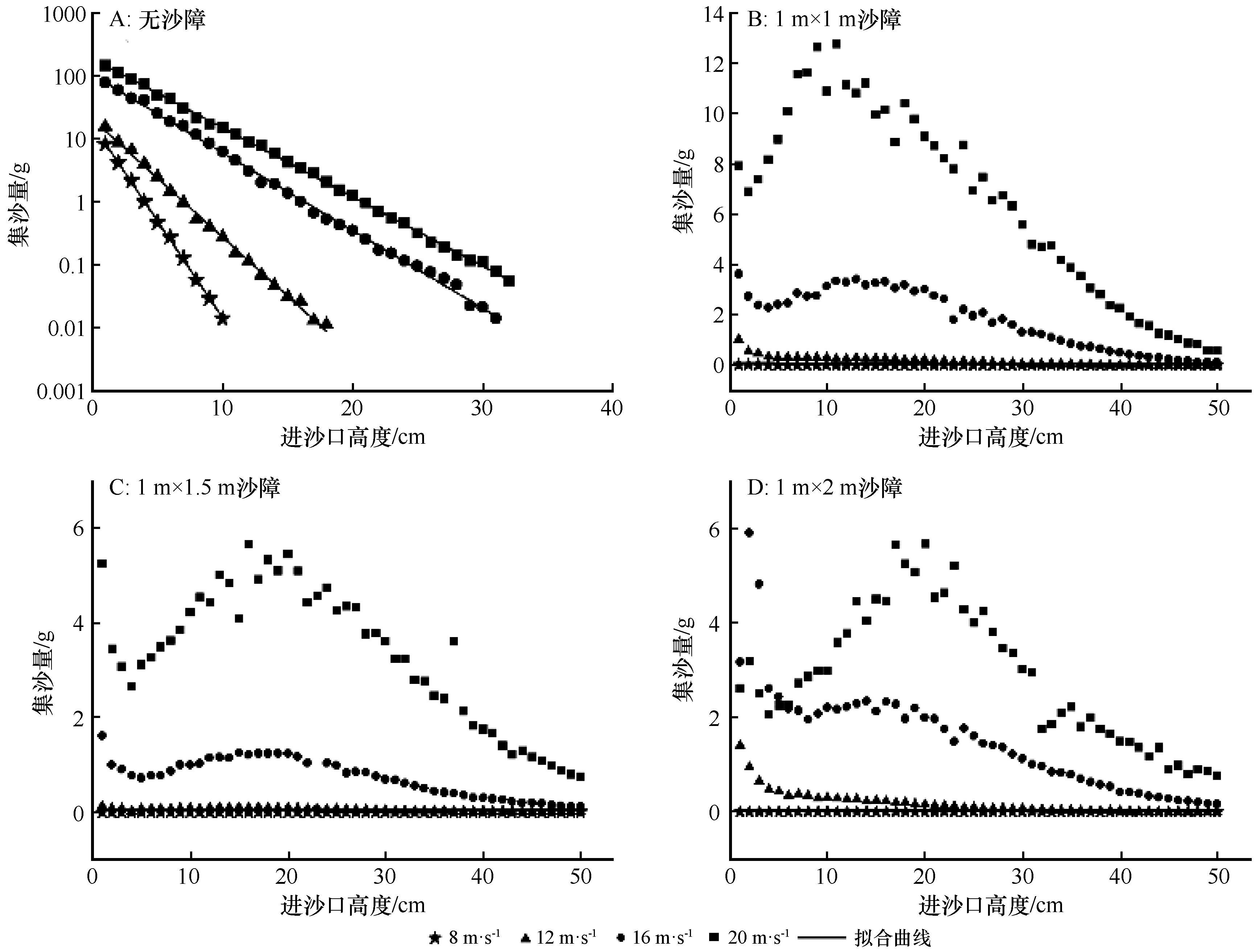
对一种以沙柳(Salix psammophila)枝条为原料的集束平铺式沙柳沙障防风固沙效益进行了风洞模拟。结果表明:(1)在每道沙障后形成效果明显的降速区,第一道沙障上方形成明显的喷流区,1 m×1 m沙障、1 m×1.5 m沙障的防风效果较好。(2)沙柳沙障在不同风速下的沙面多呈现出侵蚀状态,风速越大,沙柳沙障下的沙面侵蚀变化越大;在沙柳沙障所构成的网格状中,第一格的侵蚀最为严重,随后侵蚀程度逐渐减弱。(3)风洞无沙障风沙流结构呈现指数下降曲线;风洞沙障风沙流结构则呈现动态分布,这主要是因为沙障形成阻挡,使得风洞沙障风沙流结构不同于无沙障风沙流结构。(4)1 m×1 m、1 m×1.5 m、1 m×2 m沙障在8、12、16、20 ms-1风速下,集沙量分别减少100%、79%、72%、51%,100%、94%、89%、74%,100%、78%、76%、78%,表明沙柳沙障具有较好的固沙性能,其中1 m×1.5 m沙障的固沙效果最好。

关键词: 沙柳, 集束平铺式沙障, 风洞模拟, 固沙效益

Abstract:

This study evaluates the sand fixation efficiency of clustered and horizontally laid sand barriers made from Salix psammophila branches through wind tunnel simulations. The results show that:(1) A distinct deceleration zone formed behind each sand barrier, while a pronounced jet flow region developed above the first barrier. The 1 m×1 m and 1 m×1.5 m barrier configurations demonstrated superior windbreak effectiveness.(2) Under varying wind velocities, the sand surface protected by S. psammophila sand barriers generally exhibits an erosional state. The degree of sand surface erosion beneath these barriers increases significantly with higher wind speeds. Within the grid system formed by S. psammophila sand barriers, the foremost section experiences the most severe erosion, with the intensity gradually diminishing in subsequent sections.(3) The wind-sand flow structure in a wind tunnel without sand barriers exhibits an exponential decay curve. In contrast, the wind-sand flow structure in the presence of sand barriers demonstrates a dynamic distribution, primarily due to the obstruction formed by the barriers, which alters its characteristics compared to the barrier-free scenario.(4) The 1m×1m, 1 m×1.5 m, and 1 m×2 m sand barriers showed sediment accumulation reductions of 100%,79%, 72%, and 51%; 100%, 94%, 89%, and 74%; and 100%, 78%, 76%, and 78% at wind speeds of 8 m·s-1, 12 m·s-1, 16 m/s, and 20 m/s, respectively, This suggests that S. psammophila sand barriers exhibit significant sand-fixing potential, with the 1 m×1.5 m configuration showing optimal performance.

Key words: Salix psammophila, clustered and horizontally laid sand barriers, wind tunnel simulation, sand fixation efficiency

中图分类号: