中国沙漠 ›› 2026, Vol. 46 ›› Issue (2): 263-276.DOI: 10.7522/j.issn.1000-694X.2025.00178
• • 上一篇
许静1( ), 杨斌2, 冯辉2
收稿日期:2025-08-28
修回日期:2025-11-07
出版日期:2026-03-20
发布日期:2026-04-13
作者简介:许静(1983—),女,河北青县人,博士,教授,主要从事生态经济学等方面的研究。E-mail: xujing@lzufe.edu.cn
基金资助:
Jing Xu1(), Bin Yang2, Hui Feng2
Received:2025-08-28
Revised:2025-11-07
Online:2026-03-20
Published:2026-04-13
摘要:
甘肃省作为西北地区重要经济增长极,其新型城镇化与经济韧性的协同适配对区域高质量发展至关重要。本研究基于2012—2023年甘肃省14个市州面板数据评估新型城镇化与经济韧性水平,使用综合适配模型与核密度估计揭示二者适配时空格局及其动态演变,并采用随机森林与时空地理加权回归模型分析关键驱动因素及其时空异质性。结果表明:(1)2012—2023年,甘肃省新型城镇化指数由0.352增加至0.438,由较低水平提升至中等水平,经济韧性指数由0.163增加至0.377,由低度韧性转变为较低韧性。(2)新型城镇化与经济韧性适配指数由0.468提高至0.567,由较低适配转为中度适配。兰州适配水平始终较高,金昌和嘉峪关较低,空间上呈核心极化-边缘滞后的梯度格局。(3)城镇人口比重、人均绿地面积、货物出口额和地方财政一般预算支出为关键驱动因素,其作用方向与强度在时空维度上均存在异质性。
中图分类号:
许静, 杨斌, 冯辉. 甘肃省新型城镇化与经济韧性适配格局及其驱动因素[J]. 中国沙漠, 2026, 46(2): 263-276.
Jing Xu, Bin Yang, Hui Feng. The coupling pattern between new-type urbanization and economic resilience in Gansu Province and their driving factors[J]. Journal of Desert Research, 2026, 46(2): 263-276.
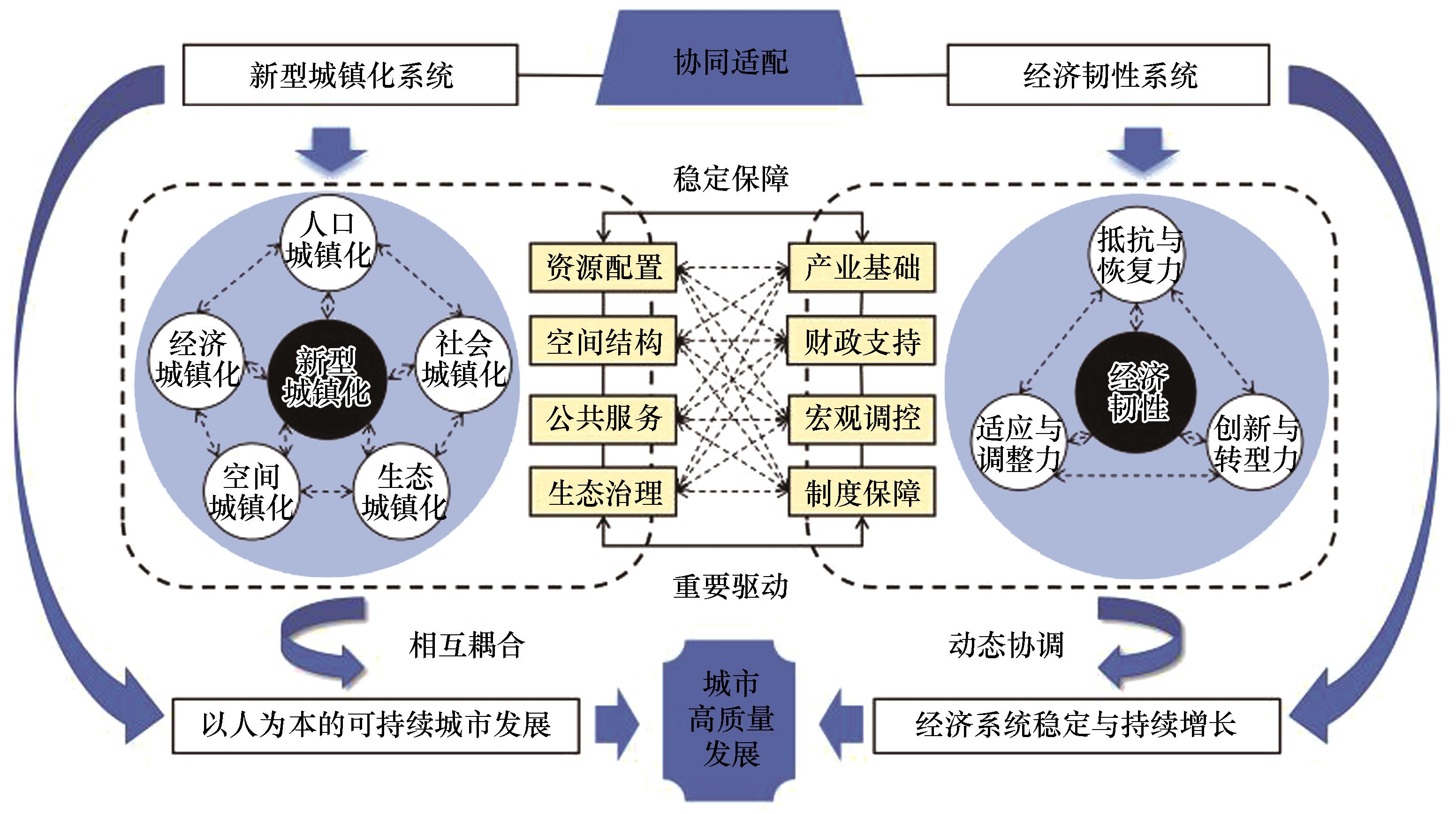
图1 新型城镇化与经济韧性适配机制
Fig.1 Adaptation mechanism between new urbanization and economic resilience
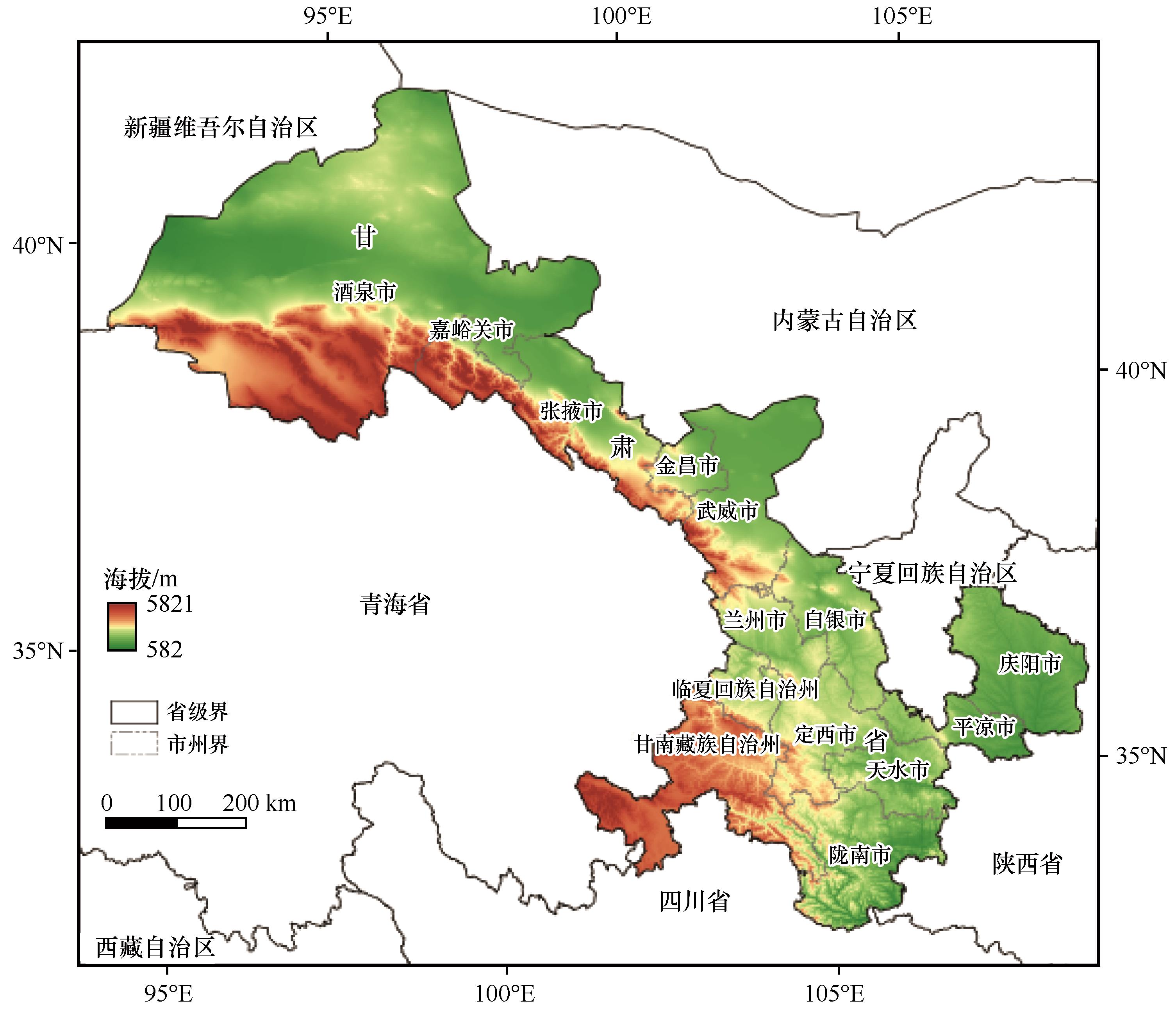
图2 研究区概况注:基于自然资源部标准地图服务网站审图号GS(2022)1873号标准地图制作,底图边界无修改
Fig.2 Overview of the study area
| 目标层 | 要素层 | 指标层 | 属性 | 权重 |
|---|---|---|---|---|
| 新型城镇化 | 人口城镇化 | 城镇人口比重(A1) | + | 0.087 |
| 城镇新增就业人员(A2) | + | 0.005 | ||
| 第二产业从业人员数(A3) | + | 0.032 | ||
| 第三产业从业人员数(A4) | + | 0.030 | ||
| 人口自然增长率(A5) | + | 0.050 | ||
| 经济城镇化 | 夜间灯光强度(A6) | + | 0.026 | |
| 第二产业占GDP比重(A7) | + | 0.047 | ||
| 第三产业占GDP比重(A8) | + | 0.048 | ||
| 地区生产总值增长率(A9) | + | 0.047 | ||
| 规模以上工业企业数(A10) | + | 0.035 | ||
| 社会城镇化 | 公共图书馆藏书量(A11) | + | 0.028 | |
| 移动电话年末用户数(A12) | + | 0.035 | ||
| 卫生机构床位数(A13) | + | 0.034 | ||
| 客运总量(A14) | + | 0.046 | ||
| 供水普及率(A15) | + | 0.034 | ||
| 燃气普及率(A16) | + | 0.041 | ||
| 空间城镇化 | 建成区面积(A17) | + | 0.040 | |
| 人均拥有道路面积(A18) | + | 0.034 | ||
| 城市建设用地面积(A19) | + | 0.023 | ||
| 建成区供水管道密度(A20) | + | 0.048 | ||
| 建成区道路面积率(A21) | + | 0.034 | ||
| 生态城镇化 | 园林绿地面积(A22) | + | 0.031 | |
| 建成区绿化覆盖率(A23) | + | 0.025 | ||
| 工业废水排放达标率(A24) | + | 0.030 | ||
| 生活垃圾无害化处理率(A25) | + | 0.044 | ||
| 人均绿地面积(A26) | + | 0.037 | ||
| 可吸入细颗粒物年平均浓度(A27) | - | 0.028 |
表1 甘肃省新型城镇化评价指标体系
Table 1 Evaluation index system of new urbanization in Gansu Province
| 目标层 | 要素层 | 指标层 | 属性 | 权重 |
|---|---|---|---|---|
| 新型城镇化 | 人口城镇化 | 城镇人口比重(A1) | + | 0.087 |
| 城镇新增就业人员(A2) | + | 0.005 | ||
| 第二产业从业人员数(A3) | + | 0.032 | ||
| 第三产业从业人员数(A4) | + | 0.030 | ||
| 人口自然增长率(A5) | + | 0.050 | ||
| 经济城镇化 | 夜间灯光强度(A6) | + | 0.026 | |
| 第二产业占GDP比重(A7) | + | 0.047 | ||
| 第三产业占GDP比重(A8) | + | 0.048 | ||
| 地区生产总值增长率(A9) | + | 0.047 | ||
| 规模以上工业企业数(A10) | + | 0.035 | ||
| 社会城镇化 | 公共图书馆藏书量(A11) | + | 0.028 | |
| 移动电话年末用户数(A12) | + | 0.035 | ||
| 卫生机构床位数(A13) | + | 0.034 | ||
| 客运总量(A14) | + | 0.046 | ||
| 供水普及率(A15) | + | 0.034 | ||
| 燃气普及率(A16) | + | 0.041 | ||
| 空间城镇化 | 建成区面积(A17) | + | 0.040 | |
| 人均拥有道路面积(A18) | + | 0.034 | ||
| 城市建设用地面积(A19) | + | 0.023 | ||
| 建成区供水管道密度(A20) | + | 0.048 | ||
| 建成区道路面积率(A21) | + | 0.034 | ||
| 生态城镇化 | 园林绿地面积(A22) | + | 0.031 | |
| 建成区绿化覆盖率(A23) | + | 0.025 | ||
| 工业废水排放达标率(A24) | + | 0.030 | ||
| 生活垃圾无害化处理率(A25) | + | 0.044 | ||
| 人均绿地面积(A26) | + | 0.037 | ||
| 可吸入细颗粒物年平均浓度(A27) | - | 0.028 |
| 目标层 | 要素层 | 指标层 | 属性 | 权重 |
|---|---|---|---|---|
| 经济韧性 | 抵抗与恢复能力 | 地区生产总值(B1) | + | 0.139 |
| 地方财政一般预算内收入(B2) | + | 0.067 | ||
| 职工平均工资(B3) | + | 0.036 | ||
| 第一产业增加值(B4) | + | 0.043 | ||
| 第二产业增加值(B5) | + | 0.026 | ||
| 第三产业增加值(B6) | + | 0.020 | ||
| 城镇登记失业率(B7) | - | 0.039 | ||
| 失业保险参保人数(B8) | + | 0.024 | ||
| 城镇居民家庭人均可支配收入(B9) | + | 0.042 | ||
| 适应与调整能力 | 地方财政一般预算支出(B10) | + | 0.030 | |
| 农村恩格尔系数(B11) | - | 0.089 | ||
| 城镇基本医疗保险参保人数(B12) | + | 0.025 | ||
| 货物进口额(B13) | + | 0.035 | ||
| 货物出口额(B14) | + | 0.020 | ||
| 社会消费品零售总额(B15) | + | 0.022 | ||
| 年末金融机构存款余额(B16) | + | 0.023 | ||
| 固定资产投资总额(B17) | + | 0.022 | ||
| 创新与转型能力 | 科学支出(B18) | + | 0.016 | |
| 教育支出(B19) | + | 0.033 | ||
| 电信业务总量(B20) | + | 0.022 | ||
| R&D内部经费支出(B21) | + | 0.030 | ||
| 每万人在校大学生数(B22) | + | 0.026 | ||
| 产业结构高级化指数(B23) | + | 0.049 | ||
| 建成区路网密度(B24) | + | 0.041 | ||
| 专利授权数(B25) | + | 0.019 | ||
| 工业固体废物综合利用率(B26) | + | 0.064 |
表2 甘肃省经济韧性评价指标体系
Table 2 Evaluation index system of economic resilience in Gansu Province
| 目标层 | 要素层 | 指标层 | 属性 | 权重 |
|---|---|---|---|---|
| 经济韧性 | 抵抗与恢复能力 | 地区生产总值(B1) | + | 0.139 |
| 地方财政一般预算内收入(B2) | + | 0.067 | ||
| 职工平均工资(B3) | + | 0.036 | ||
| 第一产业增加值(B4) | + | 0.043 | ||
| 第二产业增加值(B5) | + | 0.026 | ||
| 第三产业增加值(B6) | + | 0.020 | ||
| 城镇登记失业率(B7) | - | 0.039 | ||
| 失业保险参保人数(B8) | + | 0.024 | ||
| 城镇居民家庭人均可支配收入(B9) | + | 0.042 | ||
| 适应与调整能力 | 地方财政一般预算支出(B10) | + | 0.030 | |
| 农村恩格尔系数(B11) | - | 0.089 | ||
| 城镇基本医疗保险参保人数(B12) | + | 0.025 | ||
| 货物进口额(B13) | + | 0.035 | ||
| 货物出口额(B14) | + | 0.020 | ||
| 社会消费品零售总额(B15) | + | 0.022 | ||
| 年末金融机构存款余额(B16) | + | 0.023 | ||
| 固定资产投资总额(B17) | + | 0.022 | ||
| 创新与转型能力 | 科学支出(B18) | + | 0.016 | |
| 教育支出(B19) | + | 0.033 | ||
| 电信业务总量(B20) | + | 0.022 | ||
| R&D内部经费支出(B21) | + | 0.030 | ||
| 每万人在校大学生数(B22) | + | 0.026 | ||
| 产业结构高级化指数(B23) | + | 0.049 | ||
| 建成区路网密度(B24) | + | 0.041 | ||
| 专利授权数(B25) | + | 0.019 | ||
| 工业固体废物综合利用率(B26) | + | 0.064 |
| 区间 | 新型城镇化 | 经济韧性 |
|---|---|---|
| (0,0.2) | 低水平 | 低度韧性 |
| [0.2,0.4) | 较低水平 | 较低韧性 |
| [0.4,0.6) | 中等水平 | 中度韧性 |
| [0.6,0.8) | 较高水平 | 较高韧性 |
| [0.8,1] | 高水平 | 高度韧性 |
表3 新型城镇化与经济韧性等级划分标准
Table 3 Classification criteria of new urbanization and economic resilience levels
| 区间 | 新型城镇化 | 经济韧性 |
|---|---|---|
| (0,0.2) | 低水平 | 低度韧性 |
| [0.2,0.4) | 较低水平 | 较低韧性 |
| [0.4,0.6) | 中等水平 | 中度韧性 |
| [0.6,0.8) | 较高水平 | 较高韧性 |
| [0.8,1] | 高水平 | 高度韧性 |
| 适配指数范围 | 适配指数等级 |
|---|---|
| (0,0.3] | 低度适配 |
| (0.3,0.5] | 较低适配 |
| (0.5,0.7] | 中度适配 |
| (0.7,0.9] | 较高适配 |
| (0.9,1] | 高度适配 |
表4 适配指数等级划分标准
Table 4 Classification of adaptation index level
| 适配指数范围 | 适配指数等级 |
|---|---|
| (0,0.3] | 低度适配 |
| (0.3,0.5] | 较低适配 |
| (0.5,0.7] | 中度适配 |
| (0.7,0.9] | 较高适配 |
| (0.9,1] | 高度适配 |

图3 2012—2023年甘肃省各市州新型城镇化水平注:基于自然资源部标准地图服务网站审图号GS(2022)1873号标准地图制作,底图边界无修改
Fig.3 The new urbanization levels of cities and prefectures in Gansu Province from 2012 to 2023

图4 2012—2023年甘肃省各市州经济韧性水平注:基于自然资源部标准地图服务网站审图号GS(2022)1873号标准地图制作,底图边界无修改
Fig.4 The economic resilience levels of cities and prefectures in Gansu Province from 2012 to 2023
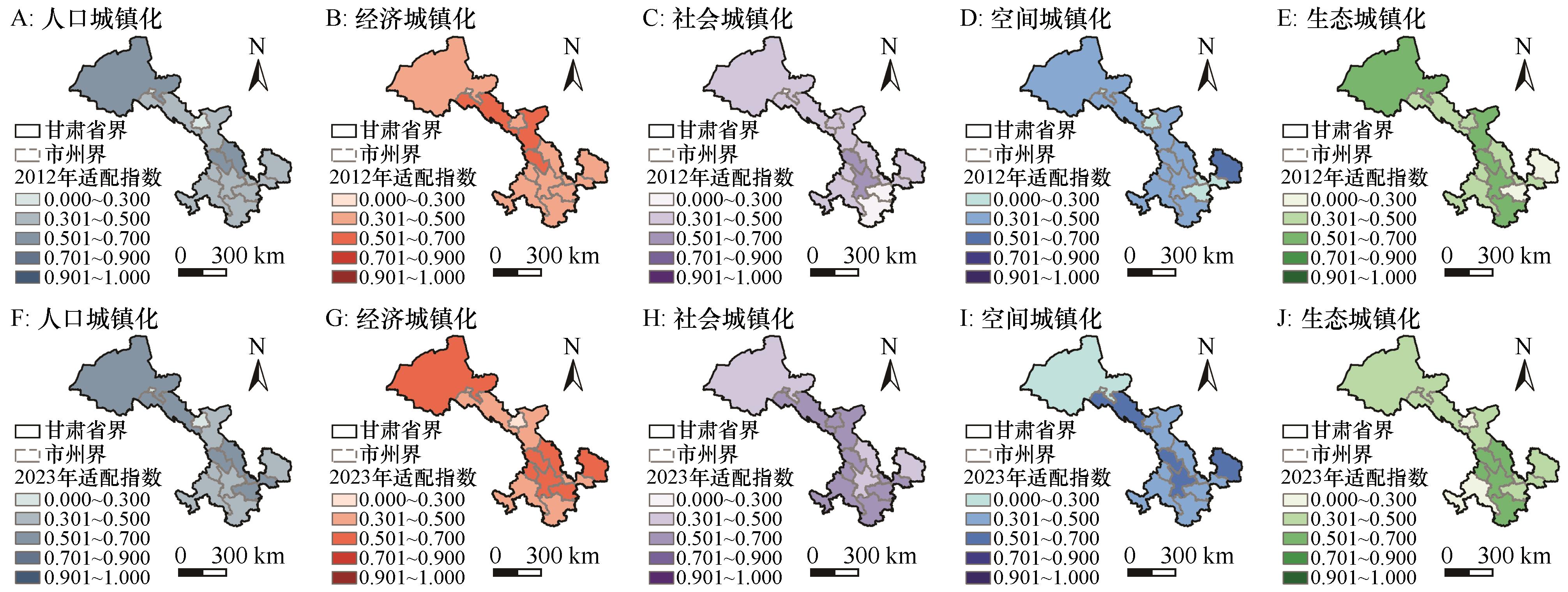
图5 甘肃省各市州新型城镇化子系统与经济韧性适配度注:基于自然资源部标准地图服务网站审图号GS(2022)1873号标准地图制作,底图边界无修改
Fig.5 The adaptation of new urbanization subsystems and economic resilience of cities and prefectures in Gansu Province

图6 2012—2023年甘肃省各市州新型城镇化与经济韧性适配度注:基于自然资源部标准地图服务网站审图号GS(2022)1873号标准地图制作,底图边界无修改
Fig.6 The adaptation of new urbanization and economic resilience of cities and prefectures in Gansu Province from 2012 to 2023
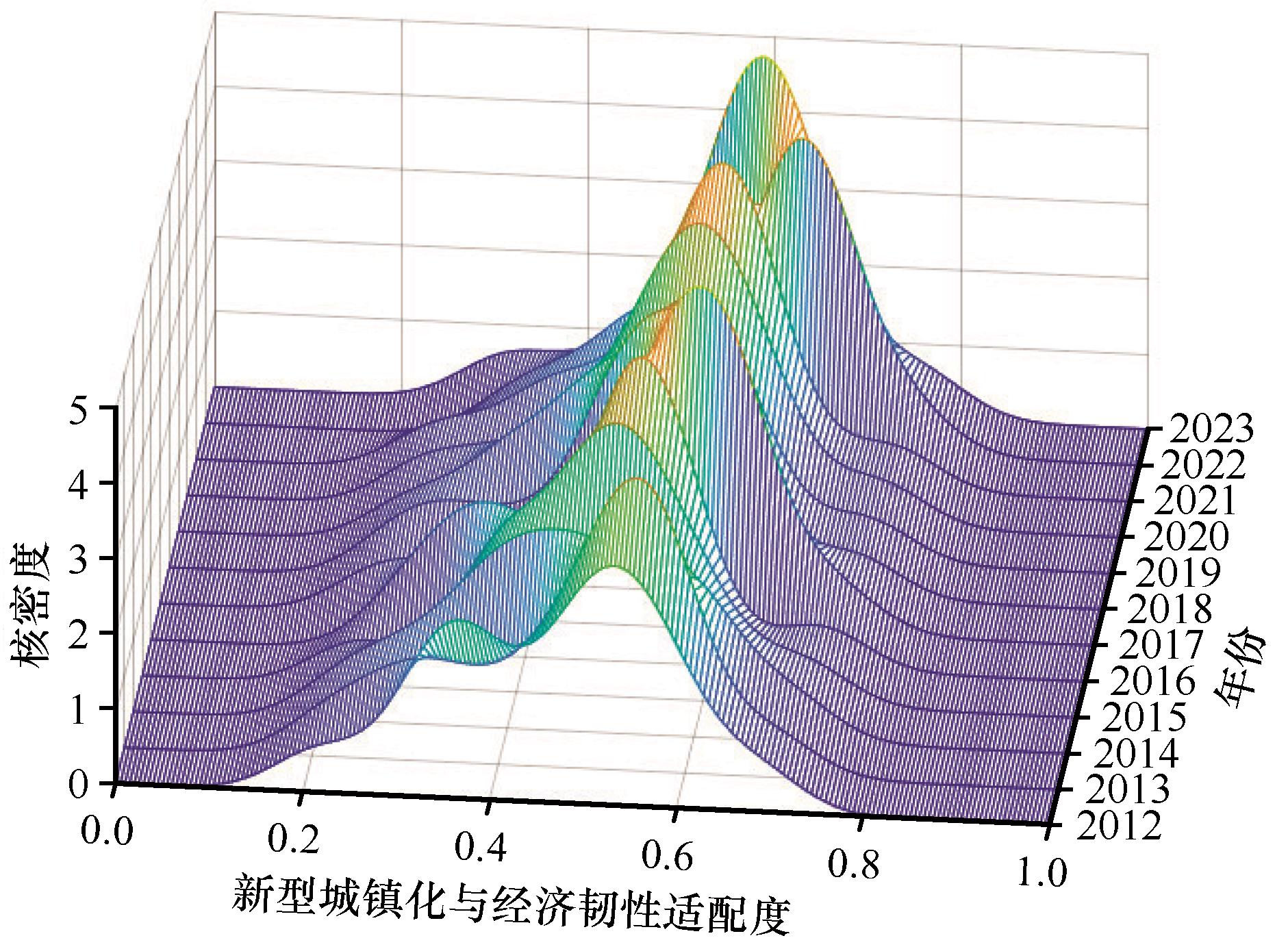
图7 2012—2023年甘肃省新型城镇化与经济韧性适配度核密度
Fig.7 Kernel density estimation of the new urbanization and economic resilience adaptation index in Gansu Province from 2012 to 2023
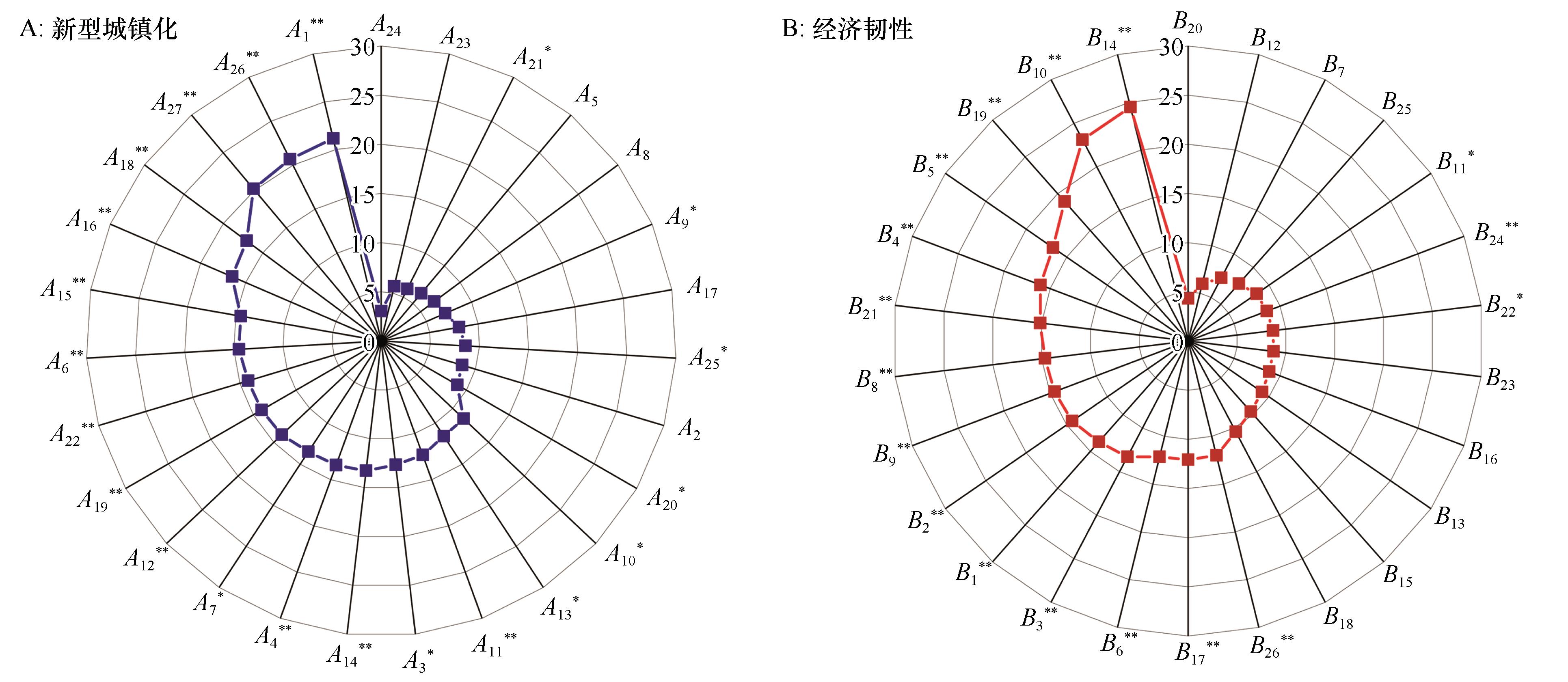
图8 新型城镇化与经济韧性适配驱动因素重要性排序注:**表示在0.01水平上差异显著,*表示在0.05水平上差异显著
Fig.8 Importance ranking of driving factors for the adaptation of new urbanization and economic resilience
| 模型 | R2 | 调整R2 | AICc |
|---|---|---|---|
| OLS | 0.464 | 0.451 | 384.416 |
| GWR | 0.824 | 0.798 | 237.396 |
| GTWR | 0.876 | 0.873 | -426.990 |
表5 模型比较
Table 5 Model comparison
| 模型 | R2 | 调整R2 | AICc |
|---|---|---|---|
| OLS | 0.464 | 0.451 | 384.416 |
| GWR | 0.824 | 0.798 | 237.396 |
| GTWR | 0.876 | 0.873 | -426.990 |
| 变量 | 年份 | |||
|---|---|---|---|---|
| 2012 | 2016 | 2020 | 2023 | |
| 城镇人口比重 | 0.422 | 0.384 | 0.284 | 0.103 |
| 人均绿地面积 | -0.484 | -0.695 | -0.230 | -0.309 |
| 货物出口额 | 1.176 | 0.478 | -0.397 | -0.220 |
| 地方财政一般预算支出 | 0.506 | 0.324 | 0.357 | 0.210 |
表6 GTWR模型各驱动因素的回归系数均值
Table 6 Mean regression coefficients of each driving factor in the GTWR model
| 变量 | 年份 | |||
|---|---|---|---|---|
| 2012 | 2016 | 2020 | 2023 | |
| 城镇人口比重 | 0.422 | 0.384 | 0.284 | 0.103 |
| 人均绿地面积 | -0.484 | -0.695 | -0.230 | -0.309 |
| 货物出口额 | 1.176 | 0.478 | -0.397 | -0.220 |
| 地方财政一般预算支出 | 0.506 | 0.324 | 0.357 | 0.210 |
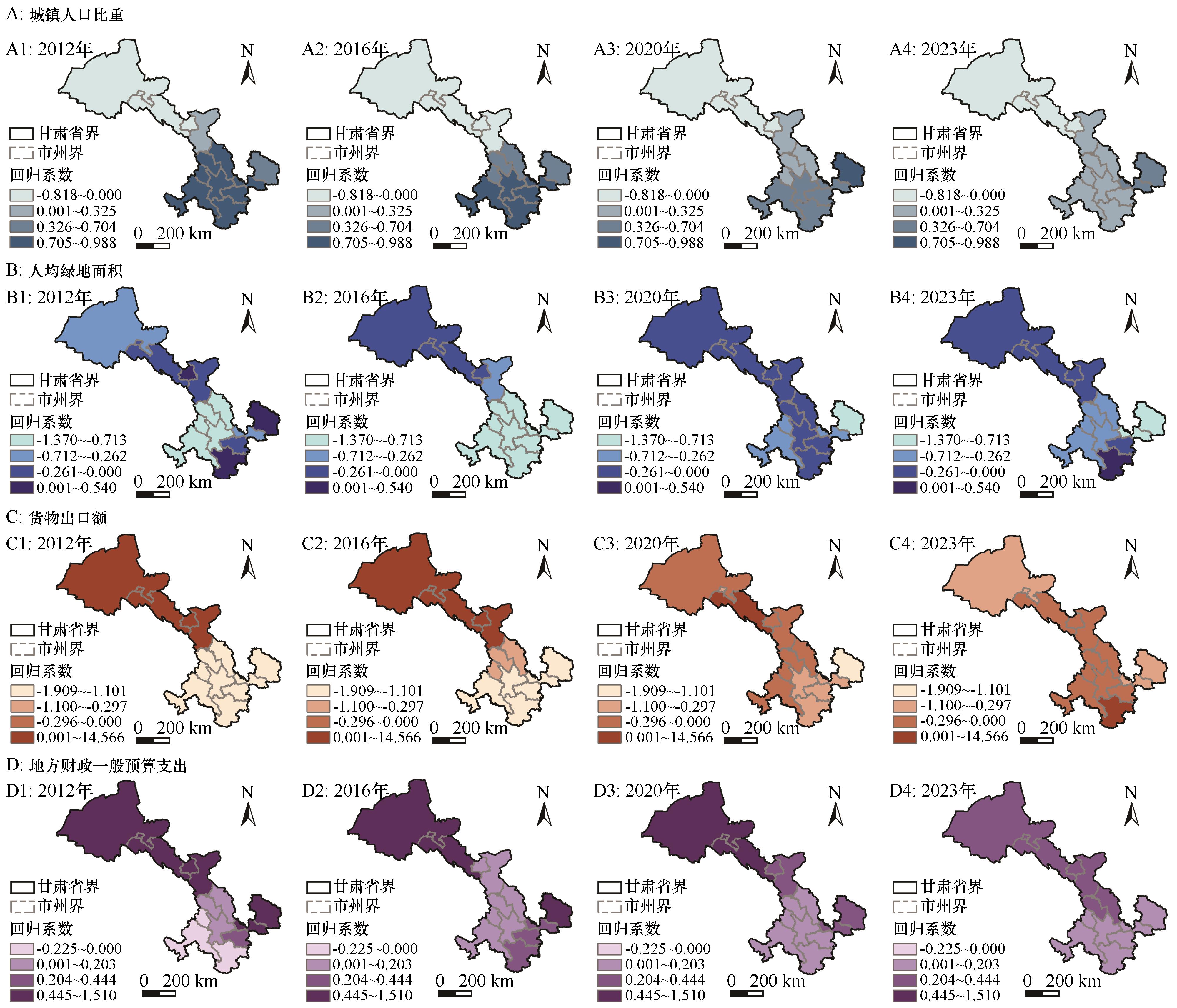
图9 甘肃省各市州新型城镇化与经济韧性适配驱动因素作用力时空分异注:基于自然资源部标准地图服务网站审图号GS(2022)1873号标准地图制作,底图边界无修改
Fig.9 The spatiotemporal differences of driving factors for the adaptation of new urbanization and economic resilience of cities and prefectures in Gansu Province
| [1] | 许志明,朱金鹤.新时期新疆的资源开发与经济发展质量:基于“资源诅咒”假说的实证研究[J].新疆大学学报(哲学∙人文社会科学版),2022,50(2):10-19. |
| [2] | 任保平,邹起浩.新发展阶段中国经济发展的韧性:评价、影响因素及其维护策略[J].中国软科学,2024(3):15-25. |
| [3] | 杨玉文,谭雨晨.新型城镇化能促进共同富裕吗?:基于136个陆地边境县的经验证据[J].南京农业大学学报(社会科学版),2025,25(2):25-38. |
| [4] | Gou Y F, Xing Q F, Yang Z W.Matching degree evaluation between new urbanization and carbon emission system in China:a case study of Anhui Province in China[J].Scientific Reports,2023,13(1):11724. |
| [5] | Ni Q, Ma X, Duan R,et al.Research on the coupling co-ordination between quality of county-level new urbanization and ecosystem service value in Shaanxi Province[J].Land,2024,13(1):105. |
| [6] | 李琳,郭东,乔璐.数字经济如何影响新型城镇化:机制与检验[J].经济问题探索,2024(3):17-36. |
| [7] | 卢晶.公共服务供给对新型城镇化发展地区差异的影响研究[J].经济体制改革,2024(2):67-73. |
| [8] | 王涵,邓玲.人力资本积累对我国新型城镇化发展的影响分析:基于结构方程模型和214个城市的实证研究[J].四川大学学报(哲学社会科学版),2017(1):127-133. |
| [9] | 熊湘辉,徐璋勇.中国新型城镇化水平及动力因素测度研究[J].数量经济技术经济研究,2018,35(2):44-63. |
| [10] | 杨宇,赵婉旭,伍骏骞,等.新型城镇化的共同富裕效应:基于国家新型城镇化综合试点政策的分析[J].农业经济问题,2025(3):46-61. |
| [11] | 张玥,代亚强,柯新利.中国新型城镇化空间关联网络及其对土地利用生态效率的影响:基于网络节点中心度视角[J].中国土地科学,2023,37(9):117-129. |
| [12] | Luo Z, Wang F, Pan H,et al.Evaluation and improvement strategy of tourism industrial park competitiveness from the perspective of new urbanization:case study of the Suining Tourism Industrial Park[J].Journal of Urban Planning and Development,2022,148(4):05022029. |
| [13] | Li X, Zheng Z, Shi D,et al.New urbanization and carbon emissions intensity reduction:mechanisms and spatial spillover effects[J].Science of the Total Environment,2023,905:167172. |
| [14] | Yang X, Zhang F, Xiao Y,et al.Coupling and interaction between tourism eco-efficiency and new urbanization in the Yangtze River Economic Belt:based on the perspective of uncoupling coordination[J].Environment,Development and Sustainability,2023,25(11):13171-13197. |
| [15] | Yang Y, Yao Y.Study on spatial pattern and coupling of county traffic superiority degree and new-type urbanization level in Guizhou Province,China[J].Scientific Reports,2025,15(1):7634. |
| [16] | Martin R.Regional economic resilience,hysteresis and recessionary shocks[J].Journal of Economic Geography,2012,12(1):1-32. |
| [17] | Kumar S, Mehany M S H M.A standardized framework for quantitative assessment of cities' socioeconomic resilience and its improvement measures[J].Socio-Economic Planning Sciences,2022,79:101141. |
| [18] | Di Pietro F, Lecca P, Salotti S.Regional economic resilience in the European Union:a numerical general equilibrium analysis[J].Spatial Economic Analysis,2021,16(3):287-312. |
| [19] | 袁丰,熊雪蕾,徐紫腾,等.长江经济带经济韧性空间分异与驱动因素[J].地理科学进展,2023,42(2):249-259. |
| [20] | 刘逸,纪捷韩,张一帆,等.粤港澳大湾区经济韧性的特征与空间差异研究[J].地理研究,2020,39(9):2029-2043. |
| [21] | 陈梦远.国际区域经济韧性研究进展:基于演化论的理论分析框架介绍[J].地理科学进展,2017,36(11):1435-1444. |
| [22] | 张明斗,张震.长三角城市群城市经济韧性的空间关联网络研究[J].地理与地理信息科学,2023,39(1):69-79. |
| [23] | 张安伟,胡艳.中国市域经济韧性结构分解与演变及其创新驱动机制[J].经济地理,2023,43(10):23-33. |
| [24] | 周霞,王佳.中国经济韧性的时空演化、区域差异及收敛特征[J].统计与决策,2025,41(6):86-91. |
| [25] | 李燕凌,李民梁.长江经济带新型城镇化与生态韧性:耦合协调、时空格局及动态影响[J].长江流域资源与环境,2024,33(11):2329-2341. |
| [26] | 汤洪霞,杨淼,李梦笛,等.山东半岛城市群城市韧性与新型城镇化耦合协调研究[J].地域研究与开发,2024,43(4):85-90. |
| [27] | 徐雪,王永瑜.甘肃省新型城镇化与乡村振兴协调水平及其影响因素[J].中国沙漠,2022,42(5):1-13. |
| [28] | 张胜武,葛宇梦,李小胜,等.黄河流域新型城镇化与水生态环境耦合协调的时空格局及影响因素[J].中国沙漠,2024,44(3):172-181. |
| [29] | 李敬锁,万群.农业技术创新对农业经济韧性的影响:基于财政支农政策的门槛效应分析[J].农业技术经济,2025(3):4-17. |
| [30] | 陆小成.空间正义视域下新型城镇化的资源配置研究[J].社会主义研究,2017(1):120-128. |
| [31] | 丁任重,赵炫焯.我国都市圈产业协同度测度研究[J].同济大学学报(社会科学版),2025,36(3):89-100. |
| [32] | 方印,李杰.人与自然和谐共生现代化的生态环境法哲学表达[J].甘肃政法大学学报,2025(2):33-50. |
| [33] | 何静,冯学钢.文化与旅游融合对经济韧性的影响[J].地理科学,2025,45(6):1259-1269. |
| [34] | 黄晓,杨艳丽,吴晓凡,等.甘肃省早熟禾属植物区系特征分析[J].中国草地学报,2024,46(9):139-148. |
| [35] | 戴文渊,玛久草,陈亦晨,等.黄河流域甘肃段水生态安全驱动力分析及动态演变[J].干旱区研究,2024,41(10):1662-1671. |
| [36] | 耿雅妮,吴韬,姜培钊,等.陕西省新型城镇化与生态环境耦合关系及情景预测[J].生态环境学报,2024,33(12):1874-1881. |
| [37] | 邹亚锋,张倩,饶钰飞,等.中国西部省会城市新型城镇化发展水平演化研究[J].干旱区地理,2023,46(4):636-648. |
| [38] | 赵玲,周鑫玥.黄河流域城市经济韧性时空分异及影响因素研究[J].西安财经大学学报,2025,38(2):93-105. |
| [39] | 周霞,王佳.中国省域经济韧性与生态效率测度及其协同演化分析[J].干旱区地理,2024,47(2):319-331. |
| [40] | Han S, Wang B, Ao Y,et al.The coupling and coordination degree of urban resilience system:a case study of the Chengdu-Chongqing urban agglomeration[J].Environmental Impact Assessment Review,2023,101:107145. |
| [41] | 谢朝武,朱海,章坤.中国文化和旅游产业高质量融合发展的适配关系与政策启示[J].自然资源学报,2025,40(4):1084-1106. |
| [42] | 贺小荣,石彩霞,彭坤杰.长江中游城市群新型城镇化与生态韧性的时空适配及互动响应[J].长江流域资源与环境,2024,33(4):699-714. |
| [43] | 麻学锋,胡双林.旅游城市韧性与居民幸福水平时空适配特征及影响因素:以张家界为例[J].资源科学,2022,44(11):2373-2385. |
| [44] | Wang Z, Liu W.A comparative study of urban ecological resilience in the Yangtze River Economic Belt and the Yellow River Basin[J].Humanities and Social Sciences Communications,2024,11(1):1-15. |
| [45] | 王微,杨淑婷,海云瑞.宁夏土地利用碳排放时空演变及影响因素[J].干旱区研究,2025,42(3):545-555. |
| [46] | Wu J, Fan X, Li K,et al.Assessment of ecosystem service flow and optimization of spatial pattern of supply and demand matching in Pearl River Delta,China[J].Ecological Indicators,2023,153:110452. |
| [47] | 李明鸿,卢辞.淮河生态经济带新型城镇化、经济发展与水生态环境耦合协调关系及其驱动因素[J].水土保持通报,2023,43(6):282-293. |
| [48] | 徐乾,赵儒煜,张振.东北地区经济韧性测度与空间演化分析[J].经济纵横,2023(8):52-62. |
| [49] | 陈海山,陈志龙.气候风险、经济增长与城市内涵式发展:基于暴雨冲击的经验证据[J].统计研究,2024,41(6):121-134. |
| [50] | 金晓燕,任广乾,罗新新.双循环发展格局下国有企业高质量发展对策[J].郑州大学学报(哲学社会科学版),2021,54(2):55-61. |
| [51] | 罗小芳,卢现祥.增强国内大循环内生动力和可靠性的制度分析[J].社会科学战线,2024(1):62-70. |
| [52] | 吴秀真,刘新华.新型城镇化与经济韧性的耦合协调分析:以长江中游城市为例[J].区域金融研究,2022,10:77-84. |
| [1] | 万路通, 刘小丹, 郭汉清, 薛万来, 刘可暄, 李瑾, 汪丽丽, 刘洪浩. 首都西部生态涵养区生态系统服务功能权衡/协同的多尺度特征及驱动因素[J]. 中国沙漠, 2025, 45(6): 206-219. |
| [2] | 刘迪, 马安奇, 李凤鸣, 陈海, 桂伊晴. 黄河流域居民福祉时空格局及其驱动因素[J]. 中国沙漠, 2025, 45(5): 102-112. |
| [3] | 张鹏飞, 韩佳琦, 赵振江, 戴燕燕, 刘庚, 钞锦龙, 张蕾. 汾河流域农业水贫困与粮食生产脆弱性耦合特征及影响因素[J]. 中国沙漠, 2025, 45(5): 13-23. |
| [4] | 李思琪, 王海兵, 袁晓飞, 敖胡日查, 杨皓钦. 毛乌素沙地景观生态风险时空演变及驱动力[J]. 中国沙漠, 2025, 45(5): 230-240. |
| [5] | 戴燕燕, 蒋依婷, 张鹏飞, 刘庚, 张蕾. 山西省水资源与种植结构耦合协调现状及驱动因素[J]. 中国沙漠, 2024, 44(6): 37-47. |
| [6] | 张胜武, 葛宇梦, 李小胜, 宋马林. 黄河流域新型城镇化与水生态环境耦合协调的时空格局及影响因素[J]. 中国沙漠, 2024, 44(3): 172-181. |
| [7] | 沈爱红, 佘洁, 石云, 吴涛, 梁咏亮, 董军, 马益婷. 2001—2020年贺兰山东麓荒漠草原植被覆盖度演变[J]. 中国沙漠, 2024, 44(3): 308-320. |
| [8] | 卢调雪, 杨林山, 冯起, 朱猛, 李乃玉. 近20年张掖盆地绿洲结构和规模变化及其影响因素[J]. 中国沙漠, 2023, 43(6): 131-141. |
| [9] | 付石林, 雷加强, 周仪琪, 周娜, Hare Malicha Loje, Jorro Zinabu Bora. 基于植被净初级生产力和水分利用效率的埃塞俄比亚土地退化趋势及驱动因素分析[J]. 中国沙漠, 2023, 43(1): 128-141. |
| [10] | 程小云, 张琴, 兰芳芳, 李源, 韩雅萱, 张黎敏, 杨妍轲, 王新源. 河西走廊草地荒漠化动态及驱动因素[J]. 中国沙漠, 2022, 42(6): 134-141. |
| [11] | 徐雪, 王永瑜. 甘肃省新型城镇化与乡村振兴协调水平及其影响因素[J]. 中国沙漠, 2022, 42(5): 1-13. |
| [12] | 陈云, 李玉强, 王旭洋, 姚彩萍, 牛亚毅. 中国生态脆弱区全球变化风险及应对技术途径和主要措施[J]. 中国沙漠, 2022, 42(3): 148-158. |
| [13] | 高永道, 乔荣荣, 季树新, 白雪莲, 王理想, 常学礼. 内蒙古河套灌区作物种植结构变化及其驱动因素[J]. 中国沙漠, 2021, 41(3): 110-117. |
| [14] | 倪向南, 郭伟, 乔凯. 陕北风沙过渡带植被净初级生产力变化特征及原因[J]. 中国沙漠, 2018, 38(4): 889-898. |
| [15] | 赵国帅, 叶功富, 王军邦. 1949—2014年福建沿海沙地动态演变及其驱动因素[J]. 中国沙漠, 2018, 38(4): 701-708. |
| 阅读次数 | ||||||
|
全文 |
|
|||||
|
摘要 |
|
|||||
©2018中国沙漠 编辑部
地址: 兰州市天水中路8号 (730000)
电话:0931-8267545
Email:caiedit@lzb.ac.cn;desert@lzb.ac.cn


 甘公网安备 62010202000688号