
- CN 62-1070/P
- ISSN 1000-694X
- Bimonthly 1981
Journal of Desert Research ›› 2026, Vol. 46 ›› Issue (2): 122-130.DOI: 10.7522/j.issn.1000-694X.2025.00117
Yongxin Zeng1( ), Chongyi E1,2(), Yunkun Shi1, Yongjuan Sun1,2, Jiawei Wang1, Zhaokang Zhang1
Received:2025-02-21
Revised:2025-05-14
Online:2026-03-20
Published:2026-04-13
Contact:
Chongyi E
CLC Number:
Yongxin Zeng, Chongyi E, Yunkun Shi, Yongjuan Sun, Jiawei Wang, Zhaokang Zhang. Luminescence chronology record of Tamarix chinensis nebkhas in the Qaidam Basin[J]. Journal of Desert Research, 2026, 46(2): 122-130.
Add to citation manager EndNote|Ris|BibTeX
URL: http://www.desert.ac.cn/EN/10.7522/j.issn.1000-694X.2025.00117
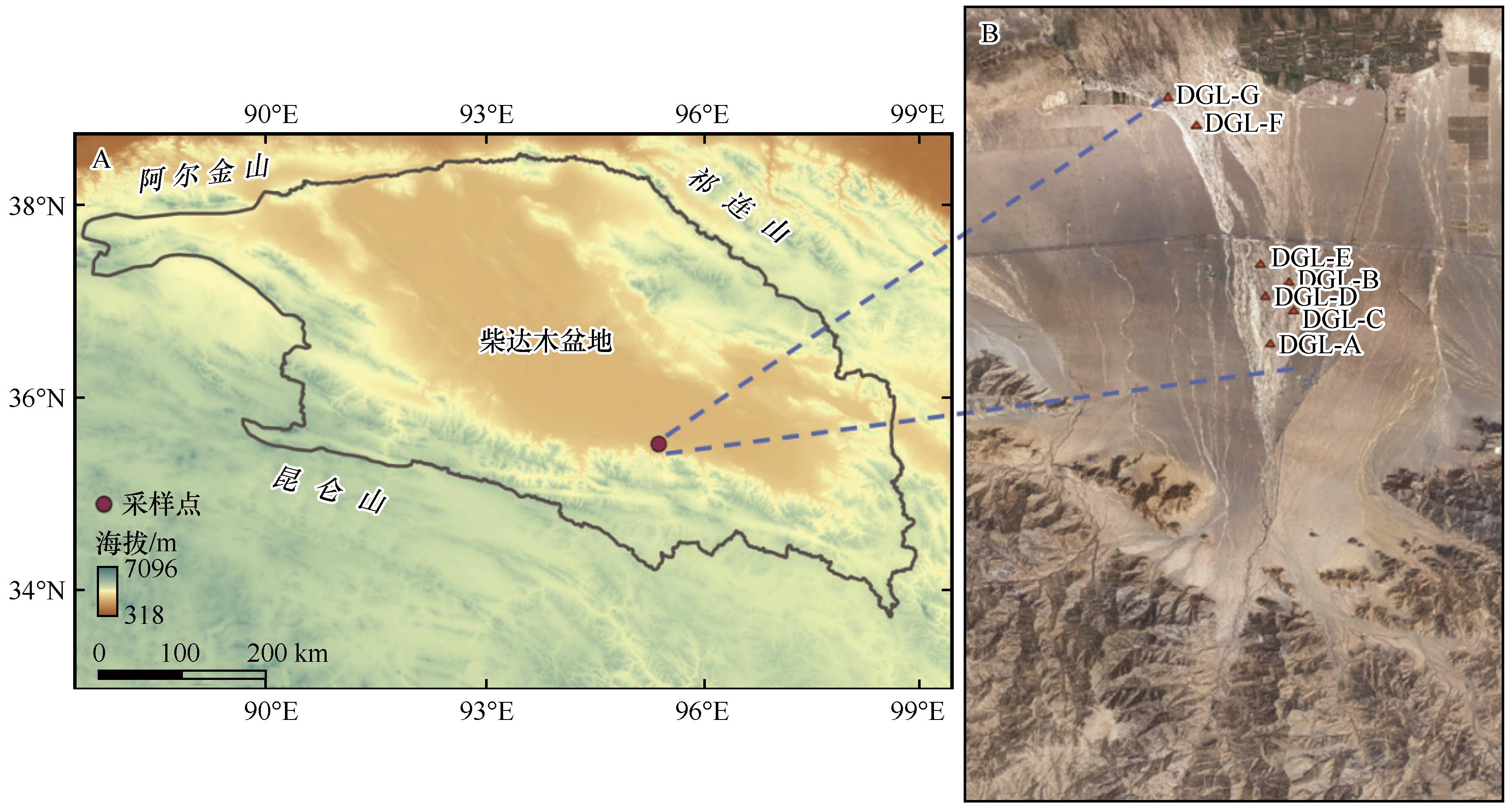
Fig.1 Location of the study area and the Tamarix chinensis nebkha profiles
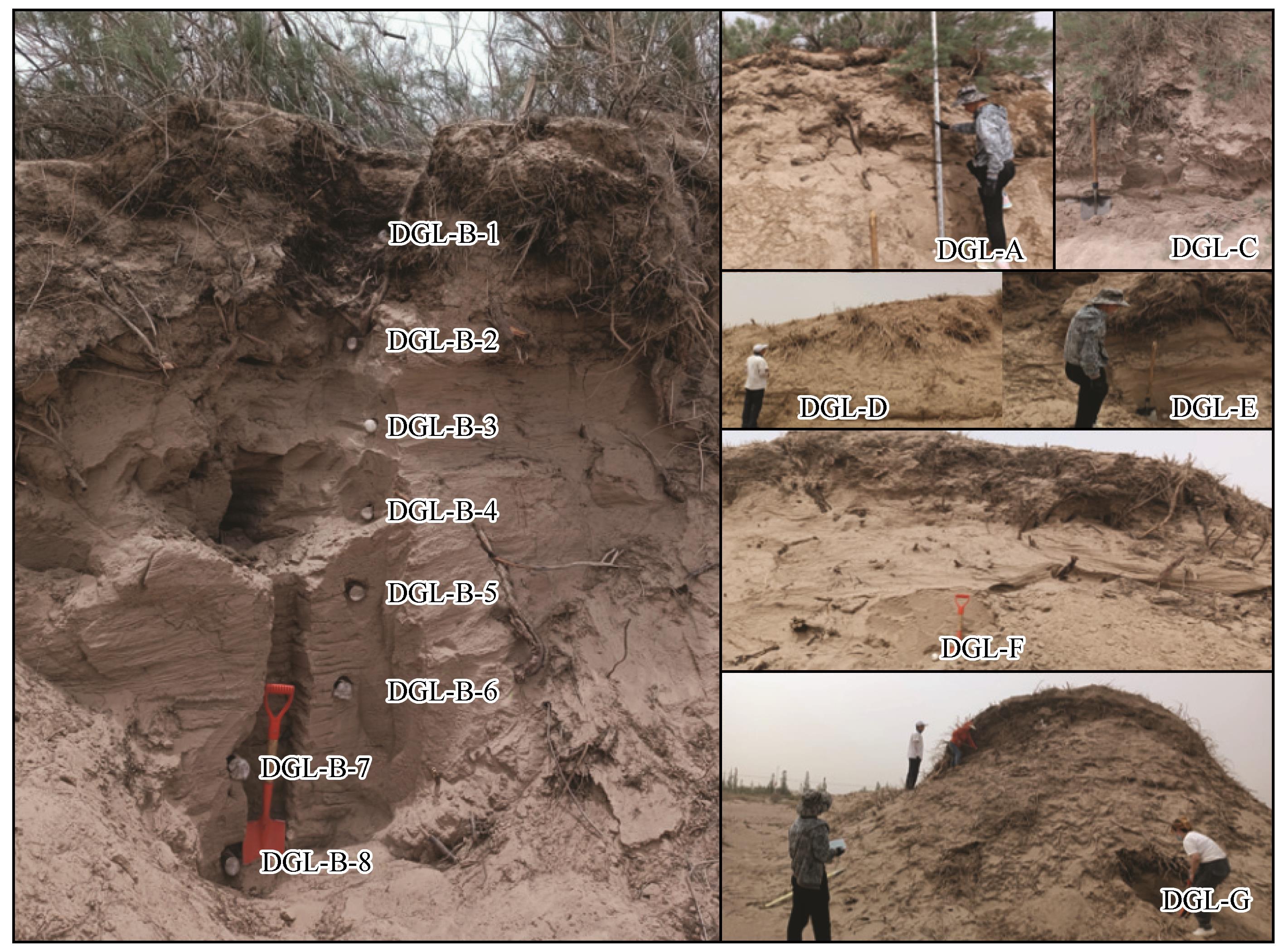
Fig.2 Photos of Tamarix chinensis nebkha profiles and location of profile OSL sample collection (where DGL-B on the left is the main sampling profile)
| 步骤 | 石英SAR-OSL | 说明 | 钾长石pIR-IRSL | 说明 |
|---|---|---|---|---|
| 1 | 再生剂量,Di (i =0,1,2,3…) | 再生剂量,Di (i =0,1,2,3…) | i为循环数,i=0时为自然剂量 | |
| 2 | 预热(240 ℃,10 s) | 预热(320 ℃,60 s) | ||
| 3 | — | 90%红光激发(50 ℃,200 s) | Lx,IR50 | |
| 4 | 90%蓝光激发(125 ℃,40 s) | Lx | 90%红光激发(170 ℃,200 s) | Lx,pIRIR170 |
| 5 | 辐照实验剂量 | 辐照实验剂量 | ||
| 6 | 预热(200 ℃,0 s) | 预热(320 ℃,60 s) | ||
| 7 | — | 90%红光激发(50 ℃,200 s) | Tx,IR50 | |
| 8 | 90%蓝光激发(125 ℃,40 s) | Tx | 90%红光激发(170 ℃,200 s) | Tx,pIRIR170 |
| 9 | — | 90%红光激发(325 ℃,200 s) | ||
| 10 | 返回步骤1,开始下一循环 | 返回步骤1,开始下一循环 |
Table 1 Dose measurement protocols used in used in this study
| 步骤 | 石英SAR-OSL | 说明 | 钾长石pIR-IRSL | 说明 |
|---|---|---|---|---|
| 1 | 再生剂量,Di (i =0,1,2,3…) | 再生剂量,Di (i =0,1,2,3…) | i为循环数,i=0时为自然剂量 | |
| 2 | 预热(240 ℃,10 s) | 预热(320 ℃,60 s) | ||
| 3 | — | 90%红光激发(50 ℃,200 s) | Lx,IR50 | |
| 4 | 90%蓝光激发(125 ℃,40 s) | Lx | 90%红光激发(170 ℃,200 s) | Lx,pIRIR170 |
| 5 | 辐照实验剂量 | 辐照实验剂量 | ||
| 6 | 预热(200 ℃,0 s) | 预热(320 ℃,60 s) | ||
| 7 | — | 90%红光激发(50 ℃,200 s) | Tx,IR50 | |
| 8 | 90%蓝光激发(125 ℃,40 s) | Tx | 90%红光激发(170 ℃,200 s) | Tx,pIRIR170 |
| 9 | — | 90%红光激发(325 ℃,200 s) | ||
| 10 | 返回步骤1,开始下一循环 | 返回步骤1,开始下一循环 |
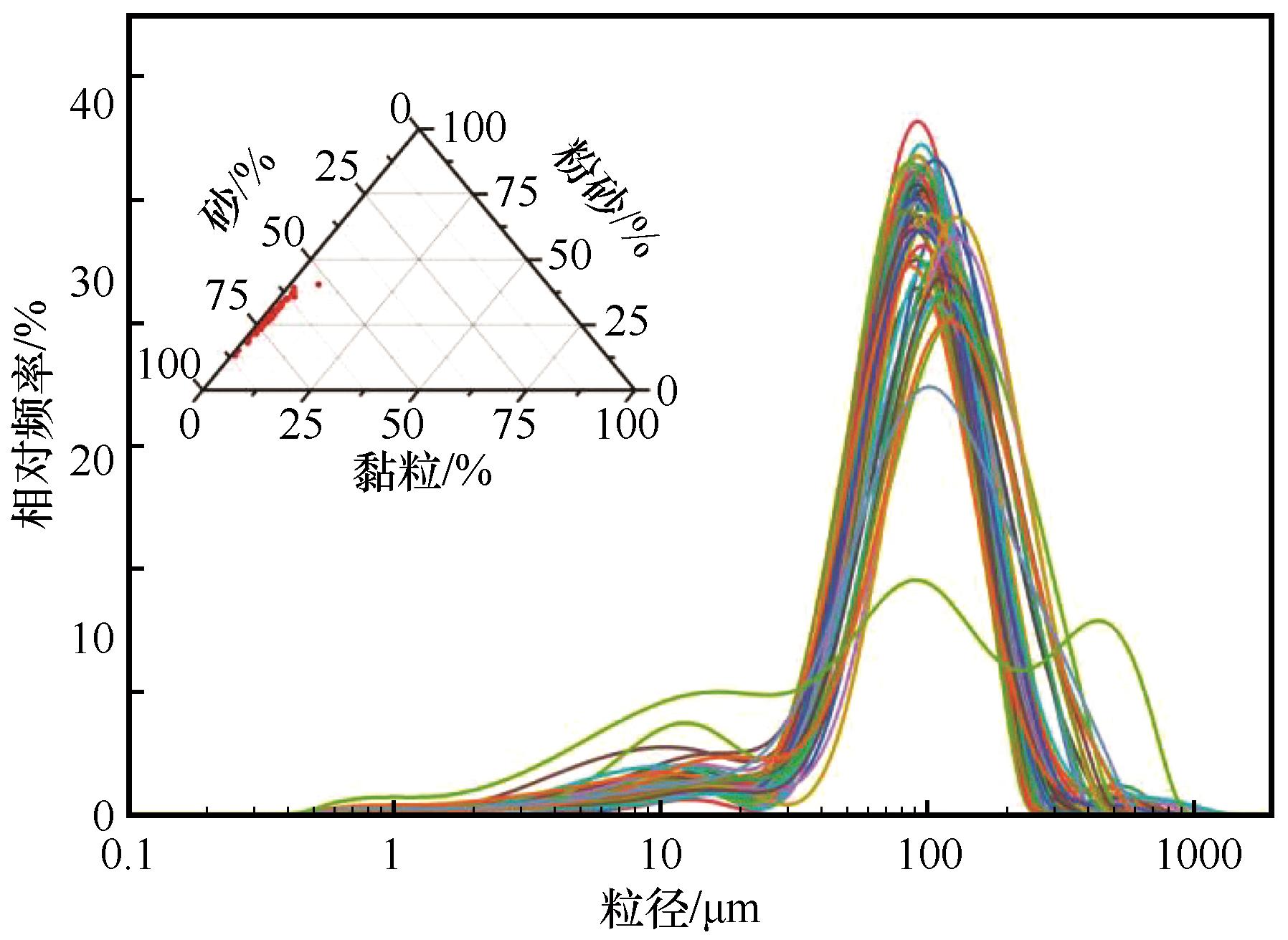
Fig.3 Grain size frequency distribution curve of Tamarix chinensis nebkha sediments
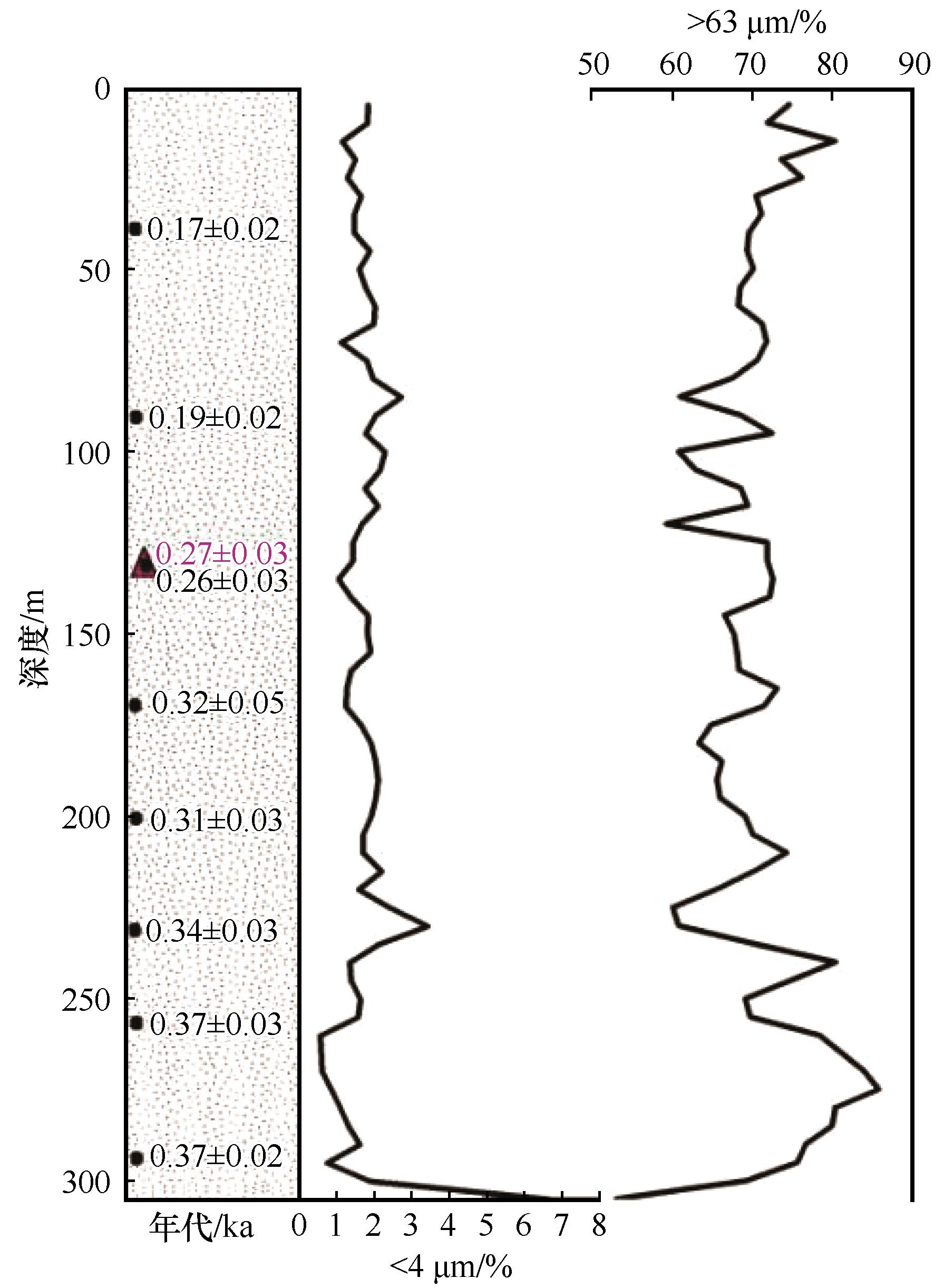
Fig.4 Chronological distribution of OSL and AMS14C samples in the profile and grain size variation with depth
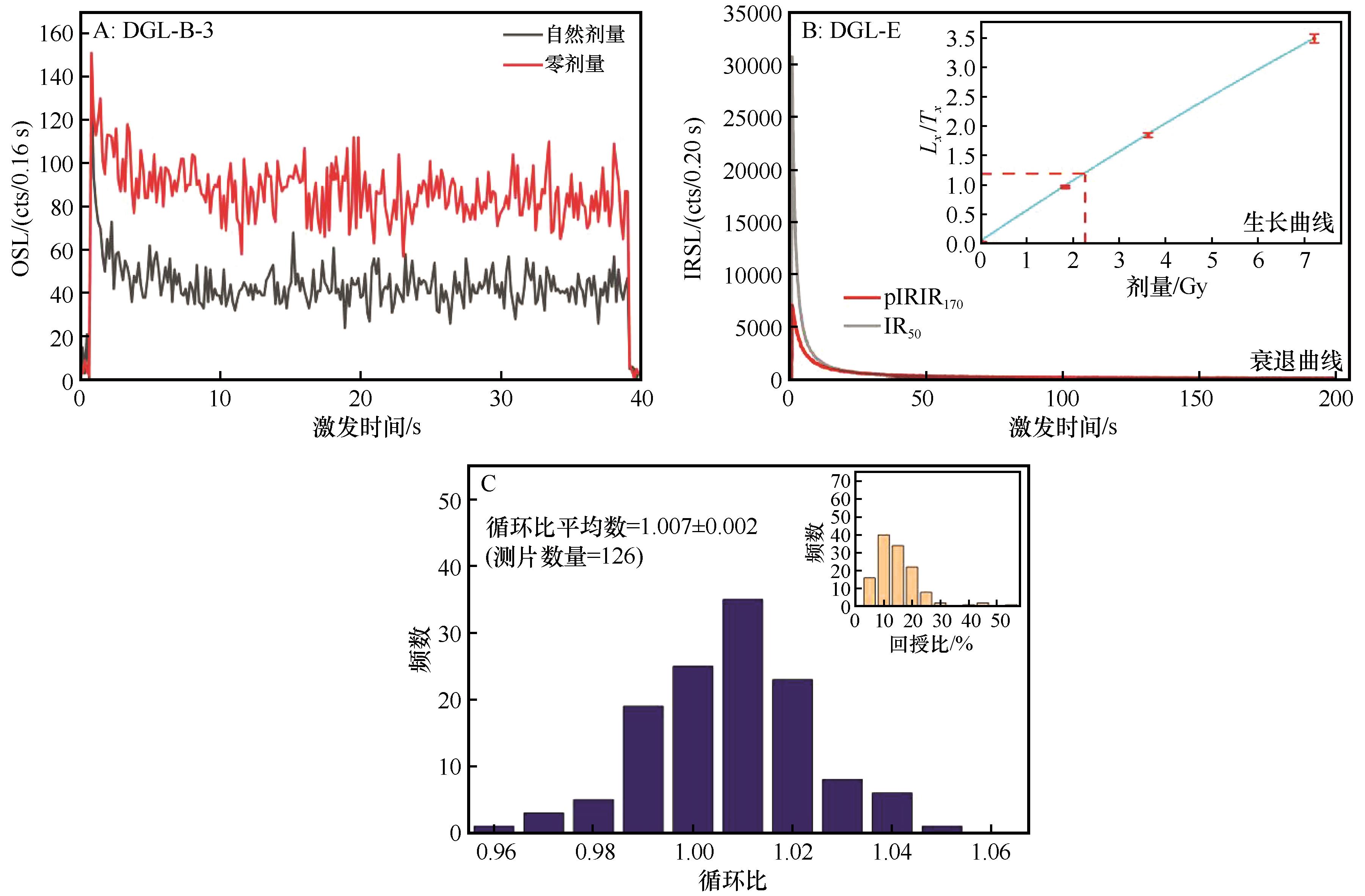
Fig.5 Luminescence decay curves of quartz sample DGL-B-3 (A); Luminescence decay curves and dose-response curve of K-feldspar sample DGL-E (B); Histogram of recycling ratio and recuperation of K-feldspar aliquots (C)
| 样品号 | 深度/m | K含量/% | Th含量/(mg·kg-1) | U含量/(mg·kg-1) | 含水量/% | 测片数 | 剂量率/(Gy·ka-1) | De/Gy | OSL年代/ka BP |
|---|---|---|---|---|---|---|---|---|---|
| DGL-A | 2.6 | 1.60±0.04 | 10.28±0.7 | 2.45±0.3 | 5±3 | 9 | 3.38±0.14 | 2.66±0.27 | 0.79±0.09 |
| DGL-B-1 | 0.4 | 1.60±0.04 | 9.96±0.6 | 1.49±0.3 | 5±3 | 9 | 3.28±0.13 | 0.55±0.07 | 0.17±0.02 |
| DGL-B-2 | 0.9 | 1.64±0.04 | 8.11±0.6 | 1.61±0.3 | 5±3 | 9 | 3.16±0.13 | 0.58±0.06 | 0.19±0.02 |
| DGL-B-3 | 1.3 | 1.58±0.04 | 10.26±0.7 | 1.66±0.3 | 5±3 | 9 | 3.25±0.14 | 0.84±0.07 | 0.26±0.03 |
| DGL-B-4 | 1.7 | 1.43±0.04 | 8.79±0.6 | 1.57±0.3 | 5±3 | 9 | 2.96±0.13 | 0.94±0.15 | 0.32±0.05 |
| DGL-B-5 | 2.0 | 1.59±0.04 | 8.82±0.6 | 1.44±0.3 | 5±3 | 9 | 3.35±0.14 | 1.04±0.07 | 0.31±0.03 |
| DGL-B-6 | 2.3 | 1.51±0.04 | 11.19±0.7 | 1.97±0.3 | 5±3 | 9 | 3.27±0.14 | 1.10±0.08 | 0.34±0.03 |
| DGL-B-7 | 2.6 | 1.56±0.04 | 9.70±0.6 | 1.66±0.3 | 5±3 | 9 | 3.14±0.13 | 1.17±0.05 | 0.37±0.03 |
| DGL-B-8 | 2.9 | 1.65±0.04 | 9.29±0.6 | 1.72±0.3 | 5±3 | 9 | 3.16±0.14 | 1.15±0.03 | 0.37±0.02 |
| DGL-C | 2.5 | 1.77±0.04 | 9.89±0.6 | 2.02±0.3 | 5±3 | 9 | 3.43±0.14 | 2.35±0.36 | 0.68±0.11 |
| DGL-D | 2.4 | 1.53±0.04 | 14.80±0.8 | 2.82±0.4 | 5±3 | 9 | 3.70±0.16 | 1.68±0.06 | 0.45±0.03 |
| DGL-E | 2.2 | 1.68±0.04 | 9.58±0.6 | 1.81±0.3 | 5±3 | 9 | 3.29±0.14 | 2.20±0.08 | 0.67±0.04 |
| DGL-F | 3.5 | 1.63±0.04 | 11.13±0.7 | 1.98±0.3 | 5±3 | 9 | 3.35±0.14 | 2.44±0.13 | 0.73±0.05 |
| DGL-G | 5.5 | 1.68±0.04 | 10.56±0.7 | 1.78±0.3 | 5±3 | 9 | 3.26±0.14 | 1.95±0.09 | 0.59±0.04 |
Table 2 Dose rates and OSL datings of samples
| 样品号 | 深度/m | K含量/% | Th含量/(mg·kg-1) | U含量/(mg·kg-1) | 含水量/% | 测片数 | 剂量率/(Gy·ka-1) | De/Gy | OSL年代/ka BP |
|---|---|---|---|---|---|---|---|---|---|
| DGL-A | 2.6 | 1.60±0.04 | 10.28±0.7 | 2.45±0.3 | 5±3 | 9 | 3.38±0.14 | 2.66±0.27 | 0.79±0.09 |
| DGL-B-1 | 0.4 | 1.60±0.04 | 9.96±0.6 | 1.49±0.3 | 5±3 | 9 | 3.28±0.13 | 0.55±0.07 | 0.17±0.02 |
| DGL-B-2 | 0.9 | 1.64±0.04 | 8.11±0.6 | 1.61±0.3 | 5±3 | 9 | 3.16±0.13 | 0.58±0.06 | 0.19±0.02 |
| DGL-B-3 | 1.3 | 1.58±0.04 | 10.26±0.7 | 1.66±0.3 | 5±3 | 9 | 3.25±0.14 | 0.84±0.07 | 0.26±0.03 |
| DGL-B-4 | 1.7 | 1.43±0.04 | 8.79±0.6 | 1.57±0.3 | 5±3 | 9 | 2.96±0.13 | 0.94±0.15 | 0.32±0.05 |
| DGL-B-5 | 2.0 | 1.59±0.04 | 8.82±0.6 | 1.44±0.3 | 5±3 | 9 | 3.35±0.14 | 1.04±0.07 | 0.31±0.03 |
| DGL-B-6 | 2.3 | 1.51±0.04 | 11.19±0.7 | 1.97±0.3 | 5±3 | 9 | 3.27±0.14 | 1.10±0.08 | 0.34±0.03 |
| DGL-B-7 | 2.6 | 1.56±0.04 | 9.70±0.6 | 1.66±0.3 | 5±3 | 9 | 3.14±0.13 | 1.17±0.05 | 0.37±0.03 |
| DGL-B-8 | 2.9 | 1.65±0.04 | 9.29±0.6 | 1.72±0.3 | 5±3 | 9 | 3.16±0.14 | 1.15±0.03 | 0.37±0.02 |
| DGL-C | 2.5 | 1.77±0.04 | 9.89±0.6 | 2.02±0.3 | 5±3 | 9 | 3.43±0.14 | 2.35±0.36 | 0.68±0.11 |
| DGL-D | 2.4 | 1.53±0.04 | 14.80±0.8 | 2.82±0.4 | 5±3 | 9 | 3.70±0.16 | 1.68±0.06 | 0.45±0.03 |
| DGL-E | 2.2 | 1.68±0.04 | 9.58±0.6 | 1.81±0.3 | 5±3 | 9 | 3.29±0.14 | 2.20±0.08 | 0.67±0.04 |
| DGL-F | 3.5 | 1.63±0.04 | 11.13±0.7 | 1.98±0.3 | 5±3 | 9 | 3.35±0.14 | 2.44±0.13 | 0.73±0.05 |
| DGL-G | 5.5 | 1.68±0.04 | 10.56±0.7 | 1.78±0.3 | 5±3 | 9 | 3.26±0.14 | 1.95±0.09 | 0.59±0.04 |
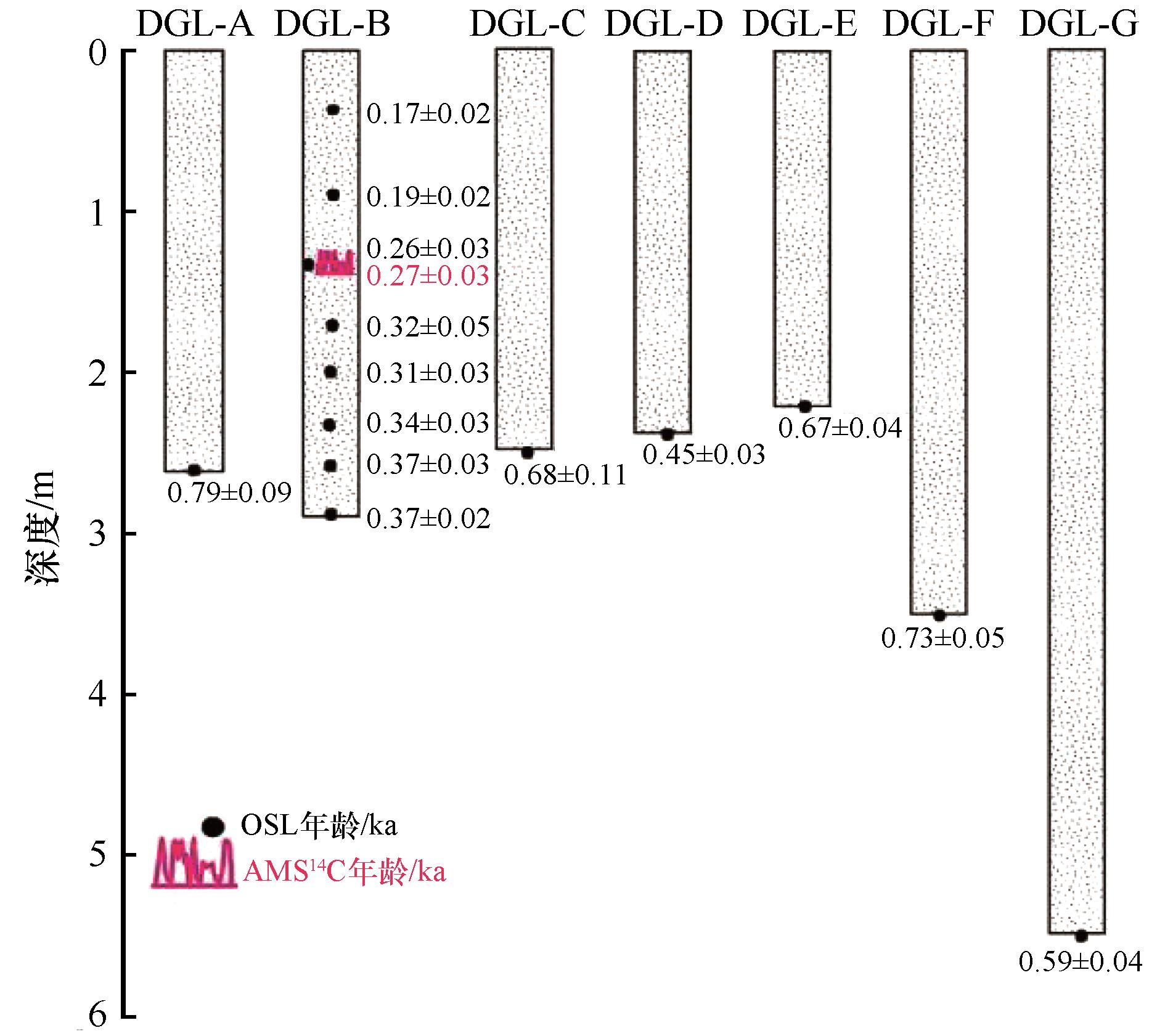
Fig. 6 Stratigraphic age of sampled nebkhas in the southern Qaidam Basin
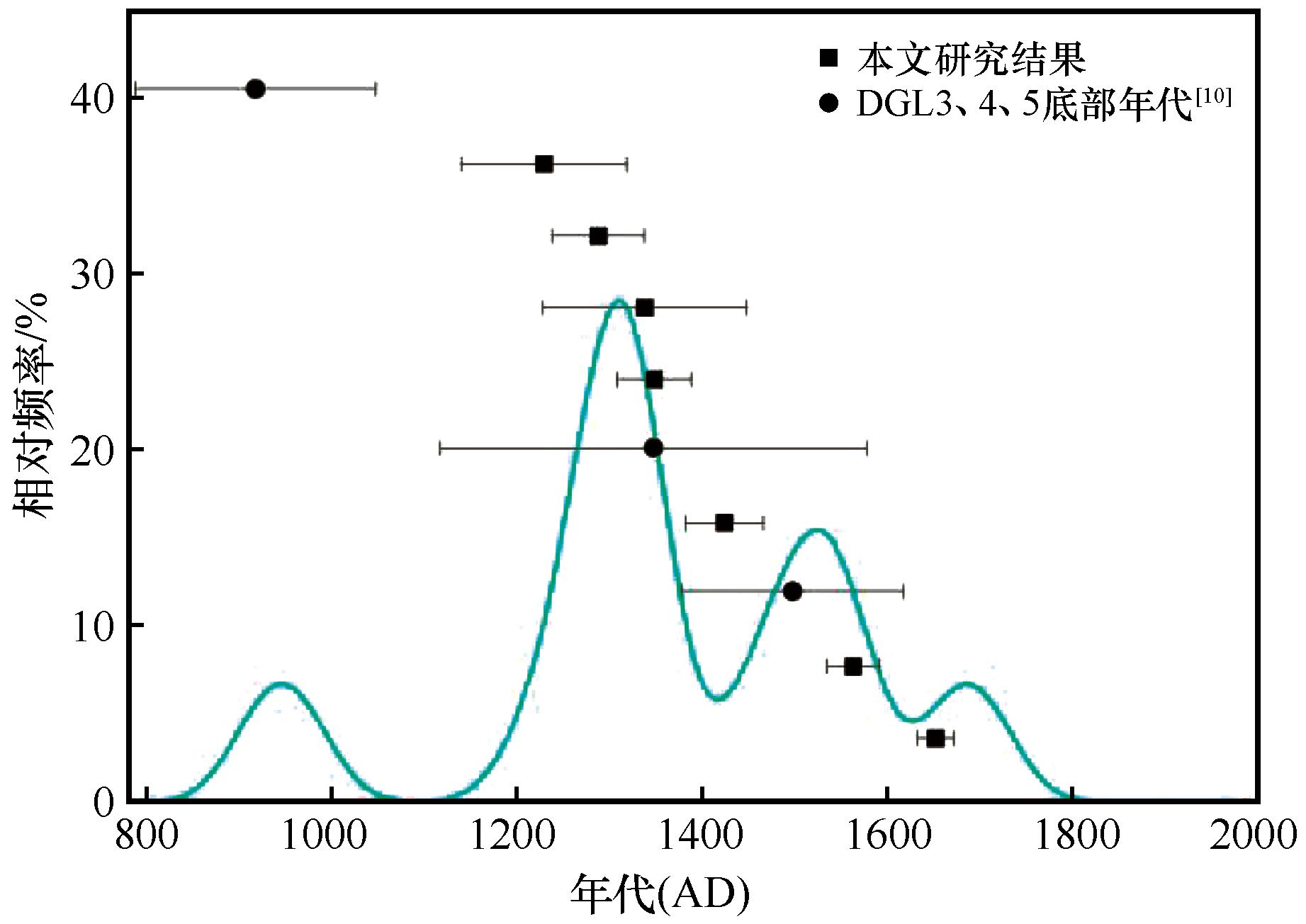
Fig.7 OSL ages of bottom samples and their probability density plots for the Dagele Tamarix chinensis nebkha profile
| 研究区域 | 形成年代/ka | 测年方式 |
|---|---|---|
| 塔克拉玛干沙漠[ | ~0.7 | AMS14C |
| 塔里木盆地[ | ~0.8 | OSL、AMS14C |
| 阿拉善高原[ | ≥0.65 | AMS14C |
| 柴达木盆地 | ~0.8~0.4 | OSL |
Table 3 Formation age of Tamariskchinensis nebkhas in northern China
| 研究区域 | 形成年代/ka | 测年方式 |
|---|---|---|
| 塔克拉玛干沙漠[ | ~0.7 | AMS14C |
| 塔里木盆地[ | ~0.8 | OSL、AMS14C |
| 阿拉善高原[ | ≥0.65 | AMS14C |
| 柴达木盆地 | ~0.8~0.4 | OSL |
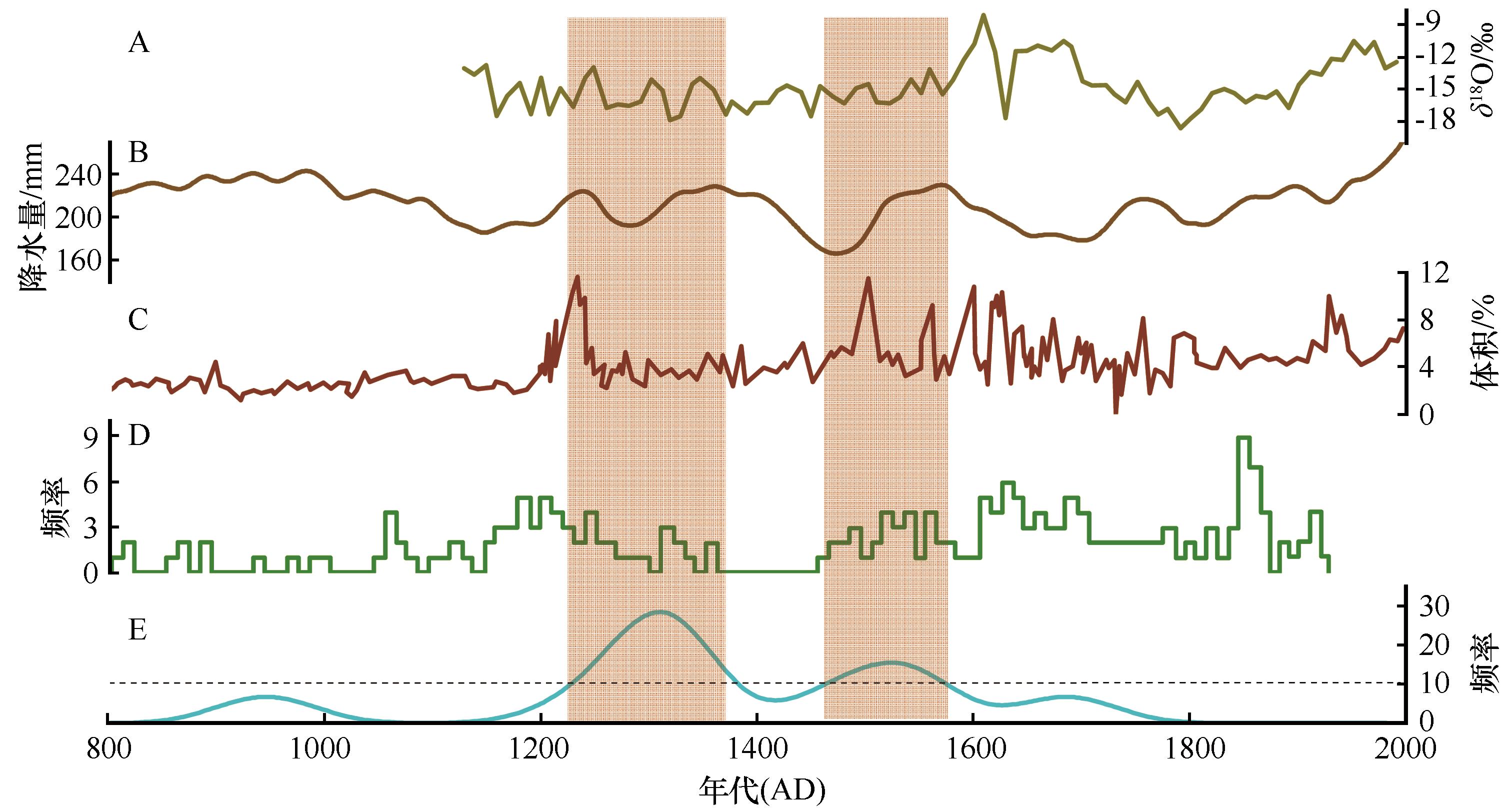
Fig.8 Age of Dagele nebkha formation and climatic context
| [1] | Lang L L, Wang X M, Ha S,et al.Nebkha (coppice dune) formation and significance to environmental change reconstructions in arid and semiarid areas[J].Journal of Geographical Sciences,2013,23(2):344-358. |
| [2] | Tengberg A, Chen D L.A comparative analysis of nebkhas in central Tunisia and Northern Burkina Faso[J].Geomorphology,1998,22:181-192. |
| [3] | Goudie A S.Nebkhas:an essay in aeolian biogeomorphology[J].Aeolian Research,2022,54:100772. |
| [4] | Nield J M, Baas A C W.Investigating parabolic and nebkha dune formation using a cellular automaton modelling approach[J].Earth Surface Processes and Landforms,2008,33(5):724-740. |
| [5] | 王湘.柴达木盆地东缘白刺灌丛沙堆土壤性质及其“沃岛”效应[D].陕西杨凌:西北农林科技大学,2022:51-74. |
| [6] | 曹雪.柴达木盆地典型植物沙堆拦沙沃岛效应及其对植被发育的影响[D],北京:中国科学院大学,2022:74-83. |
| [7] | 谢高地,鲁春霞,冷允法,等.青藏高原生态资产的价值评估 [J].自然资源学报,2003,18 (2):189-196. |
| [8] | 于禄鹏,赖忠平,安萍.柴达木盆地中部与西南部古沙丘的光释光年代学研究 [J].中国沙漠,2013,33(2):453-462. |
| [9] | 凌智永,陈亮,芦宝良,等.柴达木盆地盐湖周边灌丛沙丘年代、物源与环境[J].第四纪研究,2018,38(3):611-622. |
| [10] | Li J C, Zhao W X, Zhou N,et al.Wind erosion caused clustered development and rapid growth of nebkhas in the eastern Qaidam Basin of the Tibetan Plateau[J].Journal of Arid Environments,2022,197:104665. |
| [11] | Zheng C X, Zhou L P, Qin J T.Difference in luminescence sensitivity of coarse-grained quartz from deserts of Northern China[J].Radiation Measurements,2009,44(5):534-537. |
| [12] | Du S S, Wu Y Q, Tan L H.Geochemical evidence for the provenance of aeolian deposits in the Qaidam Basin,Tibetan Plateau[J].Aeolian Research,2018,32:60-70. |
| [13] | 朱文彬,吕爱锋,贾绍凤.基于NDVI的柴达木盆地植被空间分异规律及影响因素[J].干旱区研究,2010,27(5):691-698. |
| [14] | 鹿化煜,安芷生.前处理方法对黄土沉积物粒度测量影响的实验研究[J].科学通报,1997,42(23):2535-2538. |
| [15] | Wentworth C K.A scale of grade and class terms for clastic sediments[J].The Journal of Geology,1922,30(5):377-392. |
| [16] | E C Y, Sohbati R, Murray A S,et al.Hebei loess section in the Anyemaqen Mountains,Northeast Tibetan Plateau:a high‐resolution luminescence chronology[J].Boreas,2018,47(4):1170-1183. |
| [17] | Prescott J R, Hutton J T.Cosmic ray contributions to dose rates for luminescence and ESR dating:large depths and long-term time variations[J].Radiation Measurements,1994,23(2):497-500. |
| [18] | Reimer P J, Austin W E N, Bard E,et al.The IntCal20 northern Hemisphere radiocarbon age calibration curve (0-55 cal ka BP)[J].Radiocarbon,2020,62(4):1-33. |
| [19] | Yang S L, Liu X J, Zan J B,et al.Multi-method luminescence dating of young aeolian dunes in the central Tibetan Plateau[J].Quaternary Geochronology,2024,83:101595. |
| [20] | Li G Q, Wen L J, Xia D S,et al.Quartz OSL and K-feldspar pIRIR dating of a loess/paleosol sequence from arid central Asia,Tianshan Mountains,NW China[J].Quaternary Geochronology,2015,28:40-53. |
| [21] | Murray A S, Wintle A G.Luminescence dating of quartz using an improved single-aliquot regenerative-dose protocol[J].Radiation Measurements,2000,32:57-73. |
| [22] | Li B, Roberts R G, Jacobs Z,et al.Potential of establishing a ‘global standardised growth curve’ (gSGC) for optical dating of quartz from sediments[J].Quaternary Geochronology,2015,27:94-104. |
| [23] | Lang L L, Wang X M, Hua T,et al.Moisture availability over the past five centuries indicated by carbon isotopes of Tamarix taklamakanensis leaves in a nebkha profile in the Central Taklimakan Desert,NW China[J].Aeolian Research,2013,11:101-108. |
| [24] | Liu W G, Liu Z H, An Z S,et al.Wet climate during the 'little ice age' in the arid tarim basin,Northwestern China[J].The Holocene,2011,21(3):409-416. |
| [25] | Wang X M, Zhang C X, Zhang J W,et al.Nebkha formation:implications for reconstructing environmental changes over the past several centuries in the Ala Shan Plateau,China[J].Palaeogeography,Palaeoclimatology,Palaeoecology,2010,297:697-706. |
| [26] | Buckley R.The effect of sparse vegetation cover on the transport of dune sand by wind[J].Nature,1987,325:426-428. |
| [27] | Wolfe S A, Nickling W G.Shear stress partitioning in sparsely vegetated desert canopies[J].Earth Surface Processes and Landforms,1996,21:607-620. |
| [28] | Wiggs G F S, Thomas D S G, Bullard J E,et al.Dune mobility and vegetation cover in the Southwest Kalahari Desert[J].Earth Surface Processes and Landforms,2010,20(6):515-529. |
| [29] | Chen F H, Qiang M R, Zhou A F,et al.A 2000‐year dust storm record from Lake Sugan in the dust source area of arid China[J].Journal of Geophysical Research:Atmospheres,2013,118(5):2149-2160. |
| [30] | Zhang D E.Synoptic-climatic studies of dust fall in China since historic times[J].Scientia Sinica,1984,27(8):825-836. |
| [31] | 王宁练,姚檀栋,蒲建辰,等.青藏高原北部马兰冰芯记录的近千年来气候环境变化[J].中国科学(D辑):地球科学,2006,36(8):723-732. |
| [32] | Yang B, Qin C, Wang J L,et al.A 3,500-year tree-ring record of annual precipitation on the Northeastern Tibetan Plateau[J].Proceedings of the National Academy of Sciences,2014,111(8):2903-2908. |
| [33] | 徐高兴,王立,徐先英,等.民勤绿洲边缘地下水埋深对柽柳灌丛生长及物种多样性的影响[J].草原与草坪,2017,37(2):49-56. |
| [34] | 庄丽,陈亚宁.塔里木河下游干旱胁迫条件下柽柳生理代谢的响应[J].科学通报,2006(4):442-447. |
| [1] | Wenrong Kang, Wenzhi Zhao, Yongyong Zhang, Denke Ma, Yuanyuan Ma, Yifan Yue, Guoying Zhou. Vegetation distribution characteristics and influencing factors along a precipitation gradient in the Qaidam Basin [J]. Journal of Desert Research, 2026, 46(1): 209-218. |
| [2] | Zheng Zhou, Cheng Wang, Shibing Yang, Yubi Zhou. Investigation of medicinal plant resources in the Qaidam Basin, China [J]. Journal of Desert Research, 2025, 45(6): 231-238. |
| [3] | Ying Liu, Rende Wang, Hongjun Jiang, Qing Li, Yixiao Yuan, Ruchun Zhang, Tao Zhang. Aeolian activity characteristics and influencing factors of the dry lakebed of Chahan Lake on the Bashang Plateau [J]. Journal of Desert Research, 2025, 45(2): 129-141. |
| [4] | Fang Ma, Ping Lv, Min Cao, Junlin Yu, Zishu Xia. Coexistence of barchan dunes and dome dunes and its causes in the Qaidam Basin [J]. Journal of Desert Research, 2025, 45(1): 185-194. |
| [5] | Haokun Mo, Guangyin Hu, Huicong Meng. Research progress on aeolian activity in the Qinghai Lake area, northeastern Tibetan Plateau [J]. Journal of Desert Research, 2023, 43(6): 197-209. |
| [6] | Jiyan Li, Dehua Xu, Yaoyao Zhang, Qianwen Xue, Ling Zhou. Characteristics of wind regime and sand drift potential in the Qaidam Basin, northwestern China [J]. Journal of Desert Research, 2023, 43(5): 223-231. |
| [7] | Ruicong Xu, Zhibao Dong, Weige Nan, Guoxiang Chen, Funing Yang, Lingling Kong. Morphology and sedimentary characteristics of shadow dunes of dead Halogeton arachnoideus in the southern margin of Qaidam Basin, China [J]. Journal of Desert Research, 2023, 43(4): 55-63. |
| [8] | Mengzhen Huang, Ruijie Lu, Jin Zhao, Luo Ma. Assessment of soil quality in typical wind erosion area of Qaidam Basin [J]. Journal of Desert Research, 2023, 43(3): 199-209. |
| [9] | Xiao Zhang, Ping Yan, Miao Dong, Xiaokang Liu, Wenjie Yuan, Xiaoxu Wang. Preliminary results of sedimentary structure of compound crescentic dune in the lower reaches of Tora River Basin, Qaidam Basin probed with ground penetrating radar [J]. Journal of Desert Research, 2023, 43(1): 160-168. |
| [10] | Tong Zou, Zhuanling Yang, Jinzhi Wei, Yingying Liao, Xuegang Xing, Guangqiang Qian, Xiaolei Liang. Migration and influencing factors of barchan dunes in southwestern Qaidam Basin, China [J]. Journal of Desert Research, 2023, 43(1): 212-221. |
| [11] | Siyue Zhang, Jiyan Li, Yaoyao Zhang, Dehua Xu. Geochemical characteristics and implications of sediments in the piedmont of southwestern Qaidam Basin, China [J]. Journal of Desert Research, 2023, 43(1): 222-233. |
| [12] | Hong Jia, Zhiyan Sun, Jinming Xie, Jie Chen, Yinghua Zheng, Mingrui Qiang. Environmental changes recorded by aeolian deposits in the coasts of China [J]. Journal of Desert Research, 2022, 42(3): 51-62. |
| [13] | Xin Qu, Xuemin Gao, Meng Wang, Yikun Luo, Jiyan Li. Evaluation on the geological heritage resources of the Qaidam Basin, China [J]. Journal of Desert Research, 2022, 42(1): 167-174. |
| [14] | Mei Shao, Wanyin Luo, Xuehua Che, Fang Wang, Junfeng Lu, Songbing Zou. Aeolian sand transport and its potential amount into Longyangxia Reservoir in 1987-2019 based on COSI-Corr [J]. Journal of Desert Research, 2021, 41(6): 249-261. |
| [15] | Jiyan Li, Xuemin Gao, Zhibao Dong. The dataset of wind regime for yardang landforms in the Qaidam Basin [J]. Journal of Desert Research, 2021, 41(6): 265-268. |
| Viewed | ||||||
|
Full text |
|
|||||
|
Abstract |
|
|||||
©2018Journal of Desert Research
Tel:0931-8267545
Email:caiedit@lzb.ac.cn;desert@lzb.ac.cn
Support:Magtech
