
- CN 62-1070/P
- ISSN 1000-694X
- Bimonthly 1981
Journal of Desert Research ›› 2026, Vol. 46 ›› Issue (4): 1-11.DOI: 10.7522/j.issn.1000-694X.2025.00150
Fei Wang1,2( ), Jun Han1()
Received:2025-08-05
Revised:2025-10-02
Online:2026-07-20
Published:2026-08-27
Contact:
Jun Han
CLC Number:
Fei Wang, Jun Han. Spatiotemporal evolution and driving factors of land use carbon emissions in the Lanzhou-Xining Urban Agglomeration[J]. Journal of Desert Research, 2026, 46(4): 1-11.
Add to citation manager EndNote|Ris|BibTeX
URL: http://www.desert.ac.cn/EN/10.7522/j.issn.1000-694X.2025.00150
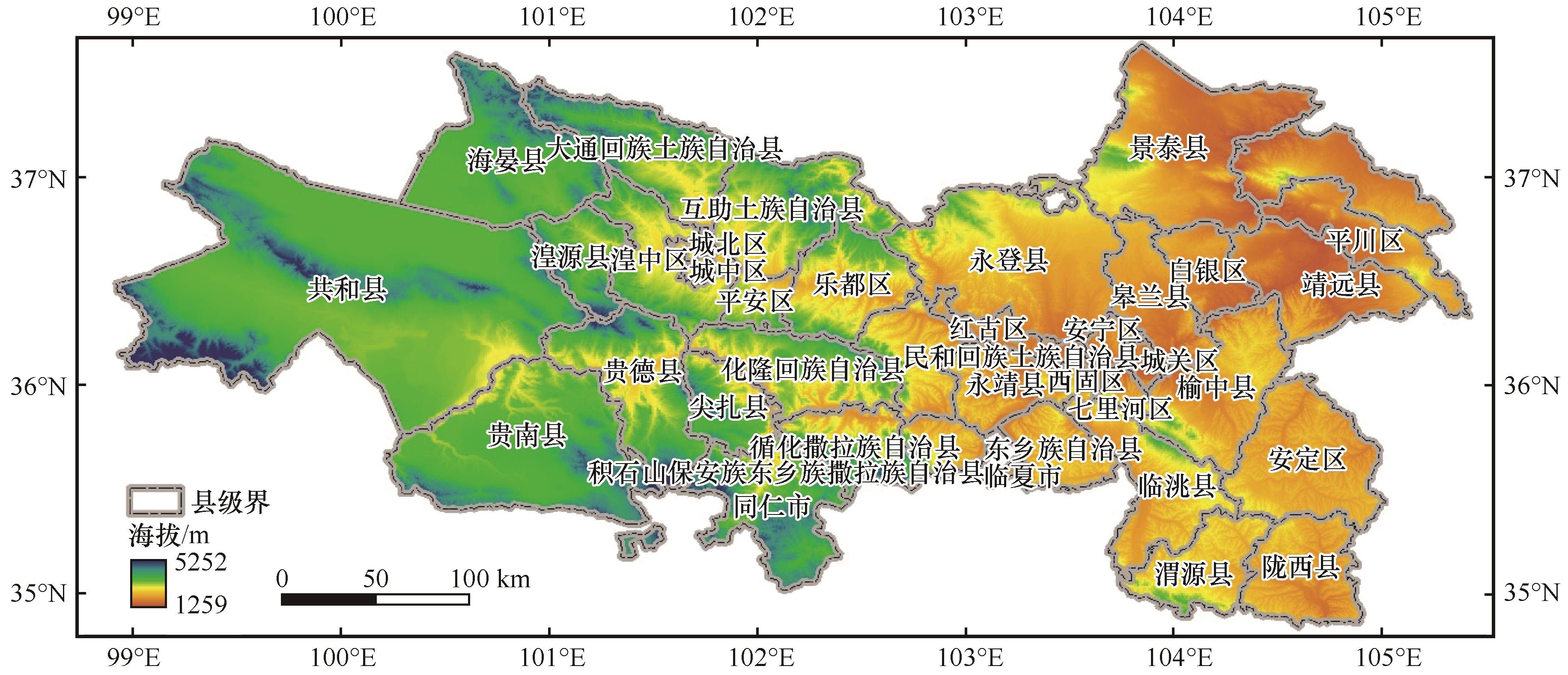
Fig.1 Overview of the research area
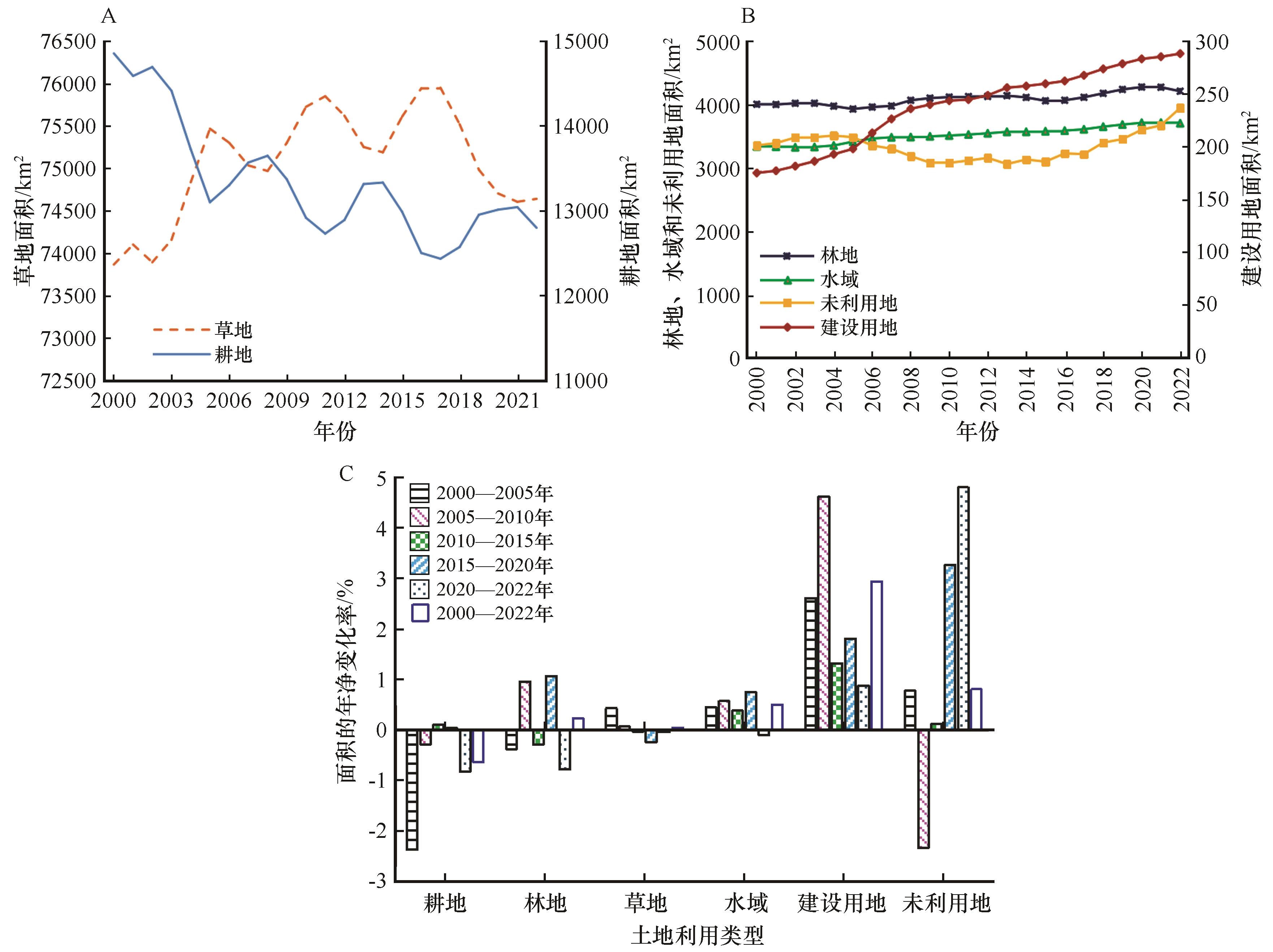
Fig.2 Area changes of land use in the Lanzhou-Xining Urban Agglomeration (2000-2022)
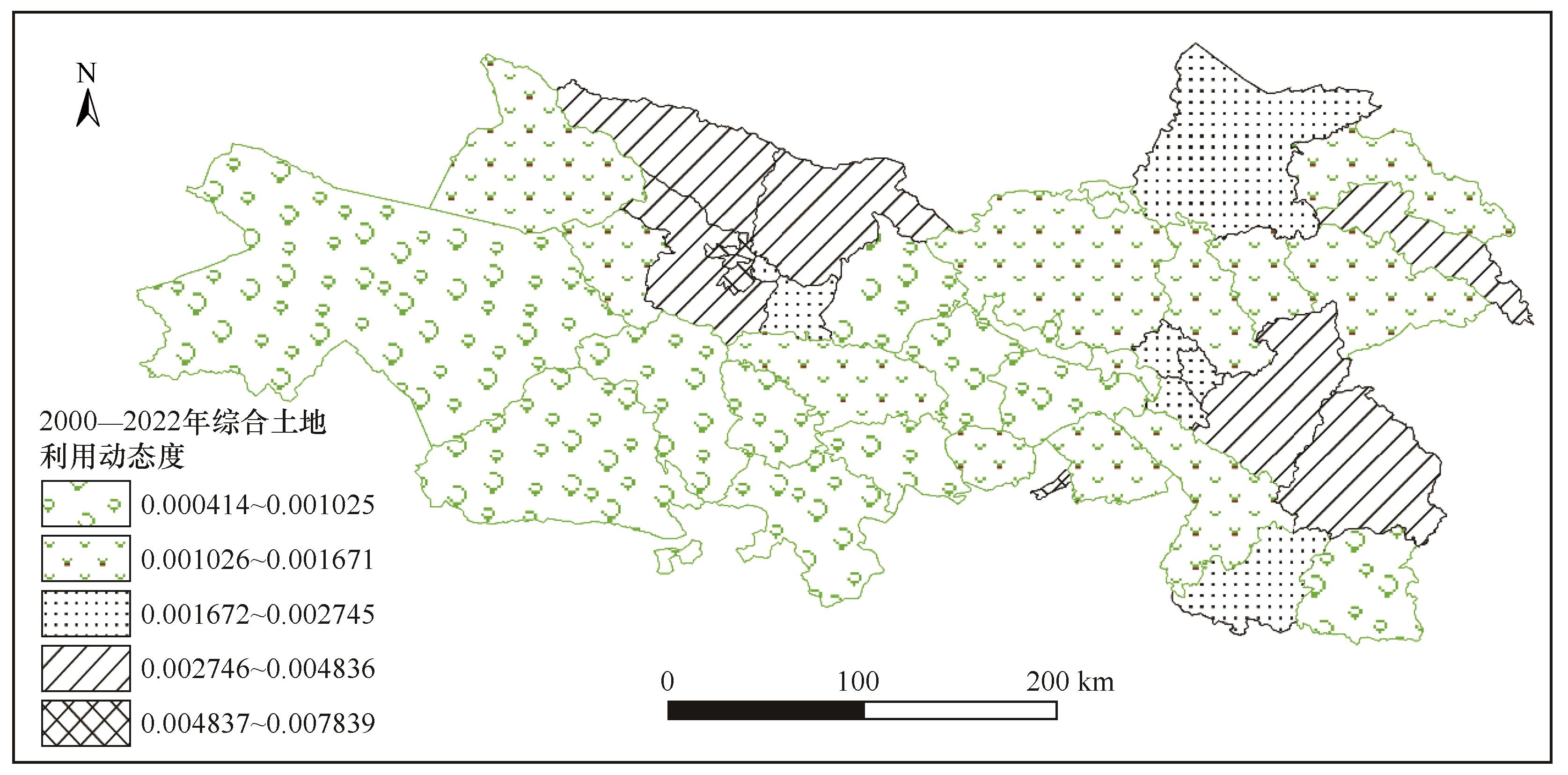
Fig.3 Spatial distribution of county-level comprehensive land use dynamic changes in the Lanzhou-Xining Urban Agglomeration (2000-2022)
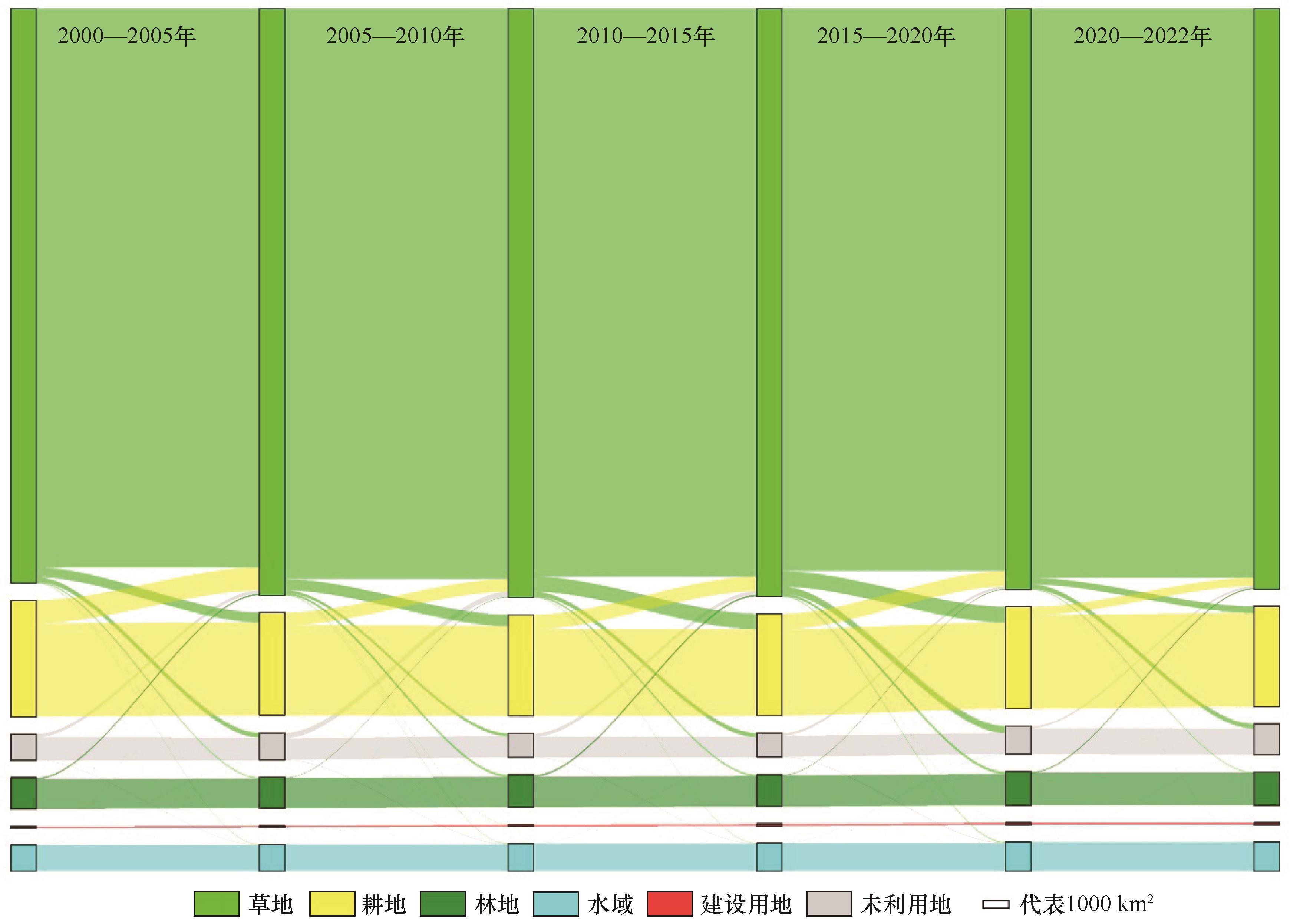
Fig.4 Transfer between different land use types in different periods in the Lanzhou-Xining Urban Agglomeration(2000-2022)
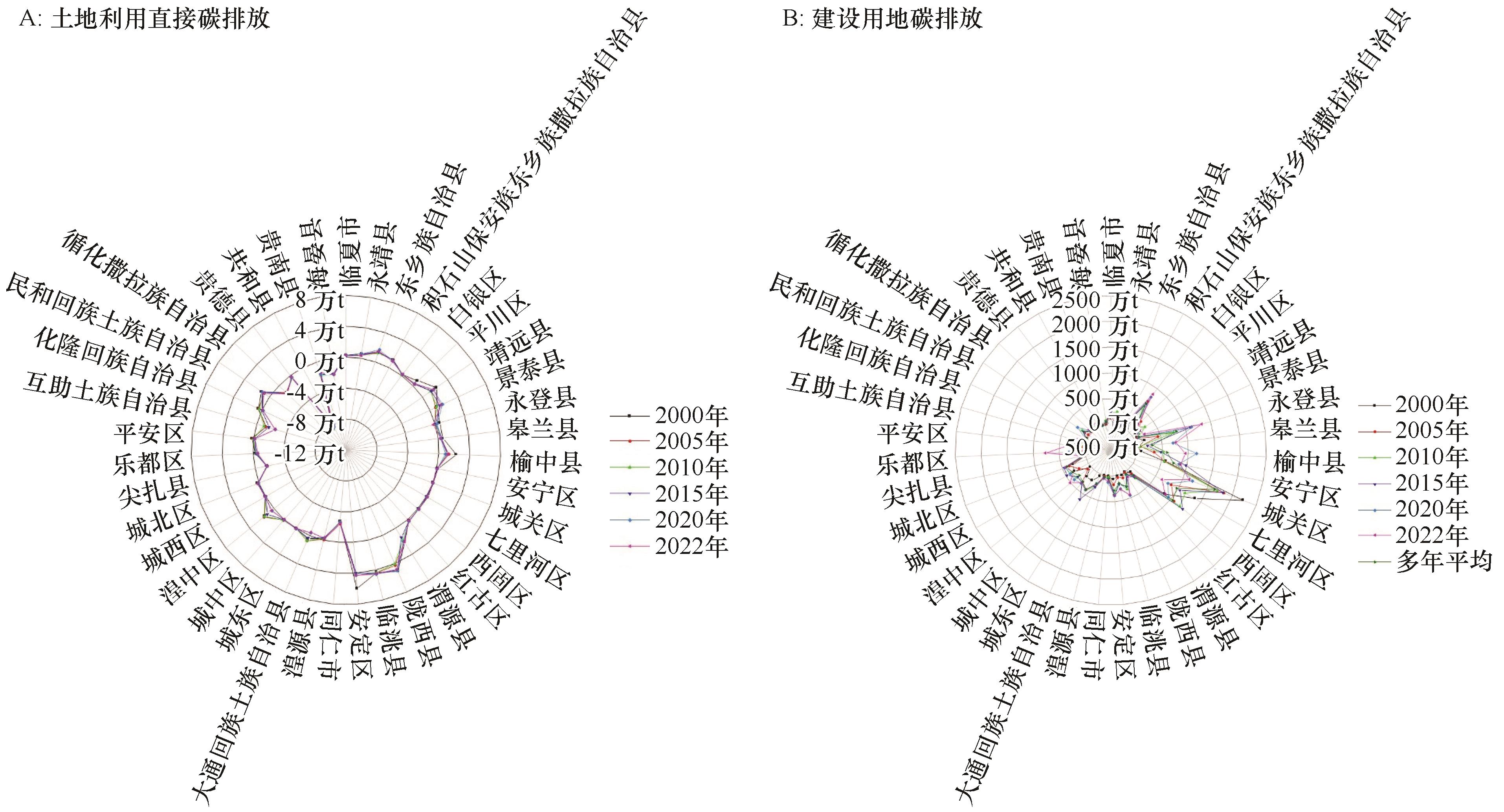
Fig.5 Changes of county-level land use carbon emissions in the Lanzhou-Xining Urban Agglomeration (2000-2022):(A) Direct land-use carbon emissions;(B)Construction land carbon emissions
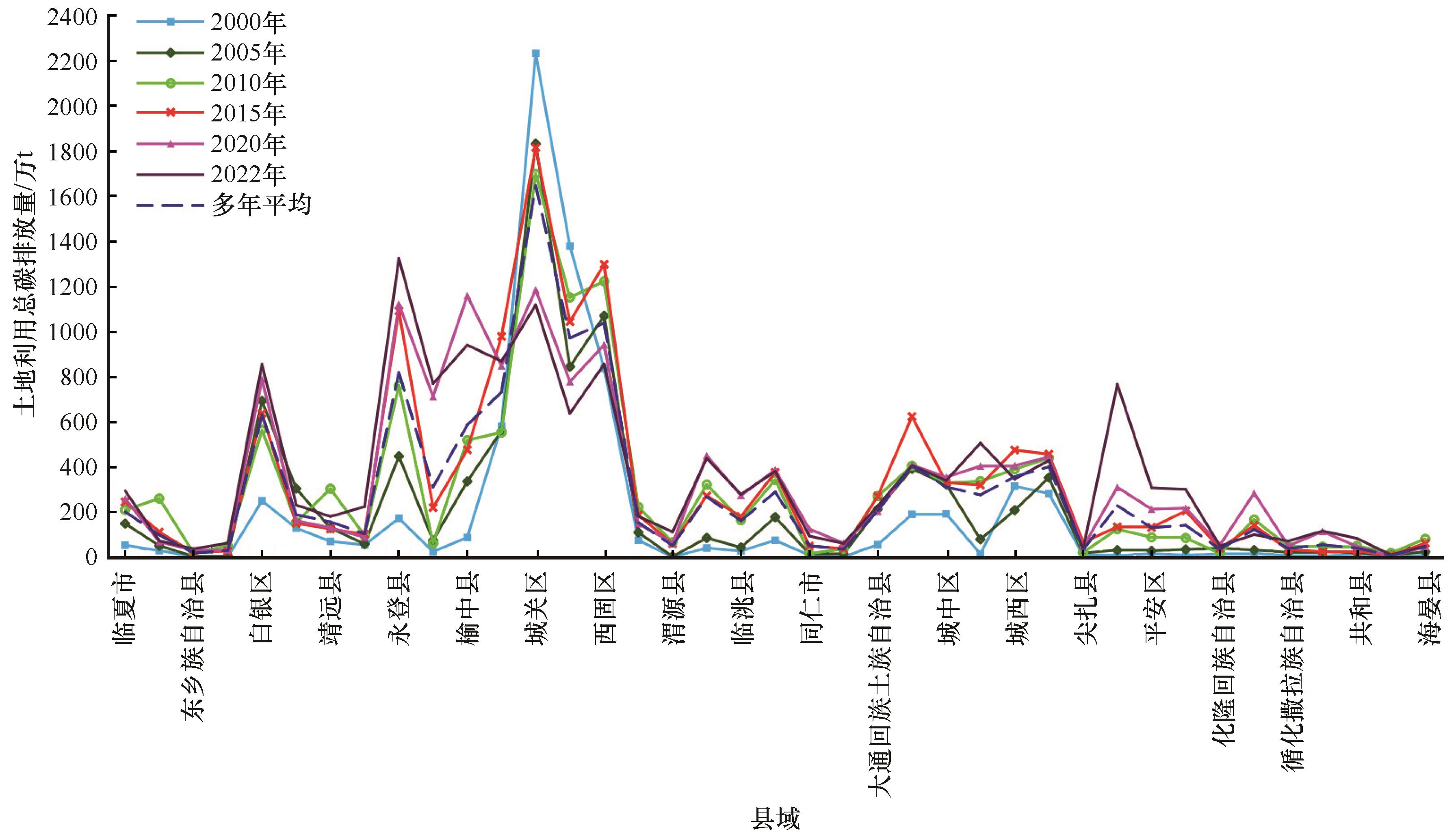
Fig.6 Changes of total land use carbon emissions in the Lanzhou-Xining Urban Agglomeration (2000-2022)
| 指标 | 年份 | 累积效应 | ||||
|---|---|---|---|---|---|---|
| 2000—2005 | 2005—2010 | 2010—2015 | 2015—2020 | 2020—2022 | ||
| ∆CIlx | -3 502.65 | -4 837.16 | -6 180.67 | -4 416.51 | -2 130.49 | -21 067.49 |
| ∆GIlx | 4 765.11 | 7 069.18 | 7 145.13 | 4 451.73 | 2 844.99 | 26 276.14 |
| ∆PIlx | -681.89 | -1 569.09 | -677.99 | -991.96 | -256.37 | -4 177.31 |
| ∆Slx | 984.21 | 2 185.72 | 850.05 | 1 529.61 | 278.97 | 5 828.58 |
| ∆Ctotlx | 1 564.78 | 2 848.64 | 1 136.52 | 572.87 | 737.11 | 6 859.92 |
| CONCIlx | -223.84% | -169.81% | -543.83% | -770.95% | -289.03% | -307.11% |
| CONGIlx | 304.52% | 248.16% | 628.69% | 777.10% | 385.97% | 383.04% |
| CONPIlx | -43.58% | -55.08% | -59.66% | -173.16% | -34.78% | -60.89% |
| CONSlx | 62.90% | 76.73% | 74.79% | 267.01% | 37.85% | 84.97% |
Table 1 Decomposition results of driving factors for county-level land use carbon emissions in the Lanzhou-Xining Urban Agglomeration
| 指标 | 年份 | 累积效应 | ||||
|---|---|---|---|---|---|---|
| 2000—2005 | 2005—2010 | 2010—2015 | 2015—2020 | 2020—2022 | ||
| ∆CIlx | -3 502.65 | -4 837.16 | -6 180.67 | -4 416.51 | -2 130.49 | -21 067.49 |
| ∆GIlx | 4 765.11 | 7 069.18 | 7 145.13 | 4 451.73 | 2 844.99 | 26 276.14 |
| ∆PIlx | -681.89 | -1 569.09 | -677.99 | -991.96 | -256.37 | -4 177.31 |
| ∆Slx | 984.21 | 2 185.72 | 850.05 | 1 529.61 | 278.97 | 5 828.58 |
| ∆Ctotlx | 1 564.78 | 2 848.64 | 1 136.52 | 572.87 | 737.11 | 6 859.92 |
| CONCIlx | -223.84% | -169.81% | -543.83% | -770.95% | -289.03% | -307.11% |
| CONGIlx | 304.52% | 248.16% | 628.69% | 777.10% | 385.97% | 383.04% |
| CONPIlx | -43.58% | -55.08% | -59.66% | -173.16% | -34.78% | -60.89% |
| CONSlx | 62.90% | 76.73% | 74.79% | 267.01% | 37.85% | 84.97% |
| [1] | IPCC.Climate Change 2021:The Physical Science Basis[M].Cambridge,UK:Cambridge University Press,2023. |
| [2] | Marcos L, Sassan S, Michael K,et al.Impacts of degradation on water,energy,and carbon cycling of the Amazon Tropical Forests[J].Journal of Geophysical Research:Biogeosciences,2020,125: JG005677. |
| [3] | 杨皓然,吴群.不同政策方案下的南京市土地利用碳排放动态模拟[J].地域研究与开发,2021,40(3):121-126. |
| [4] | Lau H C, Ramakrishna S, Zhang K,et al.The role of carbon capture and storage in the energy transition[J].Energy & Fuels,2021,35:7364-7386. |
| [5] | 马海良,丁元卿,庞庆华.武汉市湖泊水域利用转变及其碳排放影响[J].长江流域资源与环境,2020,29(2):369-375. |
| [6] | Lai L, Huang X J, Yang H,et al.Carbon emissions from land-use change and management in China between 1990 and 2010[J].Science Advances,2016,2(11):e1601063. |
| [7] | 陆大道.中国地理学的发展与全球变化研究[J].地理学报,2011,66(2):147-156. |
| [8] | Boyle J F, Gaillard M J, Kaplan J O,et al.Modelling prehistoric land use and carbon budgets:a critical review[J].Holocene,2011,21(5):715-722. |
| [9] | Li W, Yu T, Xu Y,et al.Visual analysis of article publication related to carbon emission quota field based on CiteSpace software[J].Journal of South China Normal University (Natural Science Edition),2023,55(2):26-33. |
| [10] | Liu M, Chen Y R, Chen K,et al.Progress and hotspots of research on land-use carbon emissions:a global perspective[J].Sustainability,2023,15(9):7245. |
| [11] | 吉雪强,刘慧敏,张跃松.中国省际土地利用碳排放空间关联网络结构演化及驱动因素[J].经济地理,2023,43(2):190-200. |
| [12] | 李缘缘,魏伟,周俊菊,等.中国土地利用碳排放变化及协调分区[J].环境科学,2023,44(3):1267-1276. |
| [13] | 吕倩,张林野,雒瑶.黄河流域县域土地利用碳排放时空格局及碳平衡分区[J/OL].环境科学,1-20[2025-09-30].. |
| [14] | 张杰,陈海,刘迪,等.基于县域尺度土地利用碳排放的时空分异及影响因素研究[J].西北大学学报(自然科学版),2022,52(1):21-31. |
| [15] | Yang B, Chen X, Wang Z Q,et al.Analyzing land use structure efficiency with carbon emissions:a case study in the middle reaches of the Yangtze River,China[J].Journal of Cleaner Production,2020,274:123076. |
| [16] | 樊高源,杨俊孝.土地利用结构、经济发展与土地碳排放影响效应研究:以乌鲁木齐市为例[J].中国农业资源与区划,2017,38(10):177-184. |
| [17] | Yang Y J, Li H Y.Monitoring spatiotemporal characteristics of land-use carbon emissions and their driving mechanisms in the Yellow River Delta:a grid-scale analysis[J].Environmental Research,2022,214(4):114151. |
| [18] | 马远,刘真真.黄河流域土地利用碳排放的时空演变及影响因素研究[J].生态经济,2021,37(7):35-43. |
| [19] | 冯薇,赵荣钦,谢志祥,等.碳中和目标下土地利用碳排放效率及其时空格局:以黄河流域72个地级市为例[J].中国土地科学,2023,37(1):102-113. |
| [20] | 石晶,石培基,王梓洋,等.基于PLUS-InVEST模型的酒泉市生态系统碳储量时空演变与预测[J].环境科学,2024,45(1):300-313. |
| [21] | Liang X, Guan Q F, Keith C C,et al.Understanding the drivers of sustainable land expansion using a patch-generating land use simulation (PLUS) model:a case study in Wuhan,China[J].Computers Environment and Urban Systems,2021,85:101569. |
| [22] | 武爱彬,赵艳霞,郭小平,等.基于土地利用和夜间灯光数据的京津冀区域碳排放时空分异研究[J].地理与地理信息科学,2022,38(6):36-42. |
| [23] | 邓光耀,陈刚刚.兰西城市群能源消费碳排放时空分布特征及影响因素:基于DMSP/OLS与NPP/VIIRS夜间灯光数据[J].西华大学学报(哲学社会科学版),2022,41(6):40-60. |
| [24] | 苏泳娴,陈修治,叶玉瑶,等.基于夜间灯光数据的中国能源消费碳排放特征及机理[J].地理学报,2013,68(11):1513-1526. |
| [25] | 方创琳,张国友,薛德升.中国城市群高质量发展与科技协同创新共同体建设[J].地理学报,2021,76(12):2898-2908. |
| [26] | Yang J, Huang X.The 30 m annual land cover dataset and its dynamics in China from 1990 to 2019[J].Earth System Science Data,2021,13:3907-3925. |
| [27] | 王飞,韩君.基于土地利用变化的河西内陆河流域碳排放时空特征[J].冰川冻土,2023,45(3):940-952. |
| [28] | Chen Z Q, Yu B L, Yang C S,et al.An extended time series (2000-2018) of global NPP-VIIRS-like nighttime light data from a cross-sensor calibration[J].Earth System Science Data,2021,13:889-906. |
| [29] | 张斌,卫丹琪,丁乙,等.基于夜间灯光和土地利用的珠江流域城市碳排放估算及其时空动态特征研究[J].地球科学进展,2024,39(3):317-328. |
| [30] | Li J, Jiao L M, Li F H,et al.Spatial disequilibrium and influencing factors of carbon emission intensity of construction land in China[J].Journal of Cleaner Production,2023,396:136464. |
| [31] | 王生霞,丁永建,叶柏生,等.基于气候变化和人类活动影响的土地利用分析:以新疆阿克苏河流域绿洲为例[J].冰川冻土,2012,34(4):828-835. |
| [32] | Liu J Y, Liu M L, Deng X Z,et al.The land use and land cover change database and its relative studies in China[J].Journal of Geographical Sciences,2002,12(3):275-282. |
| [33] | 王亚娟,翟晨曦,刘彩玉,等.宁夏土地利用碳排放时空差异及影响因素分析[J].环境科学,2024,45(9):5049-5059. |
| [34] | 黄汉志,贾俊松,张振旭.江西县域土地利用变化碳排放时空演变及其影响因素[J].生态学报,2023,43(20):8390-8403. |
| [35] | 谭洁,刘琴,唐晓佩,等.基于LMDI模型的土地利用碳排放时空差异及影响因素研究:以洞庭湖区为例[J].地域研究与开发,2024,43(1):160-166. |
| [36] | 董莹,许宝荣,华中,等.基于LMDI的甘肃省碳排放影响因素分解研究[J].兰州大学学报(自然科学版),2020,56(5):606-614. |
| [37] | 罗君,张学斌,石培基.兰州-西宁城市群国土空间演化特征及分区优化[J].中国沙漠,2024,44(3):182-193. |
| [38] | 李再艳,石培基.兰州-西宁城市群城乡建设用地开发强度空间格局变化及影响因素分析[J].生态与农村环境学报,2020,36(4):450-458. |
| [39] | 王宁飞.甘肃省碳排放影响因素、峰值预测和配额分配研究[D].兰州:兰州大学,2024. |
| [40] | 杨涛.基于土地利用的天津市能源碳排放分析与减排路径研究[D].天津:天津大学,2022. |
| [41] | 王家明.兰西城市群土地利用碳排放时空变化及其低碳路径研究[D].兰州:西北师范大学,2023. |
| [42] | IPCC.2006 IPCC Guidelines for National Greenhouse Gas Inventories[R].Hayama,Japan:Institute for Global Environmental Strategies,2006.https://www.ipcc-nggip.iges.or.jp/public/2006gl/. |
| Viewed | ||||||
|
Full text |
|
|||||
|
Abstract |
|
|||||
©2018Journal of Desert Research
Tel:0931-8267545
Email:caiedit@lzb.ac.cn;desert@lzb.ac.cn
Support:Magtech
