
- CN 62-1070/P
- ISSN 1000-694X
- Bimonthly 1981
Journal of Desert Research ›› 2025, Vol. 45 ›› Issue (2): 252-261.DOI: 10.7522/j.issn.1000-694X.2025.00003
Simiao Guo( ), Xiaolei Zhou(), Ju Ren, Runlong Wang, Yuke Fan, Rui Liu, Xiaowei Zhang
Received:2024-10-16
Revised:2024-12-28
Online:2025-03-20
Published:2025-03-26
Contact:
Xiaolei Zhou
CLC Number:
Simiao Guo, Xiaolei Zhou, Ju Ren, Runlong Wang, Yuke Fan, Rui Liu, Xiaowei Zhang. Ecological stoichiometric characteristics of soil in Baidunzi Salt Marsh National Wetland Park, Jingtai, Gansu Province[J]. Journal of Desert Research, 2025, 45(2): 252-261.
Add to citation manager EndNote|Ris|BibTeX
URL: http://www.desert.ac.cn/EN/10.7522/j.issn.1000-694X.2025.00003
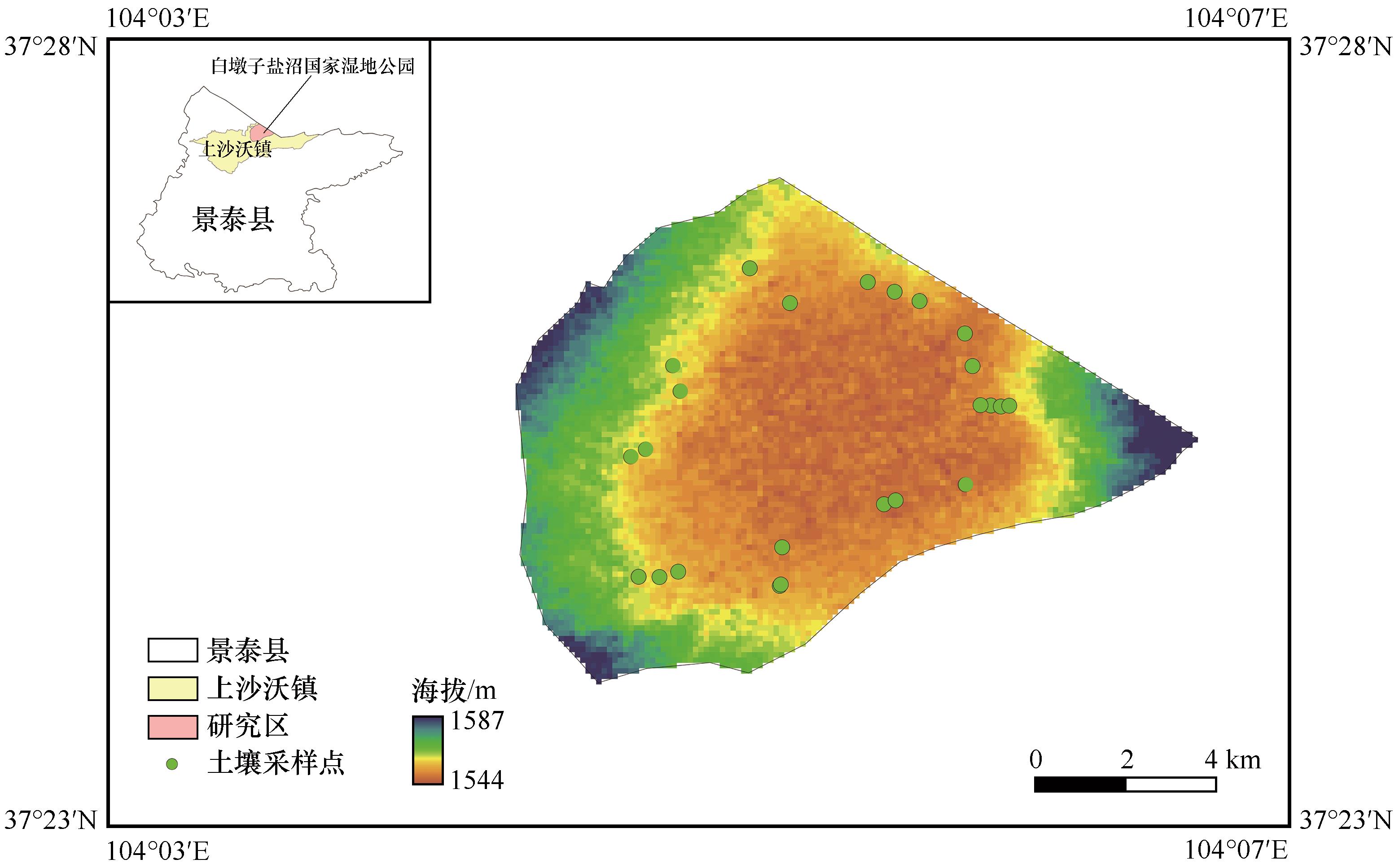
Fig.1 Location of the study area and distribution of sample points
| 群落类型 | 总盖度/% | 密度/(株·m-2) | 地上生物量/(g·m-2) |
|---|---|---|---|
| 芨芨草 | 61.41±5.54e | 16.33±1.73g | 731.56±33.44b |
| 小果白刺 | 75.66±3.25b | 25.61±3.15f | 178.27±11.56e |
| 盐爪爪 | 61.37±5.12e | 137.26±19.86c | 69.46±6.63h |
| 碱蓬 | 81.72±6.91d | 415.65±23.51b | 131.28±15.20g |
| 盐角草 | 86.16±8.20c | 767.41±35.26a | 162.37±11.66f |
| 芦苇 | 70.65±4.31a | 156.40±12.81e | 1 814.38±120.56a |
| 柽柳 | 84.52±4.32bc | 209.52±19.72d | 261.77±28.25d |
| 红砂 | 79.33±3.73a | 22.28±2.34fg | 337.69±14.63c |
Table 1 Community characteristics of different plant types in Baidunzi Salt Marsh National Wetland Park
| 群落类型 | 总盖度/% | 密度/(株·m-2) | 地上生物量/(g·m-2) |
|---|---|---|---|
| 芨芨草 | 61.41±5.54e | 16.33±1.73g | 731.56±33.44b |
| 小果白刺 | 75.66±3.25b | 25.61±3.15f | 178.27±11.56e |
| 盐爪爪 | 61.37±5.12e | 137.26±19.86c | 69.46±6.63h |
| 碱蓬 | 81.72±6.91d | 415.65±23.51b | 131.28±15.20g |
| 盐角草 | 86.16±8.20c | 767.41±35.26a | 162.37±11.66f |
| 芦苇 | 70.65±4.31a | 156.40±12.81e | 1 814.38±120.56a |
| 柽柳 | 84.52±4.32bc | 209.52±19.72d | 261.77±28.25d |
| 红砂 | 79.33±3.73a | 22.28±2.34fg | 337.69±14.63c |
| 植物群落 类型 | pH | 速效钾 /(mg·kg-1) | 铵态氮 /(mg·kg-1) | 有效磷 /(mg·kg-1) | 容重 /(g·cm-3) | 含水量 /% | 孔隙度 /% |
|---|---|---|---|---|---|---|---|
| 芨芨草 | 8.10±0.09d | 212.15±96.05e | 34.23±6.69d | 6.26±1.31h | 1.38±0.02c | 14.33±1.00c | 52.67±3.28b |
| 小果白刺 | 8.67±0.36a | 222.95±63.48d | 34.34±5.68c | 14.15±3.37e | 1.27±0.06e | 12.67±2.50f | 51.67±1.80c |
| 盐爪爪 | 7.93±0.18d | 268.66±24.68b | 32.38±2.18e | 52.95±5.97a | 1.16±0.06f | 13.00±1.73e | 55.67±1.80a |
| 碱蓬 | 8.13±0.05c | 172.40±16.76g | 29.50±2.33g | 11.97±1.39g | 1.61±0.02a | 21.67±2.18a | 49.67±1.32e |
| 盐角草 | 8.13±0.10c | 101.14±9.35h | 28.90±2.60h | 13.77±1.40f | 1.54±0.04b | 20.00±1.73b | 49.00±2.29g |
| 芦苇 | 8.57±0.30b | 263.02±126.82c | 53.21±8.15a | 20.25±3.94d | 1.54±0.06b | 11.67±0.50g | 50.67±1.32d |
| 柽柳 | 8.13±0.36c | 371.23±99.94a | 36.77±9.57b | 47.78±10.25b | 1.38±0.02c | 13.33±0.50d | 55.67±2.78a |
| 红砂 | 8.57±0.22b | 176.59±19.04f | 30.30±5.30f | 27.89±5.86c | 1.37±0.03d | 10.67±0.50h | 49.33±0.50f |
| 平均值 | 8.27 | 223.52 | 34.95 | 24.38 | 1.41 | 14.67 | 51.79 |
| 变异系数 | 0.04 | 0.45 | 0.27 | 0.70 | 0.10 | 0.27 | 0.06 |
Table 2 Differences of soil physical and chemical factors in Baidunzi Salt Marsh National Wetland Park
| 植物群落 类型 | pH | 速效钾 /(mg·kg-1) | 铵态氮 /(mg·kg-1) | 有效磷 /(mg·kg-1) | 容重 /(g·cm-3) | 含水量 /% | 孔隙度 /% |
|---|---|---|---|---|---|---|---|
| 芨芨草 | 8.10±0.09d | 212.15±96.05e | 34.23±6.69d | 6.26±1.31h | 1.38±0.02c | 14.33±1.00c | 52.67±3.28b |
| 小果白刺 | 8.67±0.36a | 222.95±63.48d | 34.34±5.68c | 14.15±3.37e | 1.27±0.06e | 12.67±2.50f | 51.67±1.80c |
| 盐爪爪 | 7.93±0.18d | 268.66±24.68b | 32.38±2.18e | 52.95±5.97a | 1.16±0.06f | 13.00±1.73e | 55.67±1.80a |
| 碱蓬 | 8.13±0.05c | 172.40±16.76g | 29.50±2.33g | 11.97±1.39g | 1.61±0.02a | 21.67±2.18a | 49.67±1.32e |
| 盐角草 | 8.13±0.10c | 101.14±9.35h | 28.90±2.60h | 13.77±1.40f | 1.54±0.04b | 20.00±1.73b | 49.00±2.29g |
| 芦苇 | 8.57±0.30b | 263.02±126.82c | 53.21±8.15a | 20.25±3.94d | 1.54±0.06b | 11.67±0.50g | 50.67±1.32d |
| 柽柳 | 8.13±0.36c | 371.23±99.94a | 36.77±9.57b | 47.78±10.25b | 1.38±0.02c | 13.33±0.50d | 55.67±2.78a |
| 红砂 | 8.57±0.22b | 176.59±19.04f | 30.30±5.30f | 27.89±5.86c | 1.37±0.03d | 10.67±0.50h | 49.33±0.50f |
| 平均值 | 8.27 | 223.52 | 34.95 | 24.38 | 1.41 | 14.67 | 51.79 |
| 变异系数 | 0.04 | 0.45 | 0.27 | 0.70 | 0.10 | 0.27 | 0.06 |
| 指标 | 最小值 /(g·kg-1) | 最大值 /(g·kg-1) | 平均值 /(g·kg-1) | 变异系数CV |
|---|---|---|---|---|
| SOC | 3.19 | 20.14 | 8.20±3.31 | 0.40 |
| TN | 0.32 | 1.89 | 0.96±0.39 | 0.40 |
| TP | 0.04 | 0.87 | 0.21±0.14 | 0.68 |
| TK | 0.15 | 4.48 | 1.85±1.30 | 0.70 |
Table 3 Soil C, N, P and K contents in Baidunzi Salt Marsh Wetland Park ( n=72)
| 指标 | 最小值 /(g·kg-1) | 最大值 /(g·kg-1) | 平均值 /(g·kg-1) | 变异系数CV |
|---|---|---|---|---|
| SOC | 3.19 | 20.14 | 8.20±3.31 | 0.40 |
| TN | 0.32 | 1.89 | 0.96±0.39 | 0.40 |
| TP | 0.04 | 0.87 | 0.21±0.14 | 0.68 |
| TK | 0.15 | 4.48 | 1.85±1.30 | 0.70 |
| 指标 | 最小值 | 最大值 | 平均值 | 变异系数CV |
|---|---|---|---|---|
| C/N | 2.26 | 46.80 | 10.34±7.12 | 0.69 |
| C/P | 11.13 | 189.73 | 52.96±35.99 | 0.68 |
| N/P | 0.72 | 44.11 | 7.54±8.30 | 1.10 |
| N/K | 0.13 | 7.20 | 0.99±1.13 | 1.15 |
Table 4 Soil C/N、C/P、N/P和N/K in Baidunzi Salt Marsh Wetland Park ( n=72)
| 指标 | 最小值 | 最大值 | 平均值 | 变异系数CV |
|---|---|---|---|---|
| C/N | 2.26 | 46.80 | 10.34±7.12 | 0.69 |
| C/P | 11.13 | 189.73 | 52.96±35.99 | 0.68 |
| N/P | 0.72 | 44.11 | 7.54±8.30 | 1.10 |
| N/K | 0.13 | 7.20 | 0.99±1.13 | 1.15 |
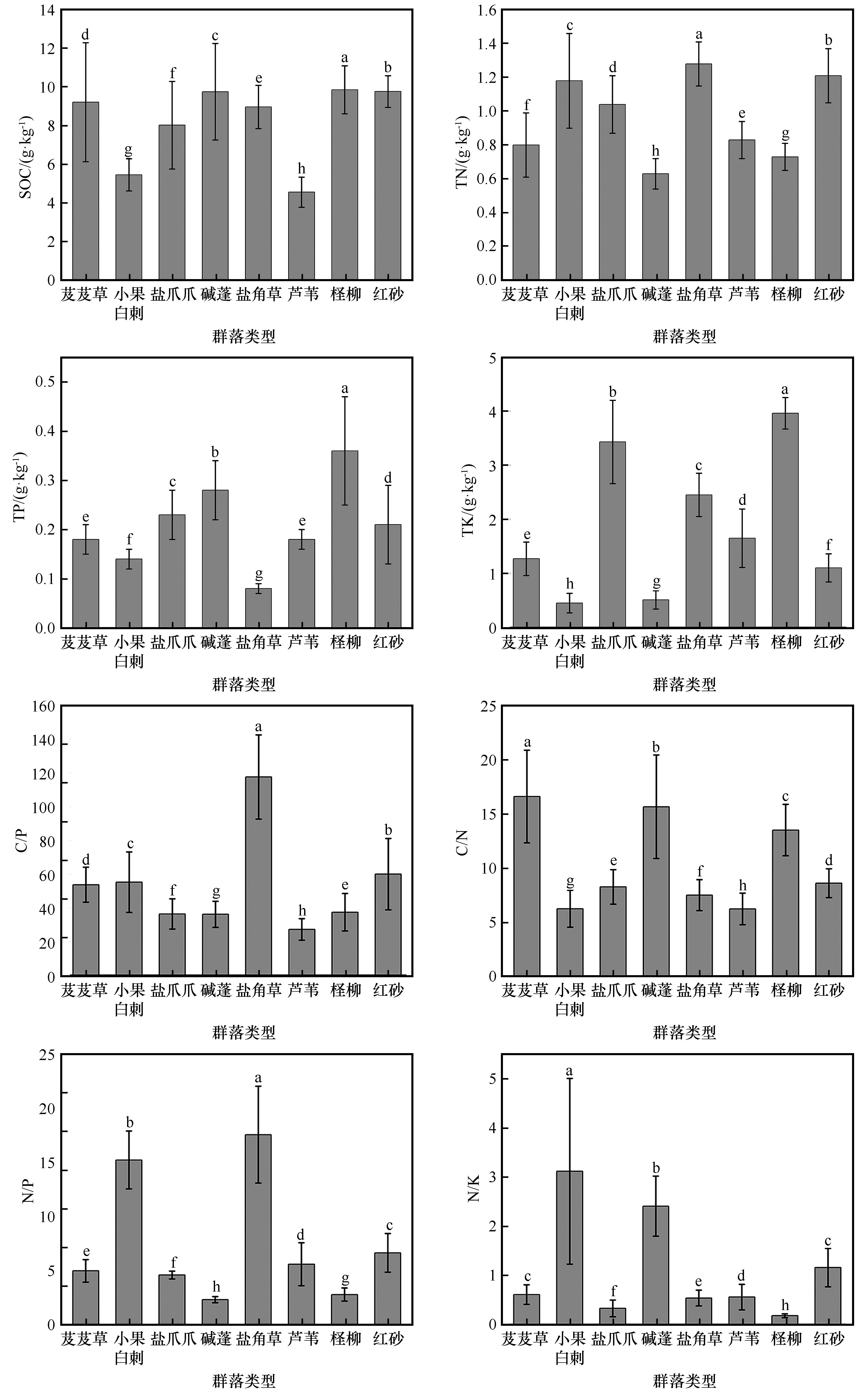
Fig.2 Characteristics of soil SOC, TN, TP, TK contents and their ecological stoichiometry ratios in different phytoecommunies
| SOC | TN | TP | TK | C/N | C/P | N/P | N/K | |
|---|---|---|---|---|---|---|---|---|
| SOC | 1 | 0.96** | 0.84** | 0.16 | 0.72** | 0.56* | -0.11 | -0.21 |
| TN | — | 1 | 0.85** | 0.19 | -0.65** | 0.34** | 0.69** | 0.36** |
| TP | — | — | 1 | 0.10 | 0.28* | -0.56** | -0.53** | -0.15 |
| TK | — | — | — | 1 | -0.03 | 0.02 | -0.10 | -0.60** |
| 地上生物量 | -0.21* | -0.18 | 0.05 | -0.14 | -0.09 | -0.26* | -0.13 | -0.17 |
| 速效钾 | 0.02 | -0.11 | -0.26* | 0.38** | -0.15 | -0.46** | -0.3 | -0.12 |
| 铵态氮 | 0.01 | -0.08 | -0.03 | 0.07 | -0.25* | -0.29* | -0.11 | -0.09 |
| 有效磷 | 0.27* | 0.30* | 0.26* | 0.72** | -0.10 | -0.25* | -0.20 | -0.32** |
| pH | 0.22 | 0.28* | -0.21 | -0.42** | -0.16 | 0.11 | 0.25* | 0.37** |
| 含水量 | -0.23 | -0.29* | -0.26* | -0.12 | 0.22 | 0.36** | 0.17 | -0.01 |
| 容重 | 0.20 | -0.21 | -0.13 | -0.27** | 0.14 | 0.15 | 0.01 | 0.10 |
| 孔隙度 | -0.19 | -0.14 | 0.18 | 0.45** | -0.02 | -0.31** | -0.19 | -0.17 |
Table 5 Correlation analysis between soil stoichiometry characteristics and soil physicochemical factors
| SOC | TN | TP | TK | C/N | C/P | N/P | N/K | |
|---|---|---|---|---|---|---|---|---|
| SOC | 1 | 0.96** | 0.84** | 0.16 | 0.72** | 0.56* | -0.11 | -0.21 |
| TN | — | 1 | 0.85** | 0.19 | -0.65** | 0.34** | 0.69** | 0.36** |
| TP | — | — | 1 | 0.10 | 0.28* | -0.56** | -0.53** | -0.15 |
| TK | — | — | — | 1 | -0.03 | 0.02 | -0.10 | -0.60** |
| 地上生物量 | -0.21* | -0.18 | 0.05 | -0.14 | -0.09 | -0.26* | -0.13 | -0.17 |
| 速效钾 | 0.02 | -0.11 | -0.26* | 0.38** | -0.15 | -0.46** | -0.3 | -0.12 |
| 铵态氮 | 0.01 | -0.08 | -0.03 | 0.07 | -0.25* | -0.29* | -0.11 | -0.09 |
| 有效磷 | 0.27* | 0.30* | 0.26* | 0.72** | -0.10 | -0.25* | -0.20 | -0.32** |
| pH | 0.22 | 0.28* | -0.21 | -0.42** | -0.16 | 0.11 | 0.25* | 0.37** |
| 含水量 | -0.23 | -0.29* | -0.26* | -0.12 | 0.22 | 0.36** | 0.17 | -0.01 |
| 容重 | 0.20 | -0.21 | -0.13 | -0.27** | 0.14 | 0.15 | 0.01 | 0.10 |
| 孔隙度 | -0.19 | -0.14 | 0.18 | 0.45** | -0.02 | -0.31** | -0.19 | -0.17 |
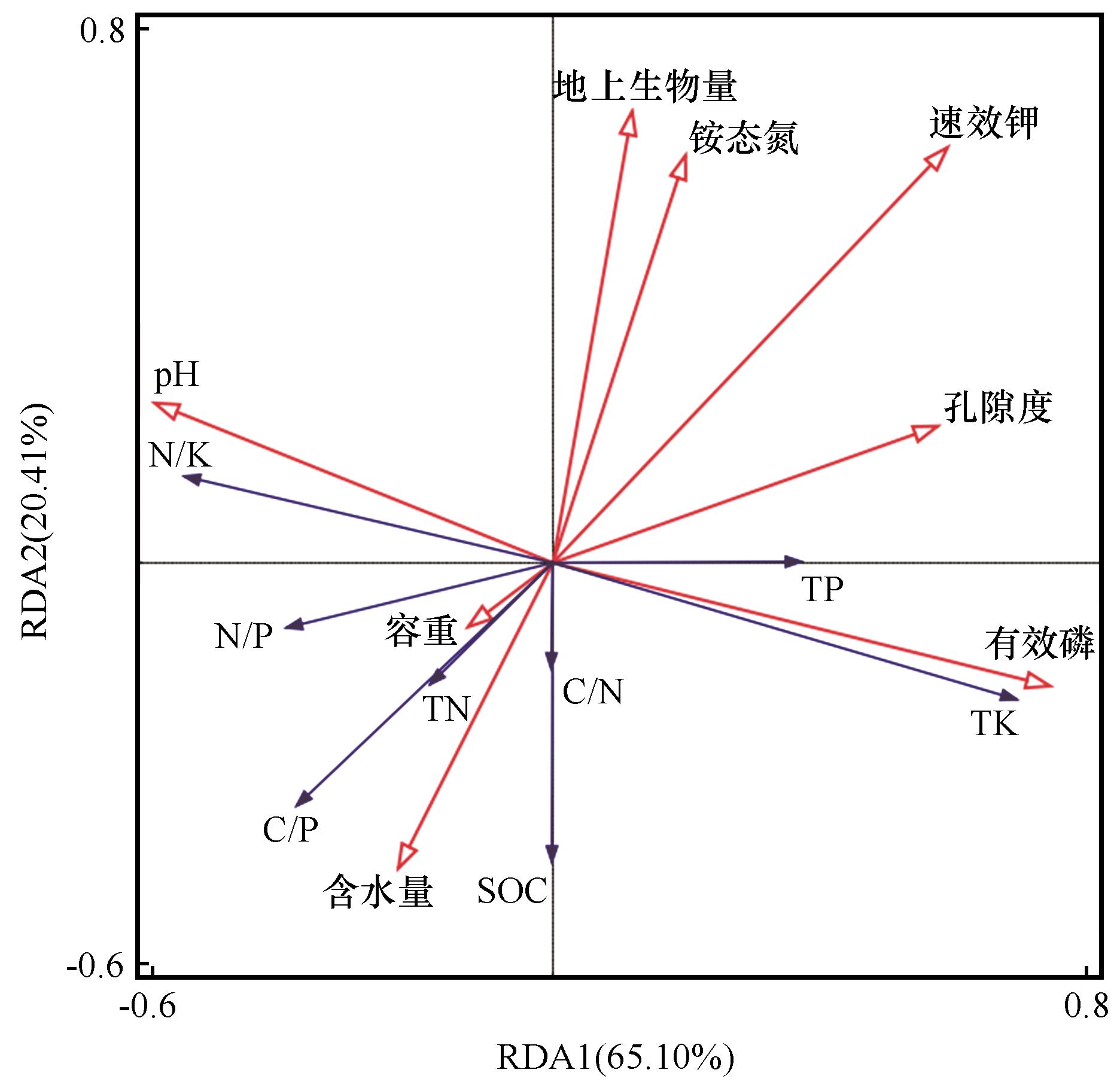
Fig.3 Soil ecological stoichiometry and RDA ranking results of soil physicochemical factors
| 理化因子 | 解释率/% | 贡献率/% | Pseudo-F | P值 |
|---|---|---|---|---|
| 有效磷 | 29.40 | 34.50 | 7.80 | 0.01 |
| pH | 15.20 | 18.60 | 4.70 | 0.01 |
| 地上生物量 | 14.50 | 15.00 | 3.50 | 0.01 |
| 含水量 | 13.60 | 10.50 | 2.50 | 0.05 |
| 速效钾 | 12.50 | 9.70 | 2.50 | 0.05 |
| 容重 | 2.50 | 5.70 | 1.40 | 0.23 |
| 铵态氮 | 0.90 | 4.10 | 1.10 | 0.37 |
| 孔隙度 | 0.50 | 1.90 | 0.50 | 0.75 |
Table 6 Ranking of the importance of soil physical and chemical factors in soil ecological stoichiometry
| 理化因子 | 解释率/% | 贡献率/% | Pseudo-F | P值 |
|---|---|---|---|---|
| 有效磷 | 29.40 | 34.50 | 7.80 | 0.01 |
| pH | 15.20 | 18.60 | 4.70 | 0.01 |
| 地上生物量 | 14.50 | 15.00 | 3.50 | 0.01 |
| 含水量 | 13.60 | 10.50 | 2.50 | 0.05 |
| 速效钾 | 12.50 | 9.70 | 2.50 | 0.05 |
| 容重 | 2.50 | 5.70 | 1.40 | 0.23 |
| 铵态氮 | 0.90 | 4.10 | 1.10 | 0.37 |
| 孔隙度 | 0.50 | 1.90 | 0.50 | 0.75 |
| 1 | Elser J J, Dobberfuhl D R, Mackay N A,et al.Organism size,life history, and N∶P stoichiometry[J].Bioscience,1996,46(9):674-684. |
| 2 | 黄昌勇,徐建明.土壤学[M].北京:中国农业出版社,2010. |
| 3 | 陶冶,刘耀斌,吴甘霖,等.准噶尔荒漠区域尺度浅层土壤化学计量特征及其空间分布格局[J].草业学报,2016,25(7):13-23. |
| 4 | 南富森,李宗省,张小平,等.黄河北岸兰州段丘陵区土壤生态化学计量与空间变异[J].中国沙漠,2022,42(5):167-176. |
| 5 | Zechmeister B S, Keiblinger K M, Mooshammer M,et al.The application of ecological stoichiometry to plant-microbial-soil organic matter transformations[J].Ecological Monographs,2015,85(2):133-155. |
| 6 | 王霖娇,汪攀,盛茂银.西南喀斯特典型石漠化生态系统土壤养分生态化学计量特征及其影响因素[J].生态学报,2018,38(18):6580-6593. |
| 7 | Iost S, Landgraf D, Makeschin F.Chemical soil properties of reclaimed marsh soil from Zhejiang Province PR China[J].Geoderma,2007,142(3/4):245-250. |
| 8 | Schneider T, Keiblinger K M, Schmid E,et al.Who is who in litter decomposition?Metaproteomics reveals major microbial players and their biogeochemical functions[J].Isme Journal,2012,6(9):1749-1762. |
| 9 | 张子琦,焦菊英,陈同德,等.拉萨河流域洪积扇不同植被类型土壤化学计量特征[J].生态学报,2022,42(16):6801-6815. |
| 10 | 向雪梅,德科加,林伟山,等.氮素添加对高寒草甸植物群落多样性和土壤生态化学计量特征的影响[J].草地学报,2021,29(12):2769-2777. |
| 11 | 陈小花,陈宗铸,吴庭天,等.海南岛不同林分植物叶片-土壤生态化学计量特征[J].林业与环境科学,2021,37(5):102-108. |
| 12 | Han W, Fang J, Guo D,et al.Leaf nitrogen and phosphorus stoichiometry across 753 terrestrial plant species in China[J].New Phytologist,2005:168(2):377-385. |
| 13 | Shasha, Luo Q, Gao S,et al.Long-term fertilization and residue return affect soil stoichiometry characteristics and labile soil organic matter fractions[J].Pedosphere,2020,30(5):133-143. |
| 14 | Leal M C, Seehausen O, Matthews B.The ecology and evolution of stoichiometric phenotypes[J].Trends in Ecology & Evolution,2017,32(2):108-117. |
| 15 | 王彬.2009-2014年景泰县沙化土地动态变化及防治对策研究[J].甘肃科技,2019,35(4):1-5. |
| 16 | 马剑,刘贤德,金铭,等.祁连山5种典型灌丛土壤生态化学计量特征[J].西北植物学报,2021,41(8):1391-1400. |
| 17 | Sun J, Gao P, Li C,et al.Ecological stoichiometry characteristics of the leaf-litter-soil continuum of Quercus acutissima Carr. and Pinus densiflora Sieb. in Northern China[J].Environmental Earth Sciences,2019,78(1):20. |
| 18 | 方培,胡海波,王霞,等.不同林龄麻栎人工林土壤生态化学计量特征研究[J].西南林业大学学报(自然科学),2022,42(2):39-47. |
| 19 | Yang Y, Luo Y.Carbon:nitrogen stoichiometry in forest ecosystems during stand development[J].Global Ecology and Biogeography,2011,20(2):354-361. |
| 20 | 李雨薇,王博,包玉海,等.草原风蚀坑发育对土壤生态化学计量的影响[J].中国沙漠,2023,43(5):166-175. |
| 21 | 马飞,徐婷婷,刘吉利,等.不同种源中间锦鸡儿碳氮磷化学计量特征研究[J].西北植物学报,2017,37(7):1381-1389. |
| 22 | 王绍强,于贵瑞.生态系统碳氮磷元素的生态化学计量学特征[J].生态学报,2008,28(8):3937-3947. |
| 23 | 谢锦,常顺利,张毓涛,等.天山北坡植物土壤生态化学计量特征的垂直地带性[J].生态学报,2016,36(14):4363-4372. |
| 24 | 孙雪,龙永丽,刘乐,等.河西走廊中段荒漠绿洲土壤生态化学计量特征[J].环境科学,2023,44(6):3353-3363. |
| 25 | 廖金梅,黄维,李安生,等.氮素对茶树生长及茶园土壤环境的影响研究进展[J].中国农学通报,2023,39(16):82-87. |
| 26 | 杭伟,陆永兴,郭浩,等.西北荒漠区土壤氮素组分沿干旱梯度的空间变化[J].中国沙漠,2024,44(3):259-268. |
| 27 | Yu M F, Tao Y, Liu W,et al.C,N,and P stoichiometry and their interaction with different plant communities and soils in subtropical riparian wetlands[J].Environmental Science and Pollution Research,2020,27(3):1024-1034. |
| 28 | 王凯,齐悦彤,刘建华,等.油松与榆树人工林植物-凋落叶-土壤碳、氮、磷化学计量特征[J].生态学杂志,2022,41(3):427-434. |
| 29 | 李建平,张昊.黄土高原封育草地深层土壤碳氮动态[M].银川:宁夏人民出版社,2021. |
| 30 | 刘姝萱,安慧,张馨文,等.氮磷添加对荒漠草原土壤养分含量及生态化学计量特征的影响[J].环境科学,2023,44(5):2724-2734. |
| 31 | 郑浩浩,易文利,田苗,等.毛乌素沙地南缘不同植被类型生态化学计量特征[J].宝鸡文理学院学报(自然科学版),2022,42(1):74-79. |
| 32 | 王绍强,周成虎,李克让,等.中国土壤有机碳库及空间分布特征分析[J].地理学报,2000,55(5):533-544. |
| 33 | 温晨,杨智姣,杨磊,等.半干旱黄土小流域不同植被类型植物与土壤生态化学计量特征[J].生态学报,2021,41(5):1824-1834. |
| 34 | Chapin F S III, Matson P A, Mooney H A.Principles of Terrestrial Ecosystem Ecology[M].New York,USA: Springer,2002. |
| 35 | 曾全超,李鑫,董扬红,等.陕北黄土高原土壤性质及其生态化学计量的纬度变化特征[J].自然资源学报,2015,30(5):870-879. |
| 36 | 陶冶,张元明,周晓兵.伊犁野果林浅层土壤养分生态化学计量特征及其影响因素[J].应用生态学报,2016,27(7):2239-2248. |
| 37 | Koerselman W, Meuleman A F M.The vegetation N∶P ratio:a new tool to detect the nature of nutrient limitation[J].Journal of Applied Ecology,1996,33(6):1441-1450. |
| 38 | 许尔文,牛赟,赵维俊,等.祁连山北麓青海云杉林天然更新对土壤理化性质的响应[J].中南林业科技大学学报,2024,44(7):90-100. |
| 39 | 王传盈,王凯月,王浩然,等.黄河下游典型湿地土壤养分及其生态化学计量特征[J].环境科学,2024,45(3):1674-1683. |
| 40 | 李培玺,储炳银,滕臻,等.巢湖湖滨带不同植被类型土壤碳氮磷生态化学计量学特征[J].草业科学,2020,37(8):1448-1457. |
| 41 | 庞金凤,张波,王波,等.昆仑山中段北坡不同海拔梯度下土壤生态化学计量学特征[J].干旱区资源与环境,2020,34(1):178-185. |
| 42 | 徐静静.巴音布鲁克天鹅湖高寒湿地土壤微生物群落结构及酶活性特征[D].乌鲁木齐:新疆农业大学,2018. |
| 43 | 高维常,袁玉波,潘首慧,等.贵州烟田不同土壤类型pH和速效钾含量分布特征[J].中国农学通报,2023,39(10):88-94. |
| 44 | 李苏青,管冬兴,李希媛,等.天津滨海湿地土壤有机碳和有效磷的盐度响应及影响因素[J].生态学杂志,2024,43(5):1381-1389. |
| 45 | 冼应男,陈婵,方晰,等.湘中丘陵区4种植被类型土壤全磷、有效磷含量的变异特征[J].中南林业科技大学学报,2019,39(5):79-88. |
| 46 | 纪文婧,程小琴,韩海荣,等.山西太岳山好地方典型植被类型土壤理化特征[J].生态学杂志,2016,35(1):141-148. |
| 47 | Wang X G, Lü X T, Zhang H Y,et al.Changes in soil C∶N∶P stoichiometry along an aridity gradient in drylands of northern China[J].Geoderma,2020,361:114087. |
| 48 | 陈志洲,符兰吟,陈亚芹,等.盐城沿海滩涂湿地不同植物群落对土壤理化性质的影响[J].安徽农业科学,2023,51(19):69-71. |
| [1] | Zhengjiaoyi Wang, Min Chen, Huaihai Wang, Haojiang Bai, Zhaobin Song, Xiaoxue Zhang. Effects of grazing intensities on soil carbon, nitrogen, phosphorus stoichiometric ratiosin andreproductive traits of Reaumuria soongorica [J]. Journal of Desert Research, 2025, 45(2): 119-128. |
| [2] | Ren Mu, Jun Qiao, Guangfu Xu, Jingfu Han, Xiao Yu, Chuijiu Kong, Xinle Li. The effect of graphene addition on the growth of different types of grass and soil nutrients in arid areas [J]. Journal of Desert Research, 2025, 45(2): 155-165. |
| [3] | Haifu Fang, Xiang Chen, Hongling Yang, Li Cheng, Yulin Li. A review of response of nitrous oxide emissions to anthropogenic perturbation in grassland soil [J]. Journal of Desert Research, 2025, 45(2): 184-190. |
| [4] | Xin Hu, Sawut Mamat, Feng Zhang, Jintao Cui, Aimaier Ainiwan, Manlike Asiya. Hyperspectral remote sensing estimation of Fe2O3 content in desert soil based on dandelion-optimized random forest model [J]. Journal of Desert Research, 2025, 45(2): 191-204. |
| [5] | Rui Zhang, Xueyong Zhao, Gang Li, Yalin Wu, Xinping Liu. Review on responses of grassland plant-soil to precipitation and management measures in arid and semi-arid areas of China [J]. Journal of Desert Research, 2025, 45(1): 131-140. |
| [6] | Chang Qin, Jiliang Liu, Jialong Ren, Qihan Yan, Wenzhi Zhao, Jing Fang, Weidong Xin. Short-term response of spiders, mites and springtails to increased rainfall in arid desert ecosystems [J]. Journal of Desert Research, 2025, 45(1): 141-150. |
| [7] | Yuqian Li, Xuyang Wang, Hongdong Lin, Xiaoming Mou, Weiyuan Liu, Jie Lian, Yuqiang Li. Effects of altitude gradient on soil microbial carbon, nitrogen and phosphorus stoichiometric characteristics in Maxian Mountain ecosystem [J]. Journal of Desert Research, 2025, 45(1): 151-161. |
| [8] | Jin Fang, Rentao Liu, Xuan Zhao, Min Yang. Responses of soil meso- and micro-fauna diversity and functional groups to soil texture of oasis farmland in arid region [J]. Journal of Desert Research, 2024, 44(6): 155-166. |
| [9] | Haoyu He, Wei Liu, Zongqiang Chang, Chunmei Hou, Liwei Sun, Xiuli Chi. Effects of revegetation on soil organic carbon composition and stability in the southern edge of the Tengger Desert [J]. Journal of Desert Research, 2024, 44(6): 307-317. |
| [10] | Yu Xing, Benli Liu, Tao Ma, Yimeng Wang. Wind erosion and dust emission in the core area of Hexi Corridor-Taklimakan Desert edge in 2000-2023 [J]. Journal of Desert Research, 2024, 44(6): 330-341. |
| [11] | Ting Ning, Dinghai Zhang, Youyi Zhao, Jing Jiang. Relationship between soil moisture and topography and vegetation in the Tengger Desert [J]. Journal of Desert Research, 2024, 44(5): 133-142. |
| [12] | Heng Ren, Wenzhi Zhao, Rong Yang, Zeyu Du. Pathway and countermeasures to improve agricultural water productivity in oasis of Hexi Corridor [J]. Journal of Desert Research, 2024, 44(5): 217-224. |
| [13] | Jing Zhang, Xiaoan Zuo, Peng Lv. Effects of changes in growing season precipitation regimes on plant community structure, function and aboveground biomass in typical habitats in the Horqin Sandy Land [J]. Journal of Desert Research, 2024, 44(4): 1-13. |
| [14] | Yanan Wang, Wei Feng, Wenbin Yang. Soil microbial community diversity in low-coverage sand-fixing forest belts [J]. Journal of Desert Research, 2024, 44(4): 102-110. |
| [15] | Shuai Wang, Dengke Ma, Zhibin He, Weihao Sun, Jun Du, Rui Li, Wen Wang, Shuping Yang, Shuxuan Zhao. Vegetation diversity and its relationship with soil physical and chemical properties in Hedong Sandy Land, Ningxia [J]. Journal of Desert Research, 2024, 44(4): 202-211. |
| Viewed | ||||||
|
Full text |
|
|||||
|
Abstract |
|
|||||
Address: No. 8, Tianshui Middle Road, Chengguan District, Lanzhou City, Gansu Province, China (Postcode: 730000)
Tel:0931-8267545
Email:caiedit@lzb.ac.cn;desert@lzb.ac.cn
Support:Magtech
