中国沙漠 ›› 2026, Vol. 46 ›› Issue (2): 73-85.DOI: 10.7522/j.issn.1000-694X.2025.00122
郑承翊( ), 贾卓(), 文明星
收稿日期:2025-06-05
修回日期:2025-07-17
出版日期:2026-03-20
发布日期:2026-04-13
通讯作者:
贾卓
作者简介:郑承翊(2000—),男,福建福清人,硕士研究生,研究方向为城市与区域发展转型。E-mail: zhengchy2023@lzu.edu.cn
基金资助:
Chengyi Zheng(), Zhuo Jia(), Mingxing Wen
Received:2025-06-05
Revised:2025-07-17
Online:2026-03-20
Published:2026-04-13
Contact:
Zhuo Jia
摘要:
城乡经济融合与城乡空间融合是城乡融合的重要维度,揭示二者的交互影响是促进城乡融合的科学基础。基于2013—2022年甘肃省面板数据,利用城乡收入关系与城乡景观指数分别刻画城乡经济融合与城乡空间融合的水平,采用面板向量自回归模型、探索性空间数据分析与空间联立方程模型分析二者的交互影响与空间效应。结果表明:(1)城乡经济融合水平和城乡空间融合水平均呈上升趋势,城乡经济融合水平存在西北部引领、中部追赶、东南部滞后的空间格局,城乡空间融合水平存在中心县(市、区)向周边县(市、区)递减的空间格局,高值区主要沿交通轴线分布。(2)城乡经济融合与城乡空间融合存在正向交互影响关系,且城乡经济融合与城乡空间融合均存在正向空间相关性。本县(市、区)城乡经济融合与本县(市、区)城乡空间融合存在正向交互影响,邻县(市、区)城乡经济融合与邻县(市、区)城乡空间融合各自具有正向空间溢出效应,但却存在负向空间交互溢出效应。(3)经济发展水平、政府干预水平、产业结构高级化水平与农业现代化水平促进城乡经济融合,产业集聚水平抑制城乡经济融合。产业结构高级化水平、土地城镇化水平、固定资产投资水平与交通基础设施水平促进城乡空间融合,经济发展水平与政府干预水平抑制城乡空间融合。
中图分类号:
郑承翊, 贾卓, 文明星. 甘肃省城乡经济融合与城乡空间融合的交互影响及空间效应[J]. 中国沙漠, 2026, 46(2): 73-85.
Chengyi Zheng, Zhuo Jia, Mingxing Wen. Interaction effects and spatial effects of urban-rural economic integration and urban-rural spatial integration in Gansu Province[J]. Journal of Desert Research, 2026, 46(2): 73-85.
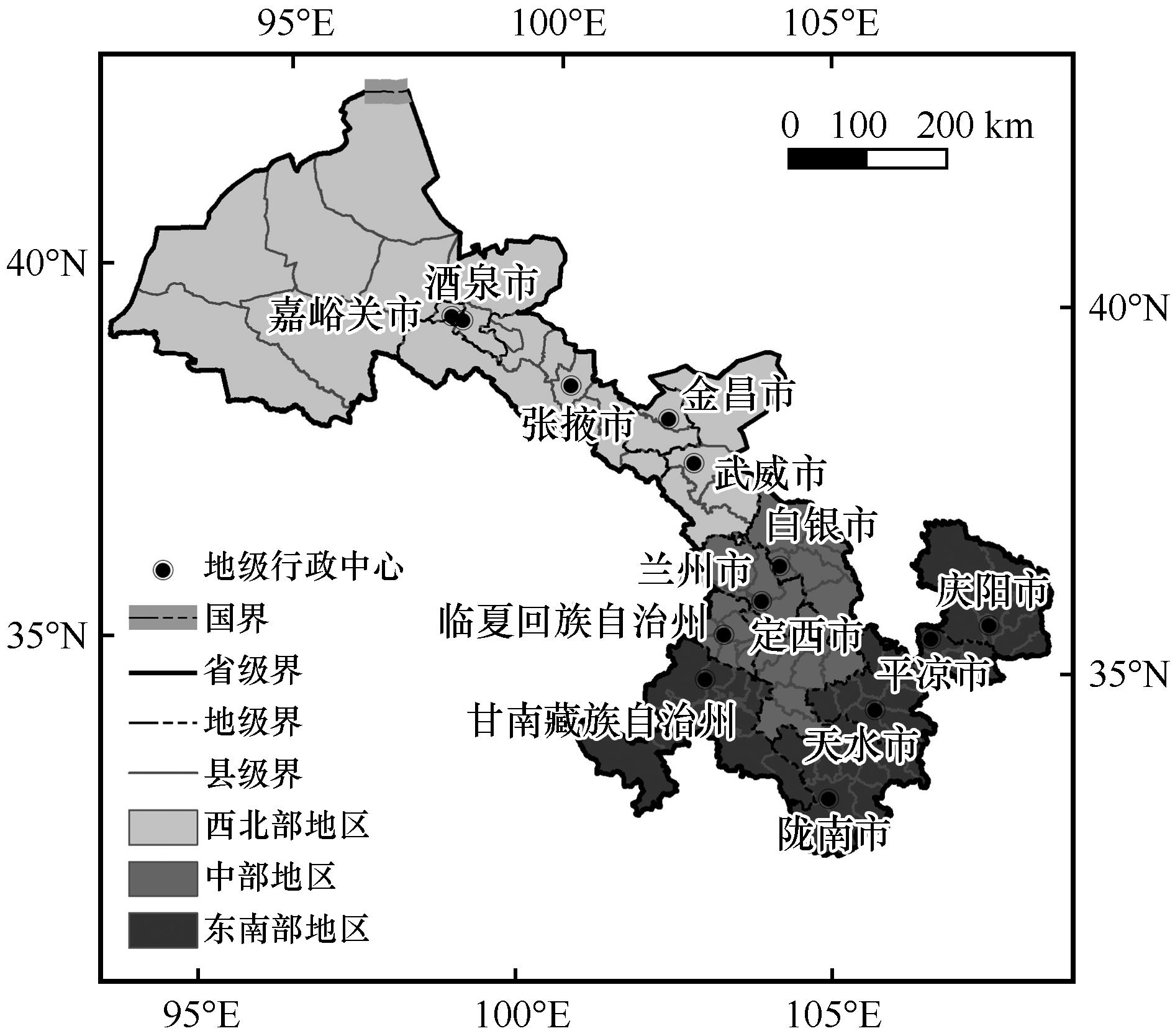
图1 研究区概况注:基于自然资源部标准地图服务网站标准地图(审图号:GS(2019)1822号)制作,底图边界无修改
Fig.1 Study area
| 特征 | 名称 | 计算公式 | 变量说明 | 属性 |
|---|---|---|---|---|
| 扩张特征 | 蔓延度指数 | m为城乡景观中的斑块类型数量,pij 为面积加权的概率值 | 正向 | |
| 连通特征 | 内聚力指数 | A为城乡景观内的斑块总数,pij 为斑块的周长(m),aij 为斑块的面积(m2) | 正向 | |
| 聚散特征 | 聚合度指数 | gii 为城乡景观中所有斑块之间的邻接数,max→gii 为城乡景观中所有斑块之间的最大邻接数,ki 为i类型城乡景观斑块占城乡景观总面积的比例 | 正向 |
表1 城乡景观指数及特征描述
Table 1 Urban-rural landscape indexes and characteristic description
| 特征 | 名称 | 计算公式 | 变量说明 | 属性 |
|---|---|---|---|---|
| 扩张特征 | 蔓延度指数 | m为城乡景观中的斑块类型数量,pij 为面积加权的概率值 | 正向 | |
| 连通特征 | 内聚力指数 | A为城乡景观内的斑块总数,pij 为斑块的周长(m),aij 为斑块的面积(m2) | 正向 | |
| 聚散特征 | 聚合度指数 | gii 为城乡景观中所有斑块之间的邻接数,max→gii 为城乡景观中所有斑块之间的最大邻接数,ki 为i类型城乡景观斑块占城乡景观总面积的比例 | 正向 |
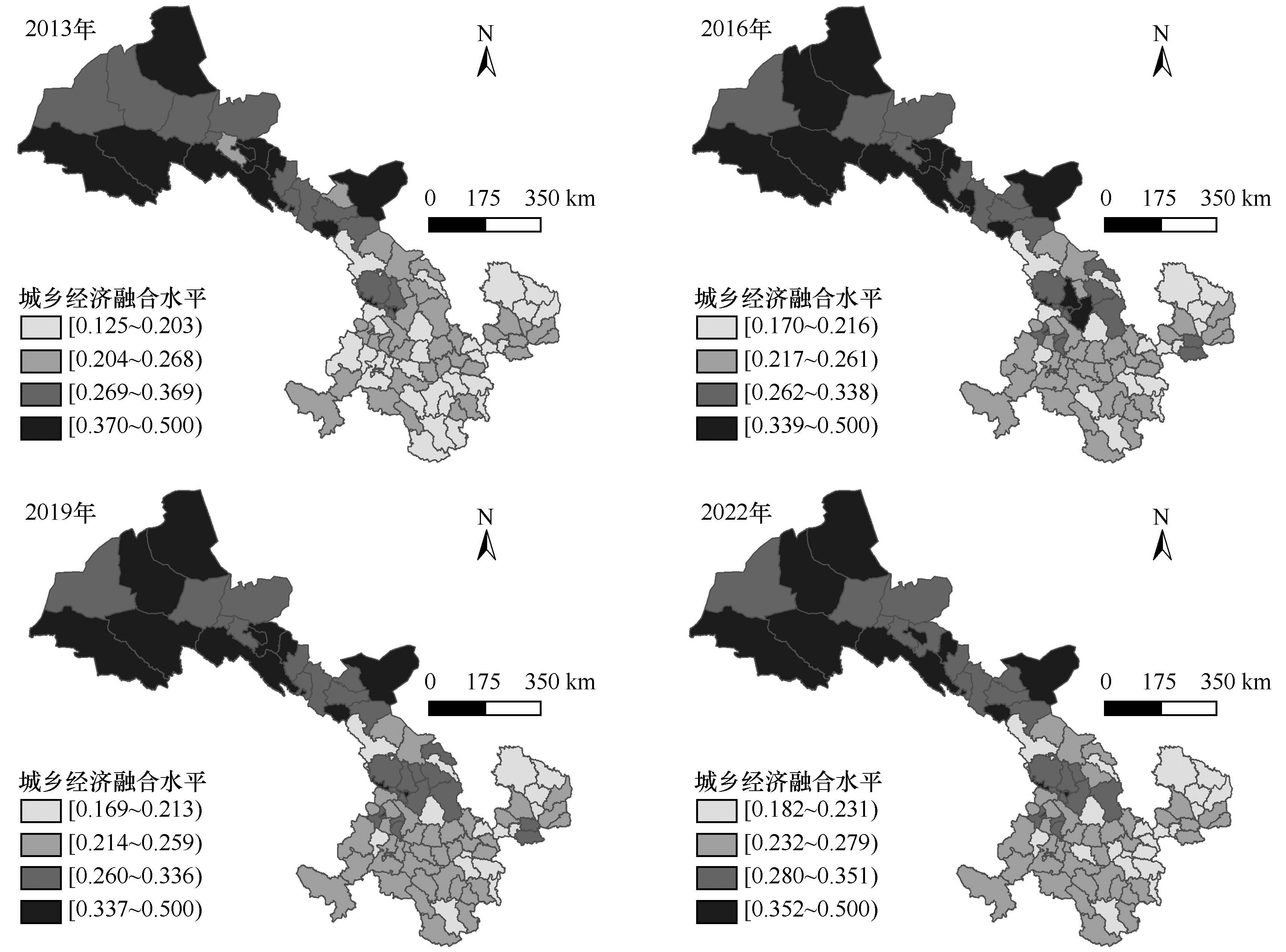
图2 2013—2022年甘肃省城乡经济融合的时空特征注:基于自然资源部标准地图服务网站标准地图(审图号:GS(2019)1822号)制作,底图边界无修改
Fig.2 Spatio-temporal distribution characteristics of urban-rural economic integration in Gansu Province from 2013 to 2022
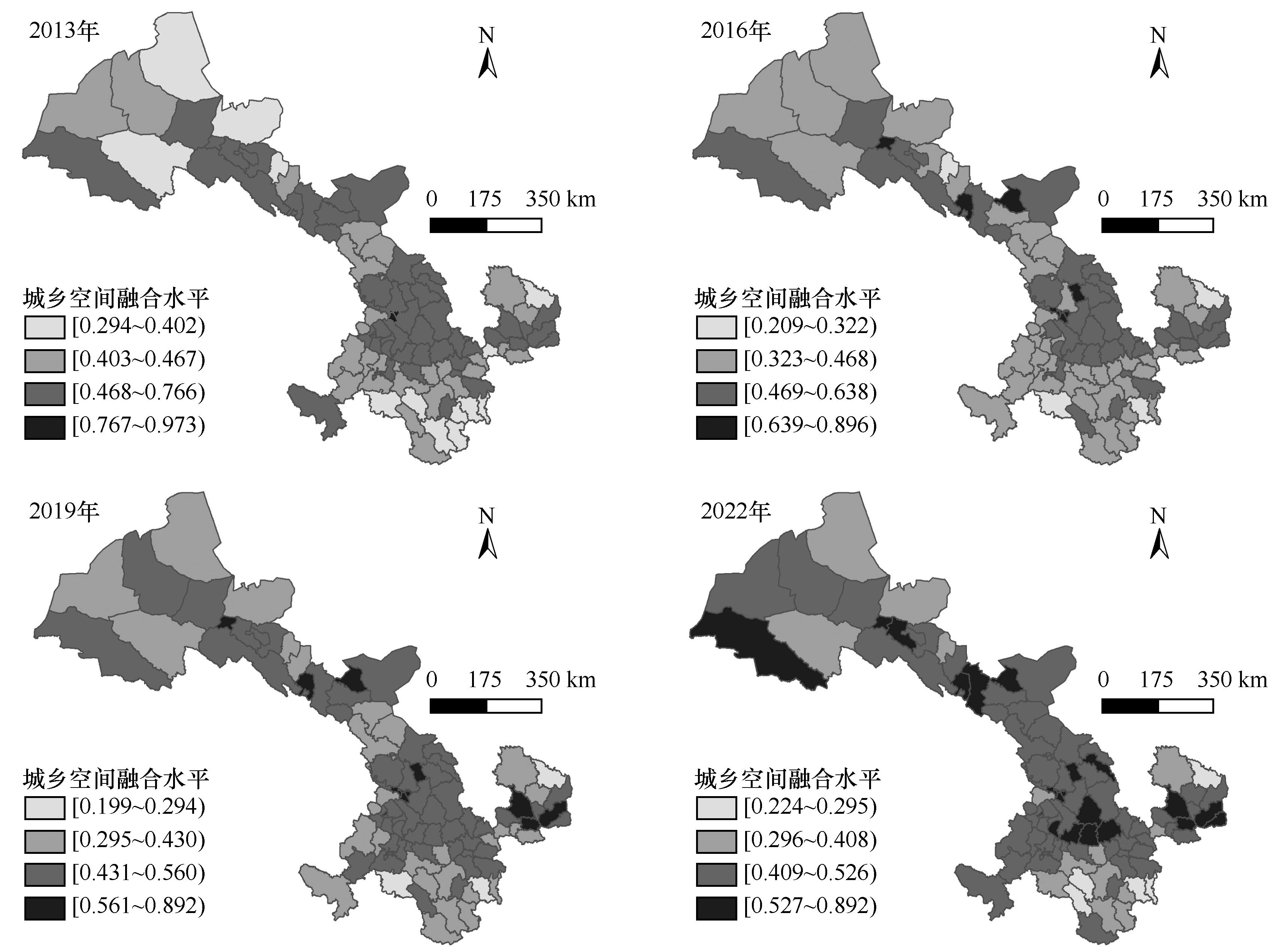
图3 2013—2022年甘肃省城乡空间融合的时空特征注:基于自然资源部标准地图服务网站标准地图(审图号:GS(2019)1822号)制作,底图边界无修改
Fig.3 Spatio-temporal distribution characteristics of urban-rural spatial integration in Gansu Province from 2013 to 2022
| 变量名称 | LLC检验 | IPS检验 | ADF检验 | PPF检验 | 平稳性 |
|---|---|---|---|---|---|
| lnUEI | -43.081*** | -6.641*** | -78.388*** | -35.048*** | 平稳 |
| D(lnUEI) | -60.196*** | -10.199*** | -43.161*** | -19.918*** | 平稳 |
| lnUSI | -20.604*** | -0.720 | -9.782*** | 0.443 | 非平稳 |
| D(lnUSI) | -16.148*** | -8.198*** | -4.187*** | -27.383*** | 平稳 |
表2 城乡经济融合与城乡空间融合的单位根检验
Table 2 Unit root test of urban-rural economic integration and urban-rural spatial integration
| 变量名称 | LLC检验 | IPS检验 | ADF检验 | PPF检验 | 平稳性 |
|---|---|---|---|---|---|
| lnUEI | -43.081*** | -6.641*** | -78.388*** | -35.048*** | 平稳 |
| D(lnUEI) | -60.196*** | -10.199*** | -43.161*** | -19.918*** | 平稳 |
| lnUSI | -20.604*** | -0.720 | -9.782*** | 0.443 | 非平稳 |
| D(lnUSI) | -16.148*** | -8.198*** | -4.187*** | -27.383*** | 平稳 |
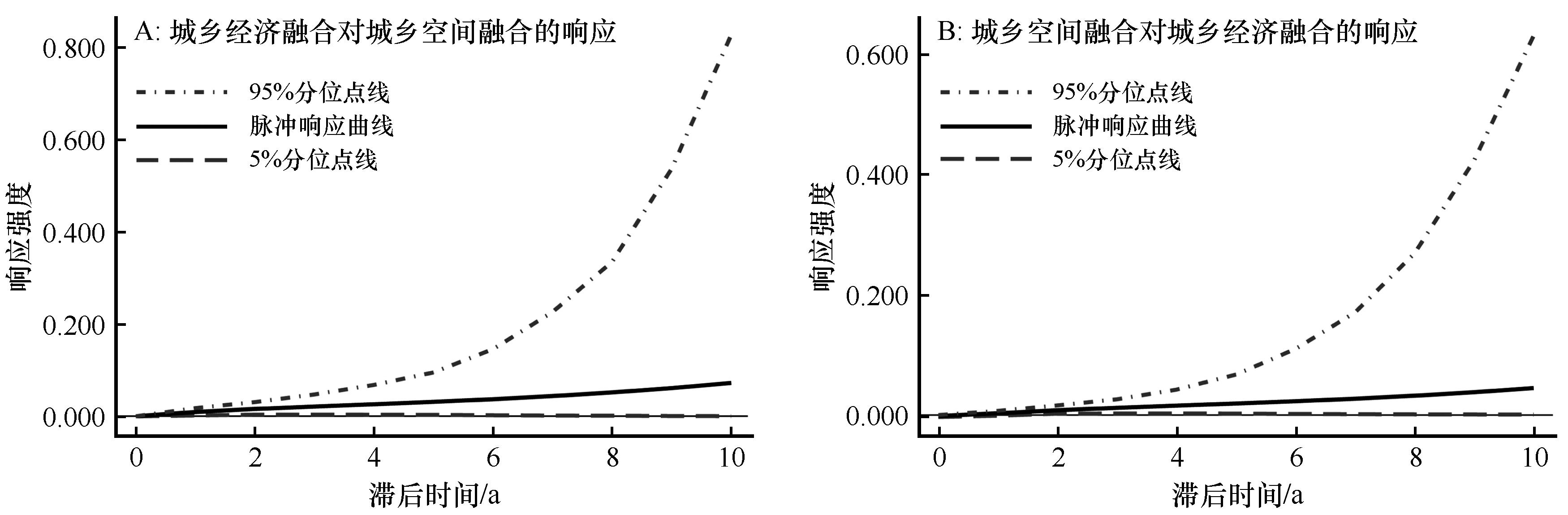
图4 城乡经济融合与城乡空间融合的面板脉冲响应
Fig.4 Panel impulse response of urban-rural economic integration and urban-rural spatial integration
| 年份 | 城乡经济融合 | 城乡空间融合 | ||
|---|---|---|---|---|
| Moran's I | Z值 | Moran's I | Z值 | |
| 2013 | 0.403*** | 8.694 | 0.160*** | 3.786 |
| 2014 | 0.414*** | 8.815 | 0.150*** | 3.568 |
| 2015 | 0.391*** | 8.272 | 0.140*** | 3.369 |
| 2016 | 0.395*** | 8.357 | 0.125*** | 3.048 |
| 2017 | 0.404*** | 8.510 | 0.121*** | 2.948 |
| 2018 | 0.412*** | 8.136 | 0.118*** | 2.903 |
| 2019 | 0.404*** | 8.049 | 0.122*** | 2.995 |
| 2020 | 0.404*** | 8.010 | 0.104*** | 2.574 |
| 2021 | 0.414*** | 8.100 | 0.128*** | 3.112 |
| 2022 | 0.425*** | 8.120 | 0.159*** | 3.706 |
表3 2013—2022年甘肃省城乡经济融合与城乡空间融合的全局Moran's I
Table 3 Global Moran's I of urban-rural economic integration and urban-rural spatial integration in Gansu Province from 2013 to 2022
| 年份 | 城乡经济融合 | 城乡空间融合 | ||
|---|---|---|---|---|
| Moran's I | Z值 | Moran's I | Z值 | |
| 2013 | 0.403*** | 8.694 | 0.160*** | 3.786 |
| 2014 | 0.414*** | 8.815 | 0.150*** | 3.568 |
| 2015 | 0.391*** | 8.272 | 0.140*** | 3.369 |
| 2016 | 0.395*** | 8.357 | 0.125*** | 3.048 |
| 2017 | 0.404*** | 8.510 | 0.121*** | 2.948 |
| 2018 | 0.412*** | 8.136 | 0.118*** | 2.903 |
| 2019 | 0.404*** | 8.049 | 0.122*** | 2.995 |
| 2020 | 0.404*** | 8.010 | 0.104*** | 2.574 |
| 2021 | 0.414*** | 8.100 | 0.128*** | 3.112 |
| 2022 | 0.425*** | 8.120 | 0.159*** | 3.706 |
| 变量 | OLS | GS3SLSAR | ||
|---|---|---|---|---|
| 城乡经济融合方程 | 城乡空间融合方程 | 城乡经济融合方程 | 城乡空间融合方程 | |
| WlnUEI | — | — | 0.028***(4.486) | -0.023***(-3.876) |
| WlnUSI | — | — | -0.026**(-2.206) | 0.022**(1.992) |
| lnUEI | — | 0.193***(6.280) | — | 0.338***(7.209) |
| lnUSI | 0.301***(9.014) | — | 0.485***(10.918) | — |
| lnperGDP | 0.151***(10.805) | -0.058***(-4.349) | 0.168***(12.251) | -0.084***(-5.612) |
| lngov | -0.004(-0.211) | -0.110***(-7.931) | 0.035*(1.815) | -0.112***(-8.159) |
| lnindua | 0.052***(5.632) | 0.024***(2.606) | 0.035***(3.723) | 0.023***(2.533) |
| lnagg | -0.032***(-4.700) | — | -0.036***(-5.192) | — |
| lnmag | 0.082***(8.587) | — | 0.075***(8.137) | — |
| lnjl | 0.004(0.792) | — | 0.004(0.664) | — |
| lntd | — | 0.053***(8.849) | — | 0.051***(8.670) |
| lnfai | — | 0.032**(2.445) | — | 0.023*(1.802) |
| lnlw | — | 0.022***(2.829) | — | 0.020***(2.677) |
| 常数项 | -2.565 | 0.239 | -2.451 | 0.617 |
| 样本量 | 870 | 870 | 870 | 870 |
| R2 | 0.410 | 0.411 | 0.982 | 0.943 |
表4 城乡经济融合与城乡空间融合的OLS和GS3SLSAR估计结果
Table 4 OLS and GS3SLSAR estimation results of urban-rural economic integration and urban-rural spatial integration
| 变量 | OLS | GS3SLSAR | ||
|---|---|---|---|---|
| 城乡经济融合方程 | 城乡空间融合方程 | 城乡经济融合方程 | 城乡空间融合方程 | |
| WlnUEI | — | — | 0.028***(4.486) | -0.023***(-3.876) |
| WlnUSI | — | — | -0.026**(-2.206) | 0.022**(1.992) |
| lnUEI | — | 0.193***(6.280) | — | 0.338***(7.209) |
| lnUSI | 0.301***(9.014) | — | 0.485***(10.918) | — |
| lnperGDP | 0.151***(10.805) | -0.058***(-4.349) | 0.168***(12.251) | -0.084***(-5.612) |
| lngov | -0.004(-0.211) | -0.110***(-7.931) | 0.035*(1.815) | -0.112***(-8.159) |
| lnindua | 0.052***(5.632) | 0.024***(2.606) | 0.035***(3.723) | 0.023***(2.533) |
| lnagg | -0.032***(-4.700) | — | -0.036***(-5.192) | — |
| lnmag | 0.082***(8.587) | — | 0.075***(8.137) | — |
| lnjl | 0.004(0.792) | — | 0.004(0.664) | — |
| lntd | — | 0.053***(8.849) | — | 0.051***(8.670) |
| lnfai | — | 0.032**(2.445) | — | 0.023*(1.802) |
| lnlw | — | 0.022***(2.829) | — | 0.020***(2.677) |
| 常数项 | -2.565 | 0.239 | -2.451 | 0.617 |
| 样本量 | 870 | 870 | 870 | 870 |
| R2 | 0.410 | 0.411 | 0.982 | 0.943 |
| 变量 | 经济距离空间权重矩阵 | 缩短样本时间 | ||
|---|---|---|---|---|
| 城乡经济融合方程 | 城乡空间融合方程 | 城乡经济融合方程 | 城乡空间融合方程 | |
| WlnUEI | 1.107***(30.452) | -0.731***(-8.514) | 0.035***(4.858) | -0.025***(-3.668) |
| WlnUSI | -0.271***(-4.031) | 0.543***(7.266) | -0.038***(-2.706) | 0.028**(2.148) |
| lnUEI | — | 0.728***(10.863) | — | 0.245***(4.825) |
| lnUSI | 0.450***(10.873) | — | 0.408***(7.799) | — |
| 控制变量 | 控制 | 控制 | 控制 | 控制 |
| 常数项 | 0.060 | 0.155 | -2.760 | 0.479 |
| 样本量 | 609 | 609 | 609 | 609 |
| R2 | 0.995 | 0.954 | 0.985 | 0.946 |
表5 城乡经济融合与城乡空间融合的空间联立方程稳健性回归结果
Table 5 The robustness regression results of spatial simultaneous equations of urban-rural economic integration and urban-rural spatial integration
| 变量 | 经济距离空间权重矩阵 | 缩短样本时间 | ||
|---|---|---|---|---|
| 城乡经济融合方程 | 城乡空间融合方程 | 城乡经济融合方程 | 城乡空间融合方程 | |
| WlnUEI | 1.107***(30.452) | -0.731***(-8.514) | 0.035***(4.858) | -0.025***(-3.668) |
| WlnUSI | -0.271***(-4.031) | 0.543***(7.266) | -0.038***(-2.706) | 0.028**(2.148) |
| lnUEI | — | 0.728***(10.863) | — | 0.245***(4.825) |
| lnUSI | 0.450***(10.873) | — | 0.408***(7.799) | — |
| 控制变量 | 控制 | 控制 | 控制 | 控制 |
| 常数项 | 0.060 | 0.155 | -2.760 | 0.479 |
| 样本量 | 609 | 609 | 609 | 609 |
| R2 | 0.995 | 0.954 | 0.985 | 0.946 |
| [1] | 王凯,刘美伦,谭佳欣,等.武陵山片区旅游经济空间关联网络的城乡融合效应[J].地理科学进展,2024,43(2):246-261. |
| [2] | 唐常春,卢幸芷,雷钧钧,等.大城市边缘区城乡多维空间冲突特征与形成机制:以韶关市转溪村为例[J].经济地理,2022,42(1):79-89. |
| [3] | 程东亚,张小林,李红波,等.城乡视角下地形多尺度分异与融合[J].地理学报,2025,80(2):304-323. |
| [4] | 李雯骐,张立,张尚武.中国城乡融合研究的议题、评述及展望[J].城市规划学刊,2022(6):36-43. |
| [5] | 尹君锋,石培基,黄万状,等.甘肃省县域乡村振兴与新型城镇化耦合协调发展的时空分异特征及影响因素[J].自然资源学报,2023,38(8):2148-2168. |
| [6] | Ma L B, Liu S C, Fang F,et al.Evaluation of urban-rural difference and integration based on quality of life[J].Sustainable Cities and Society,2020,54:101877. |
| [7] | 潘晔.城乡关系研究的演变逻辑与评析[J].经济问题,2020(4):77-85. |
| [8] | Wang Y, Lu Y Q, Zhu Y M.Can the integration between urban and rural areas be realized?a new theoretical analytical framework[J].Journal of Geographical Sciences,2024,34(1):3-24. |
| [9] | Chen K Q, Long H L, Liao L W,et al.Land use transitions and urban-rural integrated development:theoretical framework and China's evidence[J].Land Use Policy,2020,92:104465. |
| [10] | 刘荣增,黄月霞,何春.城乡高质量融合发展影响土地利用效率的作用机制与实证检验[J].城市发展研究,2021,28(12):128-136. |
| [11] | 孟贵,王开泳,王甫园,等.长江经济带市域数字经济与城乡融合发展耦合协调格局及其作用机制[J].经济地理,2024,44(11):73-83. |
| [12] | 谢智敏,甄峰.基于多源数据的南京市域城乡融合水平测度研究[J].地理科学,2023,43(1):1-10. |
| [13] | 葛语思,杨忍,战歌,等.城乡互动视角下都市边缘区乡村空间转型的资本介入机制:以广州港头村为例[J].地理科学进展,2024,43(3):458-473. |
| [14] | 方创琳.城乡融合发展机理与演进规律的理论解析[J].地理学报,2022,77(4):759-776. |
| [15] | 杨一鸣,王健,吴群.中国城乡实体要素流动对城乡融合发展的影响机制研究[J].地理科学进展,2022,41(12):2191-2202. |
| [16] | 马志飞,宋伟轩,王捷凯,等.长三角地区城乡融合发展水平、演化及影响因素[J].自然资源学报,2022,37(6):1467-1480. |
| [17] | 高杨,杨洋,吴振磊.中国城乡融合和区域协调发展联动的时空分异与形成机理[J].财经问题研究,2025(1):114-129. |
| [18] | 于雪霞,周国华,吴国华,等.中国中部农区城乡融合发展的时空特征及驱动机制[J].地理研究,2025,44(2):400-418. |
| [19] | He Y H, Wen C B, Fang X N,et al.Impacts of urban-rural integration on landscape patterns and their implications for landscape sustainability:the case of Changsha,China[J].Landscape Ecology,2024,39(7):129. |
| [20] | 朱媛媛,罗源,王优聪,等.城乡要素交互作用下乡村公共文化空间的演变及机制研究:以河南舞阳县柴庄村为例[J].地理科学,2023,43(5):847-859. |
| [21] | Zhou M, Lyu H Y.Intensifying separation or collaborative prosperity?the impact of The Belt and Road Initiative on China's urban-rural integration development from a spatial justice lens[J].Habitat International,2025,156:103249. |
| [22] | 林聚任.新城乡空间重构与城乡融合发展[J].山东大学学报(哲学社会科学版),2022(1):72-81. |
| [23] | 米梓溪,周韬.乡村振兴战略下我国城乡空间结构变迁及一体化组织机制[J].城市发展研究,2022,29(3):63-69. |
| [24] | Zeng C, Song Y, He Q S,et al.Urban-rural income change:influences of landscape pattern and administrative spatial spillover effect[J].Applied Geography,2018,97:248-262. |
| [25] | 邹秀清,葛天越,孙学成,等.城乡收入差距、消费差异与碳排放效率:以京津冀地区为例[J].软科学,2023,37(7):104-110. |
| [26] | 周佳宁,毕雪昊,邹伟.“流空间”视域下淮海经济区城乡融合发展驱动机制[J].自然资源学报,2020,35(8):1881-1896. |
| [27] | 方创琳,廖霞,孙彪.中国城乡融合发展的实践模式与实施成效解析[J].经济地理,2024,44(9):1-11. |
| [28] | 刘瑜,姚欣,龚咏喜,等.大数据时代的空间交互分析方法和应用再论[J].地理学报,2020,75(7):1523-1538. |
| [29] | Kim D, Marcouiller D W.The role of public lands in local economies of the US Lake States:a spatial simultaneous equation approach[J].Land Use Policy,2021,100:104883. |
| [30] | 胡雪瑶,张子龙,陈兴鹏,等.县域经济发展时空差异和影响因素的地理探测:以甘肃省为例[J].地理研究,2019,38(4):772-783. |
| [31] | Niu K Z, Xu H Z.Urban-rural integration and poverty:different roles of urban-rural integration in reducing rural and urban poverty in China[J].Social Indicators Research,2023,165(3):737-757. |
| [32] | Pan W, Wang J, Li Y R,et al.Spatial pattern of urban-rural integration in China and the impact of geography[J].Geography and Sustainability,2023,4(4):404-413. |
| [33] | 郭冬梅,陈斌开,吴楠.城乡融合的收入和福利效应研究:基于要素配置的视角[J].管理世界,2023,39(11):22-46. |
| [34] | Dou R R, Zhu B R, Chen W,et al.How does townships' economic landscape affect urban-rural income inequality in China?[J].Socio-Economic Planning Sciences,2025,98:102150. |
| [35] | Lu H Y, Zhao P J, Hu H Y,et al.Transport infrastructure and urban-rural income disparity:a municipal-level analysis in China[J].Journal of Transport Geography,2022,99:103292. |
| [36] | Niu B, Ge D Z, Sun J W,et al.Multi-scales urban-rural integrated development and land-use transition:the story of China[J].Habitat International,2023,132:102744. |
| [37] | Balta S, Atik M.Rural planning guidelines for urban-rural transition zones as a tool for the protection of rural landscape characters and retaining urban sprawl:antalya case from Mediterranean[J].Land Use Policy,2022,119:106144. |
| [38] | 车冰清,朱传耿,仇方道.淮海经济区城乡空间融合格局及形成机制[J].自然资源学报,2020,35(8):1897-1907. |
| [39] | Chen Z Q, Yu S Y, You X J,et al.New nighttime light landscape metrics for analyzing urban-rural differentiation in economic development at township:a case study of Fujian Province,China[J].Applied Geography,2023,150:102841. |
| [40] | Chen S S, Wu S J, Ma M H.Ecological restoration programs reduced forest fragmentation by stimulating forest expansion[J].Ecological Indicators,2023,154:110855. |
| [41] | Zhou Z C, Xu S, Wang J,et al.Spatiotemporal impacts of urban structure and socioeconomic factors on carbon dioxide fmissions:a case study of the Yangtze River delta urban agglomeration[J].Ecosystem Health and Sustainability,2025,11:0290. |
| [42] | Cao H, Li P X, Chen J L,et al.Spatiotemporal evolution of the rural-urban interface and its effects on ecological landscape structure and function:a case study of Nanjing,China[J].Ecological Indicators,2024,166:112267. |
| [43] | Abdollahi S, Ildoromi A, Salmanmahini A,et al.Quantifying the relationship between landscape patterns and ecosystem services along the urban-rural gradient[J].Landscape and Ecological Engineering,2023,19(3):531-547. |
| [44] | Wang X J, Wang D Y, Lu J X,et al.Identifying and tracking the urban-rural fringe evolution in the urban-rural transformation period:evidence from a rapidly urbanized rust belt city in China[J].Ecological Indicators,2023,146:109856. |
| [45] | 陈麒.西宁都市圈城乡空间融合格局、形成机制及其优化路径[D].兰州:兰州大学,2024. |
| [46] | 薄文广,钱镱,屈建成,等.新型城镇化与乡村振兴耦合协调及交互影响研究:基于156个地级市面板数据的实证分析[J].中国软科学,2023(9):106-116. |
| [47] | 顾爽,刘进进.政府推动型城镇化改革与县域城乡融合发展:来自撤县设市的经验证据[J].农业经济问题,2025(3):62-78. |
| [48] | Amba M C O, Mbratana T, Le Gallo J.Spatial panel simultaneous equations models with error components[J].Empirical Economics,2023,65(3):1149-1196. |
| [49] | 贾卓,杨永春,赵锦瑶,等.黄河流域兰西城市群工业集聚与污染集聚的空间交互影响[J].地理研究,2021,40(10):2897-2913. |
| [50] | 谢磊,何仁伟,史文涛,等.黄河流域城乡融合发展时空演变和动力机制[J].中国沙漠,2022,42(3):31-40. |
| [51] | 杨洋美娜,张郁,高慧影,等.东北三省城乡结构演变及其经济增长效应[J].地理科学,2023,43(4):658-667. |
| [52] | 王武林,罗婉璐,周伟健.福建省县域城乡融合时空演变与跃迁机制[J].人文地理,2025,40(1):113-123. |
| [53] | 郑黎阳,王瑜.县域产业结构优化能缩小城乡收入差距吗?:基于内蒙古县域数据的实证检验[J].干旱区资源与环境,2024,38(11):44-51. |
| [54] | 李靖,廖和平,刘愿理,等.四川省新型城镇化与城乡收入差距时空演化及关联性分析[J].地理科学进展,2023,42(4):657-669. |
| [55] | 曾佳丽,苏维词,李青松.三峡重庆库区城乡融合发展的时空格局及影响因素分析[J].地域研究与开发,2022,41(5):32-38. |
| [56] | 杨吉鑫,崔许锋,张光宏.长江中游城市群城乡融合与碳排放耦合协调时空演化及影响因素[J].长江流域资源与环境,2024,33(11):2474-2487. |
| [57] | 崔建军,赵丹玉.数字普惠金融能够促进城乡融合发展吗?:基于门槛效应模型的实证检验[J].经济问题探索,2023(3):79-96. |
| [58] | 徐雪,王永瑜.甘肃省新型城镇化与乡村振兴协调水平及其影响因素[J].中国沙漠,2022,42(5):1-13. |
| [59] | 仝德,任一帆,邱君丽,等.深圳城中村私宅租金与统租改造选址的空间交互影响[J].地理研究,2024,43(1):136-148. |
| [60] | 周颖,郑文升,王晓芳.城镇层级与人口流动交互下的武汉城市圈经济效能分析[J].地理科学进展,2025,44(1):64-76. |
| [61] | 谭佳欣,王凯.武陵山区旅游化对城乡融合发展的影响机制研究[J].自然资源学报,2025,40(4):1048-1067. |
| [62] | 彭文斌,苏欣怡,邝嫦娥,等.长株潭都市圈数字经济对碳排放效率的影响及空间效应[J].地理学报,2024,79(11):2915-2928. |
| [1] | 李晓鹏, 李康, 李贺. 甘肃省干旱演变特征及主导因子[J]. 中国沙漠, 2025, 45(6): 103-112. |
| [2] | 庞卫华, 魏斌, 陈彦芳, 张文斌. 甘肃省乡村振兴组态路径和发展模式[J]. 中国沙漠, 2024, 44(4): 293-301. |
| [3] | 康小虎, 李琳, 孙超, 刘鹄. 基于GRACE与GLDAS数据的黄河流域甘肃段地下水可持续性研究[J]. 中国沙漠, 2024, 44(2): 196-206. |
| [4] | 丁宁, 陈瑜, 李广, 张玉英, 赵云霞. 规模化防沙治沙试点项目农户满意度及其影响因素[J]. 中国沙漠, 2024, 44(1): 244-253. |
| [5] | 路建兵, 鞠珂, 廖伟斌. 2000—2020年甘肃省植被覆盖特征及其对气候变化和人类活动的响应[J]. 中国沙漠, 2023, 43(4): 118-127. |
| [6] | 徐绮阳, 王永瑜, 杨燕燕. 基于优化模型的甘肃省生态系统服务价值时空评估[J]. 中国沙漠, 2023, 43(2): 53-64. |
| [7] | 孙国军, 方昤璇, 刘海军. 甘肃省文化产业发展时空特征及影响因素[J]. 中国沙漠, 2023, 43(1): 75-82. |
| [8] | 李意霞, 张学斌, 罗君, 尹君锋, 雷越, 王梓洋, 姚礼堂, 李雪红. 甘肃省县域乡村功能地域分异特征[J]. 中国沙漠, 2023, 43(1): 96-106. |
| [9] | 张美兰, 崔增团, 顿志恒, 贾蕊鸿, 张玉霞, 郭世乾, 崔倩怡, 葛承暄, 蔡立群, 董博. 近40年甘肃省耕层土壤有机碳时空分异及影响因素[J]. 中国沙漠, 2022, 42(6): 295-303. |
| [10] | 吴翠霞, 冯永忠, 赵浩, 包琼, 雷元奇, 冯洁. 基于土地利用变化的甘肃省黄河流域生态系统服务价值研究[J]. 中国沙漠, 2022, 42(6): 304-316. |
| [11] | 尹君锋, 石培基. 甘肃省县域乡村振兴发展评估与空间格局分异[J]. 中国沙漠, 2022, 42(5): 158-166. |
| [12] | 孙曼, 宋涛. 甘肃省黄河流域科技创新与产业发展时空格局及协同发展模式[J]. 中国沙漠, 2021, 41(4): 140-151. |
| [13] | 董莹, 华中, 陆志翔, 许宝荣, 邹松兵. 面向低碳转型的甘肃省地区聚类分析[J]. 中国沙漠, 2020, 40(5): 25-31. |
| [14] | 曹博, 张勃, 马彬, 王国强, 唐敏, 张耀宗, 贾艳青. 2000-2014年甘肃省NDVI时空变化特征[J]. 中国沙漠, 2018, 38(2): 418-427. |
| [15] | 王素萍, 李耀辉, 冯建英, 王劲松, 王静. 1961—2012年甘肃省干湿变化特征及其影响因子[J]. 中国沙漠, 2014, 34(6): 1624-1632. |
| 阅读次数 | ||||||
|
全文 |
|
|||||
|
摘要 |
|
|||||
©2018中国沙漠 编辑部
地址: 兰州市天水中路8号 (730000)
电话:0931-8267545
Email:caiedit@lzb.ac.cn;desert@lzb.ac.cn


 甘公网安备 62010202000688号