
- CN 62-1070/P
- ISSN 1000-694X
- Bimonthly 1981
Journal of Desert Research ›› 2026, Vol. 46 ›› Issue (1): 50-62.DOI: 10.7522/j.issn.1000-694X.2025.00311
Previous Articles Next Articles
Haoqi Ren1,2( ), Rong Yang1(), Tong Li2()
Received:2025-11-23
Revised:2025-12-16
Online:2026-01-20
Published:2026-03-09
Contact:
Rong Yang, Tong Li
CLC Number:
Haoqi Ren, Rong Yang, Tong Li. Effects of farmland management practices on soil carbon sequestration in the arid region of Northwest China: a meta-analysis[J]. Journal of Desert Research, 2026, 46(1): 50-62.
Add to citation manager EndNote|Ris|BibTeX
URL: http://www.desert.ac.cn/EN/10.7522/j.issn.1000-694X.2025.00311
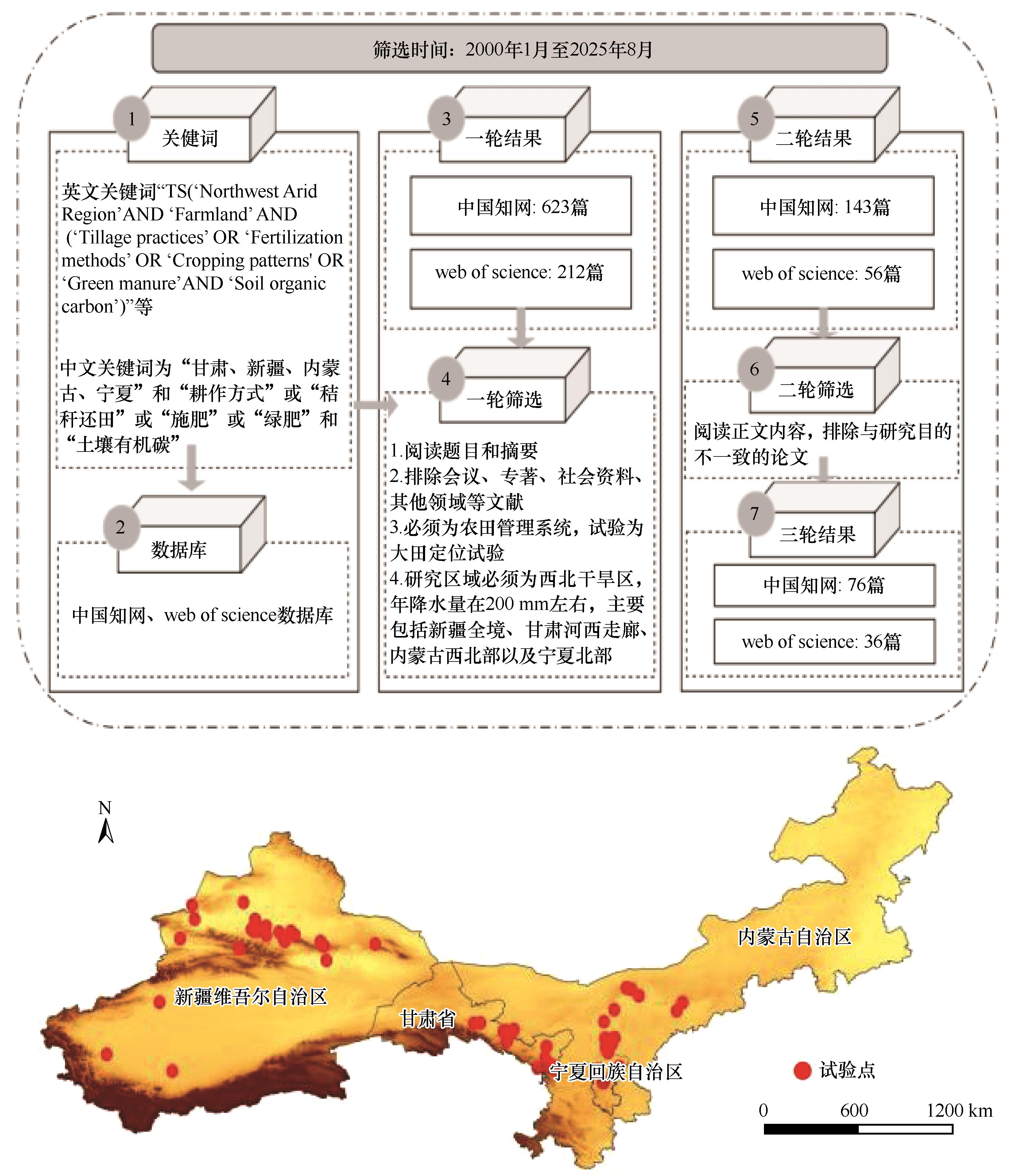
Fig.1 Distribution of experimental sites for the meta-analysis
| 亚组类型 | 具体分类指标 | 分类梯度 |
|---|---|---|
| 绿肥品种 | 主要种植品种 | 箭筈豌豆、大豆、毛叶苕子 |
| 作物类型 | 主栽农作物 | 棉花、玉米、小麦 |
| 土壤类型 | 耕作层土壤类型 | 灰漠土、灌漠土、其他(灰钙土、灌淤土等) |
| 试验年限 | 田间定位试验持续时间 | <5 a、5~10 a、>10 a |
| 年降水量 | 试验区域年均降水量 | <60 mm、60~120 mm、120~180 mm、>180 mm |
| 海拔 | 试验样点海拔 | <500 m、500~1 000 m、1 000~1 500 m、>1 500 m |
| 年平均气温 | 试验区域年平均气温 | 2~4 ℃、4~6 ℃、6~8 ℃、>8 ℃ |
Table 1 Classification criteria for subgroup analysis
| 亚组类型 | 具体分类指标 | 分类梯度 |
|---|---|---|
| 绿肥品种 | 主要种植品种 | 箭筈豌豆、大豆、毛叶苕子 |
| 作物类型 | 主栽农作物 | 棉花、玉米、小麦 |
| 土壤类型 | 耕作层土壤类型 | 灰漠土、灌漠土、其他(灰钙土、灌淤土等) |
| 试验年限 | 田间定位试验持续时间 | <5 a、5~10 a、>10 a |
| 年降水量 | 试验区域年均降水量 | <60 mm、60~120 mm、120~180 mm、>180 mm |
| 海拔 | 试验样点海拔 | <500 m、500~1 000 m、1 000~1 500 m、>1 500 m |
| 年平均气温 | 试验区域年平均气温 | 2~4 ℃、4~6 ℃、6~8 ℃、>8 ℃ |
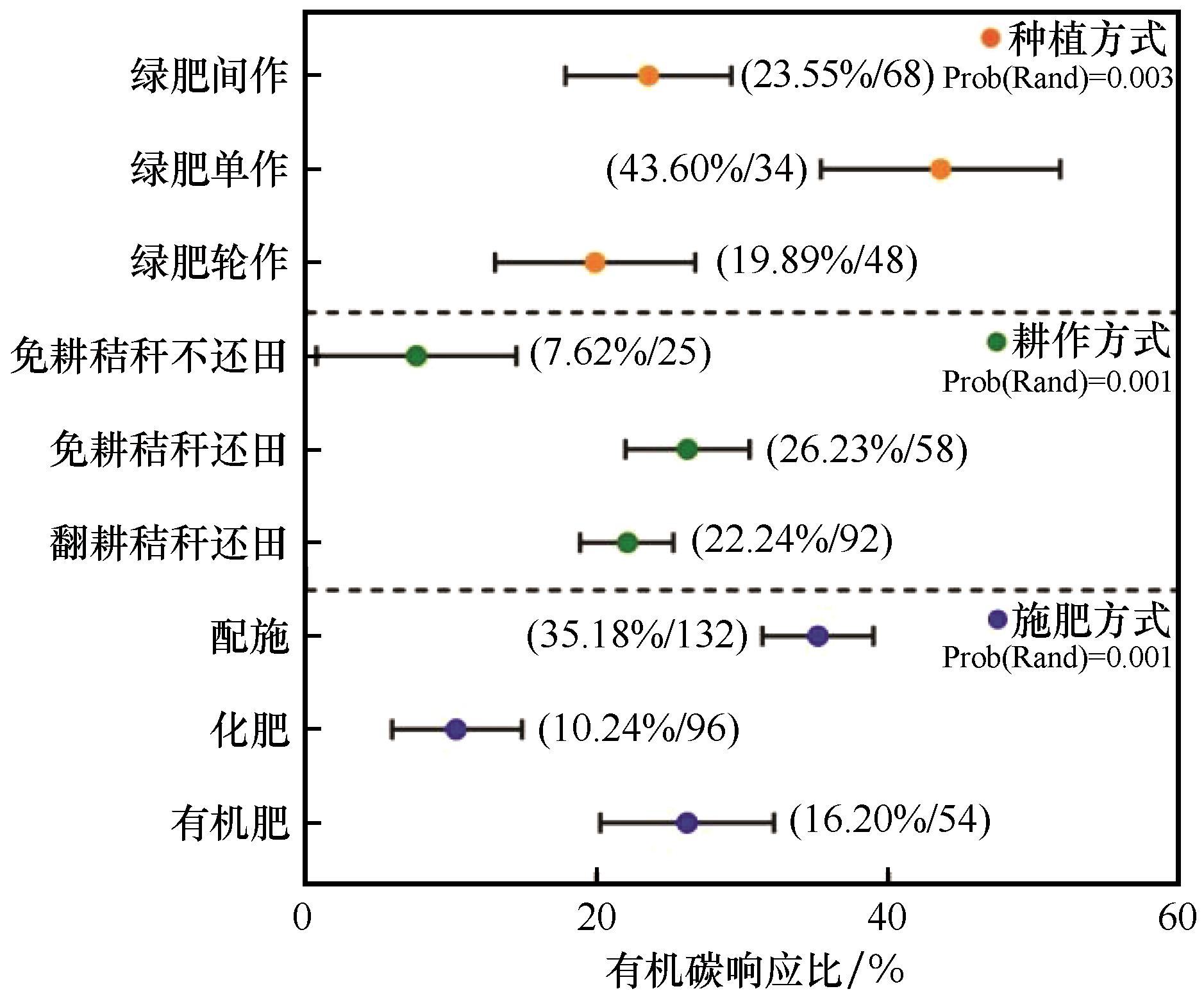
Fig.2 Effects of farmland management practices on SOC content
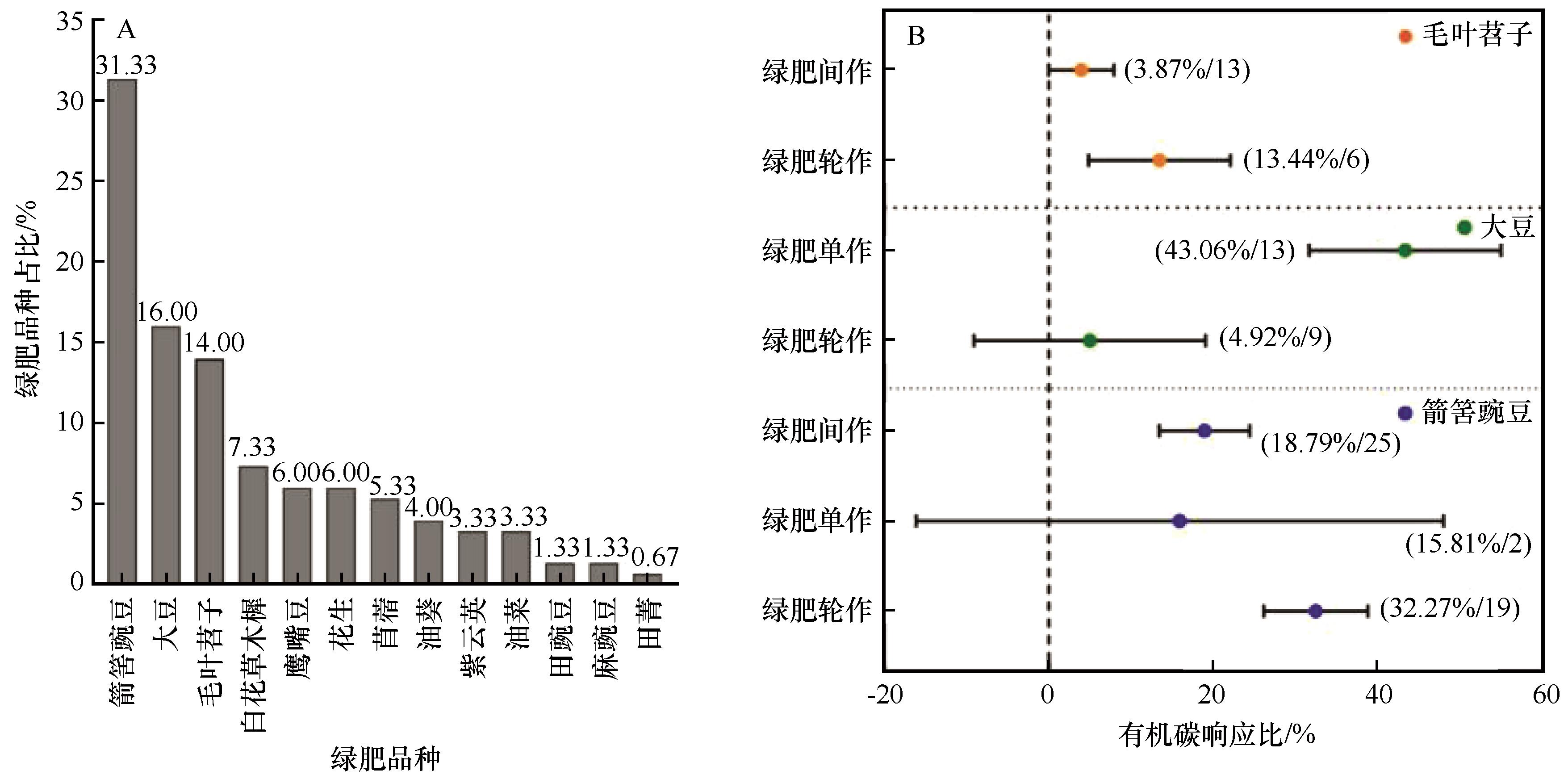
Fig.3 Proportion of green manure species and their effects on SOC content
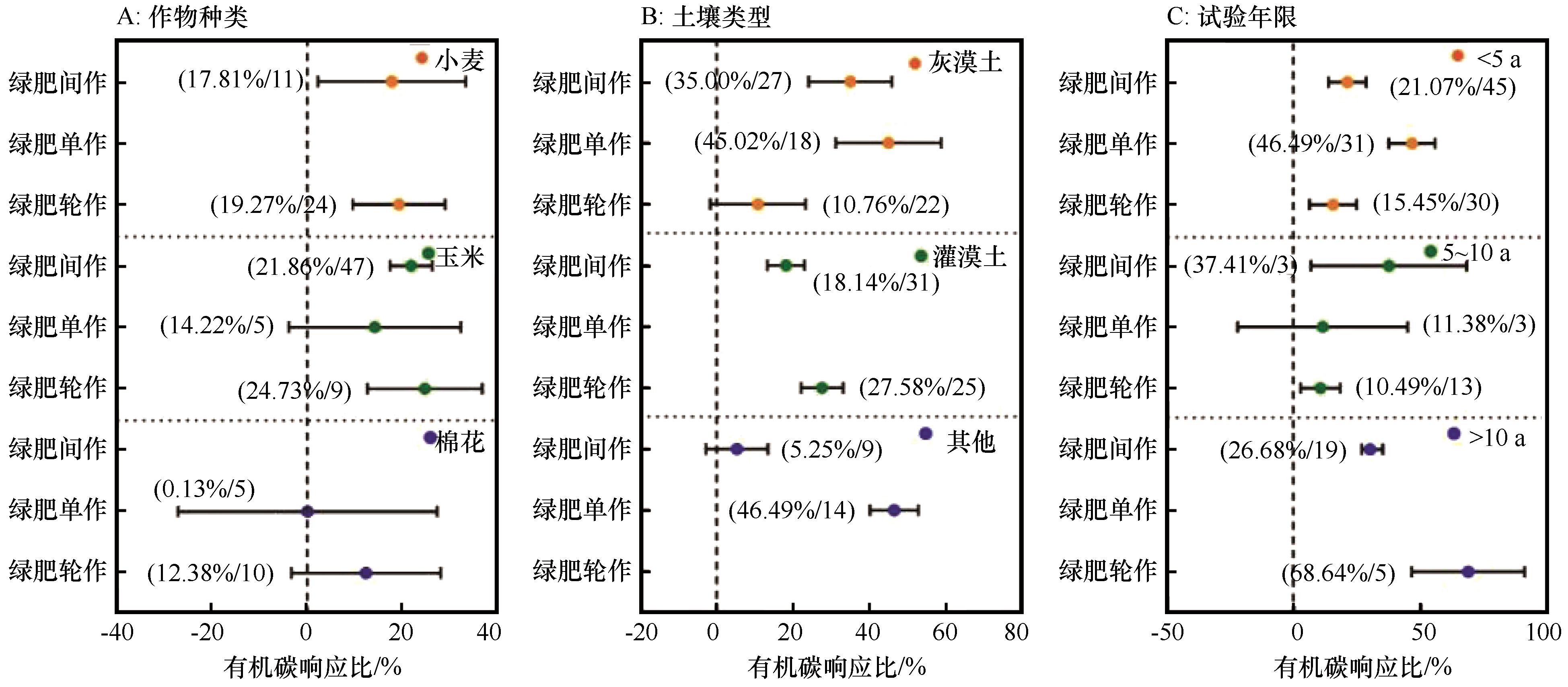
Fig.4 Effects of green manure cropping practices on SOC content across different crop types, soil types, and experimental ages
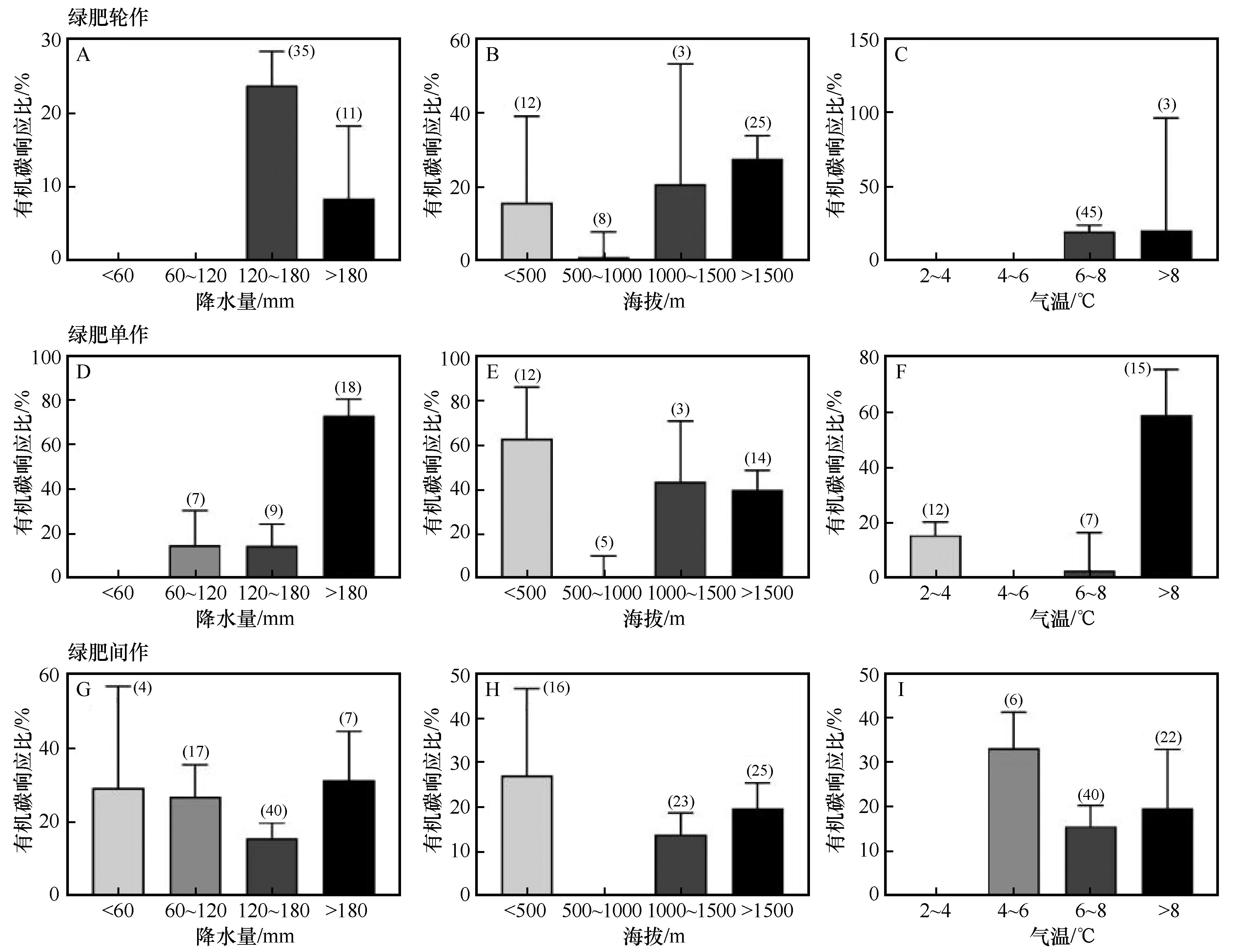
Fig.5 Effects of green manure cropping practices on SOC content under different ranges of rainfall, altitude, and temperature
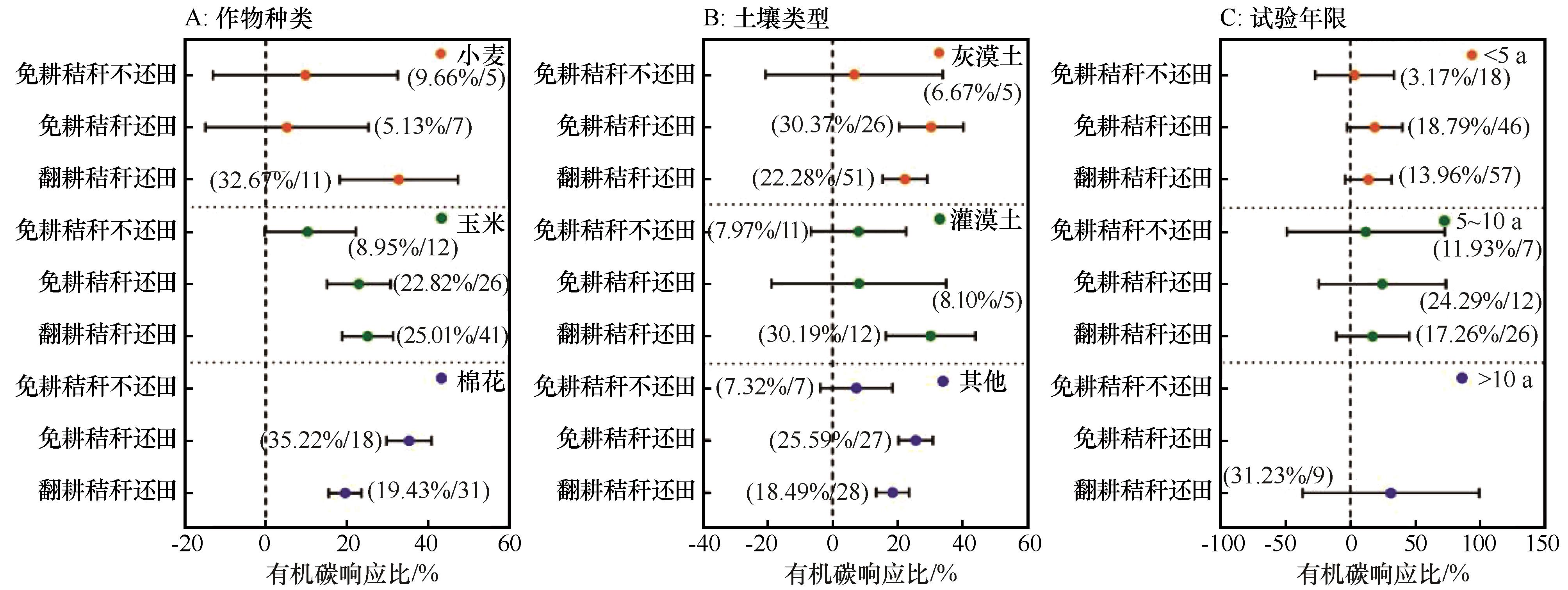
Fig.6 Effects of tillage practices on SOC content across different crop types, soil types, and experimental ages
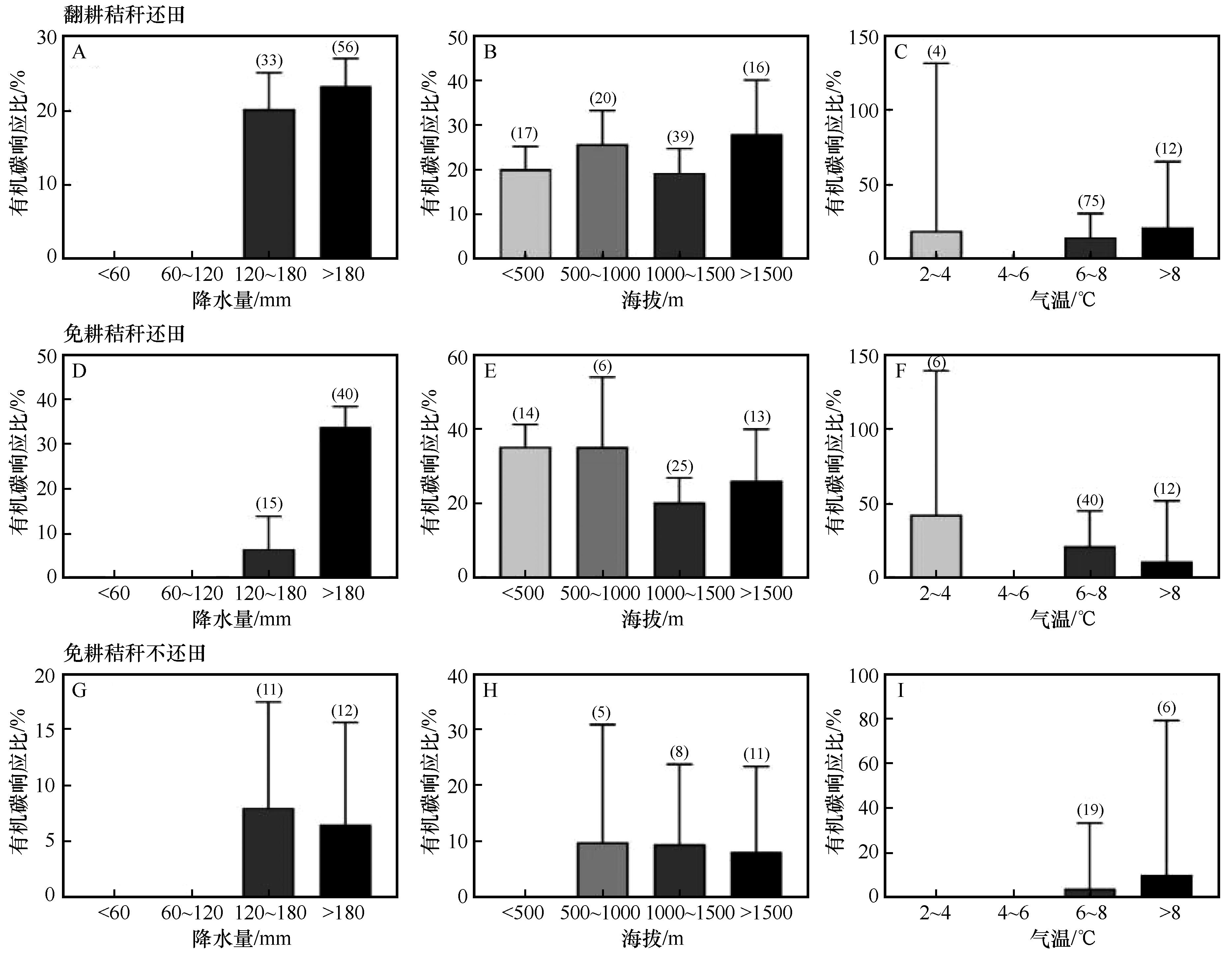
Fig.7 Effects of tillage practices on SOC content under different ranges of rainfall, altitude, and temperature
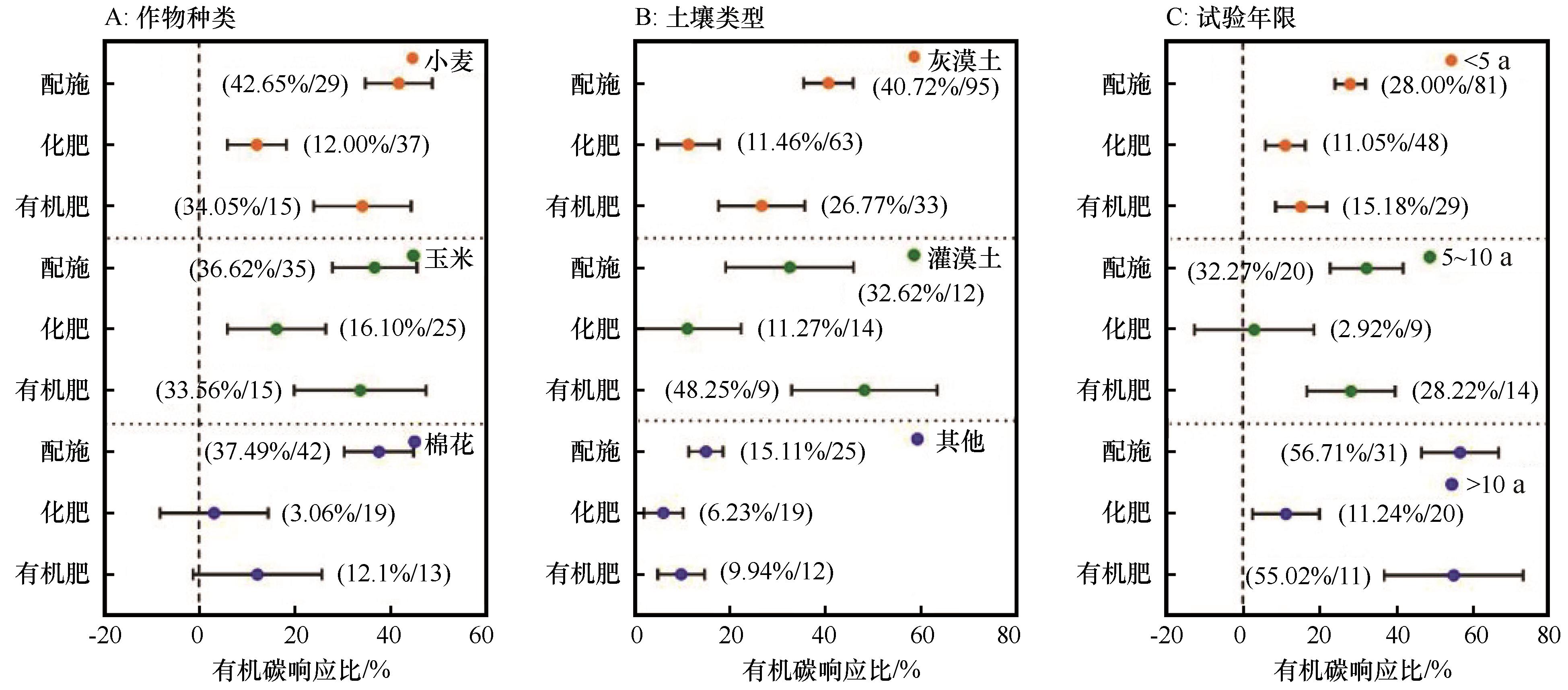
Fig.8 Effects of fertilization practices on SOC content across different crop types, soil types, and experimental ages
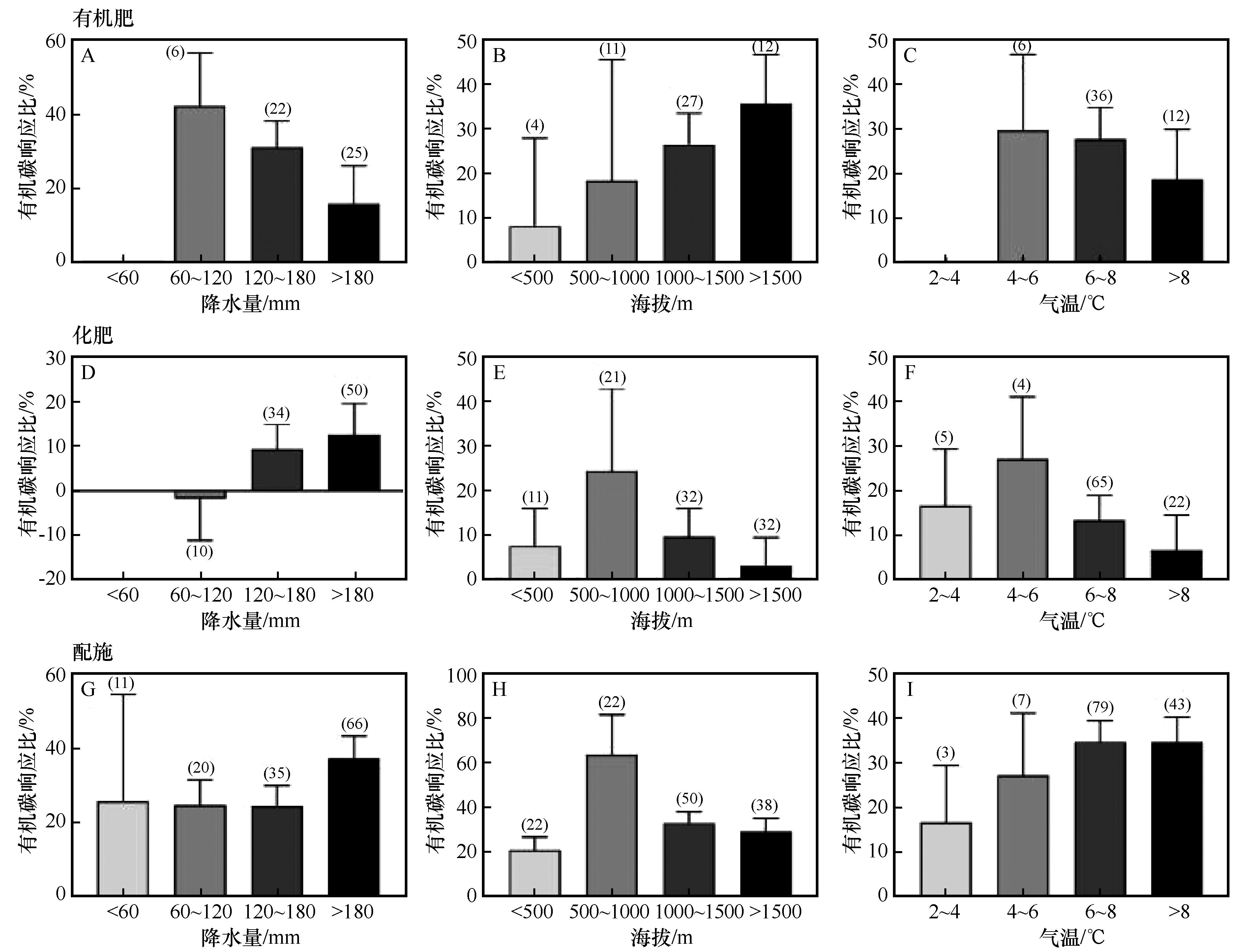
Fig.9 Effects of fertilization practices on SOC content under different ranges of rainfall, altitude, and temperature
| [1] | Lal R.Soil carbon sequestration to mitigate climate change[J].Geoderma,2004,123(1/2):1-22. |
| [2] | Huang J P, Yu H P, Dai A G,et al.Drylands face potential threat under 2 ℃ global warming target[J].Nature Climate Change,2017,7(6):417-422. |
| [3] | 张学渊,魏伟,周亮,等.西北干旱区生态脆弱性时空演变分析[J].生态学报,2021,41(12):4707-4719. |
| [4] | 黄蝶,鲁洪智,丁瑞,等.青贮玉米与绿肥作物间作对土壤理化性状和微生物的影响[J].云南农业大学学报(自然科学),2025,40(2):131-137. |
| [5] | 管彤彤,张燕,陶海宁,等.绿肥还田对土壤有机碳组分及碳转化酶活性的影响[J].中国农业科学,2024,57(14):2791-2802. |
| [6] | 冯倩倩,韩惠芳,张亚运,等.耕作方式对麦-玉轮作农田固碳、保水性能及产量的影响[J].植物营养与肥料学报,2018,24(4):869-879. |
| [7] | Yang R, Su Y Z, Yang Q.Crop yields and soil nutrients in response to long-term fertilization in a desert oasis[J].Agronomy Journal,2015,107(1):83-92. |
| [8] | 朱亚琼,简大为,郑伟,等.不同种植模式下豆科绿肥对土壤改良效果的影响[J].草业科学,2020,37(5):889-900. |
| [9] | 张凤华,王建军.不同轮作模式对土壤团聚体组成及有机碳分布的影响[J].干旱地区农业研究,2014,32(4):113-116. |
| [10] | Han H, Fan D J, Liu S X,et al.Integrating straw return and tillage practices to enhance soil organic carbon sequestration in wheat-maize rotation systems in the North China Plain[J].Agriculture,Ecosystems & Environment,2025,384:109555. |
| [11] | 田慎重,宁堂原,王瑜,等.不同耕作方式和秸秆还田对麦田土壤有机碳含量的影响[J].应用生态学报,2010,21(2):373-378. |
| [12] | 苏永中,杨荣,刘婷娜.施肥对新垦绿洲风沙土肥力及碳积累的影响[J].中国沙漠,2019,39(3):1-6. |
| [13] | Koricheva J, Gurevitch J, Mengersen K.Handbook of Meta-analysis in Ecology and Evolution [M].Princeton,USA:Princeton University Press,2013. |
| [14] | Liu D T, Song C C, Xin Z H,et al.Agricultural management strategies for balancing yield increase,carbon sequestration,and emission reduction after straw return for three major grain crops in China:a meta-analysis[J].Journal of Environmental Management,2023,340:117965. |
| [15] | 张泽茂,邬磊,高天宇,等.化肥和有机物料施用对东北黑土有机碳组分影响的整合分析[J].环境科学,2025,46(8):4947-4960. |
| [16] | 曹卫东,包兴国,徐昌旭,等.中国绿肥科研60年回顾与未来展望[J].植物营养与肥料学报,2017,23(6):1450-1461. |
| [17] | Ma D K, Yin L N, Liang W J,et al.Meta-analysis of green manure effects on soil properties and crop yield in northern China[J].Field Crops Research,2021,266:108146. |
| [18] | Yang R, Song S J, Chen S Y,et al.Adaptive evaluation of green manure rotation for a low fertility farmland system:impacts on crop yield,soil nutrients,and soil microbial community[J].Catena,2023,222:106873. |
| [19] | Yang L, Luo Y, Lu B,et al.Long-term maize and pea intercropping improved subsoil carbon storage while reduced greenhouse gas emissions[J].Agriculture,Ecosystems & Environment,2023,349:108444. |
| [20] | 刘蕊,常单娜,高嵩涓,等.西北小麦与豆科绿肥间作体系箭筈豌豆和毛叶苕子生物固氮效率及氮素转移特性[J].植物营养与肥料学报,2020,26(12):2184-2194. |
| [21] | 中国科学院南京土壤研究所.中国土壤数据库[DB/OL].南京:中国科学院南京土壤研究所,2025. |
| [22] | Tecon R, Or D.Biophysical processes supporting the diversity of microbial life in soil[J].FEMS Microbiology Reviews,2017,41(5):599-623. |
| [23] | Bonfanti N, Choler P, Khedim N,et al.Drivers of soil organic carbon stocks and stability along elevation gradients[J].Geoderma,2025,461:117452. |
| [24] | Kan Z R, Liu W X, Liu W S,et al.Mechanisms of soil organic carbon stability and its response to no‐till:a global synthesis and perspective[J].Global Change Biology,2022,28(3):693-710. |
| [25] | 佘玮.秸秆综合利用技术[M].长沙:湖南科学技术出版社: 201811:98. |
| [26] | 李俊义,刘荣荣,王润珍,等.北疆棉花根系分布规律研究[J].中国棉花,1999(6):18-20. |
| [27] | 张雄智,李帅帅,刘冰洋,等.免耕与秸秆还田对中国农田固碳和作物产量的影响[J].中国农业大学学报,2020,25(5):1-12. |
| [28] | 刘斐耀,尤全刚,吴思渊,等.干旱区绿洲耕地撂荒与复耕对土壤水力性质的影响[J].中国沙漠,2021,41(6):169-178. |
| [29] | 刘兵,刘煜,郝卓,等.自然降雨下紫色土坡耕地碳源添加对碳迁移及固碳的影响机制[J].水土保持学报,2025,39(1):229-238. |
| [30] | 丁司丞,陈书涛,王瑾,等.增温对不同作物秸秆在土壤中分解速率的影响及模拟[J].植物营养与肥料学报,2021,27(11):2054-2062. |
| [31] | Yang R, Su Y Z, Wang T,et al.Effect of chemical and organic fertilization on soil carbon and nitrogen accumulation in a newly cultivated farmland[J].Journal of Integrative Agriculture,2016,15(3):658-666. |
| [32] | Zhang Y, E S Z, Wang Y N,et al.Long-term manure application enhances the stability of aggregates and aggregate-associated carbon by regulating soil physicochemical characteristics[J].Catena,2021,203. |
| [33] | Katoh M, Murase J, Hayashi M,et al.Nutrient leaching from the plow layer by water percolation and accumulation in the subsoil in an irrigated paddy field[J].Soil Science and Plant Nutrition,2004,50(5):721-729. |
| [34] | Liang C, Schimel J P, Jastrow J D.The importance of anabolism in microbial control over soil carbon storage[J].Nature Microbiology,2017,2(8):1-12. |
| [35] | 沈姣,王小国,马晗.施肥对紫色土农田土壤有机碳损失过程的影响[J].中国生态农业学报(中英文),2021,29(9):1571-1581. |
| [36] | Noah W, Sokol Megan M,Foley Eric Slessarev,et al.The path from root input to mineral-associated soil carbon is dictated by habitat-specific microbial traits and soil moisture[J].Soil Biology & Biochemistry,2024:109367. |
| [37] | Classen Aimee T, Sundqvist Maja K, Henning Jeremiah A,et al.Direct and indirect effects of climate change on soil microbial and soil microbial-plant interactions:What lies ahead?[J].Ecosphere,2015,6(8):1-21. |
| [38] | Shi T S, Collins S L, Yu K L,et al.A global meta-analysis on the effects of organic and inorganic fertilization on grasslands and croplands[J].Nature Communications,2024,15:3411. |
| [1] | Jianjun Kang, Wenzhi Zhao, Zhibin He, Rong Yang, Bin Liu, Liwen Zhao. Effects of reduced tillage combined with nitrogen application on soil physicochemical properties, maize productivity, and water and nitrogen use efficiency in the arid oasis farmland [J]. Journal of Desert Research, 2026, 46(1): 30-40. |
| [2] | Rui Zhang, Yalin Wu, Yulin Li, Jie Lian. The influence of fertilization on the sandy farmland productivity and stability of corn in semi-arid areas [J]. Journal of Desert Research, 2025, 45(4): 109-117. |
| [3] | Weichun Liu, Yulin Li, Li Cheng, Haifu Fang. The impact of protective tillage on wind erosion of farmland in the Horqin Sandy Land [J]. Journal of Desert Research, 2025, 45(4): 24-33. |
| [4] | Jia Li, Xiaohong Jia, Dezheng Zhou, Bo Wu. Effects of biological soil crusts development on carbon cycling in extreme environments [J]. Journal of Desert Research, 2025, 45(3): 131-140. |
| [5] | Rui Zhang, Xueyong Zhao, Gang Li, Yalin Wu, Xinping Liu. Review on responses of grassland plant-soil to precipitation and management measures in arid and semi-arid areas of China [J]. Journal of Desert Research, 2025, 45(1): 131-140. |
| [6] | Haoyu He, Wei Liu, Zongqiang Chang, Chunmei Hou, Liwei Sun, Xiuli Chi. Effects of revegetation on soil organic carbon composition and stability in the southern edge of the Tengger Desert [J]. Journal of Desert Research, 2024, 44(6): 307-317. |
| [7] | Yaofang Shi, Xian Xue, Quangang You, Fei Peng, Cuihua Huang. Distribution characteristics of soil organic carbon and its relationship with soil physical properties in Ali Desert Area, Tibetan Plateau [J]. Journal of Desert Research, 2023, 43(3): 284-294. |
| [8] | Meilan Zhang, Zengtuan Cui, Zhiheng Dun, Ruihong Jia, Yuxia Zhang, Shiqian Guo, Qianyi Cui, Chenxuan Ge, Liqun Cai, Bo Dong. The Spatial-temporal variance characteristic of soil organic carbon in cultivited land of Gansu Province and its influencing factors in the 40 years from 1980 to 2020 [J]. Journal of Desert Research, 2022, 42(6): 295-303. |
| [9] | Meng Yan, Xuyang Wang, Liye Zhou, Yuqiang Li. Characteristics and influencing factors of soil organic carbon in the process of desertification in Horqin Sandy Land [J]. Journal of Desert Research, 2022, 42(5): 221-231. |
| [10] | Shiyang Chen, Rong Yang, Yongzhong Su, Zeyu Du. Characteristics of soil respiration in farmland of Hexi oasis and its response to long-term fertilization [J]. Journal of Desert Research, 2022, 42(3): 178-186. |
| [11] | Yanbin Hu, Qiang Zhang, Guoju Xiao, Zhengji Qiu, Yongping Li, Zhanqiang Guo. Effect of soil carbon, nitrgen and phosphate contents on maize production in semi-arid regions of China [J]. Journal of Desert Research, 2022, 42(3): 261-273. |
| [12] | Zhao Yu, Qizheng Li, Peiyuan Wang, Qi Jiang. Changes of organic carbon density in desert steppe ecosystem driven by degradation and restoration [J]. Journal of Desert Research, 2022, 42(2): 215-222. |
| [13] | Chenyu An, Rende Wang, Haitao Zhou, Qing Li, Xinjun Zhang, Chunping Chang, Zhongling Guo, Jifeng Li. Effect of no-tillage in autumn on farmland wind erosion and soil properties in Bashang district [J]. Journal of Desert Research, 2022, 42(2): 95-103. |
| [14] | Quanlin Ma, Wen Shang, Xinyou Wang, Jing Ma, Kejie Zhan, Duoze Wang. Influence of sand blown activity on soil organic carbon and total nitrogen in artificial Haloxylon ammodendron plantations in arid desert regions [J]. Journal of Desert Research, 2022, 42(1): 71-78. |
| [15] | Zonghuan Ma, Yajuan He, Wei Li, Wenfang Li, Yanlan Guo, Cunwu Zuo, Juan Mao, Baihong Chen. Effects of nitrogen application periods on aroma components and contents of "Marselan" wine grape in the mature period [J]. Journal of Desert Research, 2021, 41(4): 247-256. |
| Viewed | ||||||
|
Full text |
|
|||||
|
Abstract |
|
|||||
©2018Journal of Desert Research
Tel:0931-8267545
Email:caiedit@lzb.ac.cn;desert@lzb.ac.cn
Support:Magtech
