img

官方微信

高级检索

中国沙漠 ›› 2026, Vol. 46 ›› Issue (2): 371-379.DOI: 10.7522/j.issn.1000-694X.2026.00035

• • 上一篇    

水蚀作用下砂黄土坡耕地风蚀的坡向分异特征

范晓强1(), 白飞2, 张加琼1,3(), 黄子炎1, 王梦婕1, 安鑫1, 严云籍1   

  1. 1.西北农林科技大学 水土保持科学与工程学院/水土保持与荒漠化整治全国重点实验室,陕西 杨凌 712100
    2.榆林市水土保持生态工程建设中心,陕西 榆林 719000
    3.中国科学院水利部水土保持研究所,陕西 杨凌 712100
  • 收稿日期:2026-01-12 修回日期:2026-03-05 出版日期:2026-03-20 发布日期:2026-04-13
  • 通讯作者: 张加琼
  • 作者简介:范晓强(2000—),男,宁夏固原人,硕士研究生,研究方向为土壤风水复合侵蚀。E-mail: 3540054839@qq.com
  • 基金资助:
    国家自然科学基金面上项目(42577396)

Aspect differentiation of wind erosion rates on sandy loess hillslopes affected by water erosion

Xiaoqiang Fan1(), Fei Bai2, Jiaqiong Zhang1,3(), Ziyan Huang1, Mengjie Wang1, Xin An1, Yunji Yan1   

  1. 1.College of Soil and Water Conservation / National Key Laboratory of Soil and Water Conservation and Desertification Combating,Northwest A&F University,Yangling 712100,Shaanxi,China
    2.Yulin Engineering Construction Center of Soil and Water Conservation Ecological,Yulin 719000,Shaanxi,China
    3.Institute of Soil and Water Conservation,Chinese Academy of Sciences and Ministry of Water Resources,Yangling 712100,Shaanxi,China
  • Received:2026-01-12 Revised:2026-03-05 Online:2026-03-20 Published:2026-04-13
  • Contact: Jiaqiong Zhang

摘要:

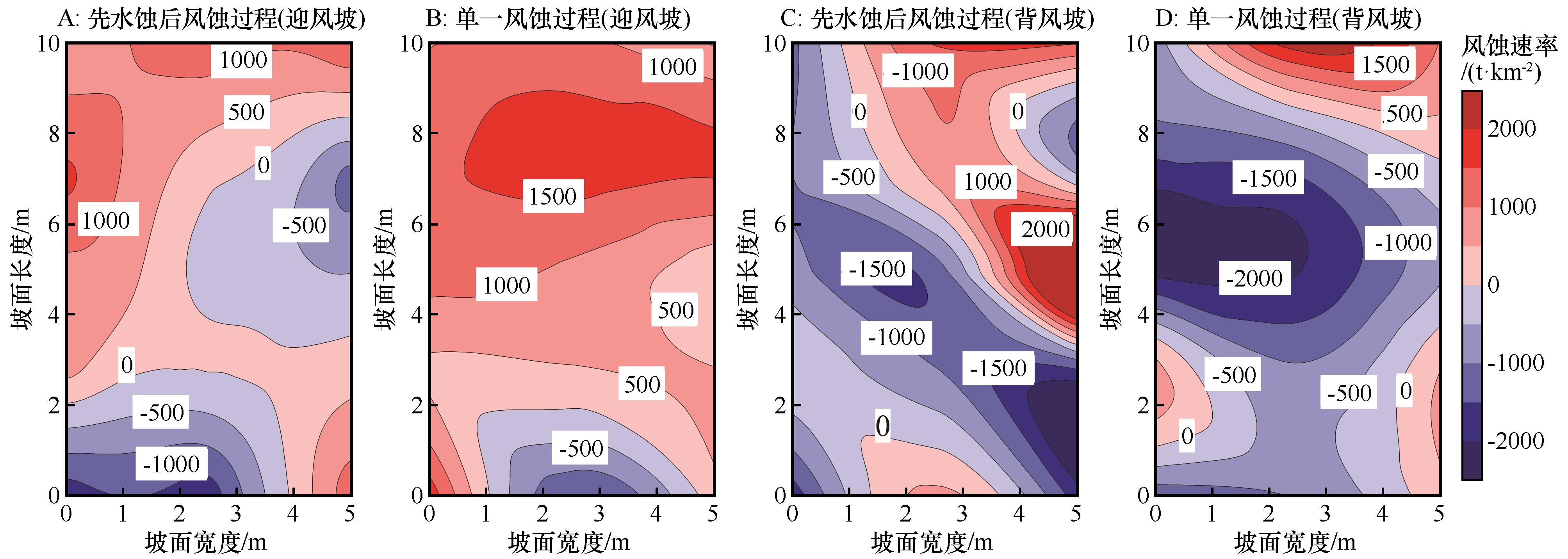
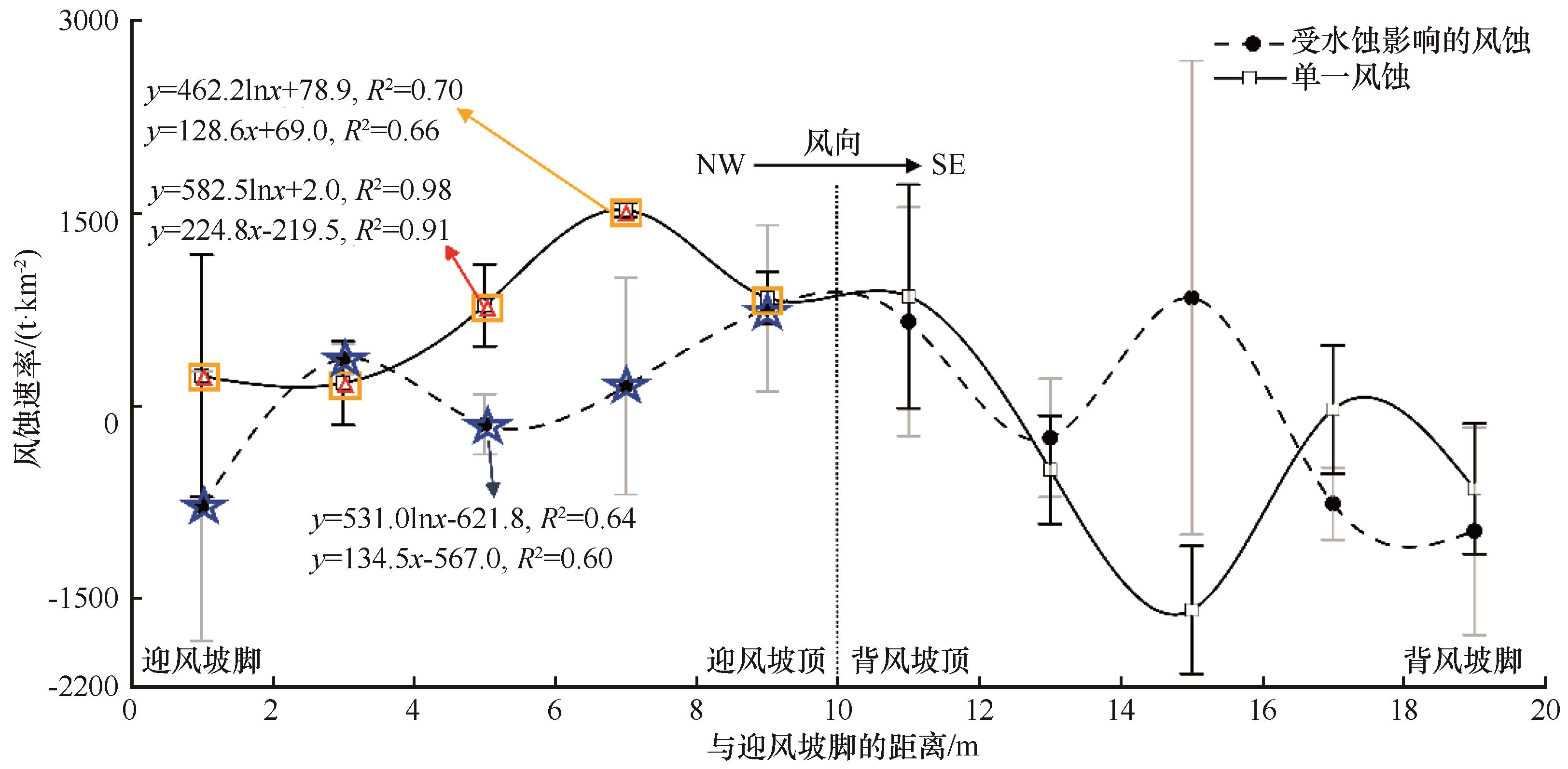
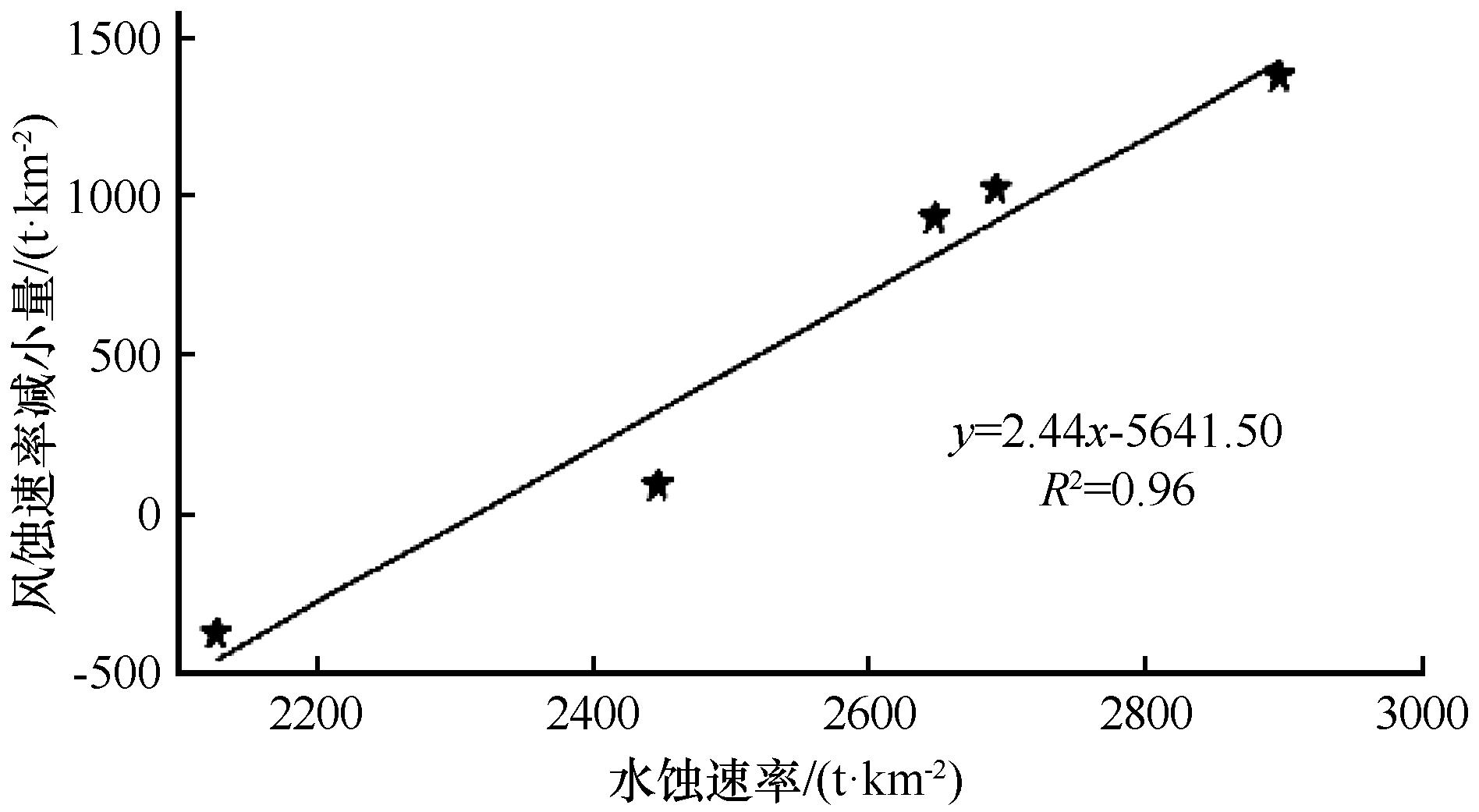
坡向是影响土壤风蚀的重要因素,而目前水蚀作用下土壤风蚀坡向分异相关研究缺乏。本研究选取陕西省神木市作为黄土高原水蚀风蚀交错带的代表性区域,采用Be-7示踪与定位观测相结合的方法,以单一风蚀为对照,在呈“˄”形分布的迎风坡与背风坡,阐明水蚀作用下风蚀速率的坡向变化,量化水蚀对风蚀速率影响程度的坡向分异。结果表明:无论是否有水蚀影响,迎风坡以风蚀为主,风蚀速率从坡脚到坡顶呈对数或线性增大;背风坡以风积为主,风积主要发生在坡面中上部到坡脚区域。水蚀明显改变坡面风蚀速率及其空间分布。水蚀作用导致迎风坡平均风蚀速率较单一风蚀(712.2 t·km-2)减小85.2%,不同坡面部位的风蚀速率减少量与该部位的水蚀速率呈显著正相关(R²=0.96);背风坡平均沉积速率较单一风蚀(383.5 t·km-2)降低74.2%,风蚀面积减小30%。此外,水蚀作用后两坡面风蚀速率等值线在部分区域从垂直坡面走向的平行带状变为顺坡延伸分布。水蚀作用改变了两坡面间的物质运移与侵蚀效应,水蚀作用后迎风坡风蚀物质在背风坡的沉积比例比单一风蚀提高了38.2%,两坡面总风蚀速率较单一风蚀降低了97.4%,研究结果为量化地形因子对风水交错侵蚀的影响奠定了基础。

关键词: 水蚀风蚀交错带, Be-7示踪, 土壤风蚀, 坡向, 侵蚀速率等值线

Abstract:

Slope aspect is one of the key factors affecting soil wind erosion, yet there is currently a lack of research on the aspect differentiation of wind erosion rates affected by water erosion. This study quantified wind erosion rates on typical windward and leeward hillslopes at Shenmu City of Shaanxi Province in the wind-water erosion crisscross region on the Loess Plateau using a Be-7 tracing. The specified objectives were to clarify aspect variation in wind erosion rates affected by water erosion taking wind erosion as a contrast, and to identify the impact degree of water erosion on wind erosion on "˄" shape continuous distributed hillslopes. The results showed that windward slopes were dominated by wind erosion, with wind erosion rates increased logarithmically or linearly from the toe to the top of the hillslope; while leeward slopes were dominated by wind deposition, concentrating between the middle-upper to toe area of the slope regardless of the influence of water erosion. Water erosion obviously varied wind erosion rates and their spatial distribution. Water erosion resulted in the decrease of the mean wind erosion rate by 85.2% on the windward slope compared to that of sole wind erosion (712.2 t·km-2), and the reduction in wind erosion rates at different slope positions was significantly positively correlated to the co-located water erosion rates (R²=0.96). On the leeward slope, the mean deposition rate of wind erosion affected by water erosion decreased by 74.2% compared to that of sole wind erosion (383.5 t·km-2), and the wind erosion area decreased by 30%. Additionally, water erosion also changed the spatial distribution of wind erosion indicating by the contour line distribution of wind erosion rates. The contour lines of wind erosion rates changed from a pattern that parallel to width direction of the hillslopes to parallel to their length direction in some areas. Furthermore, water erosion also varied the material transport from windward slope to its connected leeward slope. The deposition proportion of eroded material on the leeward slope transporting from the windward slope increased by 38.2% affected by water erosion compared to sole wind erosion, and the total wind erosion rates of both hillslopes decreased by 97.4%. The results of this study could provide research foundation for quantifying the influence of topographic factors on wind-water erosion.

Key words: wind-water erosion crisscross region, Be-7 tracing, wind erosion, slope aspect, isoline of erosion rate

中图分类号: