img

官方微信

高级检索

中国沙漠 ›› 2026, Vol. 46 ›› Issue (3): 318-329.DOI: 10.7522/j.issn.1000-694X.2025.00251

• • 上一篇    

艾比湖流域4种典型灌丛植物的环境效应

史慧杰1(), 武胜利1,2(), 张燕3(), 肖佳奇1, 陈鹏鹏1, 黄露蕊1, 张宇博4   

  1. 1.新疆师范大学,地理科学与旅游学院,新疆 乌鲁木齐 830054
    2.新疆师范大学,新疆维吾尔自治区高等学校师资培训中心,新疆 乌鲁木齐 830054
    3.新疆生产建设兵团第五师农业科学研究所,新疆 博乐 833400
    4.长春工业大学 人文信息学院,吉林 长春 130000
  • 收稿日期:2025-07-18 修回日期:2025-10-21 出版日期:2026-05-20 发布日期:2026-06-11
  • 通讯作者: 武胜利,张燕
  • 作者简介:史慧杰(2002—),女,河南周口人,硕士研究生,主要从事风沙地貌研究。E-mail: 2984747390@qq.com
  • 基金资助:
    湖北省重点研发计划援疆援藏项目(2023EGA124)

Environmental effects of four typical shrub plants in the Ebinur Lake Basin

Huijie Shi1(), Shengli Wu1,2(), Yan Zhang3(), Jiaqi Xiao1, Pengpeng Chen1, Lurui Huang1, Yubo Zhang4   

  1. 1.School of Geography and Tourism /, Xinjiang Normal University,Urumqi 830054,China
    2.Xinjiang Uygur Autonomous Region Higher Education Teacher Training Center, Xinjiang Normal University,Urumqi 830054,China
    3.Agricultural Science Research Institute of the Fifth Division of Xinjiang Production and Construction Corps,Bole 833400,Xinjiang,China
    4.College of Humanities Information,Changchun University of Technology,Jilin 130000,China
  • Received:2025-07-18 Revised:2025-10-21 Online:2026-05-20 Published:2026-06-11
  • Contact: Shengli Wu, Yan Zhang

摘要:

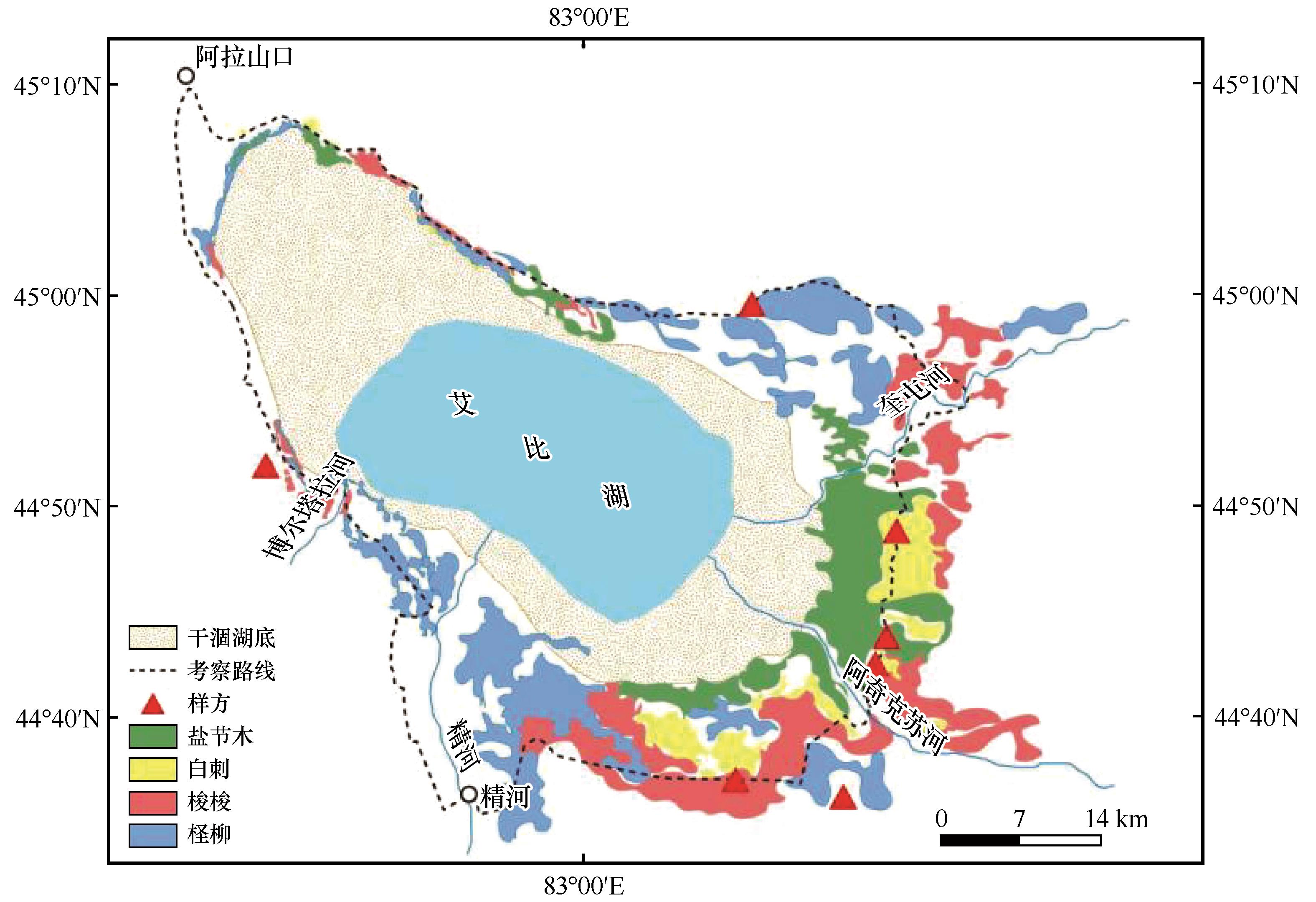
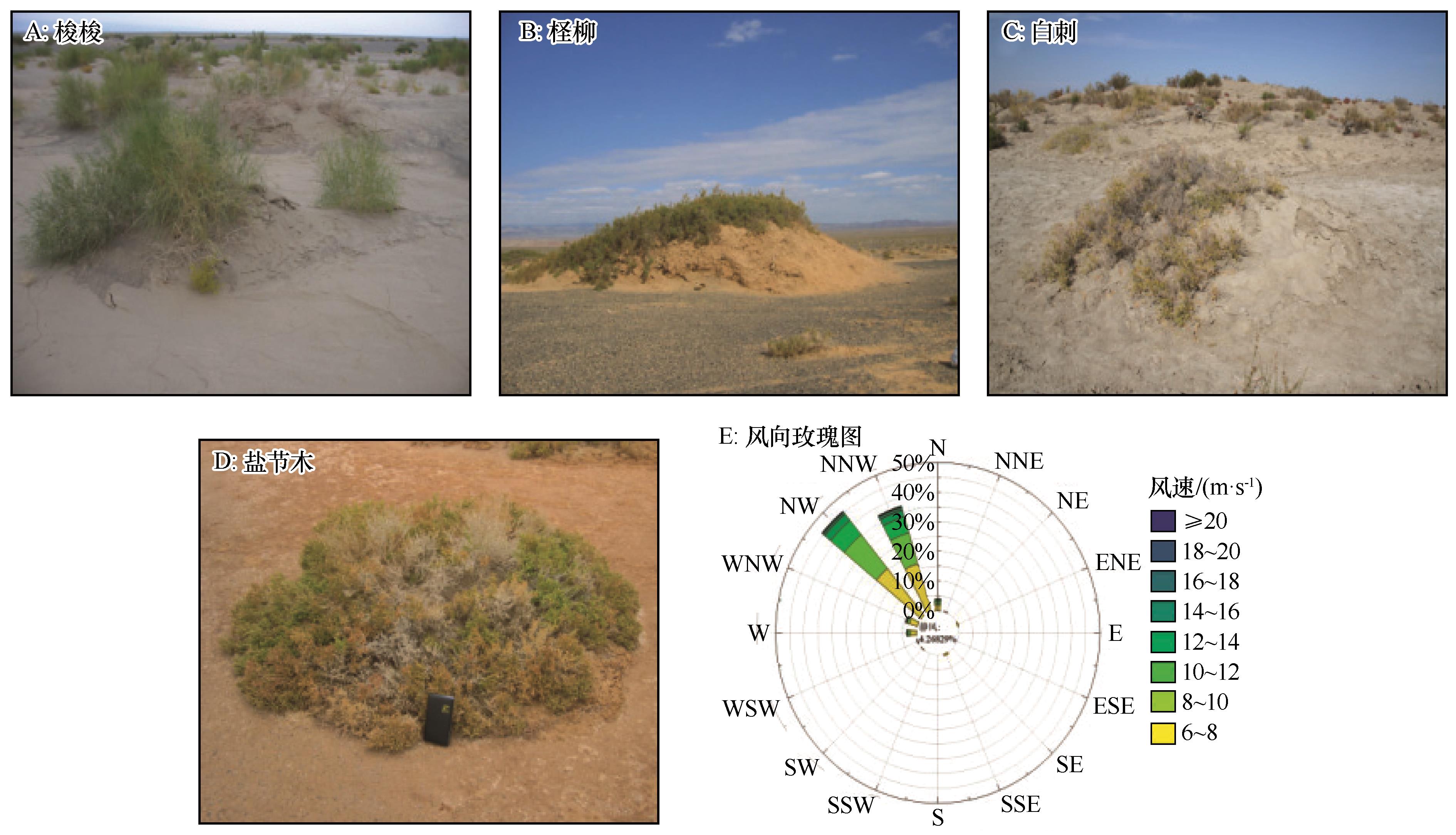
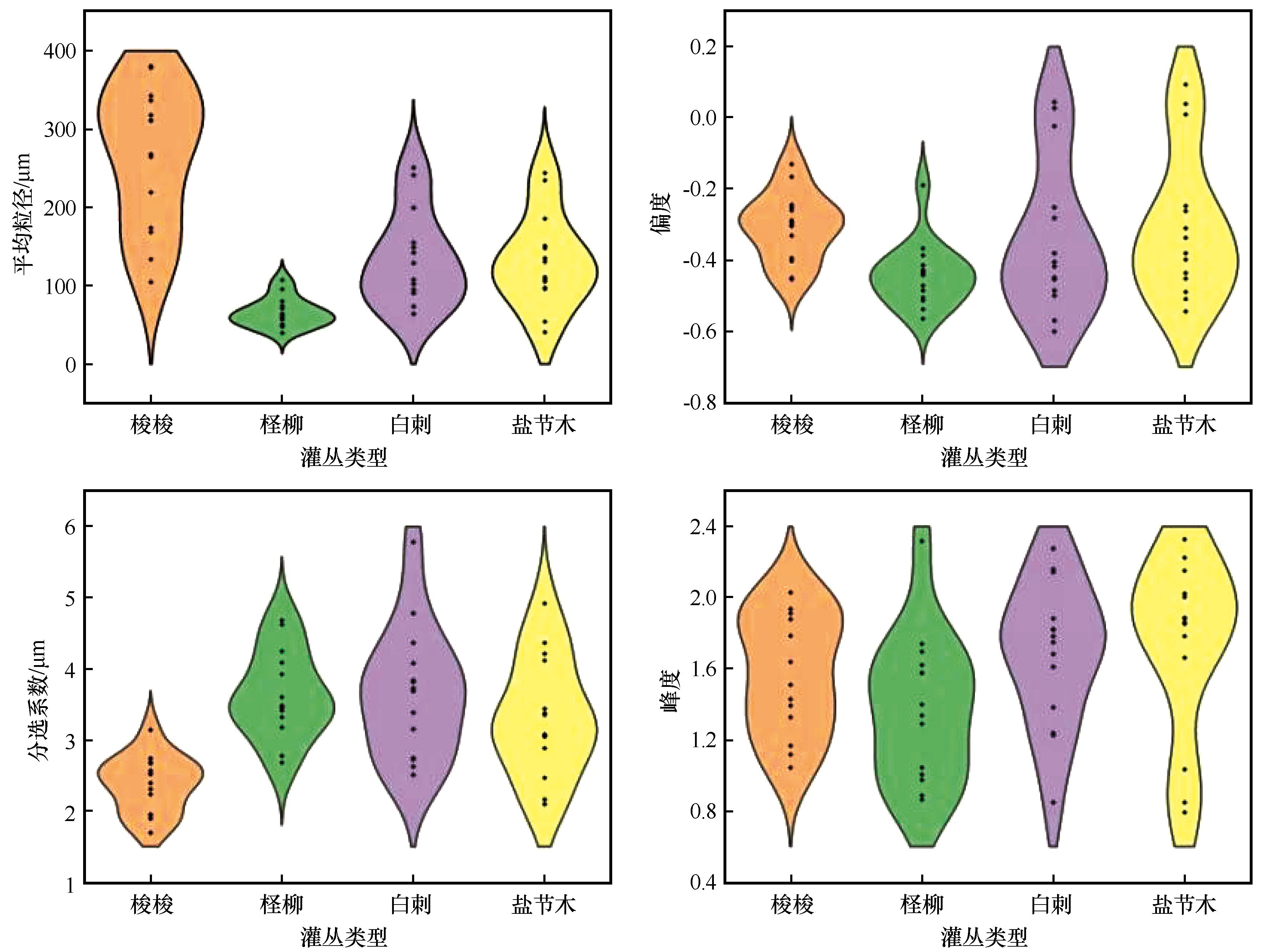
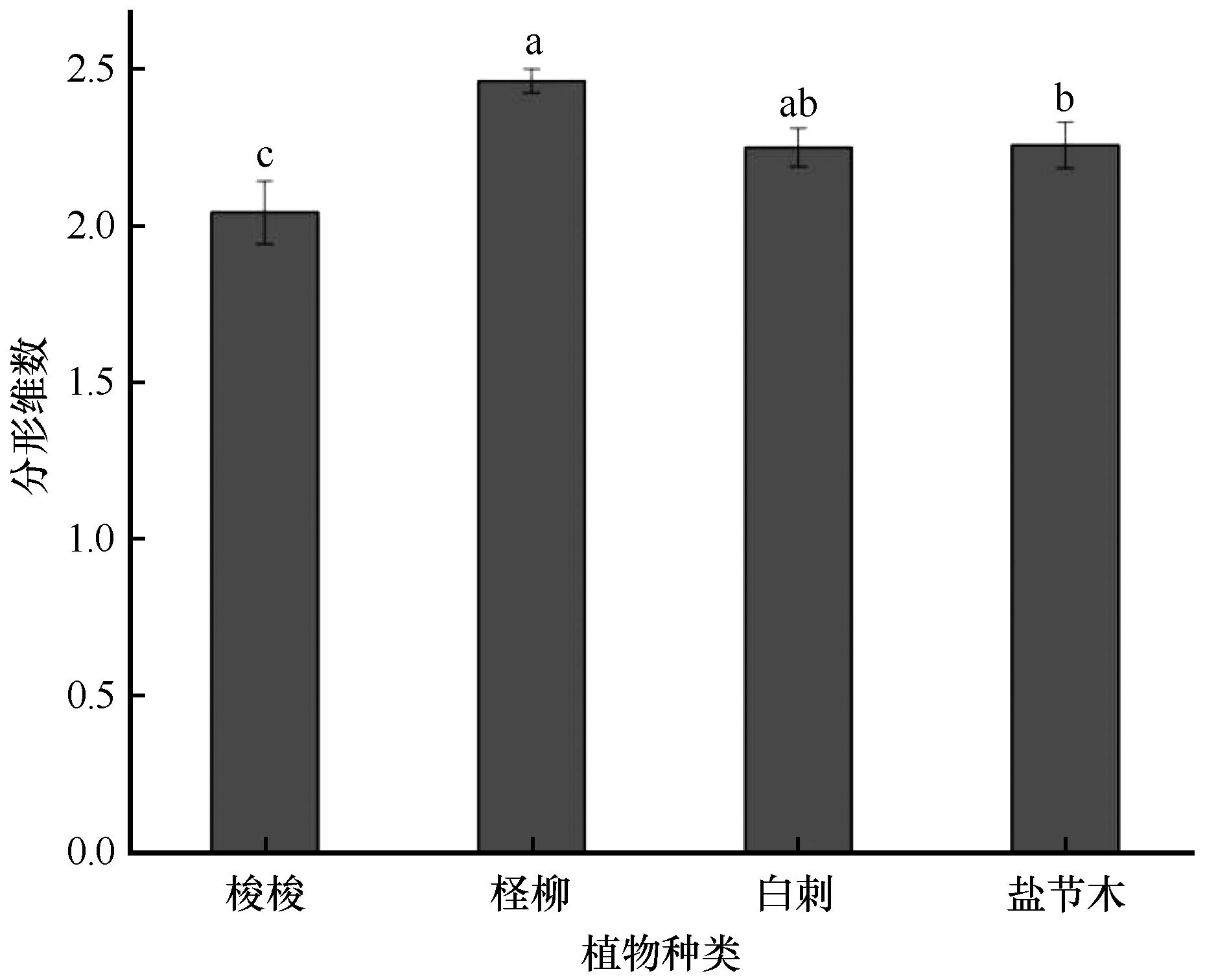
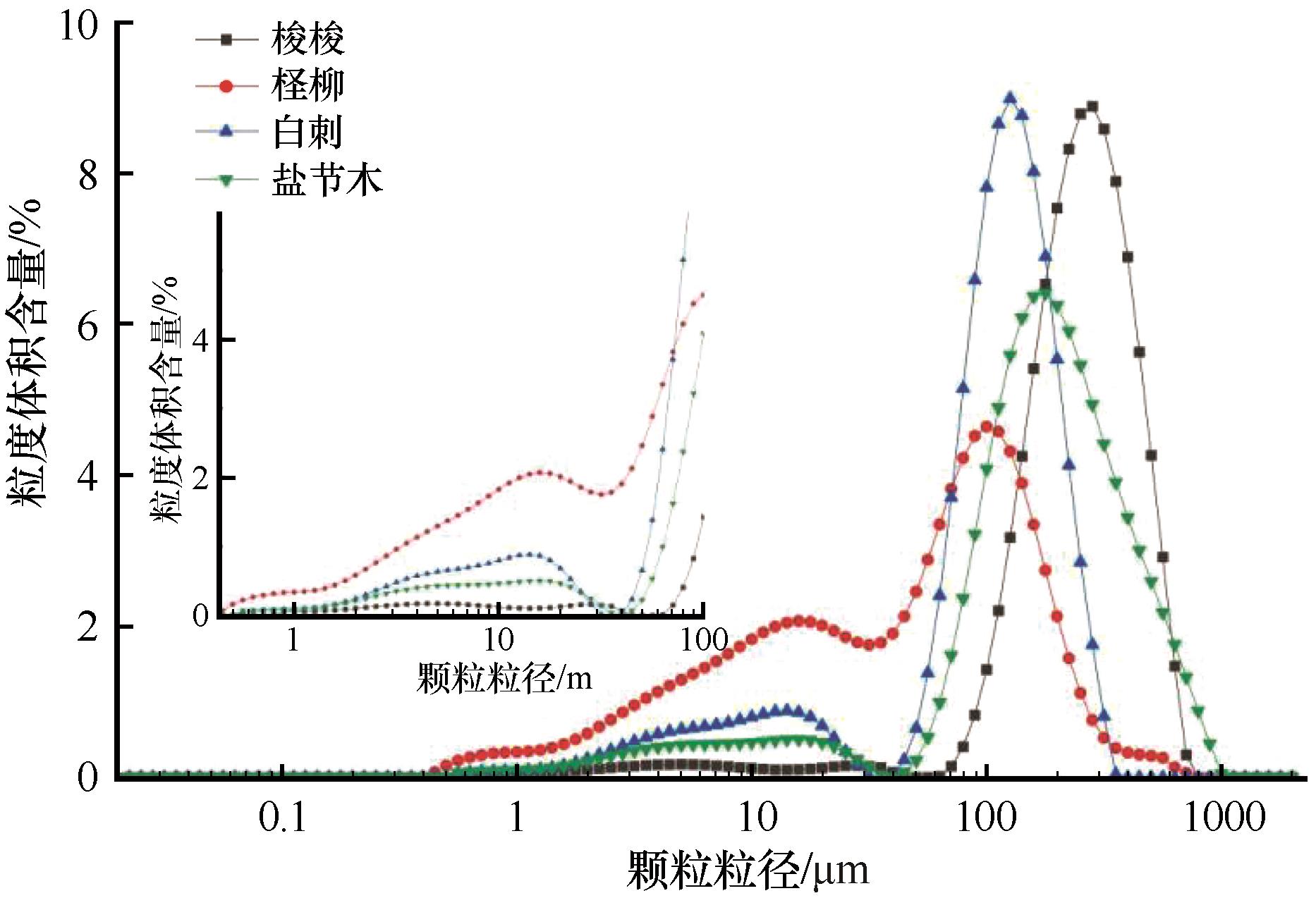
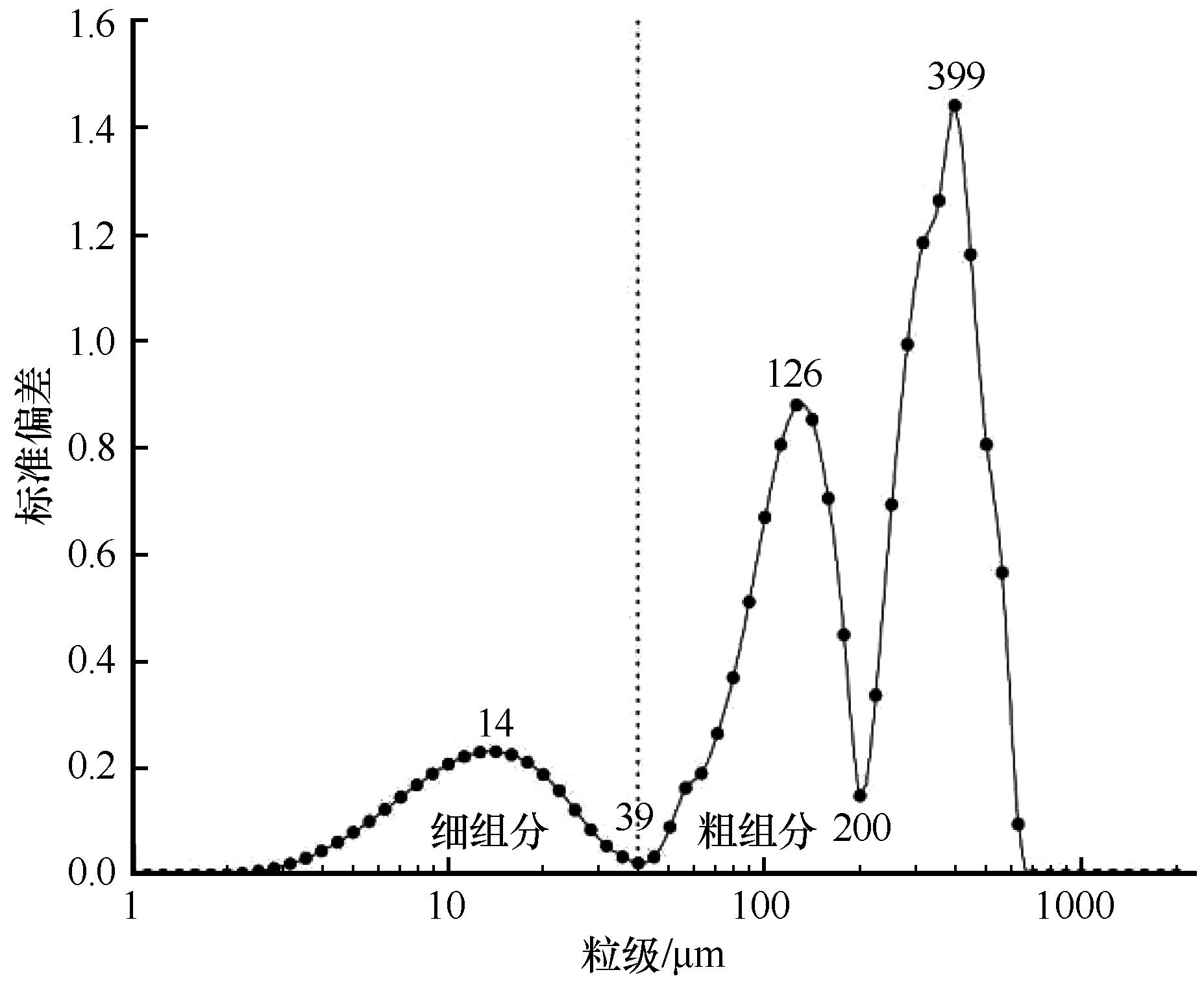
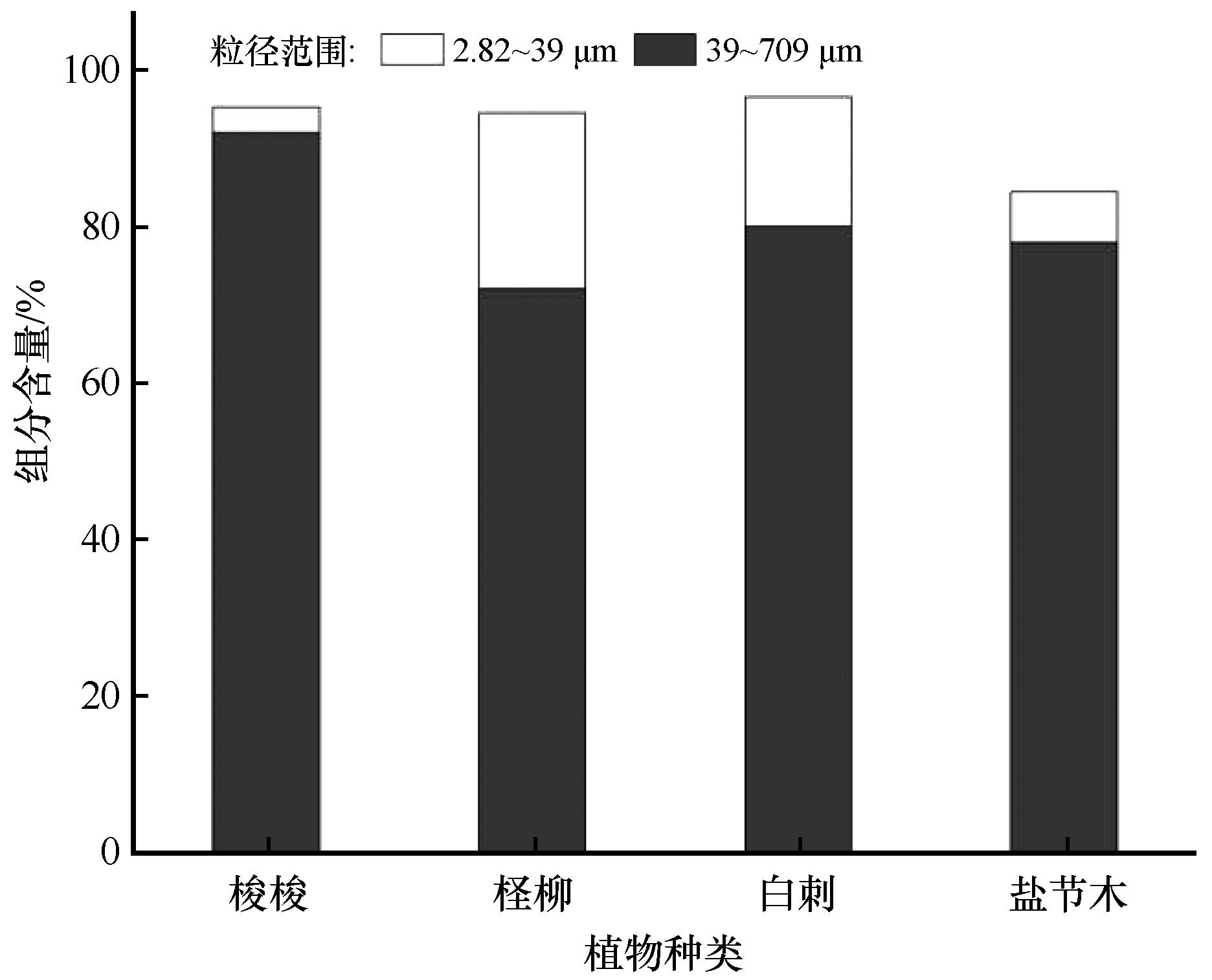
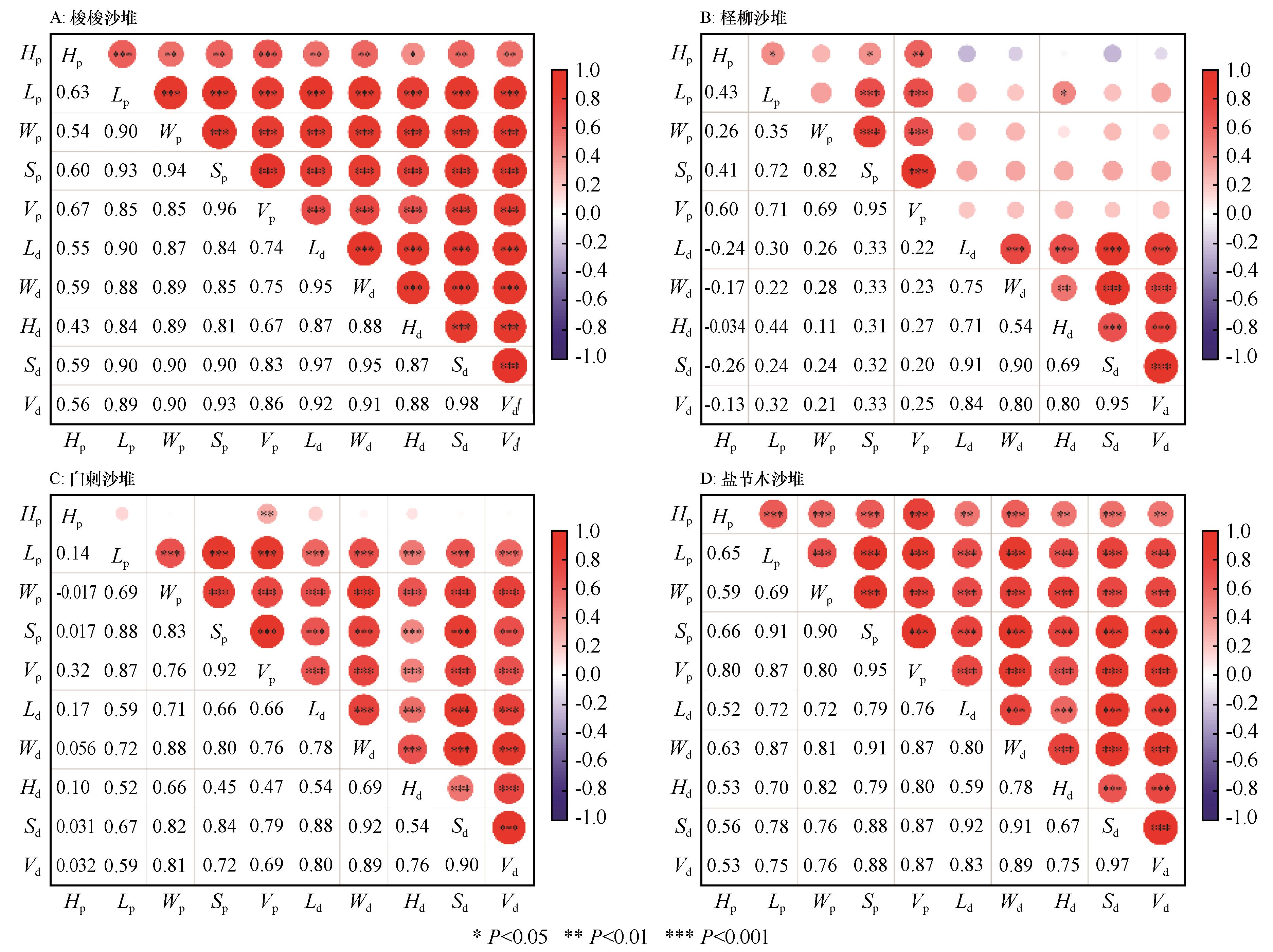
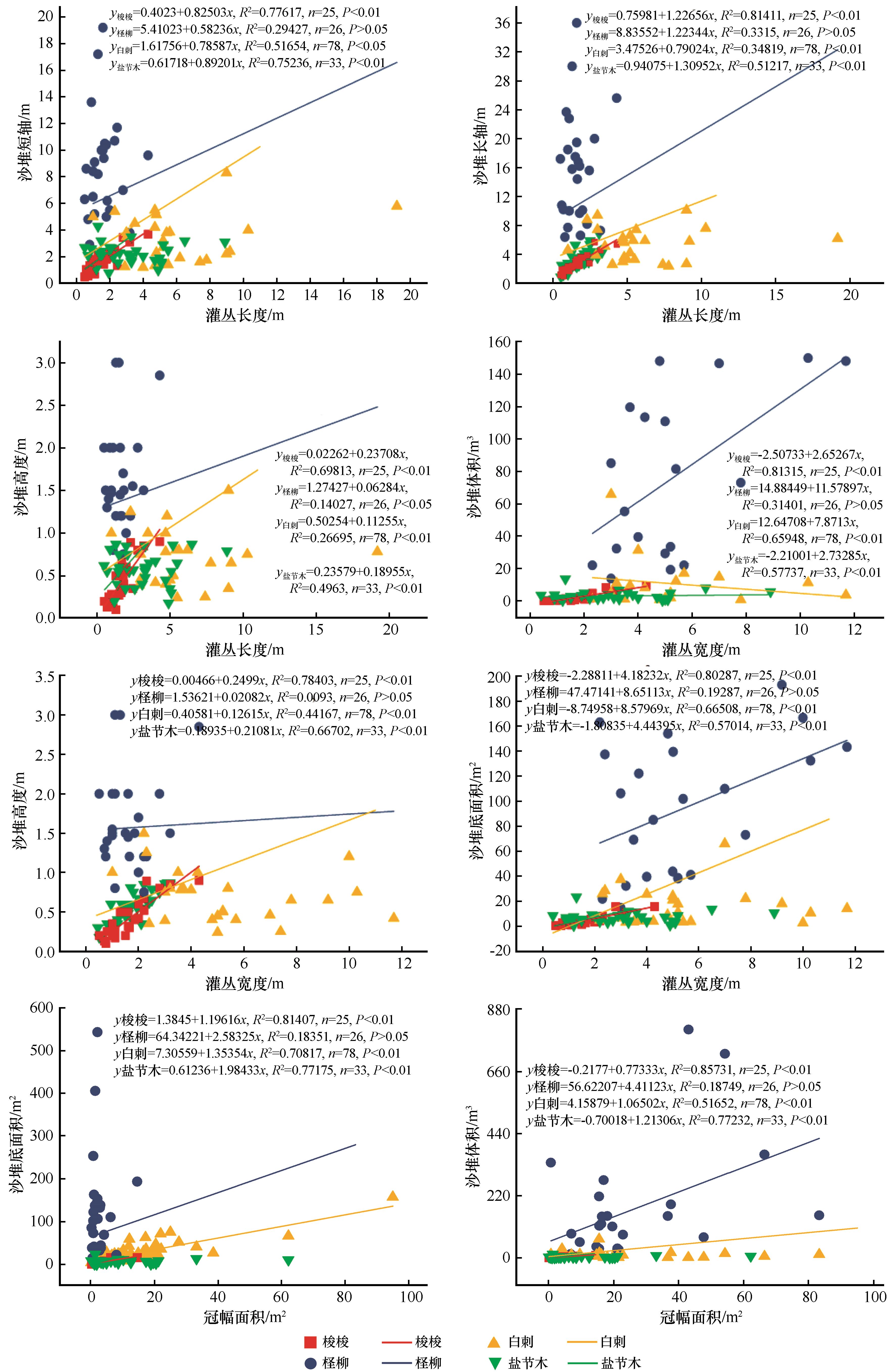
研究艾比湖流域的梭梭(Haloxylon ammodendron)、柽柳(Tamarix chinensis)、白刺(Nitraria tangutorum)与盐节木(Halocnemum strobilaceum)典型灌丛的环境效应,对认识干旱区灌丛沙堆的形成机制、优化防风固沙植物配置具有较强的理论价值与实际意义。本文系统测定4种典型灌丛及灌丛沙堆形态参数,分析灌丛沙堆表层沉积物粒度与分形特征,识别环境敏感组分,比较4种灌丛固沙能力。结果表明:(1)4种灌丛在株高、冠幅等形态特征上存在显著差异。柽柳株高可达2.4 m、冠幅可达83.32 m2,形成的沙堆体积约167.73 m3,显著高于梭梭、白刺、盐节木。(2)不同灌丛下沉积物的粒级组成、粒度参数、分形维数及环境敏感组分含量呈现明显差异。提取2.82~39 μm和39~709 μm两个环境敏感组分,柽柳对细组分(2.82~39 μm)的拦截能力最强(含量>20%,D>2.5);梭梭对粗组分(39~709 μm)的富集能力最强(含量>90%,D<2.1);白刺和盐节木的特征介于二者之间。(3)灌丛形态与灌丛沙堆形态存在一定正相关关系,灌丛与灌丛沙堆协同发育。4种灌丛单位冠幅面积拦截沙物质量从大到小依次为柽柳(22.52 m3)、白刺(1.51 m3)、盐节木(0.92 m3)、梭梭(0.53 m3),柽柳灌丛固沙能力最强。

关键词: 灌丛沙堆, 固沙能力, 分形维数, 环境敏感组分, 艾比湖流域

Abstract:

Investigating the environmental effects of four typical shrub species—Haloxylon ammodendronTamarix chinensisNitraria tangutorum, and Halocnemum strobilaceum—in the Ebinur Lake Basin is of substantial theoretical and practical significance for understanding the formation mechanisms of shrub-nebkhas in arid regions and for optimizing the arrangement of windbreak and sand-stabilizing vegetation. In this study, we systematically quantified the morphological parameters of the four shrub species and their associated nebkhas, analyzed the grain-size distribution and fractal characteristics of surface sediments, identified environmentally sensitive grain-size components, and compared the sand stabilization capacity among species.The results indicate that: (1) The four species display pronounced differences in morphological traits such as plant height and crown area. T. ramosissima reaches heights of up to 2.4 m and crown areas of 83.32 m², forming nebkhas with an average volume of 167.73 m³—significantly larger than those formed by H. ammodendronN. sibirica, and H. strobilaceum. (2) The grain-size composition, particle-size parameters, fractal dimensions, and proportions of sensitive components in the sediments vary markedly among shrub types. Two sensitive fractions (2.82-39 μm and 39-709 μm) were identified. T. ramosissima exhibited the highest capacity to intercept fine particles (2.82-39 μm), with contents exceeding 20% and fractal dimensions (D)>2.5; H. ammodendron was most effective at trapping coarse particles (39-709 μm), with contents > 90% and D<2.1; N. sibirica and H. strobilaceum showed intermediate characteristics. (3) A positive correlation was observed between shrub morphology and nebkha form, indicating their coordinated development. The volume of trapped sediment per unit crown area for the four shrubs, in descending order, was: T. ramosissima (22.52 m³), N. sibirica (1.51 m³), H. strobilaceum (0.92 m³), and H. ammodendron (0.53 m³), with T. ramosissima demonstrating the strongest sand stabilization capacity.

Key words: nabkhas, sand-fixing ability, fractal dimension, environmentally sensitive components, Ebinur Lake Basin

中图分类号: