
- CN 62-1070/P
- ISSN 1000-694X
- Bimonthly 1981
Journal of Desert Research ›› 2026, Vol. 46 ›› Issue (4): 98-108.DOI: 10.7522/j.issn.1000-694X.2026.00005
Previous Articles Next Articles
Yanfang Chen1( ), Wenjie Cui2
Received:2025-11-13
Revised:2026-01-12
Online:2026-07-20
Published:2026-08-27
CLC Number:
Yanfang Chen, Wenjie Cui. Investigating the foundational efficiency and its spatio-temporal evolution of all-for-one tourism in northwest China under factor constraints[J]. Journal of Desert Research, 2026, 46(4): 98-108.
Add to citation manager EndNote|Ris|BibTeX
URL: http://www.desert.ac.cn/EN/10.7522/j.issn.1000-694X.2026.00005
| 指标类型 | 一级指标 | 二级指标 | 三级指标 | 单位 | 数据来源 |
|---|---|---|---|---|---|
| 投入指标 | 资本投入 | 旅游固定资产投资 | 住宿和餐饮业、文体娱乐业固定资产投资之和 | 亿元 | 中国旅游统计年鉴;中国统计年鉴;中国第三产业统计年鉴;各省(区)统计年鉴;各省(区)统计公报;各省(区)统计局 |
| 4A级以上景区数量 | 4A级以上景区数量 | 个 | |||
| 星级酒店数量 | 星级酒店数量 | 家 | |||
| 旅行社数量 | 旅行社数量 | 个 | |||
| 劳动力投入 | 旅游业从业人数 | 住宿和餐饮业、文体娱乐业从业人数之和 | 万人 | ||
| 交通投入 | 旅客客运总量 | 旅客客运总量 | 万人次 | ||
| 旅客客运公路里程数 | 旅客客运公路里程数 | 亿人公里 | |||
| 产出指标 | 效率产出 | 旅游接待总人次 | 旅游接待总人次 | 万人次 | |
| 旅游总收入 | 旅游总收入 | 亿元 |
Table 1 Evaluation index system of foundational efficiency of all-for-one tourism in the five provinces (autonomous regions) of northwest China
| 指标类型 | 一级指标 | 二级指标 | 三级指标 | 单位 | 数据来源 |
|---|---|---|---|---|---|
| 投入指标 | 资本投入 | 旅游固定资产投资 | 住宿和餐饮业、文体娱乐业固定资产投资之和 | 亿元 | 中国旅游统计年鉴;中国统计年鉴;中国第三产业统计年鉴;各省(区)统计年鉴;各省(区)统计公报;各省(区)统计局 |
| 4A级以上景区数量 | 4A级以上景区数量 | 个 | |||
| 星级酒店数量 | 星级酒店数量 | 家 | |||
| 旅行社数量 | 旅行社数量 | 个 | |||
| 劳动力投入 | 旅游业从业人数 | 住宿和餐饮业、文体娱乐业从业人数之和 | 万人 | ||
| 交通投入 | 旅客客运总量 | 旅客客运总量 | 万人次 | ||
| 旅客客运公路里程数 | 旅客客运公路里程数 | 亿人公里 | |||
| 产出指标 | 效率产出 | 旅游接待总人次 | 旅游接待总人次 | 万人次 | |
| 旅游总收入 | 旅游总收入 | 亿元 |
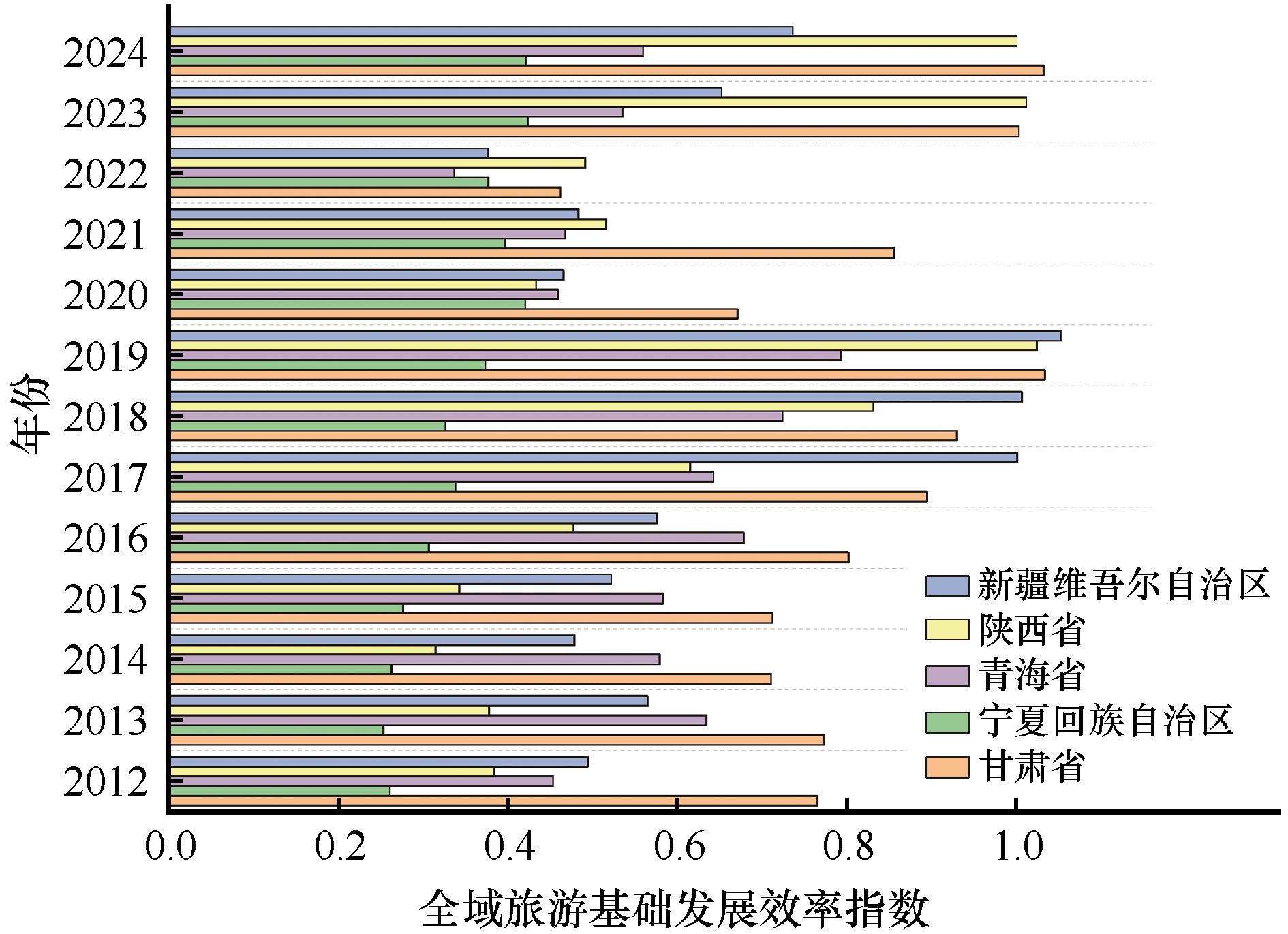
Fig.1 Measurement results of foundational efficiency of all-for-one tourism in the five provinces (autonomous regions) of northwest China (2012-2024)
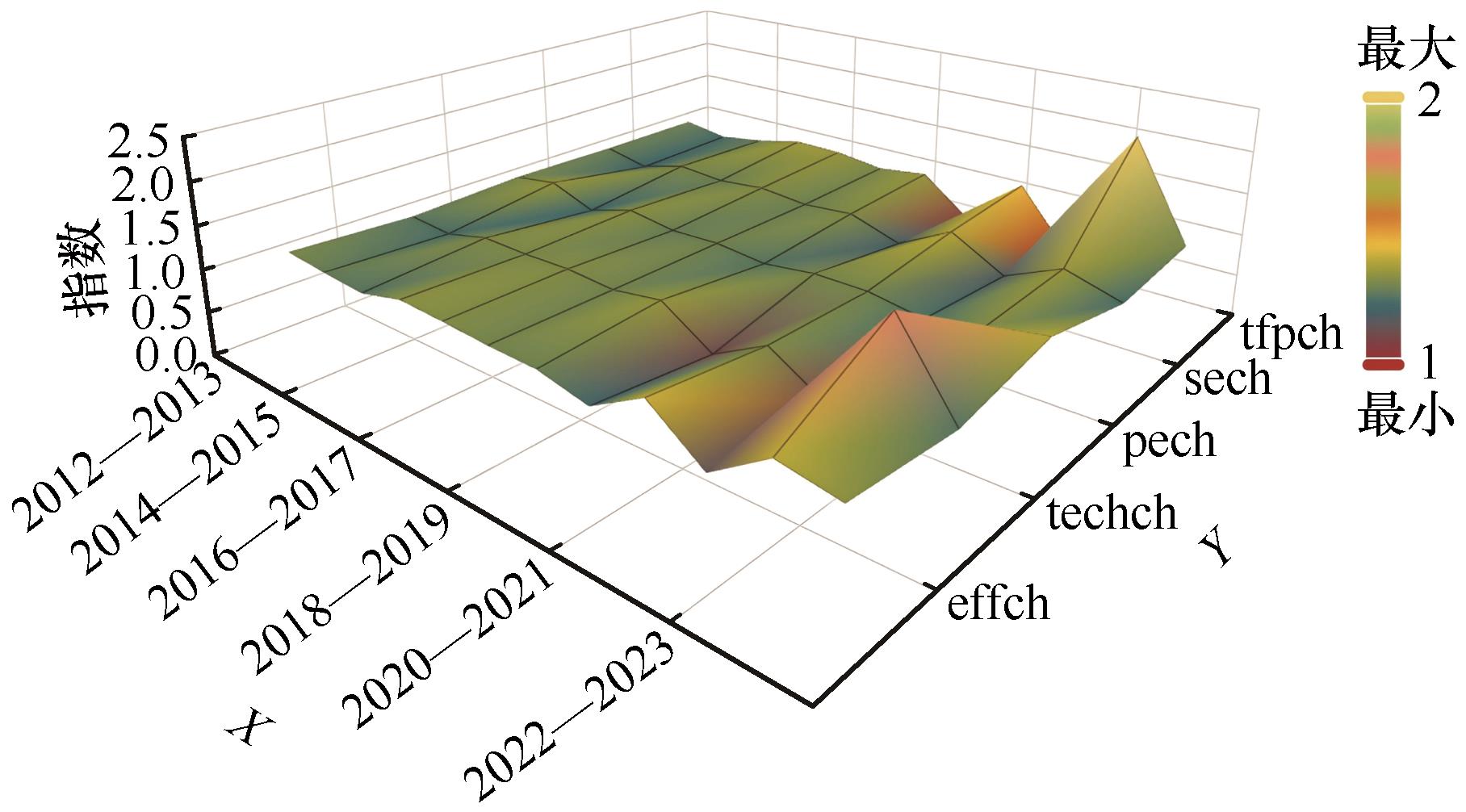
Fig.2 Index decomposition results of foundational efficiency of all-for-one tourism in Gansu Province (2012-2024)
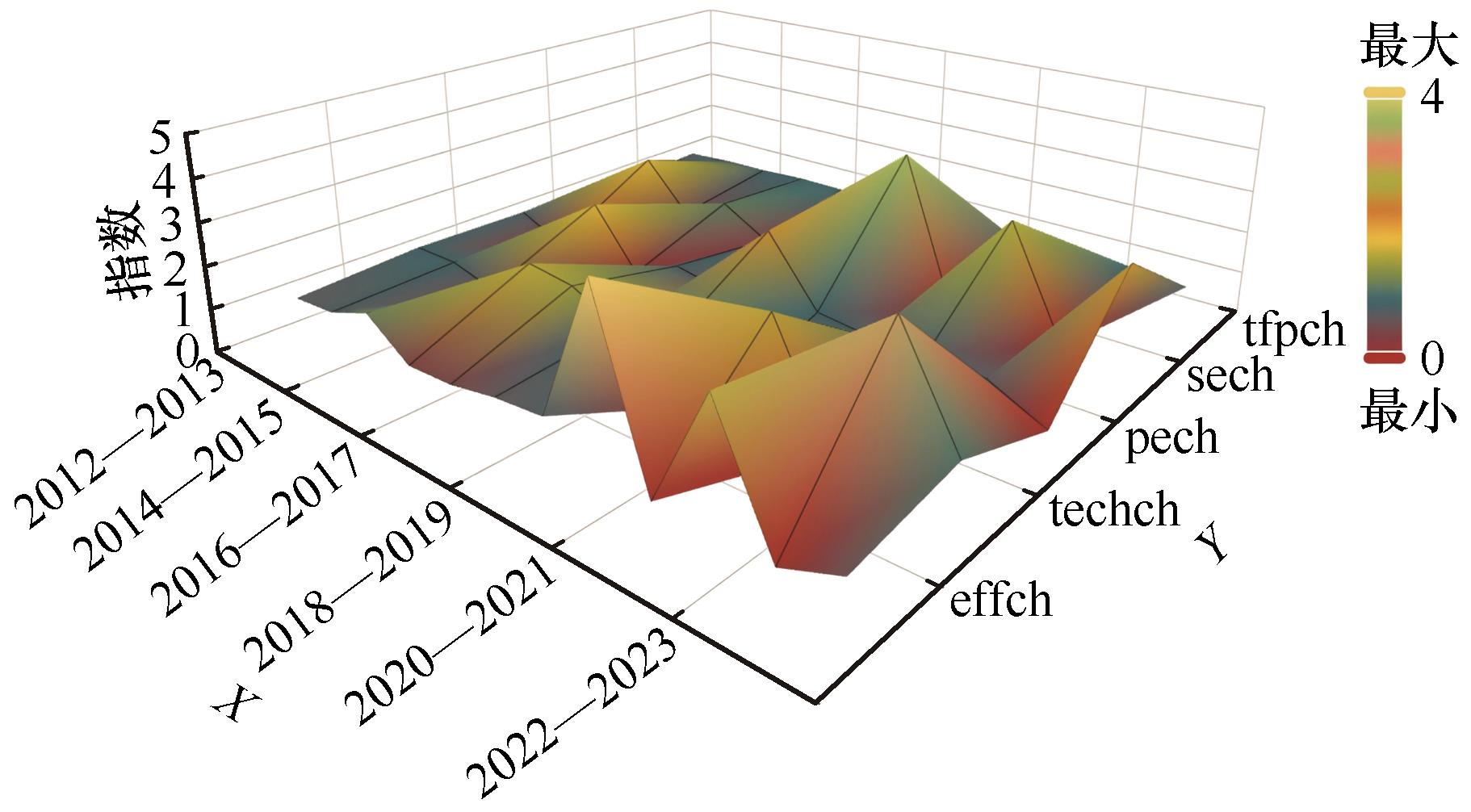
Fig.3 Index decomposition results of foundational efficiency of all-for-one tourism in Ningxia Hui Autonomous Region (2012-2024)
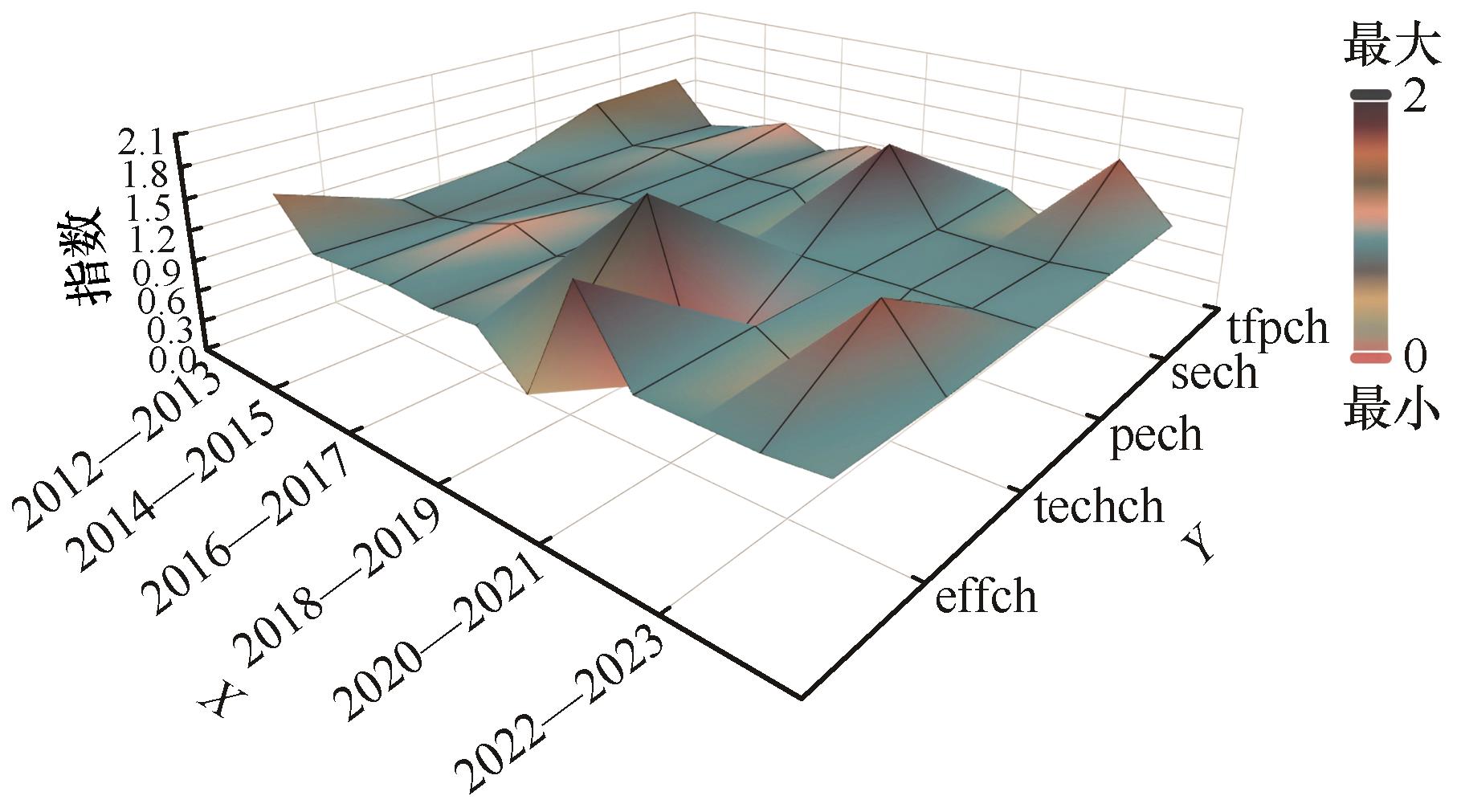
Fig.4 Index decomposition results of foundational efficiency of all-for-one tourism in Qinghai Province (2012-2024)
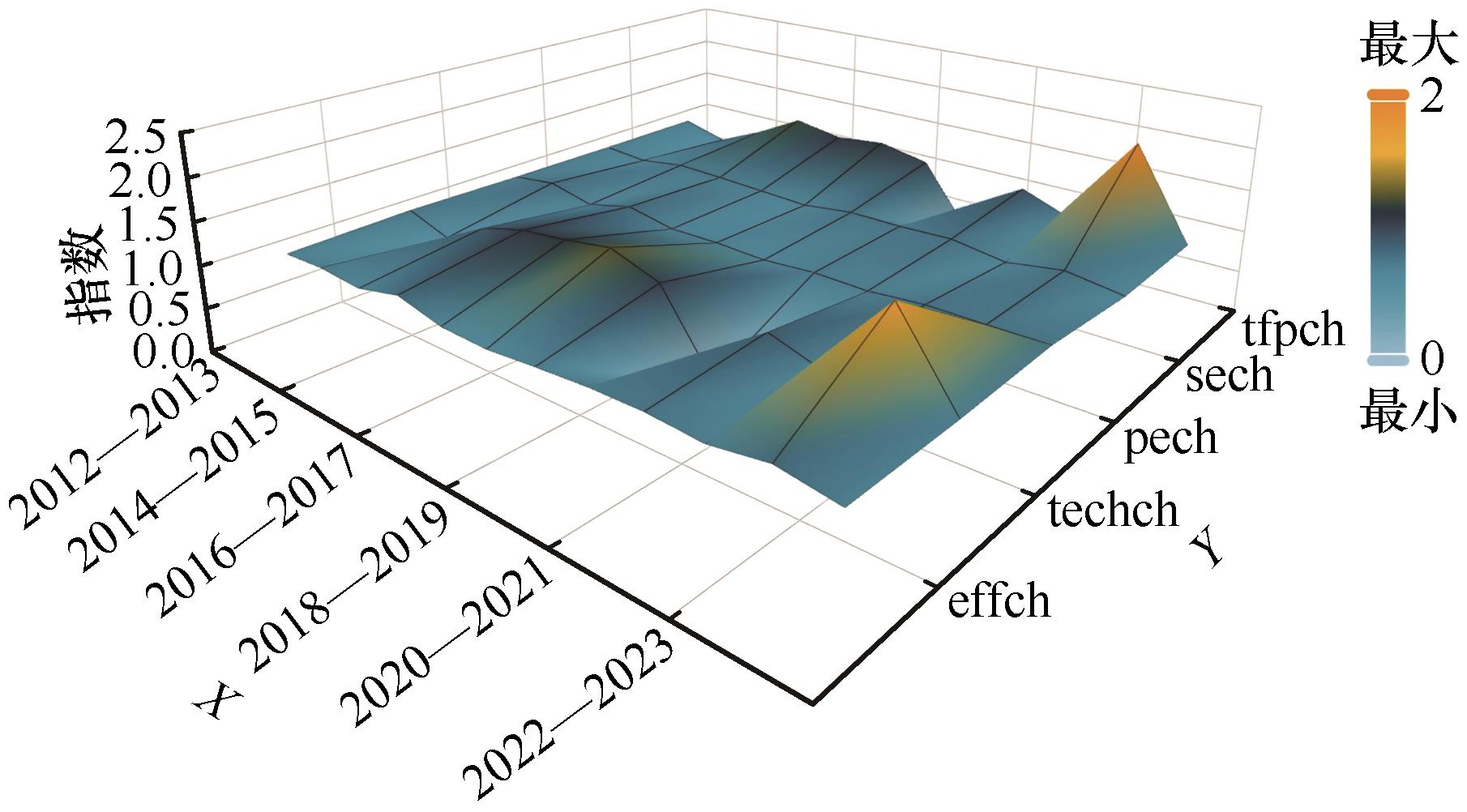
Fig.5 Index decomposition results of foundational efficiency of all-for-one tourism in Shaanxi Province (2012-2024)
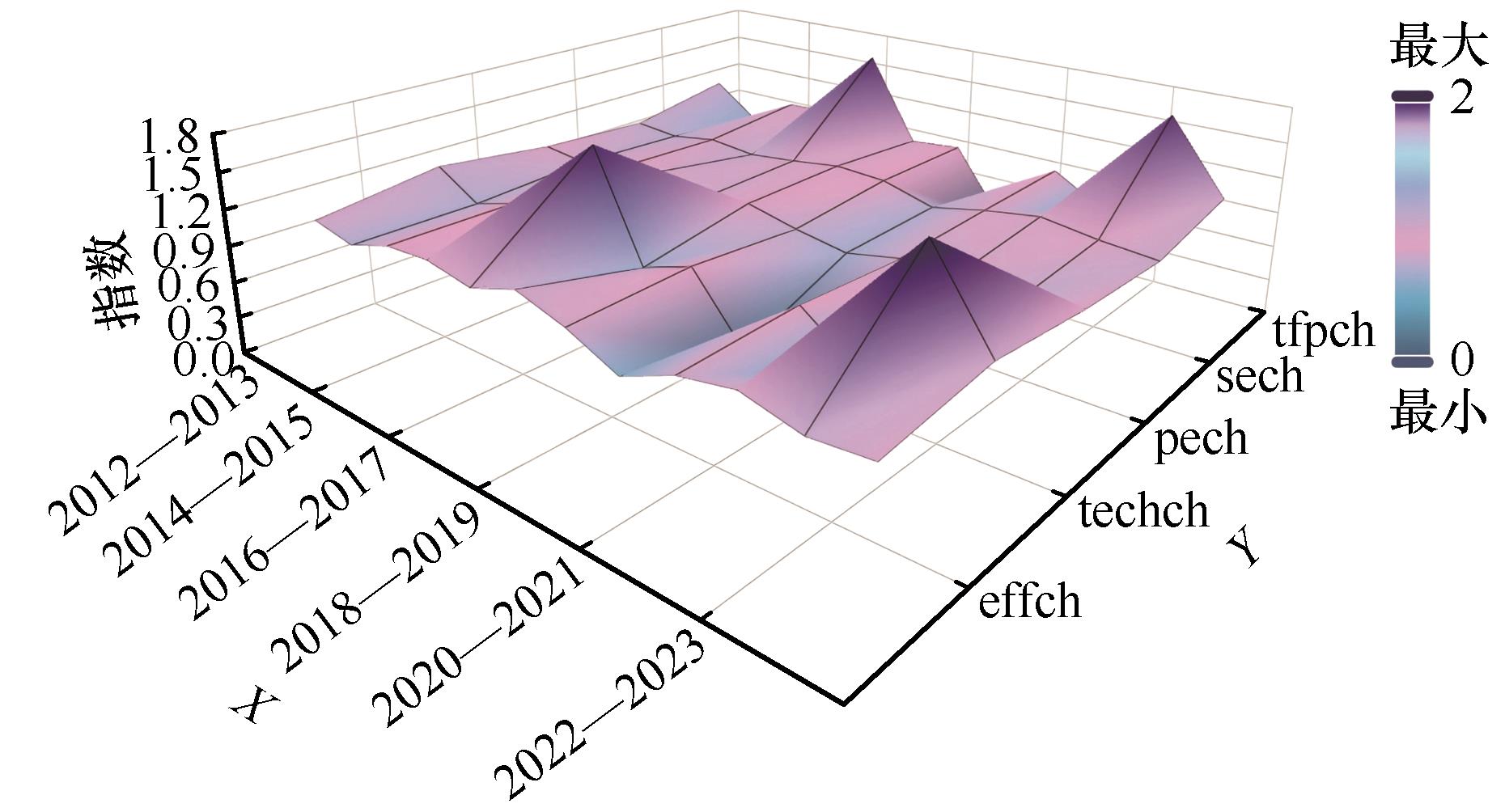
Fig.6 Index decomposition results of foundational efficiency of all-for-one tourism in Xinjiang Uygur Autonomous Region (2012-2024)
| 年份 | Moran's I | P值 | PermMean | permStd |
|---|---|---|---|---|
| 2012 | -0.3054 | 0.0100 | -0.2489 | 0.1162 |
| 2013 | -0.2705 | 0.0100 | -0.2478 | 0.1163 |
| 2014 | -0.2377 | 0.0100 | -0.2503 | 0.1175 |
| 2015 | -0.2701 | 0.0100 | -0.2495 | 0.1164 |
| 2016 | -0.3161 | 0.0100 | -0.2493 | 0.1155 |
| 2017 | -0.3379 | 0.0100 | -0.2504 | 0.1165 |
| 2018 | -0.2864 | 0.0100 | -0.2517 | 0.1183 |
| 2019 | -0.4345 | 0.0354 | -0.2504 | 0.1207 |
| 2020 | -0.2994 | 0.0100 | -0.2507 | 0.1138 |
| 2021 | -0.4044 | 0.0100 | -0.2511 | 0.1164 |
| 2022 | -0.3858 | 0.0100 | -0.2512 | 0.1177 |
| 2023 | -0.4421 | 0.0492 | -0.2504 | 0.1238 |
| 2024 | -0.4421 | 0.0432 | -0.2500 | 0.1245 |
Table 2 Moran's I index of foundational efficiency of all-for-one tourism in the five provinces (autonomous regions) of northwest China (2012-2024)
| 年份 | Moran's I | P值 | PermMean | permStd |
|---|---|---|---|---|
| 2012 | -0.3054 | 0.0100 | -0.2489 | 0.1162 |
| 2013 | -0.2705 | 0.0100 | -0.2478 | 0.1163 |
| 2014 | -0.2377 | 0.0100 | -0.2503 | 0.1175 |
| 2015 | -0.2701 | 0.0100 | -0.2495 | 0.1164 |
| 2016 | -0.3161 | 0.0100 | -0.2493 | 0.1155 |
| 2017 | -0.3379 | 0.0100 | -0.2504 | 0.1165 |
| 2018 | -0.2864 | 0.0100 | -0.2517 | 0.1183 |
| 2019 | -0.4345 | 0.0354 | -0.2504 | 0.1207 |
| 2020 | -0.2994 | 0.0100 | -0.2507 | 0.1138 |
| 2021 | -0.4044 | 0.0100 | -0.2511 | 0.1164 |
| 2022 | -0.3858 | 0.0100 | -0.2512 | 0.1177 |
| 2023 | -0.4421 | 0.0492 | -0.2504 | 0.1238 |
| 2024 | -0.4421 | 0.0432 | -0.2500 | 0.1245 |
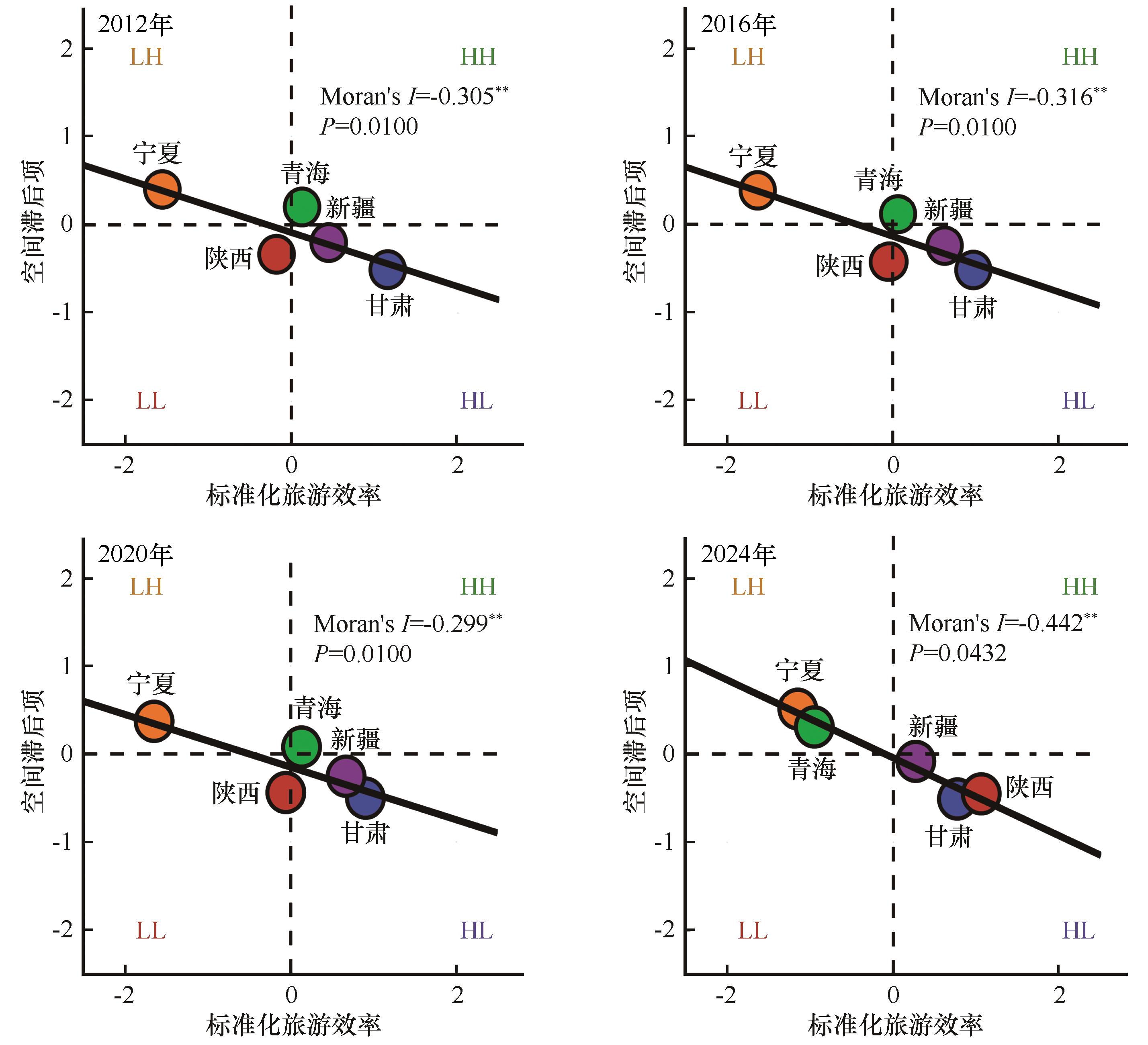
Fig.7 Moran's I scatter plots of foundational efficiency of all-for-one tourism in the five provinces (autonomous regions) of northwest China (2012, 2016, 2020, 2024)
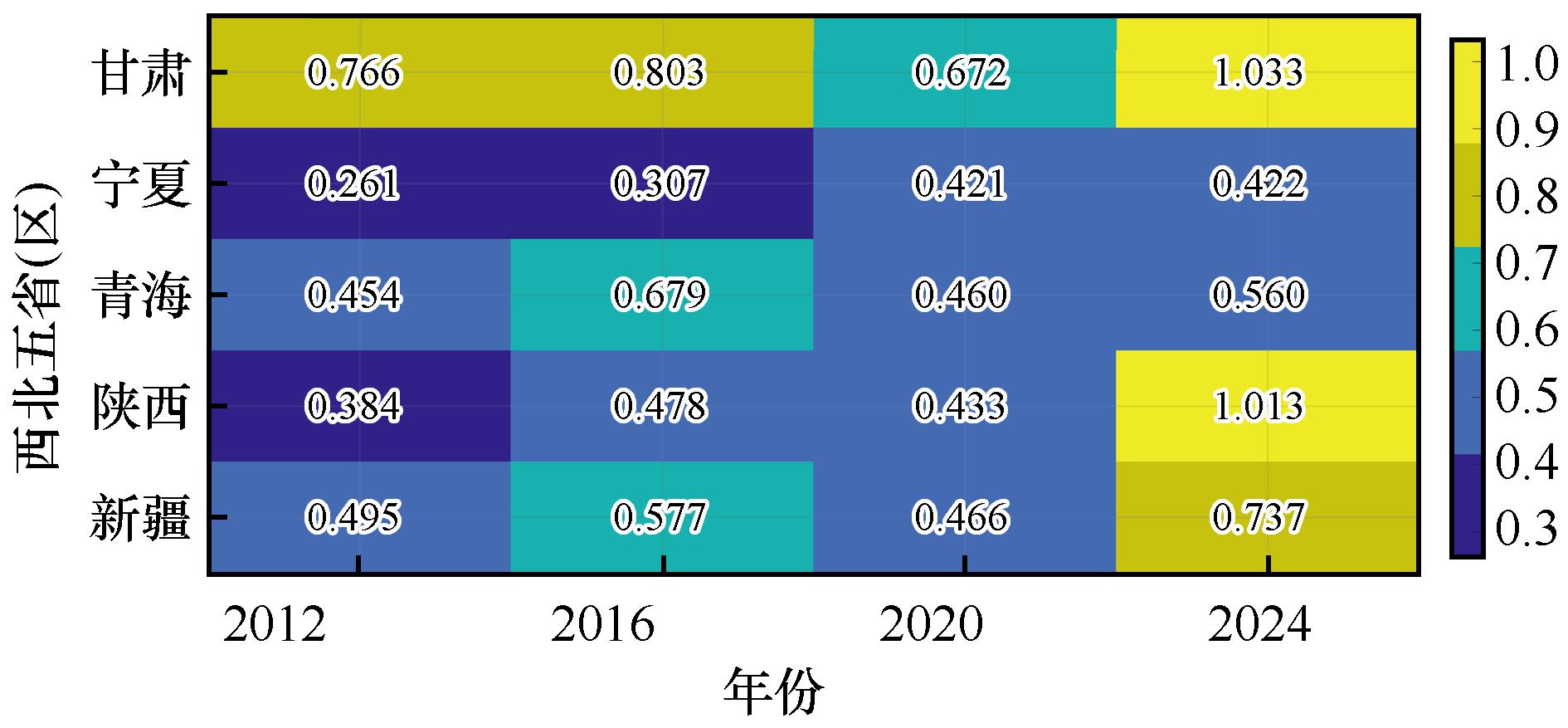
Fig.8 Spatiotemporal Pattern Heatmaps of foundational efficiency of all-for-one tourism in the five provinces (autonomous regions) of northwest China (2012, 2016, 2020, 2024)
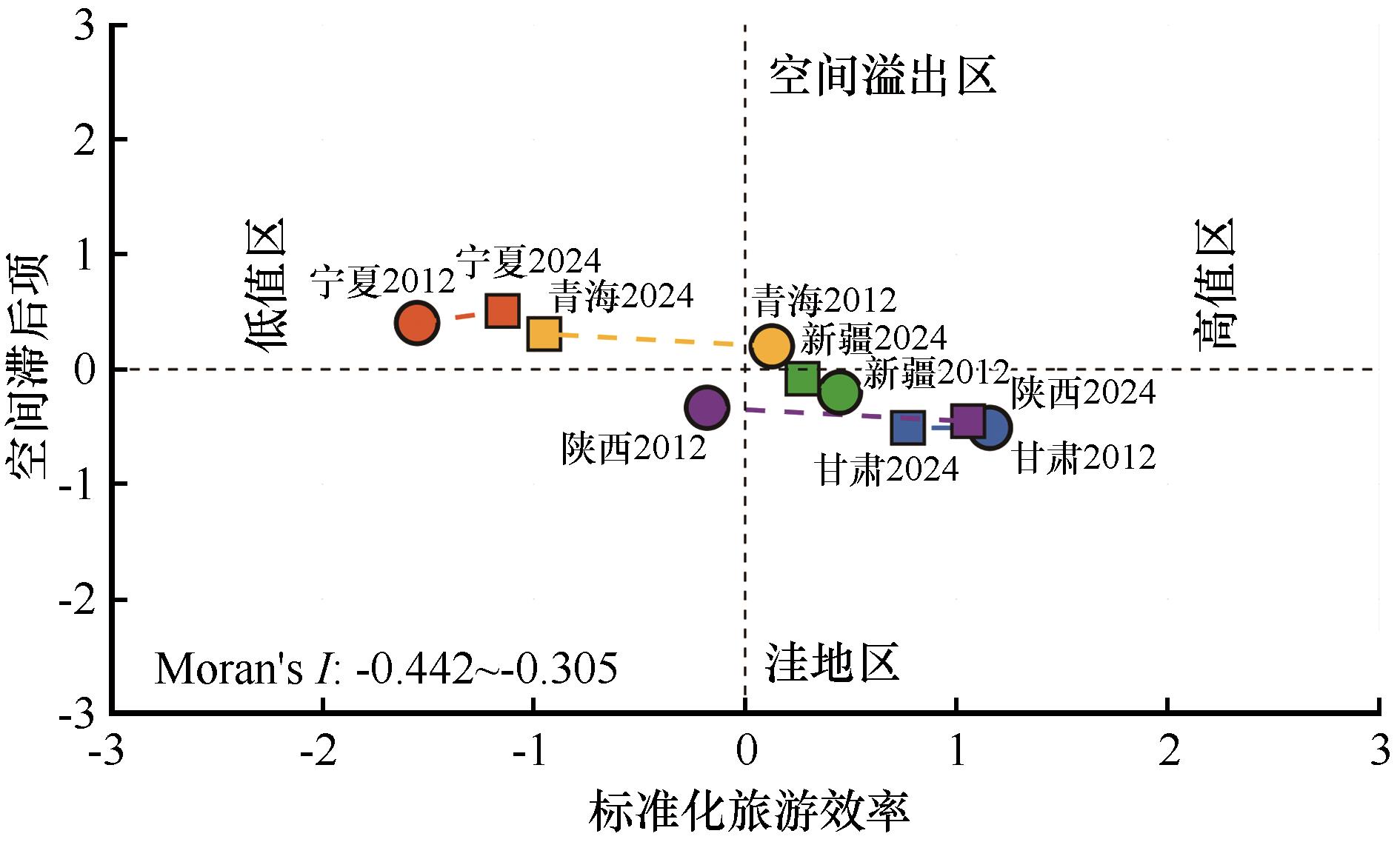
Fig.9 Spatial cluster evolution of foundational efficiency of all-for-one tourism in the five provinces (autonomous regions) of northwest China(2012-2024)
| [1] | 中共中央 国务院.关于新时代推进西部大开发形成新格局的指导意见[EB/OL].(2020-05-17)[2025-08-27].. |
| [2] | 史亚奇.全域旅游的可持续发展:耦合协调度评估与未来趋势预测[J].西南大学学报(自然科学版),2024,46(7):84-93. |
| [3] | 王莉琴,石培华,张一楠.国家全域旅游示范区空间分布、类型结构及驱动机理[J].地理科学,2023,43(10):1815-1824. |
| [4] | 王兆峰,彭雯.长江经济带数字经济对旅游产业效率影响机制与效应研究[J].旅游科学,2025,39(2):1-21. |
| [5] | 胡炜霞,张玉芳.黄河中下游旅游效率评价及影响因素分析[J].干旱区资源与环境,2022,36(7):187-193. |
| [6] | 方叶林,朱志刚,陆海云.城市群旅游生态效率时空演化及影响因素比较研究:以长三角与珠三角城市群为例[J].地理与地理信息科学,2025,41(1):134-141. |
| [7] | 田磊,刘亚彤,尹雨,等.旅游产业集聚对旅游生态效率的影响:基于黄河流域90个城市的实证分析[J].干旱区资源与环境,2025,39(6):197-208. |
| [8] | 厉建梅,赵苗祎.大运河文化带沿线城市旅游效率评价与影响因素研究[J].河南大学学报(自然科学版),2025,55(2):142-156. |
| [9] | 王辉,姚瑶.海岛县旅游效率及影响因子分析:以长海县为例[J].福建师范大学学报(自然科学版),2025,41(1):124-130. |
| [10] | 马琪,王佳雯.全域视角下旅游廊道构建与网络体系评价:以渭南市为例[J].经济地理,2025,45(7):247-254. |
| [11] | 惠余杰,李会琴,候玉洁,等.中国旅游百强县旅游效率时空演变及影响因素[J].干旱区资源与环境,2025,39(6):186-196. |
| [12] | Stoiljković A, Horvat M A, Tomić S.Assessing the tourism efficiency of european countries using data envelopment analysis:a sustainability approach[J].Sustainability,2025,17(4):1493. |
| [13] | Andrea B A, Nikolina S D, Klara J.Measuring the efficiency and productivity of Mediterranean tourism: a window dea analysis[J].Tourism and Hospitality Management,2025,31(1):1-15. |
| [14] | 李振环,唐睿,冯学钢.粤港澳大湾区背景下澳门入境旅游效率:基于随机前沿引力模型的实证[J].华侨大学学报(哲学社会科学版),2021,(1):54-63. |
| [15] | 邓泽平,张河清,王蕾蕾.广东省国家全域旅游示范区旅游效率研究[J].中南林业科技大学学报(社会科学版),2019,13(2):109-114. |
| [16] | 陈宇,岳游松.生态环境视角下东北地区冰雪旅游发展效率评估及影响因素分析[J].冰川冻土,2024,46(6):1896-1907. |
| [17] | 赖志城,陶卓民,黄敏,等.三峡库区旅游发展效率时空演化及其影响因素[J].南京师大学报(自然科学版),2025,48(3):30-39. |
| [18] | 王必达,苏婧.运输效率、空间集聚与区域协调发展[J].世界经济文汇,2019(4):104-120. |
| [19] | 王新越,韩霞霞.“一带一路”中国沿海港口城市旅游效率测度与空间特征研究[J].中国海洋大学学报(社会科学版),2018(5):36-42. |
| [20] | 刘丹琪,杨阿莉,辜友骞.基于DEA-Malmquist指数模型的旅游交通业绿色发展效率测度与评价:以兰州市为例[J].干旱区地理,2025,48(11):2062-2071. |
| [21] | 王慧,王晓川,邓学龙.沿海城市群旅游效率测度及评价:以北部湾城市群为例[J].社会科学家,2023(2):45-52. |
| [22] | 向小东,陈炎光.长江经济带绿色创新效率评价研究:基于双重异质性DEA区间交叉效率模型[J].长江流域资源与环境,2024,33(3):472-486. |
| [23] | 冷浪平,张利国.农业社会化服务对农业绿色全要素生产率的影响及空间效应[J].经济地理,2025,45(6):151-160. |
| [24] | 王少华.河南省旅游产业效率测度分解与时空演变[J].经济经纬,2019,36(3):9-16. |
| [25] | 焦爱英,陶洪宇.“双碳”背景下京津冀城市群旅游绿色发展效率测度及时空演化[J].生态经济,2025,41(6):136-145. |
| [26] | 卢飞,宫红平.中国旅游生态效率测度、时空特征与影响因素研究[J].统计与决策,2020,36(16):96-100. |
| [27] | 邬玮玮.基于大数据分析的浙江城市旅游效率比较创新研究[J].西南师范大学学报(自然科学版),2019,44(9):27-33. |
| [28] | 张韵君,童昀.中国重点旅游城市旅游效率演化与差异性分析:基于超效率EBM模型[J].西南大学学报(自然科学版),2021,43(4):109-119. |
| [29] | 游诗咏,林仲源,韩兆洲.广东省城市旅游效率的时空特征及其增长机制[J].资源科学,2017,39(8):1545-1559. |
| [30] | 纪晓萌,秦伟山,李世泰,等.中国地级单元旅游业发展效率格局及影响因素[J].资源科学,2021,43(1):185-196. |
| [31] | 吴玉彬,何非洋,王永瑜,等.基于冰冻圈背景的中国西部五省(区)旅游生态效率测度及其影响因素分析[J].冰川冻土,2024,46(1):325-334. |
| [32] | 张舒宁,李勇泉,阮文奇.成渝经济区旅游发展效率测度及其影响因素研究[J].资源开发与市场,2017,33(12):1523-1528. |
| [33] | 王胜鹏,滕堂伟,鲍涵.黄河流域城市旅游效率时空演化特征及其驱动因素[J].统计与信息论坛,2023,38(5):105-117. |
| [34] | 张军琳,兰娅菲,茅宁莹.我国社区医疗卫生机构服务效率评价:基于超效率EBM模型[J].卫生经济研究,2024,41(7):9-14. |
| [35] | 周淑霞,李江峰,付军桦,等.基于超效率EBM模型和Malmquist指数的青岛市公立综合医院医疗服务效率评价[J].精准医学杂志,2025,40(5):460-464. |
| Viewed | ||||||
|
Full text |
|
|||||
|
Abstract |
|
|||||
©2018Journal of Desert Research
Tel:0931-8267545
Email:caiedit@lzb.ac.cn;desert@lzb.ac.cn
Support:Magtech
